

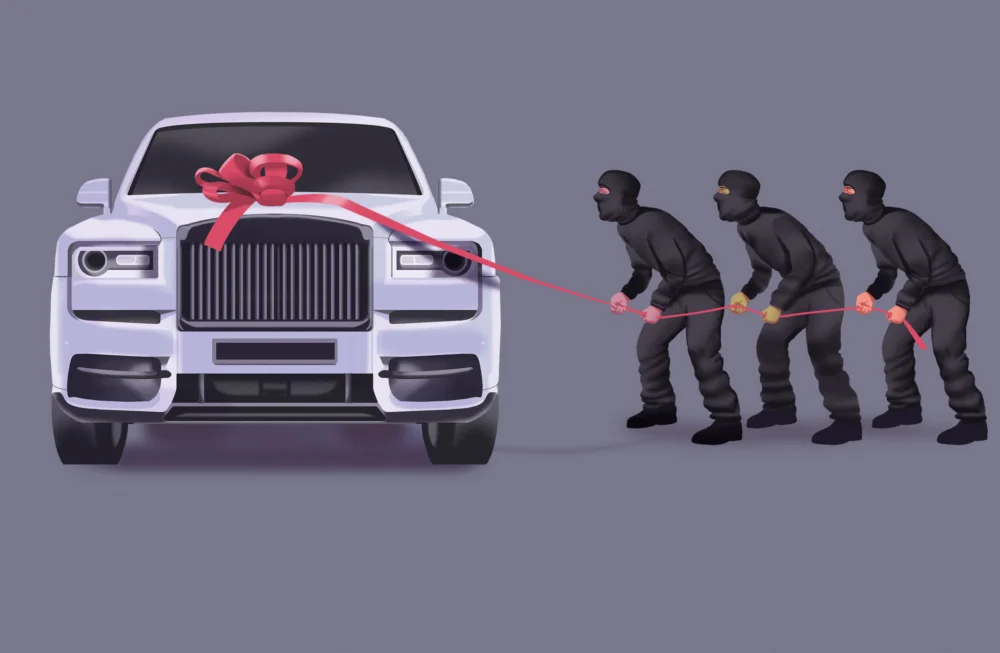
When Sam Zahr, director of operations at Detroit’s Dream Luxury Rental, first laid eyes on a gray Rolls-Royce Dawn convertible featuring a striking orange interior and a matching roof, he envisioned the crown jewel of his fleet. The vehicle was a magnet for a high-end clientele seeking to celebrate weddings, graduations, and red-carpet events in peak opulence. To bring the vehicle from its purchase point in Miami to his showroom in Michigan, Zahr turned to the industry standard for automotive logistics: Central Dispatch.
In the specialized world of vehicle logistics, Central Dispatch functions as a massive, digital stock exchange for "loads." It is a marketplace where dealers, manufacturers, and private owners post shipping needs, and licensed carriers bid on the jobs. In theory, the process is a model of digital efficiency. A listing goes up with a vehicle description, pickup and delivery coordinates, and a negotiated fee. Within minutes, a broker or carrier typically claims the job. However, when Zahr watched his Rolls-Royce being loaded into an enclosed trailer on January 17, 2025, he had no way of knowing he was witnessing a high-tech disappearance.
The car was scheduled to arrive in Detroit by January 21. It never appeared. When Zahr contacted the transport company he believed he had hired, the response was not just a denial—it was a confrontation. The contact claimed they primarily moved consumer goods like Coca-Cola products, not exotic cars, and reacted with hostility to the inquiry. The vehicle had vanished into a jurisdictional and digital void, marking Zahr’s first encounter with a sophisticated, burgeoning criminal enterprise: vehicle transport fraud.
The Evolution of the "Digital Hijack"
The automotive industry is currently grappling with a paradigm shift in organized crime. While traditional car theft often involves "smash-and-grab" tactics or relay attacks on keyless entry systems, this new wave of "digital hijacking" leverages the vulnerabilities of the global supply chain. Criminals are no longer just stealing cars from driveways; they are stealing the entire logistics process.
By utilizing email phishing, credential harvesting, and sophisticated social engineering, organized fraud rings have begun to compromise the accounts of legitimate brokers and carriers on load boards. Once inside the system, these bad actors impersonate reputable companies to secure high-value "loads." They then divert the shipments to "cool-down" locations where the vehicles can be stripped of their digital and physical identities.
Steven Yariv, CEO of Dealers Choice Auto Transport, one of the nation’s premier luxury vehicle brokers, estimates the scale of this crisis is staggering. Since the spring of 2024, Yariv suggests that approximately 8,000 exotic and high-end vehicles have been stolen through these methods, representing over $1 billion in losses. "You’re talking 30 cars a day on average that are just gone," Yariv notes. This is no longer a series of isolated incidents; it is a systemic failure of the digital infrastructure that moves the world’s most expensive assets.

Exploiting the Regulatory Vacuum
The meteoric rise in transport fraud can be traced to a combination of technological over-reliance and a lax regulatory environment. To operate as a carrier in the United States, a company must obtain a Department of Transportation (USDOT) number and interstate operating authority (MC number) from the Federal Motor Carrier Safety Administration (FMCSA).
However, investigators and industry insiders argue that the FMCSA’s vetting process is woefully inadequate for the digital age. Fraudsters frequently register "shell" transport companies using stolen identities or fraudulent insurance credentials. Alternatively, they engage in "account takeovers," hacking into the FMCSA profiles of long-standing, legitimate businesses to change contact information, thereby "wearing the skin" of a trusted company to secure a high-value contract.
Once a fraudster secures a load, they often engage in "malicious double-brokering." They repost the vehicle on a different load board, hiring an unwitting, legitimate driver to pick up the car and deliver it to a fraudulent destination—often a mall parking lot or a warehouse just a few miles from the original pickup point. The legitimate driver believes they are performing a standard short-haul job, while the criminals wait at the drop-off point to take possession of a vehicle they never officially touched.
The Tech-Savvy Chop Shop
The sophistication does not end with the theft. Once a $400,000 Rolls-Royce or a $250,000 Lamborghini is in the hands of these syndicates, the "re-VINing" process begins. Modern luxury cars are essentially computers on wheels, equipped with multiple GPS trackers and proprietary telematics. To counter this, thieves utilize GPS jammers to "darken" the vehicle’s signal immediately upon acquisition.
In a modern "digital chop shop," criminals do more than change license plates. They use specialized software to wipe the vehicle’s onboard computers, reprogram key fobs, and replace physical Vehicle Identification Number (VIN) plates with high-quality counterfeits. These fake VINs are often cloned from legitimate vehicles of the same make and model that are currently registered in different states, making it nearly impossible for standard police checks to flag the car as stolen.
The National Insurance Crime Bureau (NICB) has observed a disturbing trend: while overall vehicle thefts have seen a slight decline following a pandemic-era spike, "cargo theft"—the category under which transport fraud often falls—is skyrocketing. The NICB estimates cargo theft now accounts for $35 billion in annual losses, with a projected 22% increase in 2025.
High-Profile Targets and International Pipelines
The audacity of these rings is best illustrated by their choice of victims. Professional athletes and celebrities, who frequently ship luxury vehicles between residences or to customization shops, have become primary targets. In late 2024, Colorado Rockies star Kris Bryant saw his Lamborghini Huracán intercepted during a transport to Las Vegas. NBA legend Shaquille O’Neal and R&B singer Ray J have faced similar losses, with vehicles often suspected of being loaded into shipping containers bound for Dubai, Russia, or West Africa before the owners even realize the transport has gone off-course.

In the case of Kris Bryant, a multi-agency sting operation in Las Vegas revealed the depth of the conspiracy. Detectives tracked the vehicle using advanced traffic camera networks, eventually arresting a "broker" named Dat Viet Tieu. The investigation uncovered a Jeep Wrangler in Tieu’s possession that had already been re-VINed and registered to his wife, along with a cache of fraudulent VIN stickers and key fobs for other luxury brands. This suggests a highly organized, assembly-line approach to vehicle identity theft.
The "Flip-Flop Mafia" and Industry Pushback
Within the industry, these transient, fraudulent carriers have earned a derogatory nickname: the "flip-flop mafia." The term refers to both the casual attire of the drivers often used in these schemes and the "flip-flopping" of DOT and MC numbers. Fraudulent companies will operate under one registration for several months, racking up complaints and violations, only to "wash" their identity and reappear under a new number a week later.
The backlash against platforms like Central Dispatch is growing. While Cox Automotive, the parent company of Central Dispatch, maintains that fraud affects only a small percentage of its massive volume, many high-end brokers are retreating to analog methods. Some have stopped using digital load boards entirely, returning to "working the phones" and relying on a closed network of vetted, known drivers.
Central Dispatch has recently implemented security upgrades, including two-factor authentication and real-time load tracking via a dedicated app. However, critics like Jake MacDonald of Super Dispatch argue that the industry is being "out-innovated" by criminals. "The industry is moving toward a more technologically advanced position, but it’s so slow that fraud is actually moving faster," MacDonald noted in a recent industry analysis.
The Path Forward: A Systemic Detox
The recovery of Sam Zahr’s Rolls-Royce in Miami, following a complex police sting at an Aventura mall, provides a rare success story in a sea of losses. The sting resulted in the arrest of several individuals, including one who was later deported to Armenia. Yet, legal experts warn that prosecuting these cases remains difficult. The layers of "double-brokering" provide plausible deniability to many participants, and the international nature of the syndicates makes it hard to reach the architects of the schemes.
For the luxury automotive industry, the future requires a "detox" of the current logistics system. This likely involves:
- Biometric Verification: Requiring carriers to provide biometric data at both pickup and delivery points to ensure identity.
- Blockchain Titling: Transitioning vehicle titles and transport manifests to a decentralized ledger to prevent VIN cloning and fraudulent re-titling.
- Enhanced Federal Oversight: Pressuring the FMCSA to implement more rigorous identity verification for the issuance of MC and DOT numbers.
- Hardware-Level Security: Manufacturers integrating "un-jammable" secondary tracking systems that utilize low-frequency or satellite-based communication independent of standard GPS.
As long as a few phone calls and a fraudulent email can net a criminal a $400,000 asset for free, the "disappearing Lamborghini" will remain a recurring headline. The industry’s challenge is to prove that its digital efficiency is not its greatest security vulnerability. For now, Sam Zahr and others like him are learning a hard lesson: in the world of luxury transport, the most dangerous part of the journey isn’t the road—it’s the data.
