

The cinematic portrayal of a high-stakes heist is a masterclass in choreographed complexity. We envision a team of specialized rogues—the grease man, the hacker, the demolitions expert—navigating a labyrinth of infrared laser grids, pressure-sensitive floors, and biometric scanners that require a cloned eyeball to bypass. This aesthetic, popularized by the sleek, rhythmic direction of filmmakers like Steven Soderbergh, suggests that the only way to breach the modern fortress is through an equally modern technological scalpel. Soderbergh himself once famously noted that the process of filmmaking mirrors the execution of a heist: it requires a creative angle, a curated team of specialists, the systematic overcoming of technical hurdles, and a level of precision timing that borders on the horological. In both cinema and production, if the gears mesh perfectly, the result is a massive redistribution of capital.
However, a cold analysis of the criminal underworld reveals a startling disconnect between the silver screen and the street. While Hollywood remains obsessed with electromagnetic pulse generators and knockout gas, the reality of high-value larceny is far more prosaic, favoring brute force and psychological manipulation over digital wizardry. In the world of actual high-stakes crime, the most sophisticated piece of technology used to bypass an €88 million security system is often not a custom-coded exploit, but a cordless angle grinder purchased at a local hardware store. This persistent "low-tech" reality challenges our assumptions about security, vulnerability, and the nature of human ingenuity under pressure.
The myth of the high-tech heist serves a dual purpose: it provides entertainment for the public and a sense of "security theater" for the institutions being protected. If we believe that only a genius with a multimillion-dollar gadget can rob a vault, we feel safer. Yet, history and data suggest that the greatest vulnerabilities are rarely found in the firmware of a camera or the circuit of an alarm. Instead, they reside in the physical barriers—the doors, the walls, and the sewers—and the human beings who guard them. The primary barrier to entry is almost always a literal one. To bypass it, thieves do not typically look for a software back door; they look for an insider who can be bribed, a guard who can be fooled, or a wall that can be tunneled through with sweat and patience.
The discrepancy between myth and reality was perhaps most clinically documented in 2014 by an unlikely source: the Sandia National Laboratories. Tasked with the gravitas of protecting the United States’ nuclear arsenal, researchers at Sandia took an analytical detour into the world of high-end theft. They produced a seminal 100-page report titled "The Perfect Heist: Recipes from Around the World." The motivation was not curiosity, but existential dread. The scientists feared that if a criminal organization could successfully steal nearly a hundred million dollars in diamonds or art, they might apply those same methodologies to a nuclear weapon.
By compiling the "Heist Methods and Characteristics Database," which analyzed 23 of the most successful high-value robberies between 1972 and 2012, the Sandia researchers discovered a pattern that contradicted every Hollywood trope. The most successful thieves did not rely on cutting-edge gadgets. Instead, they relied on obsessive preparation and "dry runs"—sometimes conducting over 100 rehearsals before the actual event. Their methods were categorized into two main pillars: brute force and guile.
The 1976 Société Générale heist in Nice, France, remains a gold standard for the brute-force approach. The perpetrators spent months tunneling through the city’s sewer system to reach the bank’s vault, bypassing every electronic sensor by simply coming up through the floor. On the other end of the spectrum is the 1990 Isabella Stewart Gardner Museum robbery in Boston, where the "technology" involved was nothing more than two convincing police uniforms. By exploiting the guards’ social conditioning to obey authority, the thieves walked through the front door and made off with $500 million worth of art—a record that stands today. In neither case was a single line of code written or a laser grid dodged.
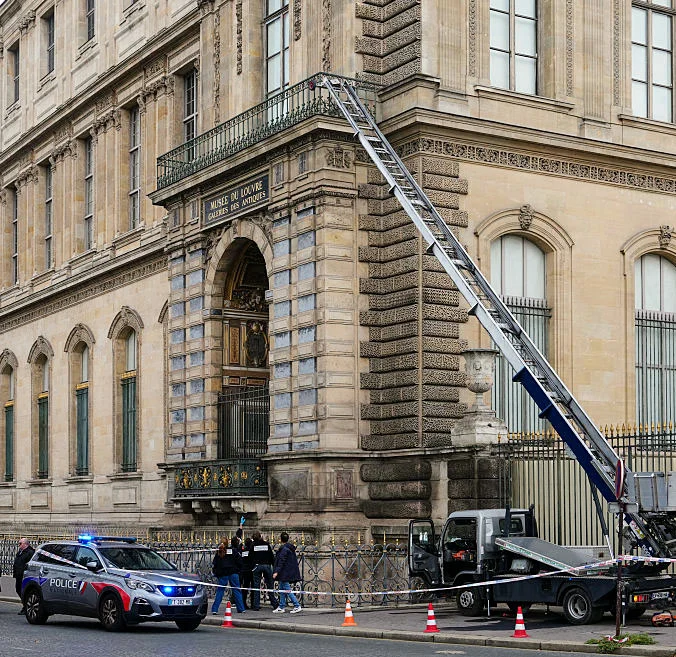
This trend has not dissipated with the advent of the digital age. A 2023 study by Spanish researchers, which examined art crimes occurring between 1990 and 2022, confirmed that the least technical methods continue to yield the highest success rates. Erin L. Thompson, an art historian and specialist in art crime at the John Jay College of Justice, emphasizes that high-tech security often fails because it introduces complexity that can be bypassed by simple speed. The recent heist at the Louvre, resulting in the loss of antique jewelry valued at €88 million, was a testament to this. Despite the museum’s formidable reputation, the theft was essentially a "smash-and-grab" executed with terrifying efficiency. When a thief is willing to use an angle grinder and move with extreme velocity, the most expensive alarm system in the world becomes a mere noisemaker—a notification of a loss that has already occurred.

The professional thief’s focus on logistics over strategy is what separates the successful from the incarcerated. As the tactical adage goes, "Amateurs talk strategy; professionals study logistics." This logistical obsession is where the "engineer’s mindset" truly manifests in crime. It is not about the gadget; it is about the total understanding of the environment. A professional thief doesn’t just want to know how to disable a camera; they want to know the patrol routes of the local police, the structural integrity of the neighboring buildings, and the exact time the streetlights flicker on.
This "deep-dive nerdery," as Professor Anna Kornbluh of the University of Illinois at Chicago describes it, is what makes the heist genre so enduringly popular. There is a fundamental human attraction to the spectacle of a "competent collective"—a group of people working with Swiss-watch precision to achieve a difficult goal. Kornbluh argues that heist movies represent a form of "anti-oligarch praxis." In an era where many feel crushed by faceless corporate structures and bureaucratic incompetence, the image of a small, highly skilled team successfully reclaiming wealth from a massive institution resonates deeply.
Interestingly, Kornbluh’s research highlights a shift in how we perceive collective action and "the grift." While classic heist movies celebrate the collective effort and the mastery of physical logistics, modern "grift" narratives—such as those chronicling the rise and fall of WeWork or the social engineering of Anna Delvey—focus on the "lone wolf" disruptor. These modern stories reflect a shift toward the "move fast and break things" ethos of the streaming and tech era, where the crime isn’t a physical breach of a vault, but a psychological breach of investor confidence. Yet, even in these digital-age grifts, the core mechanism remains low-tech: it is the ancient art of the "con," updated for a world of social media and venture capital.
Looking toward the future, the "myth" of the high-tech heist may finally begin to merge with reality, but perhaps not in the way we expect. As physical assets are increasingly digitized, the heist is moving from the vault to the blockchain. Cryptocurrency "heists," which can net hundreds of millions of dollars in a single exploit, do require the high-tech expertise that Hollywood has long imagined. However, even in the realm of cybercrime, the "low-tech" element remains the weakest link. Phishing attacks, which rely on human error and social engineering, remain far more common than the exploitation of complex cryptographic vulnerabilities.
Furthermore, the rise of drone technology and autonomous systems may provide thieves with new "low-cost, high-tech" tools. A drone equipped with a thermal camera or a signal jammer is a far cry from a Hollywood laser-bypass kit, but it represents a democratization of surveillance and disruption that was previously the sole province of nation-states. Yet, even with these tools, the fundamental constraints of the heist remain unchanged. The thief must still deal with the physical reality of weight, time, and the "literal barrier to entry."
The enduring success of low-tech methods suggests that our approach to security may be fundamentally flawed. We invest billions in "smart" systems, AI-driven surveillance, and complex encryption, yet we remain vulnerable to a man with a ladder and a sledgehammer. This is because security is often treated as a technical problem to be solved with a product, rather than a logistical and psychological challenge to be managed through vigilance and simplicity.
Ultimately, the heist—whether in the Louvre or a local bank—is a stark reminder of the limits of technology. It proves that in a battle between a sophisticated machine and a determined, well-rehearsed human collective, the humans often win by simply ignoring the machine’s complexity. As long as there is value stored behind physical walls, there will be individuals looking for the simplest, fastest way to circumvent them. And as history has shown, that way is rarely a laser; it is almost always a drill, a disguise, or a well-placed bribe. The high-tech heist remains a beautiful cinematic fiction, but the low-tech reality is far more lucrative, far more common, and far more dangerous.
