

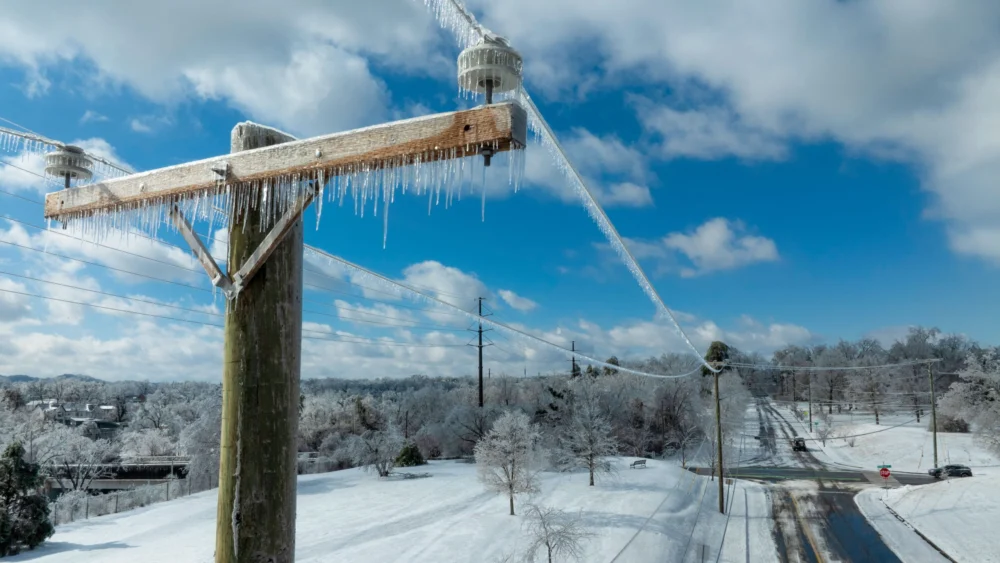
The arrival of a sprawling winter storm across the eastern half of the United States recently served as an intense, real-time stress test for the nation’s largest electricity markets. While widespread catastrophic failure was averted, the event exposed significant, recurring vulnerabilities within the conventional generation fleet—specifically those relying on fossil fuels. Despite facing plummeting temperatures and a surge in heating demand, the operational strain on the grid managed by PJM Interconnection, which serves approximately 67 million people across 13 states and the District of Columbia, revealed a critical paradox: the very sources historically relied upon for ‘firm’ capacity are often the least reliable when extreme weather conditions materialize.
The immediate aftermath of the storm’s peak highlighted the extent of this strain. PJM experienced unplanned outages exceeding 20 gigawatts (GW) during the height of the cold snap, equating to roughly 16% of the overall demand being supplied by offline capacity at that crucial juncture. Though the system ultimately maintained stability, requiring other plants to ramp up production quickly, the sheer volume of lost generation capacity underscores a systemic fragility.
Grid operators typically withhold detailed failure reports until comprehensive post-mortem analyses are complete. However, real-time data monitoring provided immediate insights. Policy and research analysts, including those at Energy Innovation, specializing in energy and climate dynamics, conducted an immediate review of publicly available grid mix data. Their conclusion was stark: the primary source of the capacity shortfall stemmed from conventional fossil fuel assets.
Analysis revealed that gas-fired power plants, despite being poised to capitalize on dramatically spiking electricity prices, were producing approximately 10 GW less power on Sunday compared to peak output the previous day. Coal and oil facilities experienced similar deratings and outages. This pattern suggests that operational failure—the inability to physically run—was the root cause, rather than a voluntary economic decision to withhold power. As experts in the field noted, if market signals were screaming for maximum output, the inability of these assets to respond confirms a fundamental physical limitation inherent in operating these facilities under severe meteorological duress.
The Physics of Failure: Why Conventional Plants Struggle
The susceptibility of fossil fuel infrastructure to extreme cold is multifaceted and deeply technical. Natural gas plants face a cascading series of challenges that begin upstream of the power generation facility itself. When ambient temperatures drop sharply, the pressure in natural gas transmission pipelines often falls, impacting the volume of fuel that can be delivered. This pressure reduction is exacerbated by freezing conditions affecting the mechanical components crucial for maintaining flow. Compression stations, which boost gas pressure along the pipeline network, are vulnerable to freezing valves, instrument lines, and lubrication systems, forcing partial or complete shutdowns. If a power plant cannot receive gas at the required pressure, it must derate its output or trip offline entirely.
Coal plants face distinct, yet equally debilitating, issues. Extreme cold can freeze the piles of pulverized coal stored on-site, rendering the material unusable or significantly hindering the conveyor systems designed to transport the fuel into the boiler. Furthermore, the massive cooling systems required by both coal and nuclear facilities are highly susceptible to icing, which can block intake screens, damage pumps, and trigger safety shutdowns. These are not minor operational hiccups; they are structural weaknesses that compromise the reliability premise upon which these generators are built.
The Shadow of 2021: Learning from Catastrophe
The most visceral recent example of this vulnerability remains the 2021 Texas winter storm, Winter Storm Uri. Operating under the isolated grid of the Electric Reliability Council of Texas (ERCOT), the state experienced a widespread, multi-day system collapse that resulted in hundreds of fatalities and billions of dollars in economic damage. The 2021 failure was largely attributed to the widespread loss of generation capacity—predominantly natural gas and some coal—that had not been adequately winterized against conditions that, while rare for Texas, are increasingly likely in a climate-volatile world.
The contrast between the 2021 disaster and Texas’s performance during the recent cold snap is instructive, providing a critical blueprint for the East Coast and other regions. Following the legislative mandate and regulatory overhaul initiated post-Uri, Texas implemented stringent, mandatory winter weatherization protocols for generation facilities and transmission assets. This involved significant capital expenditure to insulate pipes, install heat tracing on critical components, and upgrade monitoring systems to withstand prolonged periods below freezing.
Crucially, Texas also saw a massive, accelerated deployment of utility-scale Battery Energy Storage Systems (BESS). These BESS installations proved instrumental in managing the severe morning demand peaks. Batteries, unlike thermal plants, can ramp up output almost instantaneously and are less susceptible to the physical limitations imposed by fuel transport or freezing water systems. By injecting substantial, reliable power into the grid during the most critical hours—when thermal generation was often struggling to hit full stride—BESS provided a flexible, non-thermal shock absorber for the ERCOT system, allowing it to navigate the crisis far more smoothly this time around. While experts caution that the severity of the recent storm in Texas was less extreme than Uri, the enhanced physical preparation and the diversification of resources played a demonstrable role in maintaining stability.
Regulatory Triage: The Cost of Emergency Orders
The continued operational strain on the PJM system necessitated extreme regulatory intervention. The U.S. Department of Energy (DOE) invoked emergency orders under Section 202(c) of the Federal Power Act, granting temporary waivers to several grid operators, including PJM. These orders permitted specific power plants to operate while bypassing certain environmental emission regulations.
This move highlights the difficult trade-off faced by regulators during existential grid threats. While bypassing emissions controls ensures continued electricity supply—a public safety imperative—it simultaneously results in a surge of localized air pollutants (such as sulfur dioxide, nitrogen oxides, and particulate matter) and contributes negatively to broader climate goals. Furthermore, the DOE issued additional orders allowing grid operators to instruct major power consumers, like massive data centers, to switch from grid power to their on-site backup diesel generators. This decentralization of power generation is good for immediate grid reliability but is highly detrimental to air quality, as these backup generators are typically among the most emissions-intensive power sources available.
PJM’s operational forecasting projected an unprecedented challenge: a peak power demand of 130 GW persisting for seven consecutive days—a sustained winter streak the regional grid had never previously encountered. This extended period of high demand, driven by prolonged freezing conditions, stresses the system not just for a few peak hours, but continuously, draining reserves and delaying maintenance opportunities.
Industry Implications: Moving Beyond the N-1 Standard
The repeated exposure of conventional generator fragility in extreme weather environments forces a fundamental reassessment of how grid reliability is defined and achieved. Historically, reliability planning has centered on the "N-1" standard, meaning the grid must remain operational even if its single largest component (a generator or a major transmission line) fails. However, climate-driven extreme weather events represent "N-X" scenarios—simultaneous, correlated failures across multiple generating assets and fuel supply chains.
The industry implication is clear: Capacity markets, which pay generators simply to be available, must evolve to prioritize performance under stress, not just nominal availability. Investors and grid planners must begin to incorporate climate volatility and meteorological risk into resource adequacy models.
This shift necessitates integrating advanced probabilistic risk assessment tools. Grid operators (ISOs/RTOs) must move away from relying solely on historical weather data and incorporate forward-looking climate models to predict high-impact, low-probability events. This integration would demand a higher reliability factor—and thus potentially more winterization capital expenditure—for thermal plants located in vulnerable corridors.
Future Impact and Technological Trends for Resilience
The solution set for a resilient grid in a climate-stressed future is not singular but composite, emphasizing diversification, flexibility, and technological sophistication.
1. Accelerated Energy Storage Deployment
Energy storage, particularly BESS, represents the most immediate and effective solution for addressing volatility. BESS provides instantaneous response times, crucial for compensating for the sudden, unplanned outages (like the 20 GW loss seen in PJM). They lend essential flexibility, absorbing excess power during off-peak hours and discharging rapidly during demand spikes. For the East Coast, learning from Texas means massively scaling up energy storage deployments. Furthermore, investment in Long-Duration Storage (LDS) technologies—such as compressed air or flow batteries—is necessary to bridge supply gaps that last not just hours, but days, addressing the continuous stress PJM experienced.
2. Harnessing Offshore Wind in Winter
Offshore wind generation presents a highly reliable winter resource for coastal regions. Unlike solar or some terrestrial wind farms, offshore facilities benefit from stronger, more consistent wind patterns, and crucially, they tend to exhibit higher capacity factors during the cold winter months when air density increases. Integrating large-scale offshore wind projects, particularly those currently planned for the Northeast and Mid-Atlantic, provides a vital counter-cyclical power source that is decoupled from the terrestrial natural gas supply chain. While transmission and interconnection remain complex engineering hurdles, the fundamental reliability of this resource in cold weather makes it an essential component of the resilience strategy.
3. Transmission Hardening and Interregional Connectivity
The best power generation in the world is useless if the transmission infrastructure fails. Future trends must include significant investment in hardening transmission lines and substations against icing, high winds, and extreme temperatures. Furthermore, increasing the capacity and redundancy of interregional transmission ties—the lines connecting PJM to neighboring grids like NYISO or ISO-NE—provides a critical safety valve. During extreme regional events, the ability to seamlessly import and export large volumes of power prevents localized collapse.
4. The Digital Grid and Predictive Maintenance
A modernized, "smart" grid—leveraging advanced sensors, IoT, and Artificial Intelligence (AI)—is crucial for predicting and mitigating failures. Digital twin technology can simulate the stress points on the grid in real-time under various meteorological forecasts. This allows operators to preemptively derate or perform targeted maintenance on vulnerable components, moving the industry toward predictive maintenance rather than reactive crisis management. For natural gas infrastructure, advanced monitoring of pipeline pressure and compressor health can trigger operational adjustments before a complete generation facility outage occurs.
Ultimately, the recent winter storms underscore a critical reality for North American power systems: the continued reliance on legacy infrastructure susceptible to freezing is incompatible with the rising frequency and severity of climate-driven extreme weather. The path toward grid resilience is intrinsically linked to the energy transition. Diversification into weather-independent or cold-resilient resources—storage, offshore wind, and hardened transmission—is no longer a choice dictated solely by environmental policy, but a necessity driven by infrastructure security and public safety. The East Coast must rapidly adopt the lessons learned, particularly the successful BESS integration and mandatory winterization protocols pioneered in Texas, to ensure that the next extreme cold snap does not necessitate polluting emergency measures just to keep the lights on. Building a resilient grid demands flexibility, and that flexibility increasingly resides outside the traditional thermal power paradigm.
