

The portable retro gaming landscape is undergoing a structural transformation, driven by hardware manufacturers that continuously push the boundaries of what specialized emulation devices can achieve. Fresh off the commercial rollout of the Pocket Nova, device maker Retroid has formally ignited industry speculation by teasing its upcoming product: the Retroid Pocket Duo. Rather than iterating on traditional single-display form factors that dominate the modern emulation market, this new hardware targets a historically underserved niche—native dual-screen architecture. By adopting a layout evocative of Nintendo’s legendary dual-screen eras, Retroid is positioning itself to capture a deeply passionate segment of the gaming community while simultaneously tackling the formidable engineering hurdles inherent in multi-display mobile hardware.
To fully understand the market significance of the Retroid Pocket Duo, one must examine the trajectory of the retro handheld ecosystem over the past half-decade. What began as a cottage industry defined by low-powered, open-source Linux devices has rapidly evolved into a sophisticated marketplace populated by high-performance Android machines. Consumers now expect devices capable of running complex emulators, ranging from classic 8-bit and 16-bit systems to demanding sixth-generation home consoles and contemporary mobile titles. However, despite rapid advancements in chipset efficiency, graphic processing power, and display technology, one specific category of emulation has remained frustratingly compromised: Nintendo DS and 3DS software.
Historically, enthusiasts wishing to play dual-screen games on dedicated portable hardware faced difficult compromises. Single-screen Android handhelds required users to either awkwardly scale and stack two screens onto one vertical or horizontal display, constantly toggle back and forth between active screens using mapped hotkeys, or rely on external secondary displays paired with cumbersome cables. While DIY modders occasionally crafted custom dual-screen handhelds by repurposing original Nintendo hardware components or utilizing dual-smartphone chassis modifications, these projects remained inaccessible to mainstream consumers due to high costs and technical complexities. Consequently, the announcement of a factory-built, integrated dual-screen device from an established manufacturer like Retroid represents a watershed moment for portable emulation enthusiasts.
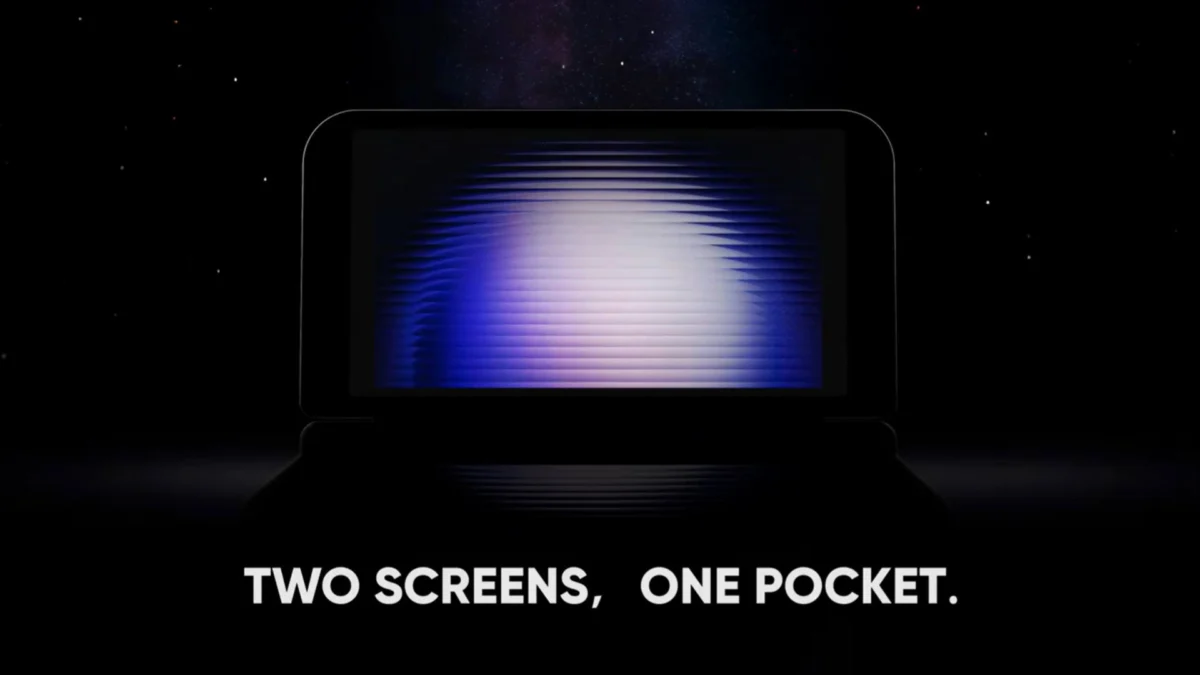
The initial promotional material released by the company offers a tantalizing glimpse into this upcoming hardware. A brief twenty-second promotional video shared across digital channels relies on stark, minimalist silhouettes and the enigmatic tagline: "Two Screens.. One Pocket." While technical specifications, internal chipsets, and pricing remain strictly under wraps, the visual presentation provides crucial design clues. The device’s physical silhouette heavily implies a clamshell or dual-panel configuration that eliminates external cables, structural clips, or modular attachments. Observers familiar with portable console design have quickly drawn parallels to the iconic Nintendo 3DS family, albeit with modern architectural refinements, likely featuring significantly larger display panels, modern aspect ratios, and more ergonomic control layouts.
Delving into the engineering and manufacturing challenges behind a dual-screen Android handheld reveals why such devices have been rare in the third-party market. Designing a clamshell or dual-panel device requires delicate balancing acts regarding weight distribution, hinge durability, and thermal management. Packing high-performance mobile processors, substantial battery capacity, active or passive cooling systems, and dual display controllers into a pocketable chassis is an exercise in extreme miniaturization. Furthermore, sourcing matching, high-quality display panels that offer low latency, high refresh rates, and accurate color reproduction—all while maintaining an affordable retail price point—presents a massive logistical hurdle for boutique hardware makers.
Beyond the hardware hurdles, the software ecosystem required to power a dual-screen Android device introduces its own set of complexities. Android, by its native design, is built around single-screen interfaces and multi-window application management tailored for smartphones and tablets. While modern versions of the operating system support robust multi-window multitasking, dedicated emulation frontends and individual emulator cores must be carefully optimized to leverage a secondary physical display seamlessly. Software developers within the emulation community will need to adapt their user interfaces, touch mapping frameworks, and display scaling algorithms to ensure that titles originally designed for the Nintendo DS and 3DS translate fluidly to Retroid’s new hardware configuration.
The implications of this release extend far beyond a single product launch; they signal a potential paradigm shift for the entire retro handheld industry. For years, competing brands have competed primarily on raw computational power—upgrading from mid-tier Unisoc processors to high-end Qualcomm Snapdragon or MediaTek chips to achieve better PlayStation 2 and Nintendo GameCube emulation. While performance upgrades remain vital, hardware differentiation has become increasingly difficult as component suppliers democratize access to powerful chipsets. By introducing a specialized form factor tailored specifically to dual-screen software, Retroid is pioneering a shift toward functional diversification. If the Pocket Duo proves successful, it could trigger a wave of imitators, encouraging other manufacturers to explore alternative form factors such as vertical multi-screen layouts, modular attachments, or advanced foldable displays.
Moreover, the psychological and nostalgic appeal of the dual-screen configuration cannot be overstated. A massive generation of gamers grew up with the dual-screen era of handheld gaming, developing deep emotional connections to franchises that utilized the secondary touch panel for inventory management, maps, radar systems, and secondary gameplay mechanics. Bringing these experiences back to a dedicated, pocket-sized device without the ergonomic compromises of single-screen letterboxing addresses a long-standing demand within the community. It bridges the gap between hardware preservation and modern portable convenience, allowing players to experience these libraries the way they were originally intended to be played.
As the industry awaits further announcements from Retroid regarding release timelines, pricing tiers, and internal specifications, anticipation continues to build. Given the company’s established operational cadence—characterized by rapid transitions from initial teasers to comprehensive product reveals—consumers will likely not have to wait long for definitive answers. Whether the Retroid Pocket Duo ultimately redefines the standard for portable emulation or carves out a specialized niche for dedicated enthusiasts, its mere existence underscores the vibrant, experimental nature of today’s independent hardware market. In an era where mainstream consumer electronics often prioritize iterative homogenization, the willingness of boutique manufacturers to embrace bold, nostalgic design concepts ensures that portable gaming remains an exciting space to watch.
