

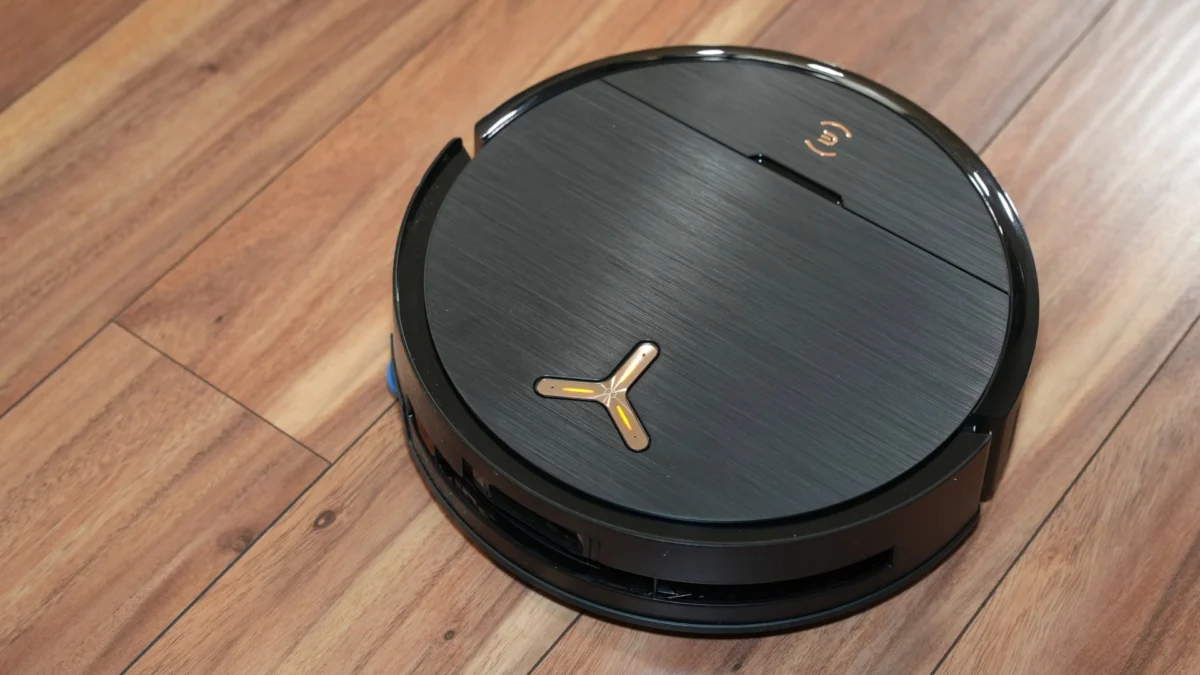
The consumer robotics landscape is undergoing a structural transformation, driven by aggressive retail discounting and rapid hardware commoditization. Nowhere is this trend more evident than in the current market pricing for top-tier home automation appliances. A striking example of this shift is a newly launched promotional campaign on Amazon, which slashes the retail price of the high-end ECOVACS Deebot X9 Pro Omni to an unprecedented $449. Representing a steep 44% markdown from its standard manufacturer’s suggested retail price of $799.99, this price adjustment brings unprecedented value to a product category that was previously restricted to luxury consumer budgets. Industry trackers note that this price point represents an all-time low for the device, signaling a broader movement among smart home manufacturers to capture market share through aggressive pricing strategies.
To understand the weight of this retail markdown, one must analyze the positioning of the ECOVACS Deebot X9 Pro Omni within the broader ecosystem of automated cleaning solutions. Modern residential environments have evolved into complex functional spaces featuring a combination of hard flooring, plush carpeting, high-traffic zones, and various challenges posed by domestic pets. Addressing these heterogeneous cleaning requirements demands sophisticated engineering that merges high-powered suction mechanisms with advanced wet-cleaning apparatuses. Historically, acquiring a machine capable of autonomous dual-action vacuuming and mopping required a substantial financial commitment, often exceeding the eight-hundred-dollar threshold. By dropping the cost to the mid-four-hundred-dollar range, this promotion fundamentally alters the cost-to-benefit calculations for consumers who have previously hesitated to invest in high-end home robotics.
At the core of the Deebot X9 Pro Omni’s hardware architecture is a suite of cleaning technologies engineered to minimize human intervention. The device utilizes high-output suction channels designed to extract deeply embedded dust, microscopic allergens, and stubborn particulate matter from various floor textures. Complementing this suction capability is an auto-washing roller mop system, which distinguishes advanced modern hybrids from older iterations that merely dragged a damp cloth across the floor. This dynamic scrubbing mechanism applies consistent downward pressure while simultaneously managing water distribution, ensuring that dried spills and stubborn stains are effectively neutralized. Furthermore, the inclusion of anti-tangle brush technology addresses a persistent pain point for pet owners and multi-person households: the accumulation of human hair and animal fur tightly wound around the main roller assembly. By engineering brush configurations that resist wrapping or actively shed collected strands, the unit maintains optimal cleaning efficiency over extended operational cycles without requiring frequent manual maintenance.
Beyond the robotic unit itself, the multi-functional OMNI dock serves as the operational nerve center of the ecosystem, radically reducing the operational overhead typically associated with autonomous floor maintenance. In earlier generations of robotic vacuums, users frequently had to empty internal dustbins after every cleaning cycle and manually wash, dry, and reinstall mop pads to prevent bacterial growth and unpleasant odors. The OMNI dock automates these tedious chores entirely. Upon the robot’s return to its base station, internal mechanisms extract debris from the onboard dustbin and deposit it into a sealed, high-capacity disposable bag capable of holding weeks of accumulated waste. Simultaneously, the dock initiates a rigorous self-cleaning sequence for the roller mop, utilizing high-temperature water to wash away grime before applying heated air drying to sanitize the materials and prevent mildew accumulation. This level of comprehensive automation transforms the cleaning appliance from a high-maintenance gadget into a genuinely autonomous utility.
Navigational intelligence and spatial awareness represent another critical battleground in the contemporary robot vacuum market, and the Deebot X9 Pro Omni incorporates sophisticated sensor suites to map and traverse complex interior layouts. Utilizing advanced laser distance measurement and optical sensors, the system constructs accurate, real-time three-dimensional maps of residential environments. This precise cartography allows the device to plan efficient cleaning routes, avoiding the haphazard bouncing patterns characteristic of legacy budget models. Moreover, sophisticated obstacle-handling algorithms enable the unit to detect and gracefully maneuver around common household clutter, ranging from stray power cords and footwear to pet toys and unexpected obstacles. Edge-cleaning capabilities have also been prioritized, with specialized software and mechanical profiling allowing the chassis to sweep tightly along baseboards and into room corners, areas that have historically presented significant challenges for circular robotic designs.
The timing of this aggressive promotional pricing reflects intense competitive pressures within the global smart home sector. Manufacturers are increasingly locked in a race to capture consumer loyalty as household penetration rates for automated cleaners approach critical mass. Brands must continuously justify premium price tags while simultaneously navigating a market where mid-tier competitors are rapidly closing the feature gap. By lowering the financial barrier of entry for a flagship-tier product, ECOVACS is effectively positioning its hardware to appeal to value-conscious consumers who might otherwise settle for compromise-heavy budget alternatives. This strategy not only stimulates immediate sales volume but also expands the user base for proprietary companion applications and consumable ecosystem components, such as replacement dust bags, cleaning solutions, and structural accessories.
From an industry analyst perspective, price drops of this magnitude highlight a maturing supply chain and manufacturing efficiencies that allow brands to compress profit margins in exchange for expanded market dominance. As component costs for LiDAR sensors, high-torque brushless motors, and lithium-ion battery cells stabilize, companies possess greater flexibility to run deep promotional campaigns during non-traditional holiday periods. For the end consumer, this creates an opportune window to upgrade legacy cleaning equipment or adopt automated maintenance for the first time without incurring the premium tax previously demanded by tier-one manufacturers.
Ultimately, the confluence of high-end engineering, comprehensive dock automation, and a historic price reduction makes the current Amazon offering for the ECOVACS Deebot X9 Pro Omni a significant development in the domestic technology space. As autonomous household appliances transition from luxury novelties to expected household infrastructure, deals that redefine the pricing tiers of flagship hardware accelerate the adoption curve. Whether this aggressive valuation will prompt rival manufacturers to recalibrate their own pricing strategies remains to be seen, but for consumers currently evaluating the market, the calculus surrounding premium robotic cleaning has fundamentally shifted.
