

The race to dominate artificial intelligence has collided head-on with the physical constraints of the modern power grid, triggering an extraordinary and largely unforeseen resurgence in natural gas infrastructure. For the past decade, the transition of the American power sector appeared to follow a predictable trajectory: aging coal-fired generators were retired, while falling capital costs turned utility-scale solar and onshore wind into the primary drivers of new capacity additions. Technology conglomerates positioned themselves at the vanguard of this green transition, signing multibillion-dollar clean power purchase agreements and committing to ambitious net-zero operational timelines.
Yet the exponential computing requirements of large language models and next-generation neural networks have fundamentally altered utility load forecasting. Unlike conventional web traffic or enterprise cloud storage, generative AI clusters require constant, dense, and non-interruptible electricity. This baseload appetite is outstripping the immediate deployment capacity of clean energy resources and grid transmission networks. As a result, the technology sector’s search for gigawatts of fast, dependable power has turned the United States natural gas industry into the indispensable beneficiary of the computing boom.
The transformation is most visible inside the regional transmission organizations responsible for coordinating wholesale electricity across vast sections of the country. Interconnection queues—the administrative and engineering waiting lists where proposed power plants sit pending grid integration studies—have historically offered a preview of future generation mixes. In recent cycles, these queues were overwhelmingly dominated by photovoltaic arrays and battery energy storage systems. However, recent data from PJM Interconnection, the nation’s largest regional transmission organization serving over 65 million people across 13 states and the District of Columbia, demonstrates a dramatic strategic pivot.
In a recent reformed interconnection cycle, PJM accepted proposals representing more than 200 gigawatts of potential generating capacity across roughly 715 projects. Nearly half of that collective capacity was claimed by natural gas-fired generation. Energy modeling from institutional researchers, including analyses conducted at Purdue University, indicates that if this current pipeline moves toward construction, the overall fossil-fuel reliance of PJM’s regional generation fleet would reverse its downward trajectory, increasing its fossil-fuel share from approximately 61 percent to nearly 67 percent.
This resurgence is not confined to the mid-Atlantic and Rust Belt corridors. Across the American South, utility long-range resource plans are being radically redrafted to accommodate the sheer scale of planned hyperscale campuses. A prime example can be seen in northeast Louisiana, where initial plans to support a massive Meta artificial intelligence facility required the local utility to prepare three dedicated natural gas plants. As the projected computing footprint and density of the site increased, that requirement swelled to ten gas-fired facilities. Across Virginia’s "Data Center Alley," Georgia, and Texas, utilities that were preparing for stagnant or marginally growing demand are now forecasting historical peaks, prompting state regulators to greenlight expedited investments in combined-cycle and simple-cycle combustion turbines.
The fundamental tension driving this dynamic is the divergence between digital deployment velocity and electrical infrastructure lead times. While an enterprise can procure thousands of advanced graphics processing units (GPUs) and construct a data center shell within 18 to 24 months, securing a high-voltage grid interconnection routinely takes between five and seven years. Regional queues are plagued by severe bureaucratic backlogs, complicated cost-allocation disputes over grid upgrades, and an acute global shortage of high-voltage transformers and switchgear.
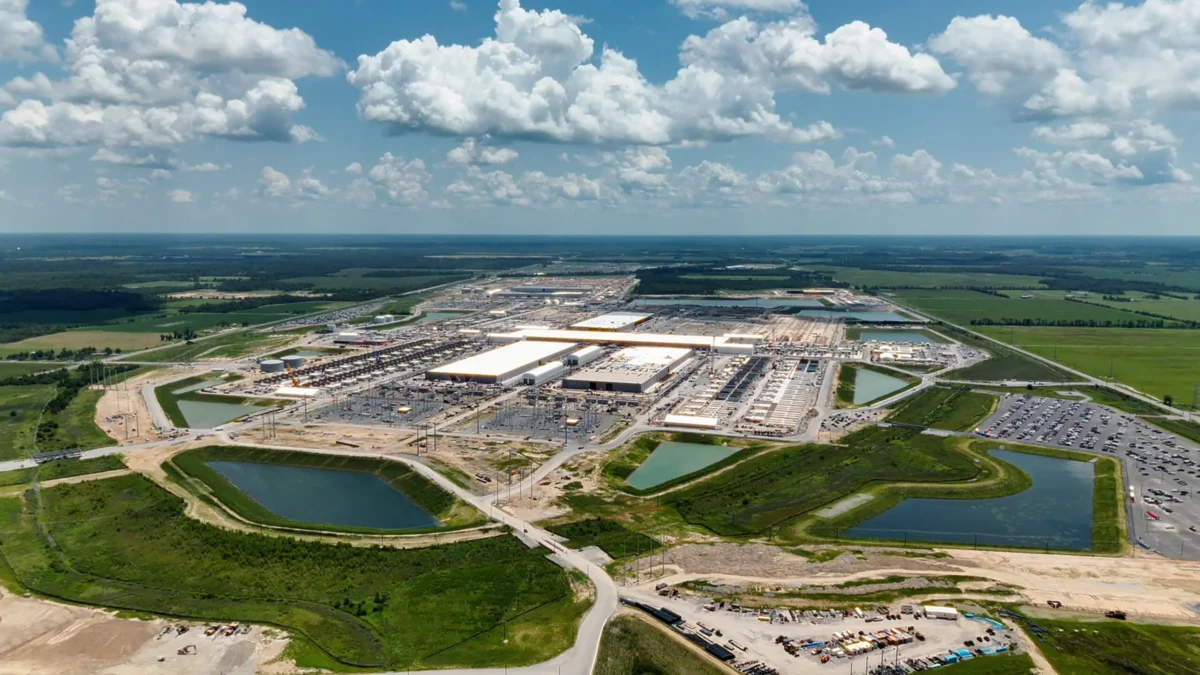
Confronted with the risk of holding billions of dollars in idle silicon, data center operators are increasingly moving to bypass public utility systems altogether. A major emerging trend across the United States involves the deployment of "islanded" or "behind-the-meter" generation assets. In these configurations, developers build dedicated, private power plants adjacent to the compute campus, operating entirely off-grid or maintaining only a minimal, secondary interconnection.
While self-generation has long been utilized by energy-intensive industries such as petrochemical refining, chlor-alkali production, and remote copper mining, the scale at which it is now being pursued for digital real estate is unprecedented. More than 100 off-grid data center generation projects have recently entered advanced planning or permitting phases across the United States, representing an astonishing 115 gigawatts of self-contained capacity. To place that metric into operational perspective, 115 gigawatts exceeds twice the peak summer electrical demand of the entire state of California. The vast majority of these proposals rely on natural gas turbines or reciprocating internal combustion engines, prized for their ability to deliver continuous 24/7 power without the spatial footprints, transmission dependencies, or intermittency limitations inherent to solar and wind farms.
This dependency on thermal combustion is exacting a visible toll on the corporate sustainability ledgers of the technology industry. For years, hyperscalers claimed operational carbon neutrality through the purchase of unbundled Renewable Energy Certificates (RECs) and virtual power contracts. But the physical integration of gas-heavy capacity to sustain live computing loads is driving actual greenhouse gas emissions rapidly upward.
Recent corporate disclosures reveal a profound divergence between corporate climate targets and corporate reality. Meta’s annual greenhouse gas emissions jumped by 45 percent year-over-year, leading the company to quietly initiate a reevaluation of its foundational 2030 net-zero targets. The trend is systemic across the sector: Microsoft recorded a 25 percent spike in emissions attributable directly to the expansion of its AI data center footprint, while Google and Amazon registered increases of 18 percent and 16 percent, respectively. The open-ended operational demands of modern compute are forcing technology executives to concede that when forced to choose between artificial intelligence deployment deadlines and decarbonization roadmaps, speed-to-market takes precedence.
The environmental and economic ramifications of this fossil revival extend far beyond corporate boardrooms. The construction of new natural gas plants entails multi-decade capital amortization schedules, typically ranging from 30 to 40 years. Environmental scientists and energy economists warn that the current rush to satisfy near-term computing demands risks locking in long-term carbon dioxide emissions and methane leakage across the upstream extraction and pipeline distribution networks. Moreover, if commercial AI workloads experience architectural efficiency breakthroughs or demand stabilization in the next decade, these large-scale thermal assets could rapidly transform into stranded capital, raising contentious questions before state public utility commissions regarding whether commercial technology operators or residential captive ratepayers will ultimately bear the financial burden of redundant plants.
Technologists and clean-energy advocates frequently point to alternative pathways designed to mitigate the reliance on fossil fuels. Advanced energy storage configurations, enhanced geothermal systems, and small modular nuclear reactors (SMRs) are widely cited as the ultimate zero-carbon baseload solutions. Concurrently, operational strategies such as demand-side flexibility—where non-urgent training tasks are throttled or shifted geographically to coincide with surplus renewable generation—have shown localized promise.
However, the temporal mismatch remains unyielding. Advanced nuclear designs face rigorous regulatory licensing hurdles and are unlikely to reach meaningful commercial deployment until the early to mid-2030s. Deep-rock geothermal remains capital-intensive and geographically constrained in the near term. Large-scale battery storage, while rapidly advancing, primarily addresses multi-hour diurnal shifts rather than multi-day weather lulls, leaving seasonal and round-the-clock reliability gaps that current market structures solve using natural gas.
As a consequence, the immediate reality of artificial intelligence infrastructure in the United States remains firmly tethered to hydrocarbon combustion. The digital frontier, often conceptualized as ethereal code operating within an abstract cloud, is proving to be anchored to the most conventional forms of industrial engineering. As long as market incentives prioritize rapid model deployment, computational scale, and five-nines grid reliability above all else, the physical backbone supporting the intelligence economy will continue to be fueled by natural gas.
