

Across the spectrum of modern climate policy, international negotiations and national carbon budgets are anchored to a singular mathematical principle: the relationship between cumulative anthropogenic greenhouse gas emissions and global surface temperature increases. Yet a compounding body of empirical Earth system science reveals a profound systemic vulnerability beneath these calculations. The planet itself is increasingly functioning as an unquantified emitter. As anthropogenic forcing drives temperatures higher, it is triggering an array of secondary biogeochemical feedback mechanisms across the biosphere and cryosphere. These processes—ranging from high-latitude permafrost thaw to runaway microbial methanogenesis in tropical wetlands—release vast stores of carbon dioxide and methane that have been largely omitted from the standard predictive models guiding global mitigation roadmaps.
The omission poses a severe risk to long-term macroeconomic planning and global climate resilience. For decades, the computational architectures underpinning international climate assessments have treated natural systems primarily as passive carbon sinks or linear dampers of atmospheric heating. In reality, the terrestrial and aquatic systems that historically absorbed over half of human-derived emissions are entering nonlinear states of destabilization. By failing to fully integrate these dynamic feedback loops into mainstream emissions-pathway modeling, international policymakers are operating under an artificial buffer, underestimating both the velocity of near-term warming and the stringency of emissions reductions required to avert catastrophic environmental tipping points.
The Dynamics of Natural Carbon Release
The mechanics of warming-induced emissions are rooted in deep ecological and chemical transformations across varied biomes. For millennia, ecosystems such as the Arctic permafrost, boreal peatlands, and equatorial wetlands have operated as planetary carbon vaults, sequestering immense volumes of organic matter in waterlogged, frozen, or low-temperature environments that retard biological decay. As mean surface temperatures rise, these biochemical guardrails are collapsing.
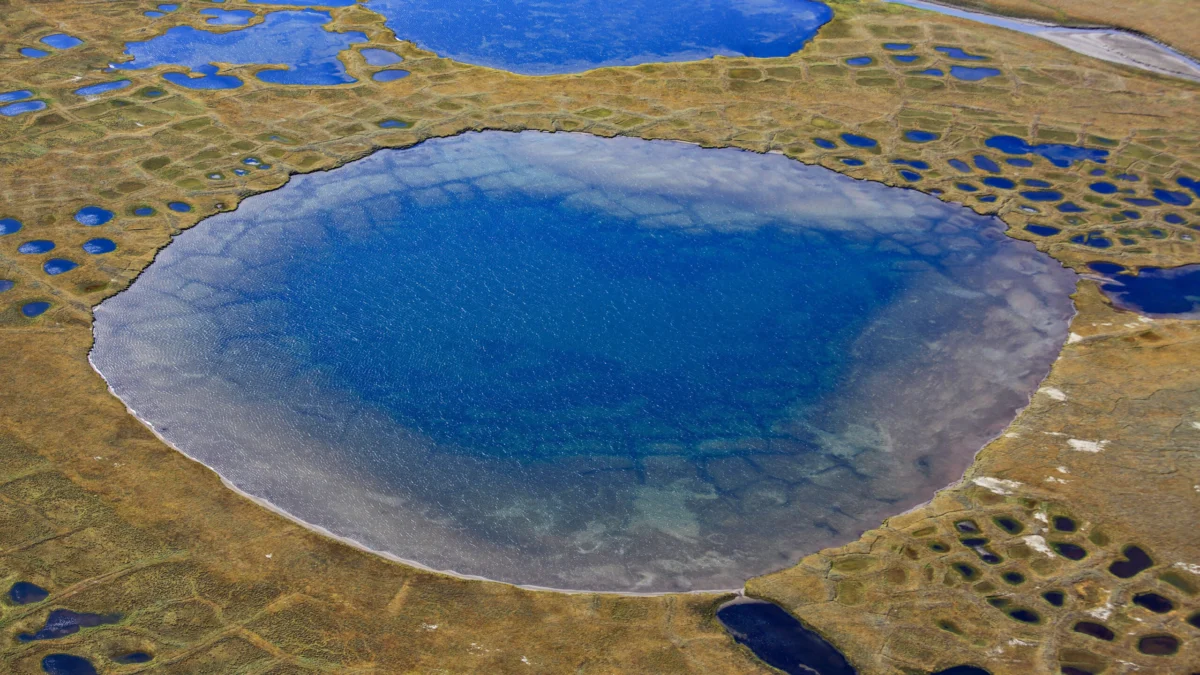
In the high northern latitudes, the circumpolar permafrost zone stores an estimated 1,400 to 1,600 gigatons of carbon—roughly double the volume currently circulating in the Earth’s atmosphere. As this frozen ground warms, microbial life awakens, metabolizing previously inert organic material and releasing continuous streams of carbon dioxide and methane. This process is exacerbated by thermokarst formation, where abrupt collapse of the land surface creates meltwater lakes that cultivate anoxic zones, ideal for hyper-efficient methane-producing microbes. Concurrently, intensifying wildfire regimes are sweeping across boreal forests in Canada, Alaska, and Siberia. These blazes do not merely consume standing biomass; they burn deep into carbon-dense ground layers, stripping away the insulating moss and peat cushions that protect underlying permafrost from solar radiation, effectively catalyzing further subsurface collapse.
Concurrently, inland waters and aquatic ecosystems are demonstrating similar accelerations in emissions. Recent limnological studies demonstrate that rising water temperatures in lakes and human-made reservoirs substantially escalate microbial metabolic activity, expanding the periods of thermal stratification and surface outgassing of dissolved methane and nitrous oxide. In the tropics, higher baseline temperatures and altered precipitation patterns are warming and saturating extensive wetland regions, supercharging microbial methanogenesis. When combined, these diffuse, autonomous releases generate a continuous radiative forcing effect that operates entirely independent of industrial smokestacks or vehicle tailpipes.
Quantifying the Scientific Blind Spot
The quantifiable risk of these feedbacks is coming into sharper focus through synthesizing literature and updated computational assessments. A comprehensive review published in Environmental Research Letters evaluating multi-system feedback effects demonstrated that warming-driven emissions from just four primary natural interfaces—thawing permafrost, escalating wildfires, warming lakes and reservoirs, and shifting wetlands—could introduce between 0.2°C and 0.4°C of additional global mean surface warming by the end of the twenty-first century.
While a fraction of a degree may appear modest in public discourse, its real-world implications within climate science are immense. Current global climate policies, even if fully implemented, place the planet on a trajectory toward approximately 2.6°C of warming above preindustrial baselines by 2100. Superimposing an unmodeled 0.2°C to 0.4°C of natural feedback warming transforms an already perilous scenario into an existential threat. Such an increment could push global systems beyond regional thermal survival limits, expanding months-long urban heat waves across the Global South and drastically worsening coastal and inland inundation risks through accelerated polar ice sheet loss.
The compression of the global timeline is even more urgent. A complementary macroeconomic and atmospheric assessment published in One Earth analyzed the interplay between these natural feedback mechanisms and the remaining global carbon budget. The study focused on three critical regional feedback zones: permafrost thaw, boreal wildland fires, and warming tropical wetlands. The findings revealed that emissions from these domains alone could shorten the remaining time window before the planet consistently breaches the critical 1.5°C and 2.0°C thresholds established by the Paris Agreement by as much as 25%.
The root of this systemic modeling deficit lies in the structural evolution of climate forecasting. The Intergovernmental Panel on Climate Change (IPCC) relies heavily on simulations derived from the Coupled Model Intercomparison Project (CMIP). While these state-of-the-art Earth System Models (ESMs) excel at simulating atmospheric circulation, radiative balance, and oceanic heat uptake, incorporating high-resolution, nonlinear ecological feedbacks presents monumental computational hurdles. Subsurface biological processes, localized wildfire behavior, and micro-scale soil hydrology do not scale easily into global atmospheric grids. Consequently, many flagship models either hold terrestrial feedback variables static, parameterize them with wide margins of error, or exclude complex biological responses altogether due to insufficient empirical field data. The result is an artificially optimistic assessment of how much greenhouse gas humanity can emit before hitting irrevocable ecological barriers.
Scientific Mobilization and the Road to AR7
Recognizing the acute risk posed by these analytical deficiencies, the international scientific community is mobilizing to overhaul existing climate models before the next major policy assessments are finalized. A leading effort bridging this analytical gap is the Warming-Induced Greenhouse Gas Emissions Model Intercomparison Project (WIE-MIP). Initiated through coordinated philanthropic and scientific avenues, including Spark Climate Solutions, the project unites more than 20 top-tier climate modeling organizations and academic laboratories worldwide.
The objective of WIE-MIP is to standardize and coordinate simulations across varied institutional models, directly subjecting them to uniform parameters of permafrost degradation, wildfire dynamics, and wetland methane discharge. By running standardized feedback experiments across different modeling frameworks, researchers can isolate discrepancies, reduce statistical uncertainties, and produce a unified quantification of natural carbon cycles under varying degrees of warming.
The strategic goal of this mobilization is explicitly aligned with international policy cycles. The research coalitions intend to submit their consolidated findings for inclusion in the IPCC’s forthcoming Seventh Assessment Report (AR7), slated for publication around 2029. Inclusion in AR7 would formally compel participating member states to integrate these natural feedback loops into their nationally determined contributions (NDCs). It would recalibrate remaining global carbon budgets downward, fundamentally restructuring the timeline and intensity of national decarbonization obligations.
The Rise of Frontier Ecological Interventions
As the scale of natural feedback emissions becomes undeniably clear, a paradigm shift is emerging across climate technology and environmental engineering. Until recently, mitigation discourse was partitioned strictly between reducing anthropogenic emissions at the source and deploying atmospheric carbon dioxide removal (CDR) technologies. Today, a nascent third frontier is emerging: active, in situ ecological intervention designed to manage and arrest natural feedback loops before they achieve self-sustaining momentum.
Field scientists and research organizations are pioneering various experimental methods to stabilize degrading ecosystems. At the Woodwell Climate Research Center in Massachusetts, researchers are focusing on tactical interventions within Arctic and sub-Arctic permafrost zones. Their efforts explore targeted wildfire management systems optimized specifically to protect high-carbon ecosystems. Because tundra and boreal fires destroy the insulating organic surface layer that preserves subterranean ice wedges, rapid detection and aggressive suppression of fires in these remote, carbon-dense zones can prevent the subsequent thaw of tens of millions of tons of frozen carbon.
Simultaneously, geochemical intervention strategies are entering preliminary testing phases. Under initiatives supported by organizations such as the Environmental Defense Fund’s Climate Innovation Initiative, researchers are evaluating biochemical interventions in wetland soils. In controlled laboratory environments, scientists are examining the introduction of compounds like sulfate and iron into wetland waters. In natural anaerobic environments, specialized microorganisms compete for resources; introducing iron or sulfate provides electron acceptors that allow iron- and sulfate-reducing bacteria to systematically outcompete methanogenic archaea. If applied safely, this biochemical redirection could suppress methane generation at the cellular level without undermining baseline wetland ecology.
The private sector and climate-tech venture firms are also deploying technical assets to address these vulnerabilities. Startups are currently testing autonomous aerial drone swarms capable of continuous infrared monitoring and rapid deployment to extinguish high-latitude fires in inaccessible Arctic terrain before they ignite underlying peat layers. Other technological initiatives are investigating electrostatic lightning suppression networks designed to dissipate localized atmospheric charges and prevent the dry lightning strikes that trigger the majority of remote boreal forest fires. In niche high-risk locations, civil engineers are even evaluating the deployment of specialized geotextile blankets over exposed permafrost cuts to reflect solar radiation and halt rapid thermokarst expansion along critical ecological corridors.
Technological Limits and Systemic Realities
While these localized ecological interventions display innovative engineering, experts across academia and atmospheric sciences urge caution regarding their ultimate scalability. Intervening directly in expansive, remote, and delicate global biomes introduces severe technical, logistical, and governance challenges.
Applying chemical amendments across vast tropical swamps or northern boreal wetlands risks unintended ecological side effects, such as bioaccumulation of metals, disrupted nutrient cycles, or the degradation of native biodiversity. Furthermore, the sheer physical expanse of the Earth’s biomes makes complete technological protection impossible. The circumpolar Arctic encompasses millions of square kilometers of wilderness devoid of transportation networks, power grids, or municipal infrastructure; maintaining technological networks or geoengineering solutions across such scales requires capital investments that may rival the cost of direct industrial decarbonization.
Moreover, framing natural feedback management as an alternative to fossil-fuel abatement risks creating moral hazard. Startup innovations and localized fire suppression strategies are defensive countermeasures, not systemic cures. They attempt to treat the symptoms of an overheating planet while the core driver—atmospheric greenhouse gas loading—continues unchecked. The operational efficacy of these interventions degrades precisely as global mean temperatures rise: suppressing fires and preserving permafrost becomes biologically and logistically unviable on a planet heated by 2.0°C or more.
A Revised Framework for Global Mitigation
The revelation that natural feedback loops are quietly eroding the remaining carbon budget demands a strategic overhaul of global energy transition milestones. The historical convention of calculating national net-zero targets exclusively against direct industrial and domestic emissions is no longer sufficient.
Corporate decarbonization models, sovereign risk assessments, and carbon credit architectures must rapidly incorporate the likelihood that natural carbon sinks will degrade into gross carbon sources. Financial markets and institutional investors, who increasingly price climate risk into long-term sovereign bonds and infrastructure investments, will face unprecedented volatility if global temperatures surge ahead of conventional timeline projections. Decarbonization trajectories that were previously modeled as adequate for mid-century may lead to deep overshoot scenarios, as natural systems contribute an increasing share of aggregate annual atmospheric emissions.
Ultimately, the emergence of dynamic feedback loops reinforces the fundamental physical reality of planetary systems: the global climate is fundamentally non-linear. The assumption that humanity can steadily increase atmospheric greenhouse gas concentrations up to an arbitrary mathematical limit and then cleanly stabilize temperatures rests on a fragile, static view of nature.
Every fraction of a degree of avoided warming reduces the probability of unleashing irreversible biogeochemical releases across wetlands, forests, and frozen tundra. While the development of ecological interventions, advanced modeling frameworks like WIE-MIP, and localized wildfire defenses represent essential fields of scientific inquiry, their primary value is buying time. The only definitive mechanism to avert self-sustaining natural feedback cascades is the immediate, aggressive, and structural phaseout of fossil-fuel combustion worldwide.
