

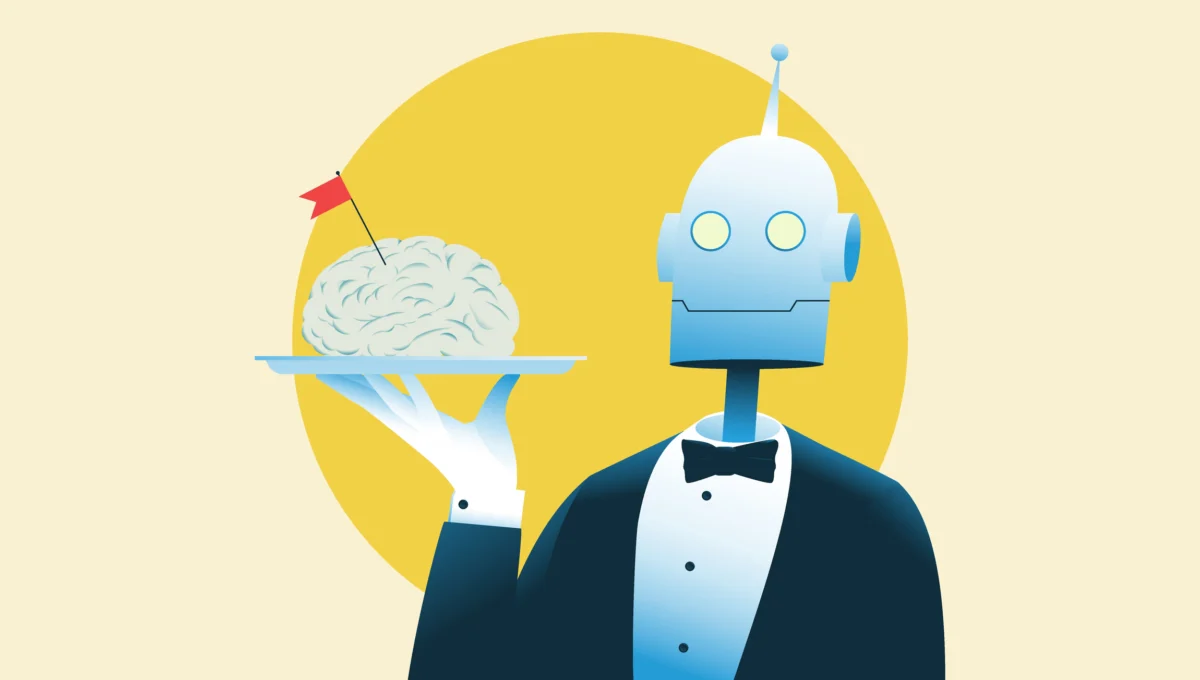
When veteran technology executive Marissa Mayer recently acknowledged turning to an artificial intelligence tool to write a school-required description of her daughter, the public reaction was swift, sharp, and predominantly incredulous. Mayer, the former chief executive of Yahoo and currently at the helm of Dazzle AI, is far from alone in proselytizing synthetic efficiency for intimate domestic tasks. OpenAI chief executive Sam Altman has repeatedly framed generative platforms as indispensable parenting infrastructure, previously musing that parents could generate custom morning podcasts for their children’s school commute and confessing on national television that he could scarcely imagine navigating modern child-rearing without ChatGPT. Meanwhile, Meta’s Mark Zuckerberg has openly posited a near future wherein autonomous software fills social and romantic voids, and Bumble founder Whitney Wolfe Herd has floated the prospect of dating concierges—autonomous bots that run exploratory dates with other bots before their human owners ever meet.
These high-profile vignettes highlight an escalating cultural rift between the architects of generative computing and the broader public they hope to monetize. What technology leaders often describe as frictionless domestic liberation, millions of potential users perceive as clinical detachment. As the industry faces swelling infrastructure costs, scrutiny from institutional investors, and impending public listings, the inability of software executives to articulate relatable, grounded use cases threatens to undermine the consumer adoption necessary to support the entire generative ecosystem.
The Financial Urgency Behind Universal Utility
The impulse among industry leaders to frame artificial intelligence as an omnipotent personal companion is driven not just by technological enthusiasm, but by immense capital pressure. Hyperscalers and venture-backed foundation model developers have directed hundreds of billions of dollars toward specialized hardware, custom data centers, and advanced energy infrastructure. With Anthropic preparing for a high-stakes public market debut and Wall Street analysts openly questioning when capital expenditure cycles will yield commensurate revenue, developers must prove that their models are not merely corporate cost-saving tools, but foundational consumer utilities.
To justify peak valuations, consumer AI cannot remain confined to professional coders, white-collar administrative tasks, or academic research assistants. It must achieve the ubiquitous, multi-hour daily engagement historically commanded by personal computers and smartphones. Consequently, marketing narratives have crept out of the enterprise software realm and into the most sacred corners of human life: child care, emotional processing, and personal relationships.
However, this messaging reveals a fundamental tension. By framing basic interpersonal responsibilities as operational inefficiencies waiting to be engineered away, executives are inadvertently presenting an unpalatable, even dystopian vision. The promise of saving five minutes on a note about one’s child does not register as a technological breakthrough to the average parent; rather, it reads as a forfeiture of fundamental attentiveness.
The Bubble Problem: Solving Executive Friction
The core disconnect stems in part from the insular daily realities of high-net-worth executives. In Silicon Valley boardrooms, daily life is characterized by dense schedules, constant context-switching, executive assistants, and chronic time deficits. Within this demographic, friction of any kind—from coordinating a calendar across two working spouses to handling routine domestic paperwork—is viewed as a structural failure that ought to be eliminated through software.
When technology leaders brainstorm product roadmaps, their baseline pain points rarely reflect those of the broader populace. The average household is not constantly juggling intercontinental flight bookings, managing complex private itineraries, or outsourcing logistical coordination. While autonomous software agents that can interface with an external scheduler represent an obvious utility for a chief executive, the typical user often finds manual interaction entirely manageable, if not preferable.
Furthermore, there is a distinct boundary between bureaucratic friction and relational investment. When executives suggest that artificial agents should negotiate social overtures, handle romantic introductions, or draft emotional correspondence, they confuse administrative toil with the foundational work of human connection. Dating, friendship, and family life are fundamentally built on shared vulnerability, unoptimized presence, and mutual effort. By designing algorithms to bypass the messiness of interpersonal dynamics, software developers risk removing the very elements that give those experiences meaning.
Historical Parallels and the Limits of Silicon Valley Intuition
The tech sector has historically overcome initial public skepticism through relentless distribution and cultural normalization. In the early days of ridesharing, critics dismissed services like Uber as boutique conveniences designed solely for affluent tech workers in densely populated cities who could afford premium urban transit. Over time, algorithmic dispatching proved transformative, scaling down-market and reshaping global transportation economics.
Silicon Valley leadership has long operated on the assumption that its lifestyle serves as a leading indicator for the rest of global civilization. The dominant thesis posits that everyday consumers will eventually catch up to early adopters once the software becomes sufficiently accessible and refined.
Yet this paradigm encounters severe limits when applied to generative cognition. Unlike a car ride, a food delivery order, or an e-commerce checkout, personal relationships cannot be reduced to logistical handoffs without altering their essential character. The calculation that the "consumer of tomorrow" will naturally desire an algorithmic intermediary between themselves and their spouse, children, or romantic partners assumes an appetite for detachment that empirical consumer behavior does not support. Rather than viewing the tech vanguard as an aspirational preview of future societal norms, a growing portion of the public views it as a cautionary tale of ambient isolation.
The Emerging Counter-Trend: Reclaiming Friction
Evidence of consumer fatigue with algorithmic over-optimization is already manifesting across various demographic segments. The unexpected resurgence of legacy technologies—such as basic feature phones, physical notebooks, vinyl records, and compact discs—is more than mere retro nostalgia. It represents an intentional consumer effort to reintroduce tactile friction, boundaries, and agency into daily routines dominated by algorithmic feeds and persistent notifications.
Users are increasingly vocal about the cognitive cost of digital omnipresence. The sentiment that one’s life should not be perpetually managed by automated recommendation engines suggests that consumer tolerance for algorithmic meddling has reached an inflection point. While enterprise customers readily embrace automated workflows that trim operational overhead, domestic consumers draw a firm distinction between productivity software and their private lives.
When platforms demand that consumers hand over personal observations, family dynamics, and romantic choices to probabilistic neural networks, they run counter to this emerging cultural ethos. The modern consumer does not necessarily desire an algorithmically optimized life; many are actively seeking to safeguard the analog experiences that software has yet to dilute.
Strategic Imperatives for the AI Industry
If the artificial intelligence sector intends to transition from speculative hype to durable consumer infrastructure, product designers and corporate communicators must fundamentally calibrate their messaging and strategic priorities.
First, companies must establish a clearer boundary between automating tedious logistical labor and encroaching on human agency. Generative platforms excel at parsing unstructured data, summarizing dense academic or legal documents, formatting code, and removing genuine administrative friction from enterprise environments. Positioning these models as replacements for human presence in domestic and personal contexts only fuels consumer wariness and feeds regulatory scrutiny over social isolation and mental health.
Second, the design of consumer applications must prioritize user empowerment over user displacement. Software that assists individuals in understanding complex subjects, learning new skills, or organizing chaotic professional environments creates tangible value without commodifying the user’s interior life. Conversely, products that position themselves as proxies for human emotional labor generate immediate brand liability.
Finally, the technology industry must confront its own blind spots. The assumption that hyper-efficiency is a universal human priority has left software leaders ill-equipped to understand why their consumer visions are greeted with defensive backlash. As model training costs climb and market demands for profitability intensify, closing the empathy gap between the technologists building artificial intelligence and the individuals expected to adopt it will be just as critical as any architectural breakthrough in neural networks. Until tech leaders demonstrate an understanding of what makes human life fundamentally human, their products will continue to struggle against the very society they hope to transform.
