

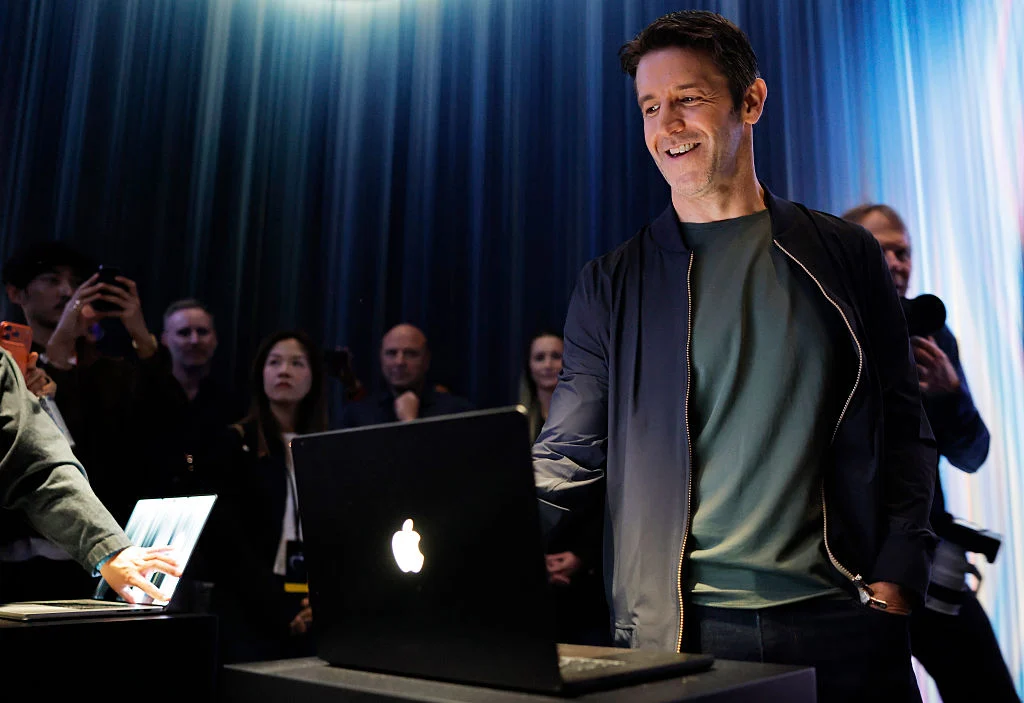
When John Ternus assumed the chief executive mantle at Apple in the autumn of 2026, he inherited an enterprise standing at the intersection of unprecedented corporate scale and intense technological disruption. For more than two years, market commentators, Wall Street analysts, and venture capitalists had repeated a common refrain: Cupertino had fallen dangerously behind in the generative artificial intelligence sweepstakes. As competitors poured tens of billions of dollars into sprawling hyperscale data centers and rushed experimental chatbots into consumer hands, Apple appeared uncharacteristically reserved.
Yet, in his most comprehensive public defense of the company’s trajectory since stepping into the chief executive position, Ternus dismissed the widespread anxieties surrounding Apple’s pace. Responding to skepticism regarding the company’s timeline and competitive standing, the new CEO emphasized that Apple remains entirely comfortable with its posture. The company’s imperative, he maintained, is not to deliver novelty for its own sake, but to weave machine intelligence so seamlessly into everyday experiences that the underlying technology effectively disappears.
The Philosophy of Invisible Engineering
Ternus’s remarks underscore a foundational philosophical rift between Apple and the rest of the technology sector. In an era dominated by large language model benchmarks and rapidly escalating compute clusters, much of the industry has treated artificial intelligence as a standalone product—a destination that users deliberately visit, whether through a chat prompt, an autonomous agent interface, or a dedicated workspace.
Apple’s doctrine historically favors integration over exhibitionism. For Ternus, the ultimate metric of success is whether a feature improves human interaction, not whether it showcases algorithmic sophistication. When artificial intelligence operates as intended within consumer hardware, users should not find themselves parsing whether a task was resolved by an advanced neural network or a deterministic string of classical code. By prioritizing the user experience over the underlying computational method, Apple is attempting to puncture the prevailing industry assumption that consumers want explicit exposure to raw machine learning models.
This orientation reflects the broader product-design legacy that has governed Cupertino for decades. Apple rarely pioneers foundational computing paradigms; instead, it refines and commercializes them once the initial turbulence of experimentation has settled. The original iPod was not the first digital media player, nor was the iPhone the first smartphone. In both instances, Apple observed the nascent frictions of early-stage consumer technology—clunky interfaces, battery drain, poor reliability—and introduced unified architectures that redefined the standard. The executive suite clearly views artificial intelligence through this identical historical lens.
Navigating the Siri Overhaul and Consumer Expectations
The backdrop to Ternus’s defense is an eventful stretch in Apple’s software roadmap. The delayed arrival of the company’s revamped, next-generation Siri voice assistant, which finally debuted in the summer of 2026, tested the patience of both customers and investors. When the upgrade finally arrived, it brought deeper contextual understanding, personal data indexing across on-device applications, and expanded multimodal capabilities. Yet, for an audience conditioned by tech-demo theatrics and speculative hype, the reality of a grounded, highly dependable personal assistant felt strikingly understated to some observers.
This tension highlights the dilemma facing modern consumer technology brands. The current wave of generative models often balances high creativity against hallucinations, latency, and erratic edge-case behavior. For enterprise search engines or experimental coding tools, a five percent error rate is frequently viewed as an acceptable trade-off for raw utility. For a global hardware platform serving over two billion active devices, that same failure rate represents a catastrophic degradation of product trust.
By keeping its intelligence layer anchored to high-certainty personal contexts—such as indexing calendar commitments, summarizing unread email threads, managing notification density, and executing discrete cross-application workflows—Apple has traded algorithmic extravagance for operational reliability. Ternus’s insistence that the company will "absolutely leverage AI" without turning it into theatrical marketing is an explicit validation of that engineering compromise.
The Agentic Threat and the App Store Paradigm
One of the most consequential structural challenges facing Apple in the coming decade involves the potential rise of autonomous, agentic workflows. As digital assistants evolve from passive query-responders to proactive agents capable of independently booking travel, negotiating retail purchases, and organizing files, the traditional paradigm of the smartphone application could face existential obsolescence.

If an ambient intelligence layer can execute complex user intents directly via underlying application programming interfaces (APIs), the consumer incentive to download, launch, and browse through distinct third-party apps diminishes significantly. Such a transformation strikes directly at the economic core of Apple’s Services division, which generated tens of billions of dollars largely on the back of App Store commissions, in-app microtransactions, and distribution exclusivity.
When pressed on whether fully autonomous software agents could render traditional apps obsolete, Ternus struck a revealing balance between technological realism and humanistic romanticism. While acknowledging that universal automation could conceptually streamline daily logistical tasks, he contended that software creation remains a fundamentally creative, deeply human pursuit.
This argument goes beyond public relations; it reflects a core corporate conviction. Apple views the developer community not merely as service providers feeding data to a central orchestrator, but as artisans crafting tailored human experiences. By defending the enduring relevance of the application ecosystem, Cupertino is signaling that it does not intend to reduce independent software developers to invisible back-end utilities for a proprietary, monopolistic agent. Instead, the company envisions AI acting as a nervous system that connects, accelerates, and enhances existing applications rather than erasing them.
Hardware Dominance as a Strategic Moat
While rivals battle over soaring cloud hosting costs and power grid capacity, Apple possesses a distinct competitive advantage that shapes Ternus’s confidence: its silicon pipeline.
Through its in-house Apple Silicon developments across the A-series and M-series architectures, Apple has systematically expanded the footprint of on-device Neural Processing Units (NPUs). Local inference eliminates server-side latency, functions without an active internet connection, and, crucially, avoids the immense variable costs associated with hosting centralized cloud queries. By processing user context on the physical device itself, Apple effectively distributes the computational and economic burden of generative AI across its vast hardware footprint.
Furthermore, on-device compute is the bedrock of Apple’s privacy differentiation. In an era where data harvesting for model training has triggered global regulatory scrutiny, Cupertino’s architecture ensures that sensitive biometric, photographic, and communicative data remains quarantined on the user’s hardware. Even when complex operations require offloading to server infrastructure, the company’s Private Cloud Compute models rely on cryptographic guarantees and custom silicon to prevent telemetry retention.
In this context, refusing to "ship AI for AI’s sake" functions as an economic shield. Hyperscalers are currently caught in an aggressive capital expenditure cycle, spending hundreds of billions of dollars on data center infrastructure that may take years to deliver sustainable margins. Apple, by contrast, monetizes its intelligence layer indirectly through premium hardware sales and sticky services ecosystem retention. It has little economic incentive to burn compute cycles on superficial generative parlor tricks that fail to drive hardware upgrades or ecosystem loyalty.
Continuity and Direction Under Ternus
John Ternus’s ascent to CEO represents an important programmatic shift inside Apple. Having spent years leading hardware engineering, Ternus built his reputation on structural discipline, materials science, and chip integration. Unlike leaders whose careers originated entirely in enterprise software or financial engineering, Ternus looks at machine learning through the prism of industrial design: it is a raw material that must be carefully shaped, refined, and placed inside a finished object to serve a human purpose.
As the tech sector navigates the maturation phase of the artificial intelligence boom, the industry appears to be entering a period of reckoning. Investors are increasingly demanding clear paths to profitability from enterprise software startups, while everyday smartphone users exhibit growing fatigue toward half-baked conversational features that fail to deliver tangible convenience.
In this shifting environment, Apple’s calculated restraint may look less like hesitation and more like institutional discipline. By asserting that true innovation occurs when users are oblivious to whether their tools are powered by neural weights or legacy logic, Ternus has drawn a distinct line in the sand. Cupertino is betting that the ultimate winners of the artificial intelligence revolution will not be the companies that generate the most headlines, but those that quietly weave intelligence into the fabric of daily life without asking users to marvel at the machinery.
