

The cryptocurrency security landscape is facing a profound reckoning following alarming disclosures from hardware wallet manufacturer Trezor. The firm has issued an urgent advisory regarding a suspected malicious hardware implant discovered within a Trezor Safe 5 unit distributed through a regional third-party vendor in Southeast Asia. This developing situation underscores the escalating sophistication of supply chain attacks targeting cold storage devices—architectures long considered the gold standard for safeguarding digital assets against remote exploitation.
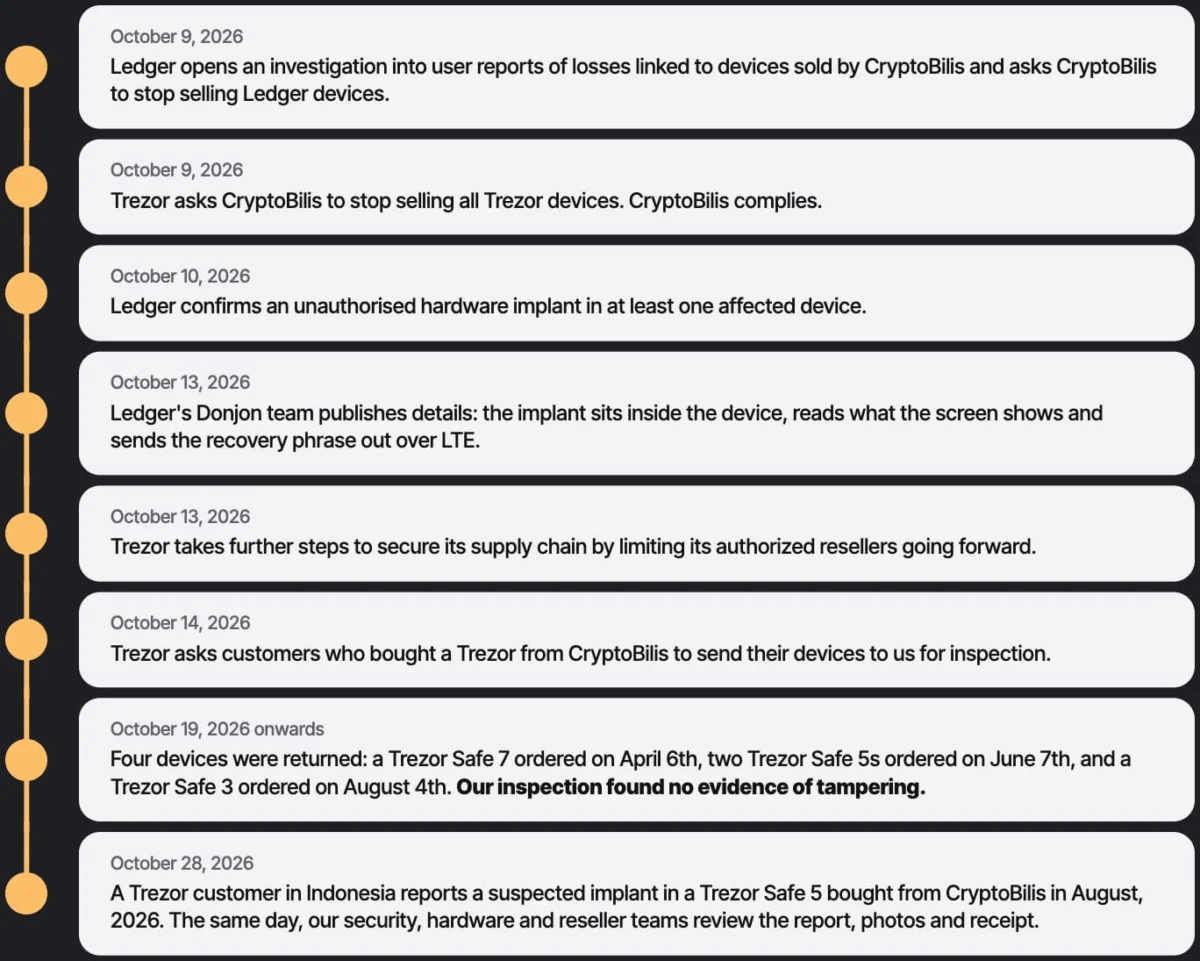
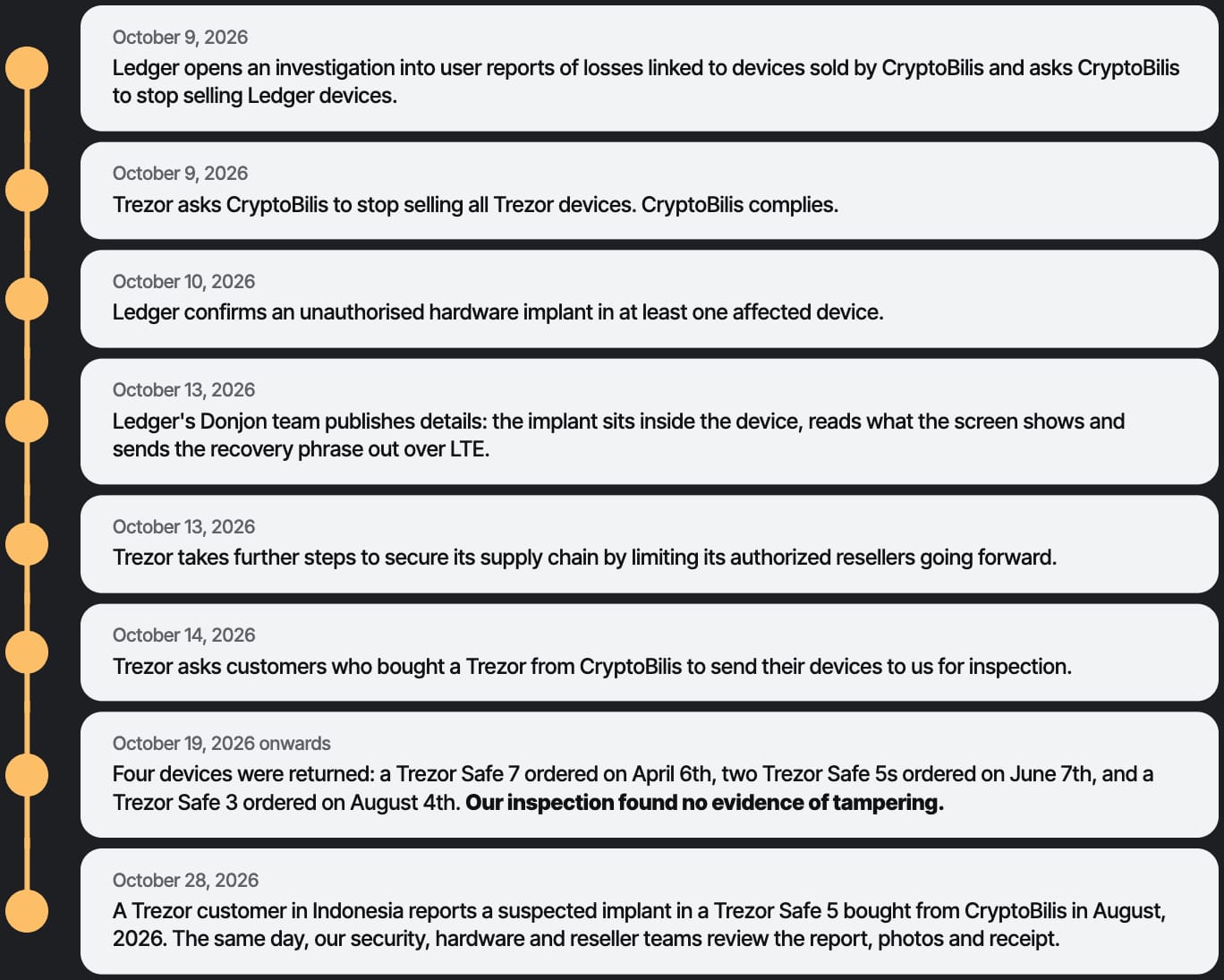
The incident came to light following an inquiry from an Indonesian consumer who acquired a Trezor Safe 5 device via the Tokopedia e-commerce platform from a regional vendor known as CryptoBilis in August 2026. Upon opening the physical packaging and inspecting the hardware internals, the customer identified an anomalous circuit board wedged strategically between the device’s primary printed circuit board (PCB) and its high-resolution display screen. Further inspection revealed that this rogue component was outfitted with an integrated cellular module and a discrete antenna, components entirely alien to the factory specifications of the Trezor Safe 5.
According to preliminary, unverified technical breakdowns provided by the affected user, this clandestine modification was engineered to intercept and exfiltrate sensitive data directly from the device’s user interface. Specifically, the implant appears capable of monitoring visual outputs generated on the screen during routine interactions—including the critical initialization phase when the user establishes or enters their wallet recovery phrase. Once captured, this high-value cryptographic material could theoretically be broadcast over cellular networks the moment the hardware wallet is plugged into a power source or host computer, effectively bypassing the air-gapped security paradigm that defines cold storage architecture.
Although Trezor’s engineering and product security teams have not yet received the physical specimen for forensic laboratory examination, the corporate leadership opted for immediate, proactive transparency. The company has formally urged potentially impacted users to migrate their private keys and associated digital assets to verified, uncompromised wallets immediately. Furthermore, Trezor has explicitly advised against initializing or operating any hardware wallet procured through CryptoBilis from March 2026 onward, highlighting the temporal scope of the potential contamination window.
Crucially, CryptoBilis is the exact same third-party reseller implicated in a major security breach involving competing hardware wallet manufacturer Ledger earlier in October 2026. That preceding incident saw sophisticated spy implants integrated into Ledger devices distributed across Southeast Asia and Hong Kong, triggering cascading financial losses and forcing regional law enforcement agencies to issue sweeping public warnings. Notably, recent advisories from authorities such as the Singapore Police Force have attributed staggering financial damages—surpassing $3.5 million in cumulative losses—to these tampered cryptocurrency hardware devices, illustrating the immense scale of the fraudulent operation.
The chronological alignment of these events points toward a coordinated, highly targeted supply chain interdiction campaign rather than isolated acts of local tampering. Recognizing the gravity of the Ledger supply chain compromise, Trezor acted swiftly well before receiving any direct complaints about its own product line. On October 9, 2026, the company suspended all device distribution through CryptoBilis. In the wake of these revelations, Trezor management announced comprehensive strategic initiatives aimed at completely restructuring and tightening its global reseller network, signaling an industry-wide shift toward rigorous end-to-end verification and authorized-only distribution channels.
At present, Trezor maintains that it has received no confirmed reports of direct fund thefts resulting from this supply chain breach on its own devices, though investigations remain ongoing. Once the compromised unit completes transit to Trezor’s security laboratories, definitive metallurgical and firmware analyses will be conducted to map the exact vector and capabilities of the implant. In the interim, the manufacturer has established remediation pathways for consumers holding valid proofs of purchase, offering direct hardware replacements or equivalent store vouchers to those affected by the reseller network purge.
Security analysts emphasize that this incident shatters several longstanding assumptions regarding hardware wallet safety. For years, the prevailing consensus dictated that physical isolation from the internet rendered cold storage immune to remote compromise. However, the insertion of clandestine cellular transponders transforms a localized cold storage device into an active telemetry beacon, capable of leaking high-entropy secrets without ever establishing a traditional network socket via the host machine. This architecture renders traditional software-based malware detection and endpoint monitoring entirely blind to the threat.
Compounding the difficulty of detection, Trezor explicitly cautioned the public that rudimentary physical inspection techniques—such as weighing devices on precision scales to detect foreign components—are thoroughly unreliable. Modern micro-implants are engineered with microscopic component densities and ultra-lightweight materials designed to closely match the mass tolerances of legitimate factory assemblies. Consequently, consumers cannot rely on simple physical heuristics to verify the integrity of secondary-market hardware.
The broader implications for the cryptocurrency ecosystem are profound. Hardware wallet manufacturers must now re-evaluate how their products move from highly controlled, sterile manufacturing cleanrooms into the hands of global consumers. The heavy reliance on localized distributors, regional third-party logistics firms, and unstructured online marketplaces creates unavoidable vectors for nation-state actors or organized criminal syndicates to intercept, modify, and reseal sophisticated electronics. Moving forward, the industry will likely migrate toward cryptographic hardware attestation—where devices feature immutable, factory-burned silicon certificates of authenticity that users can cryptographically verify before first use—alongside strict direct-to-consumer fulfillment models that bypass independent middlemen altogether.
As regulatory bodies across Asia and Europe scrutinize the safety of financial hardware supply chains, manufacturers are under immense pressure to harden their operational security. The unfolding crisis surrounding CryptoBilis serves as a stark reminder that physical possession of a cold storage device no longer guarantees absolute sovereignty over one’s digital wealth. Until comprehensive, zero-trust distribution frameworks become the baseline standard across the sector, vigilance, cautious sourcing, and proactive asset migration remain the ultimate defenses against the rising tide of sophisticated supply chain interdiction.
