

Across the post-industrial corridors of the United States, the physical apparatus powering the artificial intelligence revolution is running headlong into a formidable obstacle: the collective memory and organized resistance of frontline communities. For decades, the computational economy was marketed as a frictionless, ethereal utility residing in an abstract "cloud." Today, that illusion has vanished. Modern artificial intelligence requires an unprecedented volume of physical real estate, millions of gallons of water, specialized electrical substations, and uninterrupted gigawatts of power. As tech conglomerates and commercial real estate developers scour the continent for sites with access to high-capacity transmission lines, they are increasingly gravitating toward historical industrial hubs—regions already bearing the environmental and public health scars of fossil fuel refining, heavy manufacturing, and chemical production.
In neighborhoods like Grays Ferry in Southwest Philadelphia, this geographic convergence feels less like technological progress and more like the continuation of an exhausting pattern. Grays Ferry sits adjacent to the 1,300-acre footprint of what was once the largest and oldest oil refinery on the East Coast. Operated in its final iteration by Philadelphia Energy Solutions, the facility processed up to 335,000 barrels of crude oil daily until June 2019, when a catastrophic pipe failure triggered an explosion and fire so intense that it launched a 38,000-pound vessel across the Schuylkill River. The disaster precipitated the refinery’s bankruptcy and closure, but it left behind soil and groundwater laden with hydrocarbons, along with elevated rates of asthma, cardiovascular disease, and cancer among surrounding residents.
For community organizers, the legacy of that industrial past remains acute. Shawmar Pitts, a lifelong Grays Ferry resident and now managing co-director of the environmental justice organization Philly Thrive, entered activism only after confronting the stark correlation between local health outcomes and the refinery’s emissions. Like many who grew up in the shadow of smokestacks, chronic conditions among family and neighbors were long normalized. It was only when community organizers began systematically mapping diagnoses that the broader systemic pattern became undeniable.
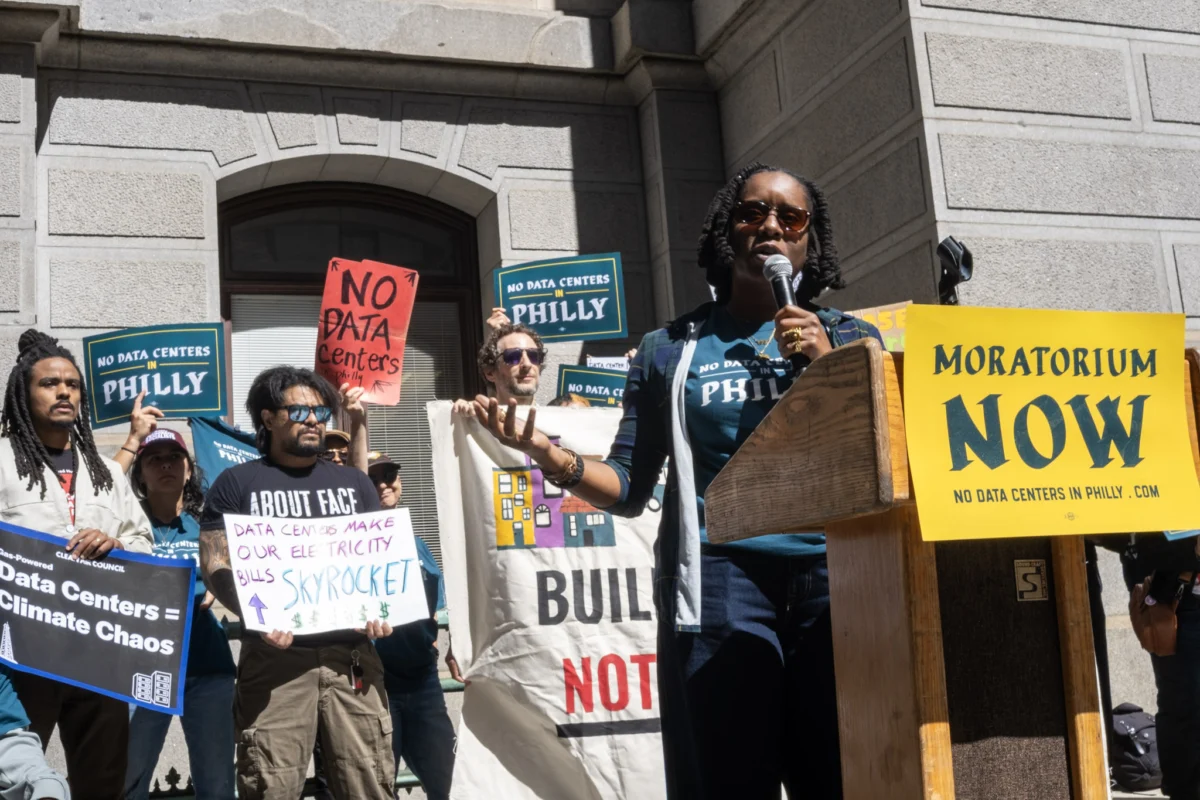
Now, as Philadelphia municipal planners evaluate prospective zones for data center development—identifying potential parcels in both Northeast Philadelphia and the Bellwether District on the former refinery grounds in Grays Ferry—Pitts and fellow advocates are working to preemptively halt construction. The community’s objective is not negotiation over cosmetic concessions; it is an outright municipal moratorium on hyperscale data infrastructure.

The skepticism in Philadelphia mirrors a broader national recalibration. While technology firms and industrial real estate developers frame data center construction as a catalyst for economic modernization and local tax revenues, public opinion has sharply diverged. Independent surveys show that a majority of Americans now express reservations about data center construction within their immediate jurisdictions. The resistance is particularly fierce in communities that have already served as what sociologists term "sacrifice zones"—neighborhoods burdened with polluting infrastructure whose health costs were discounted in the name of national economic growth.
At a recent demonstration outside Philadelphia City Hall, organized by the No Data Centers in Philly campaign, community members explicitly challenged the narrative that technological infrastructure represents an uncomplicated upgrade over legacy industry. Sonya Sanders, board president of Philly Thrive, spoke directly to the enduring human cost of historical industrial zoning. Sanders, who lost her husband to a rare bone cancer in 2020—an illness she attributes directly to decades of inhaling petrochemical pollutants despite his otherwise clean lifestyle—argued that replacing one form of heavy infrastructure with another offers cold comfort to residents who never consented to either.
A fundamental friction point centers on the economic tradeoff. Hyperscale data centers require enormous capital investments, frequently running into hundreds of millions or even billions of dollars for hardware procurement and specialized structural design. Yet unlike manufacturing facilities, automobile assembly plants, or traditional warehouses, data centers are among the least labor-intensive commercial developments in existence once operational. A multi-facility campus spanning hundreds of thousands of square feet may require hundreds of temporary trade workers during the construction phase, but its permanent operational staff often numbers fewer than 50 specialized network engineers, security personnel, and facility managers. For urban neighborhoods burdened with infrastructural disruption, the promised employment windfalls rarely materialize for the residents living closest to the property line.
Simultaneously, the environmental footprint of modern computational infrastructure has begun to parallel the very heavy industries technology was thought to displace. The global race to train and deploy frontier artificial intelligence models has sent data center power demand surging at rates unseen in the modern electrical era. Analysts at BloombergNEF estimate that by 2035, American data center operations could consume more natural gas than the combined national usage of Germany and Japan—a consumption projection that has nearly doubled within the span of a single year.
While natural gas produces fewer particulate emissions and lower carbon dioxide volumes per unit of energy than crude oil or coal, its combustion remains a major contributor to anthropogenic climate change. Natural gas combustion yields roughly 60 grams of carbon dioxide equivalent per cubic foot. The incremental demand generated exclusively by domestic data center expansion is projected to release approximately 1 million metric tons of additional greenhouse gases daily, representing an estimated 12% increase against total current United States carbon emissions. Public health research, including landmark assessments from Harvard University, has established that particulate matter and ambient pollution from fossil fuel energy generation contribute to roughly one in five premature deaths globally.

The local environmental impact extends beyond grid consumption. Because data centers require near-perfect uptime guarantees—often exceeding 99.999% reliability to prevent catastrophic service disruptions for cloud software, financial exchanges, and AI inference engines—they rely heavily on banks of commercial-grade diesel backup generators. In facilities planned throughout Pennsylvania and the mid-Atlantic region, these installations can encompass hundreds of diesel engines, each capable of generating several megawatts of standby power.
Under conventional regulatory frameworks, these backup systems are permitted strictly for emergency contingencies, such as grid outages caused by severe storms. However, regional grid pressures are quietly shifting the terms of operation. Annie Fox, a staff attorney with the Clean Air Council, notes that regional transmission organizations like PJM Interconnection—which manages the wholesale electricity grid serving 65 million people across 13 states and the District of Columbia—have increasingly issued hot-weather alerts and emergency procedures during peak summer heatwaves. Under specific grid stress conditions, commercial operators are actively encouraged or mandated to switch off public grid supplies and fire up their on-site diesel generators to prevent system-wide blackouts.
This dynamic introduces an ironic feedback loop: during peak ambient heat driven by climate change, computational facilities transition to burning high-emission diesel fuel within dense or proximate urban neighborhoods, degrading localized air quality precisely when vulnerable populations are most at risk from heat-related respiratory stress. The resulting particulate output compounds the atmospheric greenhouse gas concentration, further intensifying future climate extremes.
Beyond atmospheric emissions, municipal infrastructure faces acute resource pressure. Modern high-density computer racks, packed with power-hungry graphics processing units (GPUs) that run significantly hotter than historical enterprise server hardware, require intensive thermal management. While some operators are experimenting with closed-loop liquid cooling, many facilities still deploy evaporative cooling systems that consume millions of gallons of municipal drinking water daily, discharging heated wastewater back into municipal sewer systems.
These intersecting realities have sparked a wave of municipal and state-level policy intervention. Recognizing that conventional zoning laws never anticipated buildings that operate effectively as high-voltage electric radiators, local governments across the United States are hitting the pause button. In New York, the executive branch implemented a moratorium temporarily halting permit

approvals for mega-scale computational facilities, with Governor Kathy Hochul emphasizing that structural technological shifts must not compromise residential ratepayer stability, water safety, or ambient quiet.
A growing roster of cities—including Denver, Colorado; Indianapolis, Indiana; Asheville and Charlotte, North Carolina; and Reno, Nevada—have enacted targeted moratoriums or extended existing zoning freezes. These legal pauses, typically lasting between six months and two years, are designed to give city councils, regional utility boards, and planning commissions the runway needed to study structural externalities. Municipalities are drafting new zoning classifications that account for high electrical demand per acre, low-frequency hum from mechanical chillers, water rights allocations, and the economic fairness of utility rate structuring.
Public pushback is also expanding to incorporate broader social and regulatory anxieties. At grassroots organizing sessions, residents frequently voice apprehension about who ultimately pays for the massive grid upgrades—new substations, high-voltage transmission lines, and dedicated peaker plants—required to connect gigawatt-scale data clusters. Without strict public utility commission oversight, regional utilities frequently pass these system-reinforcement capital expenditures onto residential ratepayers, driving up base electricity costs for households that derive no direct benefit from the facilities.
Furthermore, community members like Philadelphia attendee Donna Greenberg connect the physical infrastructure of artificial intelligence to deeper concerns surrounding data sovereignty, privacy, and systemic surveillance. The opacity of hyperscale operators, combined with the opaque training pipelines of commercial AI platforms, creates an underlying distrust: communities are asked to absorb localized environmental degradation, noise, and resource strain to support an extractive software apparatus that offers them neither shared equity nor democratic accountability.
As the tech sector grapples with the geographic and energetic realities of its next growth cycle, the collision between digital ambition and physical community resistance marks a structural turning point. For the first two decades of the consumer internet, hardware was largely concealed behind clean architectural facades in remote exurbs or rural industrial parks like Virginia’s Loudoun County. But as prime sites with ready power interconnections disappear, tech operators are pushing toward the very urban centers and post-industrial river basins that paid the steepest price for the last manufacturing century.

The message emerging from civic halls, rally stages, and zoning meetings is unambiguous: frontline communities refuse to have their land treated as frictionless compute capacity. Until developers, utilities, and hyperscalers can prove that their infrastructure will neither destabilize local power grids, deplete vital resources, nor foul the air with emergency generators, the push for municipal moratoriums will continue to gather momentum nationwide, challenging Silicon Valley to rethink the physical foundations of its computational future.
