


The cybersecurity landscape for corporate communication infrastructure has entered a precarious phase following the widespread exploitation of a critical vulnerability affecting widely deployed enterprise voice-over-IP architectures. Security specialists have confirmed that malicious actors are actively weaponizing an unauthenticated vulnerability cataloged as CVE-2026-9586 within communication management platforms, executing targeted campaigns designed to establish persistent remote access. This alarming escalation underscores the relentless agility with which modern threat groups transform newly disclosed software defects into operational weaponized payloads before organizations can fully remediate their attack surfaces.
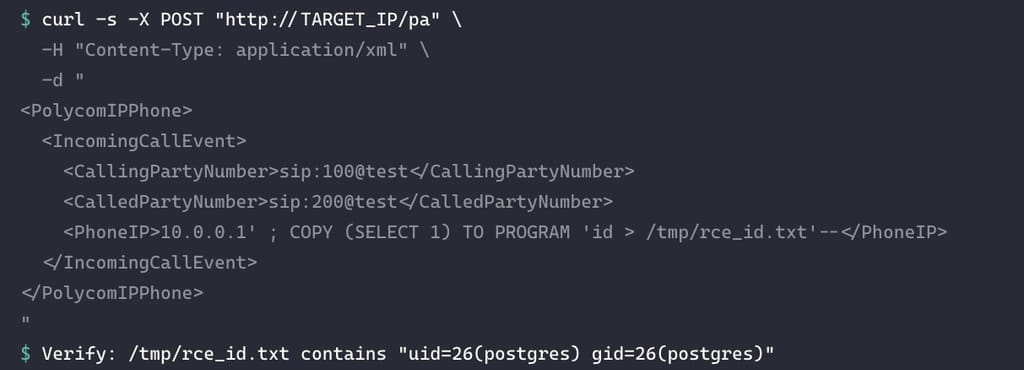
The targeted technology, a cornerstone business communications and PBX management platform used globally by enterprises to orchestrate internal and external telephony operations, has become a primary objective for automated exploitation frameworks. The core vulnerability stems from an unauthenticated SQL injection vector embedded deep within the platform’s standard HTTP routing architecture—specifically residing inside the application’s exposure point handling peer communications and inter-system notifications. When external or internal entities transmit XML-formatted instructions to this endpoint to coordinate telephony routing metrics, the application improperly handles specific parameter fields. Instead of executing parameterized database queries that sanitize user-supplied input, the underlying codebase directly concatenates untrusted data strings into raw database execution commands.
This technical oversight grants unauthenticated remote attackers the unprecedented ability to manipulate database operations dynamically. Through carefully crafted HTTP POST requests carrying maliciously structured XML payloads, adversaries can bridge the gap from a standard database injection to full remote code execution at the operating system level. Security researchers who originally uncovered the flaw demonstrated that an attacker could invoke basic command-line utilities via simple network requests, effectively bypassing all authentication barriers designed to safeguard administrative panels. This level of access transforms a standard communication appliance into an exposed entry point for broader corporate network compromise, posing severe confidentiality, integrity, and availability risks to enterprise environments.

The discovery of this critical defect is part of a larger vulnerability disclosure campaign that brought a dozen distinct security issues to light. Disclosures of this magnitude highlight the complex codebases underpinning modern enterprise software ecosystems. While vendors frequently establish robust internal quality assurance pipelines, legacy architectural patterns, rapidly evolving API integrations, and complex database abstraction layers often harbor deep-seated weaknesses that evade standard automated testing. When security investigators initially flagged these dozen vulnerabilities, the engineering teams behind the communication platform initiated a comprehensive remediation cycle, culminating in a security patch released to the public domain to address the entire cohort of reported flaws.
Despite the availability of official vendor patches, the window of vulnerability between public disclosure, patch release, and widespread deployment across enterprise IT estates remains a notoriously perilous interval. Threat actors routinely monitor vulnerability intelligence sources, exploit registries, and patch diffs to reverse-engineer software updates and construct reliable exploit mechanisms within hours of a patch becoming public. In this particular instance, automated honeypot infrastructure operated by threat intelligence teams captured active exploitation attempts originating from a specific malicious IP address, illustrating the speed at which automated scanning tools locate and attack unpatched corporate assets.
Telemetry gathered from these decoy systems reveals a distinct and calculated post-exploitation playbook. Upon successfully triggering the remote code execution vulnerability, the threat actor’s initial objective is not immediate disruption, but rather silent reconnaissance and persistence. Honeypot logs detailed how the remote adversary executed secondary staging payloads designed to enumerate active operating system processes, systematically evaluating the internal state of the compromised appliance. Once this operational intelligence was gathered, the data was serialized, base64-encoded, and exfiltrated to an external command-and-control infrastructure. Following this reconnaissance phase, the attackers attempted to spawn interactive reverse shells, establishing a persistent, bidirectional communication tunnel that grants continuous administrative control over the underlying Linux-based operating platform.
The velocity and automated nature of these malicious campaigns suggest that threat actors are systematically sweeping public-facing network search engines to index and target every vulnerable instance accessible via the public internet. Internet scanning data indicates that thousands of these communication servers remain directly reachable from the public web, with a significant concentration deployed within corporate environments across North America. Given the compressed timeline between the deployment of exploit scripts and widespread scanning activity, threat intelligence analysts have issued urgent warnings indicating that virtually all unpatched instances face an imminent risk of compromise. Interestingly, while the primary vulnerability driving these attacks is seeing active weaponization, intelligence feeds have not yet recorded widespread exploitation campaigns targeting the remaining eleven secondary flaws reported during the initial discovery phase, though those vulnerabilities continue to represent latent security risks for laggard organizations.
The broader implications of this campaign extend far beyond the immediate technical impact on individual corporate phone systems. Enterprise VoIP platforms occupy a uniquely privileged position within modern corporate topologies. Because these systems must interface seamlessly with public switched telephone networks, SIP trunking providers, internal directory services, and distributed remote workforce endpoints, they often sit at strategic perimeters with deep network visibility. Consequently, compromising a central communication server provides malicious actors with an ideal staging ground for lateral movement, credential harvesting, espionage, and the deployment of ransomware deeper into corporate enterprise zones. A breach of a telephony platform can also lead to catastrophic operational disruptions, ranging from unauthorized call toll fraud and intercepted communications to the complete paralysis of internal and external business voice operations.
Mitigating threats of this magnitude requires a paradigm shift in how organizations approach vulnerability management, patch prioritization, and perimeter defense. Traditional patch management cycles that measure remediation timelines in weeks or months are fundamentally incompatible with modern threat actor capabilities, where exploitation routinely occurs within days—or even hours—of a vulnerability becoming public knowledge. Security leadership must implement continuous asset discovery mechanisms to maintain real-time visibility over all internet-exposed appliances, ensuring that Shadow IT deployments or forgotten development instances do not become blind spots that undermine overall enterprise security posture.
For system administrators and security operations teams responsible for safeguarding these communication environments, immediate action is paramount. Remediation requires the immediate application of the vendor-supplied security update, bringing all active systems up to the patched version or later. However, simply applying a patch is insufficient if a system has already been compromised during the vulnerable window. Security teams must perform rigorous forensic assessments to detect historical indicators of compromise. Recommended investigative steps include auditing system logs for anomalies, reviewing database error logs for unusual SQL execution patterns, and inspecting network perimeter telemetry for unauthorized outbound connections targeting suspicious external IP addresses or non-standard administrative ports.
Ultimately, the active weaponization of communication platform vulnerabilities serves as a stark reminder of the persistent perils associated with internet-exposed enterprise software. As adversaries continue to automate the discovery and exploitation of unpatched software defects, organizations must couple rapid patching disciplines with proactive threat hunting, robust network segmentation, and zero-trust perimeter controls. Only through a defense-in-depth strategy that assumes potential breach conditions can enterprises effectively insulate their critical communication infrastructure from the escalating sophistication of modern cyber threats.
