

The open-source DevOps and version control ecosystem is currently grappling with a severe security crisis as threat actors actively target thousands of Internet-facing installations of Gitea. According to telemetry data gathered by the global cybersecurity watchdog Shadowserver, more than 8,300 unique IP addresses hosting vulnerable instances remain completely unpatched. This alarming exposure comes despite developers having released official security fixes weeks prior. The ongoing exploitation highlights systemic challenges in patch management across self-hosted development environments and emphasizes the aggressive speed with which malicious operators weaponize newly disclosed software flaws.
At the center of this active cyber campaign is a critical code injection vulnerability cataloged as CVE-2026-60004. Originally discovered and responsibly disclosed by Salesforce security researcher Shai Rod, the flaw resides within Gitea’s diffpatch API endpoint. Under normal operating conditions, this endpoint handles the submission and processing of patches across repositories. However, inadequate sanitization and authorization boundaries allow an authenticated actor with repository write permissions to abuse the diffpatch mechanism. Specifically, the vulnerability enables attackers to install and subsequently execute arbitrary Git hooks derived directly from repository-controlled content. Because these hooks run with the operating system privileges of the underlying Gitea service account, successful exploitation grants unauthorized individuals deep command-line access to the host infrastructure.
What elevates CVE-2026-60004 from a standard privilege-escalation bug to a high-severity mass-exploitation vector is a default configuration setting inherent to many out-of-the-box Gitea deployments. Out of the box, Gitea often ships with self-registration enabled, permitting unauthenticated visitors to visit a public-facing instance, create a brand-new user profile, and immediately establish their own repositories. Consequently, an entirely unauthenticated attacker can bypass traditional authentication barriers simply by registering a temporary account. Once inside, they can create a repository and immediately trigger the diffpatch exploit chain without possessing any prior credentials or administrative rights. This frictionless path from an anonymous Internet user to arbitrary remote code execution makes the flaw exceptionally attractive to automated botnets and opportunistic hackers.
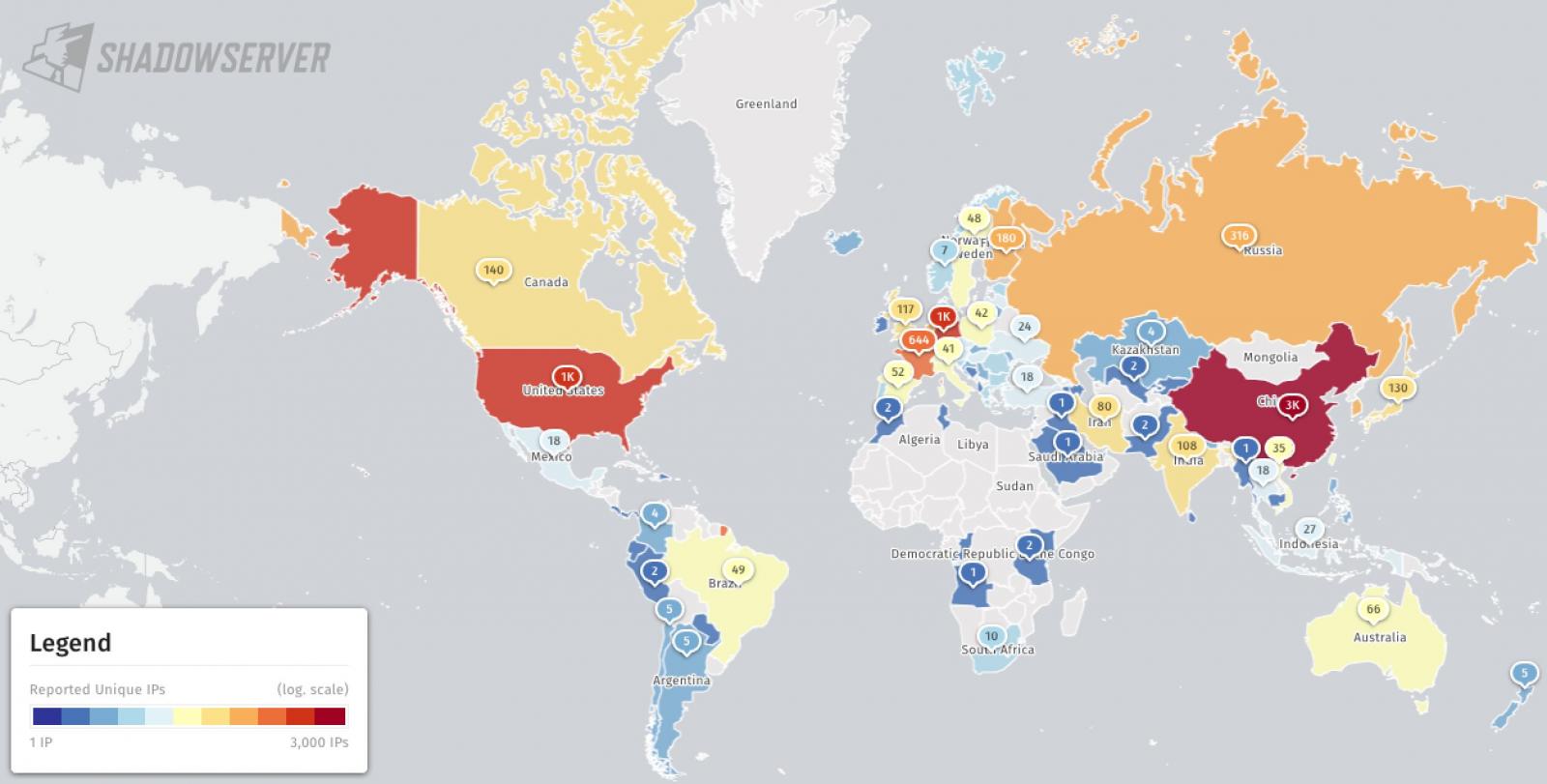
Recognizing the gravity of the threat, the development team behind Gitea acted swiftly, publishing version 1.27.1 on July 27 to definitively resolve the underlying logic flaws in the diffpatch endpoint. Project maintainers urged system administrators and DevOps teams across the globe to execute immediate upgrades. Yet, despite repeated warnings from maintainers and independent security researchers, adoption of the patched version has lagged considerably. Shadowserver’s continuous global scanning infrastructure identified exactly 8,393 vulnerable IP addresses, proving that thousands of organizations continue to operate with a false sense of security regarding their internal or external software development pipelines.
The severity of the situation caught the attention of federal authorities earlier this week. The U.S. Cybersecurity and Infrastructure Security Agency (CISA) formally incorporated CVE-2026-60004 into its authoritative Known Exploited Vulnerabilities (KEV) catalog. Accompanying this addition was a strict Binding Operational Directive (BOD 26-04) mandating that all U.S. Federal Civilian Executive Branch (FCEB) agencies identify, isolate, and remediate any affected servers within an accelerated three-day window, setting a hard deadline of August 28. Although CISA initially withheld granular telemetry concerning the exact nature of the active campaigns, concurrent international intelligence and technical reports from researchers on platforms like Habr confirmed that threat actors are actively leveraging the vulnerability in the wild to silently deploy cryptocurrency mining malware onto compromised Gitea servers.

CISA officials reiterated in public safety advisories that code execution vulnerabilities affecting developer tools represent a preferred attack vector for sophisticated and opportunistic adversaries alike. Because version control systems occupy a privileged position within corporate networks—often housing intellectual property, internal documentation, source code repositories, and sensitive API keys—a compromise of the underlying server frequently serves as a stepping stone into the broader enterprise network. Cybercriminals frequently prioritize these environments not merely for data exfiltration, but for resource hijacking, such as deploying cryptominers, or establishing persistent footholds for lateral movement.
This latest security incident is part of a broader, troubling trend impacting the platform this summer. Just weeks prior to the discovery of the diffpatch flaw, threat actors were observed actively exploiting another critical vulnerability, tracked as CVE-2026-20896, residing inside the official Gitea Docker image. That specific issue involved an authentication bypass vulnerability that exclusively targeted Gitea instances configured with reverse proxy authentication headers enabled. The compounding frequency of high-profile security flaws highlights the expanding attack surface of self-hosted DevOps platforms as they grow in popularity.
Gitea has steadily grown into a major pillar of the modern software development landscape, serving as a lightweight, self-hosted alternative to massive cloud-hosted ecosystems like GitHub, GitLab, and Bitbucket. Boasting more than 400,000 active installations worldwide and supported by a robust community of nearly 1,500 individual contributors, Gitea is widely deployed by startups, academic institutions, and enterprise IT departments desiring complete data sovereignty over their source code repositories. However, this self-hosted model places the sole burden of security configuration, network perimeter defense, and timely patch application squarely on the shoulders of local system administrators, many of whom may lack dedicated security personnel.
The implications of the current exploitation wave extend far beyond immediate resource theft or cryptocurrency mining. In the modern era of automated software supply chain attacks, gaining administrative or execution-level control over a central code repository platform grants malicious actors the terrifying ability to tamper with source code before it is compiled, tested, or deployed into production. If an attacker successfully compromises a corporate Gitea server, they could theoretically inject backdoors, malicious dependencies, or trojanized code directly into legitimate software projects. This type of supply chain poisoning can remain undetected for long periods, endangering downstream customers and business partners who rely on software produced by the affected organization.
Furthermore, the sluggish remediation rates highlighted by Shadowserver point to an underlying industry fatigue regarding patch management. With vulnerabilities disclosed across the global software ecosystem at an unprecedented rate, IT departments are frequently overwhelmed by notification fatigue. Security leaders warn that treating self-hosted development tools with lower priority than traditional perimeter firewalls or web servers is a dangerous miscalculation. Because code-hosting platforms inherently bridge internal development workflows with external network access, they require rigorous access controls, strict monitoring, and immediate emergency patching protocols.
As threat intelligence feeds continue to track active exploitation attempts against CVE-2026-60004, the path forward for vulnerable organizations is clear. System administrators running self-hosted Gitea instances must immediately update their environments to version 1.27.1 or later. Beyond merely applying software patches, organizations are strongly advised to audit their user registries for unauthorized accounts, review repository access logs for suspicious diffpatch API calls, and disable open self-registration if public-facing user generation is not a core business requirement. Ensuring the resilience of software development infrastructure is no longer just an IT maintenance task; it is an indispensable baseline requirement for safeguarding the entire organizational digital supply chain against relentless, automated cyber threats.
