

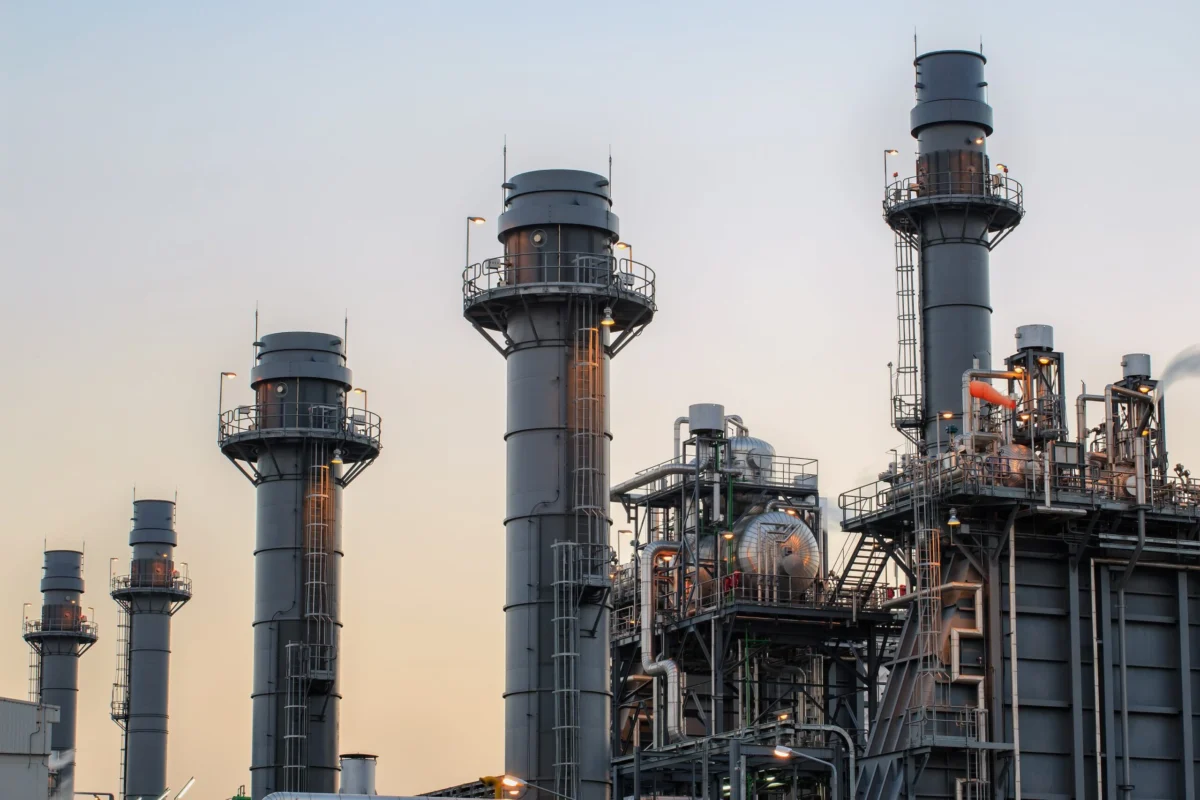
A proposed mega-scale data center development in Pecos County, Texas, backed by Amazon’s cloud computing division, has reignited an intense debate over the environmental cost of the artificial intelligence boom. According to environmental regulatory filings and regional development plans, the facility is slated to be powered by a dedicated, on-site natural gas power plant permitted to emit up to 33 million metric tons of carbon dioxide annually. If fully built and operated at capacity, the facility would rank as the single largest point-source emitter of greenhouse gas emissions in the United States, surpassing every existing coal-fired and gas-fired power station currently operating nationwide.
The project highlights a stark tactical shift among major technology hyperscalers. Faced with an explosive surge in power demand driven by generative AI workloads, cloud providers are increasingly bypassing traditional public utility grids in favor of off-grid, self-generated fossil fuel power. While this strategy offers an immediate solution to long interconnection queues and grid stability concerns, it threatens to derail corporate net-zero pledges and accelerate carbon emissions across the technology sector.
The Pecos County Blueprint: Behind-the-Meter Power in the Permian Basin
Located in the expansive desert terrain of West Texas, Pecos County sits directly atop the Permian Basin, one of the world’s most prolific natural gas producing regions. The region’s geology provides data center developers with direct, low-cost access to abundant natural gas reserves, which frequently trade at deep discounts due to local pipeline bottlenecks.
Under the design framework for the Pecos County complex, power generation will occur "behind the meter"—meaning the data center campus will draw electricity directly from an adjacent, dedicated combined-cycle natural gas generating station rather than relying on the regional power grid operated by the Electric Reliability Council of Texas (ERCOT).
In response to inquiries regarding the environmental footprint of the project, an Amazon spokesperson confirmed that the data center will rely on new on-site power generation designed explicitly to keep its energy consumption off the public grid. The company emphasized that this self-contained arrangement ensures the facility’s vast electrical draw will not compete with local demand or inflate retail electricity prices for Texas households and small businesses.
However, the sheer scale of the permitted emissions—33 million tons of carbon dioxide per year—presents an unprecedented environmental footprint for a commercial technology campus. For context, a single facility emitting at this level would generate more annual greenhouse gas pollution than the entire economy of several small nation-states, or the equivalent of adding over seven million gas-powered passenger vehicles to the road.
The AI Compute Surge and the Grid Interconnection Bottleneck
To understand why hyperscalers are turning to large-scale natural gas generation, industry analysts point to the fundamental physics of modern artificial intelligence infrastructure. Traditional enterprise data centers hosting standard cloud applications, e-commerce engines, and streaming media typically operate with power densities ranging between 5 to 10 kilowatts per server rack.
In contrast, high-density AI clusters utilizing modern GPU architectures and specialized neural accelerators require anywhere from 40 to well over 100 kilowatts per rack. Furthermore, training state-of-the-art Large Language Models (LLMs) requires months of uninterrupted, 24/7 baseload power running at near-maximum compute utilization.
This step-function increase in computational intensity has collided directly with structural delays in the domestic power grid. Across major U.S. power markets—including ERCOT in Texas, PJM in the Mid-Atlantic, and CAISO in California—the time required to complete grid interconnection studies and secure transmission upgrades now routinely stretches between five and eight years.
For technology giants competing in an aggressive race to build and deploy advanced AI models, waiting nearly a decade for utility grid connections is commercially unviable. Constructing private, natural gas-fired generating stations directly alongside data center campuses allows developers to bring gigawatt-scale computing facilities online in a fraction of the time required for traditional grid-tied hookups.
Corporate Climate Commitments vs. Operational Realities
The deployment of massive fossil fuel infrastructure in West Texas highlights a widening gap between corporate sustainability mandates and operational execution. In 2019, Amazon co-founded The Climate Pledge, publicly committing to reach net-zero carbon emissions across its global business operations by 2040—a target ten years ahead of the Paris Agreement timeline.
However, recent corporate sustainability filings reveal that the company’s absolute carbon emissions grew by 16% over the past year. This upward trajectory is directly tied to the infrastructure expansion required to support the rapid adoption of generative AI services across enterprise and consumer sectors.
Addressing the apparent conflict between expanding fossil-fuel-powered infrastructure and long-term sustainability targets, an Amazon representative noted that the broader technological and economic landscape has evolved significantly since the corporate climate goals were first established. While maintaining that the company’s ultimate commitment to decarbonization remains intact, corporate communications reflect a pragmatism driven by the urgent, non-negotiable power requirements of high-performance computing.
The dilemma facing Amazon is shared across the entire hyperscale industry. Microsoft, Google, and Meta have all reported increases in scope 1 and scope 2 emissions over recent reporting periods, citing the energy-intensive nature of AI hardware and the supply-chain carbon inherent in constructing massive physical infrastructure.
The Quest for Firm Power: Nuclear, Geothermal, and Stopgap Solutions
While natural gas currently offers the fastest route to gigawatt-scale power deployment, technology companies are actively investigating zero-carbon alternatives capable of providing continuous, reliable "firm" power. Variable renewable energy sources, such as solar photovoltaic arrays and onshore wind farms, are cheaper than ever to deploy but lack the continuous 24/7 reliability required by mission-critical data infrastructure without massive, cost-prohibitive battery energy storage systems.
As a result, Big Tech has increasingly turned its attention toward nuclear energy and next-generation clean technologies:
- Nuclear Power Restart Agreements: Cloud providers are negotiating power purchase agreements with existing nuclear stations to lock in zero-carbon firm energy. Recent transactions include long-term off-take deals to revive retired reactors or secure direct capacity from existing plants.
- Small Modular Reactors (SMRs): Multiple technology firms are investing directly in SMR startups, aiming to deploy factory-built nuclear reactors directly adjacent to future data center campuses by the early-to-mid 2030s.
- Advanced Geothermal Systems: Early-stage investments in deep-well, closed-loop geothermal technologies promise to deliver continuous clean electricity regardless of weather conditions or geographical constraints.
However, experts emphasize that these technologies remain constrained by regulatory, financial, and supply-chain timelines. SMR designs face rigorous licensing processes with federal regulators, and commercial deployment at scale is not expected before the next decade. In the interim, natural gas remains the only immediately available power source capable of delivering hundreds of megawatts of dispatchable power within short construction windows.
Regional Resistance and National Regulatory Pressures
The expansion of fossil-fuel-powered data infrastructure is meeting growing political and environmental resistance nationwide. Beyond air emissions, hyperscale campuses require substantial land footprints and often utilize millions of gallons of water daily for evaporative cooling systems—a particular concern in arid West Texas where groundwater reserves are strained.
Across the country, local governments and utility commissions are re-evaluating the fiscal and environmental terms under which data centers operate. States such as New York, Georgia, and Virginia have faced legislative proposals aimed at pausing new data center development, reviewing tax incentives, or forcing developers to pay for required grid upgrades upfront.
In Texas, where energy policy strongly favors deregulation and resource development, the debate centers on resource allocation and long-term environmental impacts. Environmental advocacy organizations argue that permitting single facilities to emit tens of millions of tons of carbon dioxide undermines state and national climate mitigation strategies, regardless of whether the generation is isolated from the public grid.
Future Trajectory: Decarbonizing the Compute Grid
As the global demand for artificial intelligence capabilities continues to accelerate, the technology sector stands at a critical juncture. The decisions made by hyperscalers over the coming decade regarding energy sourcing will shape the emissions trajectory of the national power sector for generations.
To reconcile compute demands with environmental commitments, industry experts expect cloud providers to push for several rapid adaptations:
- Carbon Capture and Storage (CCS): For near-term natural gas deployments, companies may be forced to retrofit on-site power plants with post-combustion carbon capture technology to trap emissions before they enter the atmosphere, though the commercial viability and water intensity of large-scale CCS remain key hurdles.
- Flexible Workload Scheduling: Software engineers are working on dynamic compute models that route non-urgent training tasks to data center regions where renewable generation is actively spilling onto the grid, reserving local firm gas generation for real-time inference tasks.
- Co-location with Clean Megaprojects: Future hyperscale campuses will increasingly be sited directly alongside multi-gigawatt solar, wind, and storage developments in regions with permissive land-use regulations, using gas only as a secondary backup.
For now, the Pecos County project serves as a definitive case study in the physical reality of digital growth. As the industry races to build the computational backbone of the AI economy, the immediate operational imperative for power is testing the limits of corporate climate policy—proving that the path to a high-tech future remains deeply grounded in the economics of traditional fossil fuels.
