

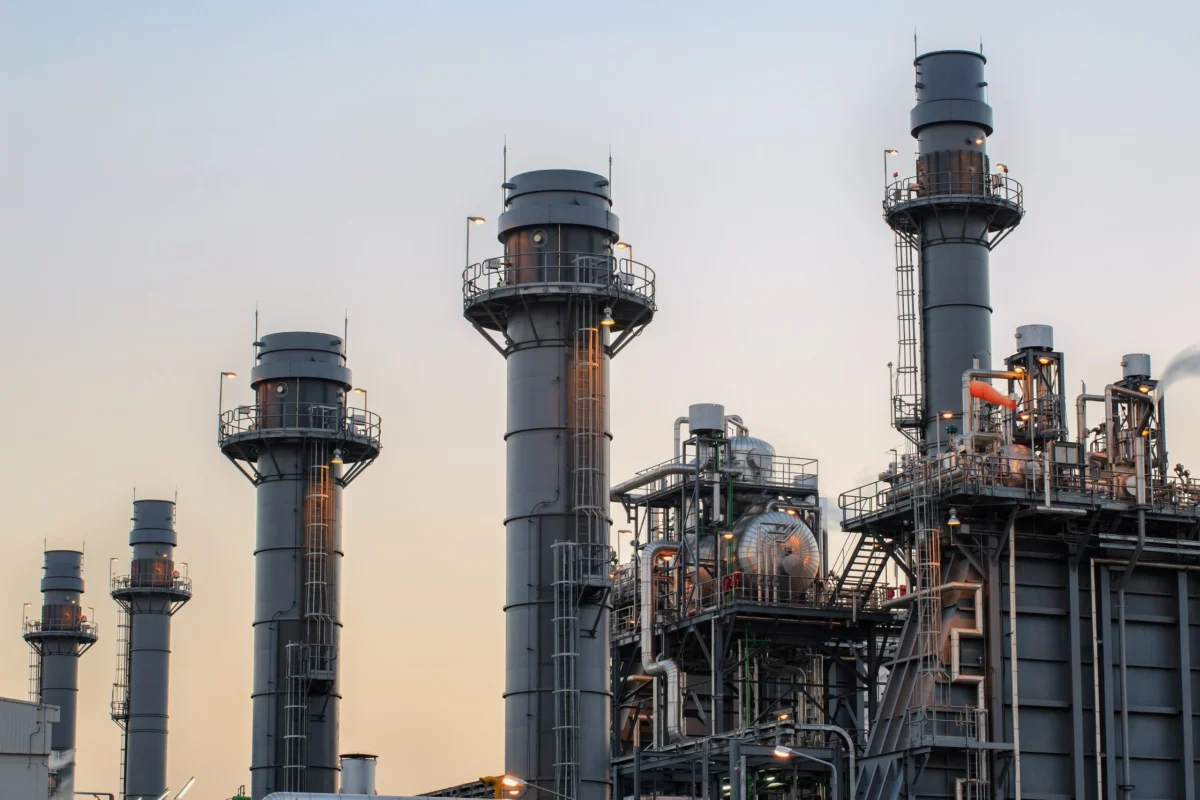
In the arid terrain of Pecos County, Texas, an unprecedented industrial enterprise is taking shape—one that underscores the fierce collision between the explosive growth of artificial intelligence and global decarbonization commitments. Amazon is advancing plans for a massive data center complex coupled with a dedicated, on-site natural gas power plant. Environmental permits for the proposed energy generation facility authorize it to emit up to 33 million metric tons of carbon dioxide per year. If fully realized at that capacity, the installation would instantly become the single largest point-source of climate pollution in the United States, surpassing every existing coal- or gas-fired utility plant in the nation.
The sheer magnitude of the project highlights a dramatic shift in how technology hyperscalers build the infrastructure required for next-generation computing. For years, tech giants prioritized power purchase agreements for wind and solar farms to offset their energy consumption on paper. However, the immense, continuous electrical loads demanded by modern generative AI workloads are forcing a pivot toward fast-deployable, uninterrupted fossil fuel generation. In West Texas, this strategy manifests as a colossal private power plant built directly adjacent to data halls, operating independently of the regional power grid.
An official statement from Amazon confirmed that the Pecos County complex will rely on newly constructed, dedicated on-site power generation designed explicitly to avoid drawing electricity from the local public grid, thereby preventing price spikes for Texan households. Yet, this self-contained solution reveals a critical trade-off: in protecting residential ratepayers from the inflationary pressure of commercial power demand, tech companies are opting to generate vast quantities of greenhouse gases on-site, directly threatening their own corporate sustainability mandates.
The Permian Basin Advantage and Behind-the-Meter Architecture
The selection of Pecos County for this facility is deeply strategic. Located in the heart of the Permian Basin, one of the world’s most productive oil and natural gas regions, the site offers direct, low-cost access to abundant natural gas feedstocks. In many West Texas fields, natural gas is produced alongside crude oil in such excess that producers frequently flare or vent it due to regional pipeline bottlenecks. By constructing a power plant at the supply source, Amazon can secure extremely competitive fuel pricing while bypassing regional utility distribution networks.
This operational design—known in the energy industry as "behind-the-meter" or off-grid generation—allows data center developers to side-step one of the greatest bottlenecks in modern utility management: grid interconnection queues. Across the United States, regional transmission operators, including the Electric Reliability Council of Texas (ERCOT), are overwhelmed by requests to connect new energy generation and massive industrial loads. Waiting times for grid interconnection can extend from five to eight years. By funding and building a dedicated gas power plant directly paired with its compute infrastructure, Amazon can bring gigawatts of AI capacity online in a fraction of the time standard grid integration would require.
However, the speed of deployment comes at an immense environmental cost. Permitted limits of 33 million metric tons of carbon dioxide annually put the proposed Pecos County power plant in a class of its own. To contextualize this output, a standard large-scale coal plant in the United States typically releases between 10 million and 15 million metric tons of carbon dioxide per year. The combined annual footprint of the Pecos facility would exceed the total direct domestic greenhouse gas emissions of several small nations, equivalent to burning billions of gallons of gasoline each year.
The Math Behind AI’s Insatiable Energy Appetite
The primary force driving this surge in natural gas development is the shifting nature of enterprise computing. Traditional data centers—which host web pages, cloud storage, and enterprise software—require steady, predictable amounts of power. In contrast, training high-parameter artificial intelligence models and operating continuous inference clusters demands extraordinary power densities. High-density server racks optimized for modern graphical processing units (GPUs) consume several times the power of standard server infrastructure, turning data center facilities from megawatt-scale sites into gigawatt-scale power hogs.
Furthermore, AI training runs cannot easily tolerate power fluctuations or intermittent outages. A disruption in power during a multi-week training run of a frontier AI model can corrupt state data, forcing operators to restart complex processes from earlier checkpoints and causing millions of dollars in lost compute time. While renewable energy sources like wind and solar can provide cheap power during peak production hours, they remain inherently variable. Utility-scale battery storage technology, while advancing rapidly, cannot yet cost-effectively supply multiple gigawatts of continuous, multi-day backup power for massive high-performance computing centers.
As a result, natural gas has emerged as the default "bridge fuel" for tech conglomerates attempting to construct gigawatt-class data hubs on aggressive timelines. Natural gas turbines offer continuous baseload power, can run around the clock regardless of weather conditions, and can be ramped up quickly to meet sudden compute spikes.
Corporate Climate Pledges Under Severe Strain
The operational reality in West Texas contrasts starkly with the ambitious climate commitments established by Silicon Valley over the past decade. Amazon was a founding signatory of the Climate Pledge in 2019, committing to reach net-zero carbon operations across its global footprint by 2040—a full decade ahead of the Paris Agreement targets.
However, corporate sustainability reports indicate that emissions trends are moving in the wrong direction. Driven largely by the rapid expansion of Amazon Web Services (AWS) and the infrastructure required to stay competitive in the AI arms race, the company reported a 16% increase in carbon emissions in its most recent disclosures.
In addressing the tension between environmental goals and infrastructure expansion, Amazon leadership acknowledged that the global landscape has evolved significantly since the corporate pledge was first established, while maintaining that their ultimate commitment to long-term sustainability remains unchanged. Yet, energy analysts note that bringing a 33-million-ton carbon emitter online creates a massive operational deficit that cannot easily be offset by purchasing renewable energy credits elsewhere.
The challenge extends beyond direct Scope 1 emissions generated by burning natural gas on-site. The upstream supply chain for natural gas in the Permian Basin carries a notorious record of fugitive methane emissions. Methane, the primary component of natural gas, possesses a global warming potential more than 80 times greater than carbon dioxide over a 20-year timescale when leaked directly into the atmosphere during extraction, gathering, and transmission. As a result, the true life-cycle impact of powering data centers with Permian natural gas could be substantially higher than the direct smokestack carbon measurements indicate.
A Growing Political and Public Reaction
The move toward off-grid gas generation is occurring against a backdrop of intensifying public and legislative scrutiny over data center expansion across the United States. In regions like Northern Virginia, Georgia, and the Pacific Northwest, rapid data center construction has begun to strain local utility grids, forcing public service commissions to approve rate hikes for everyday consumers and delay the retirement of aging fossil fuel plants to maintain grid stability.
In response, local legislatures and regulatory bodies are taking action. Several states have considered or enacted temporary moratoriums on new data center construction to evaluate environmental and economic impacts, while municipal boards are increasingly rejecting land-use permits due to concerns over noise pollution, extreme water consumption for liquid cooling systems, and air quality degradation.
By pursuing an off-grid model in Texas, Amazon effectively insulates local residential utility bills from the financial shock of funding new utility-scale power infrastructure. However, this strategy raises new policy questions regarding local air quality, regulatory oversight, and national decarbonization strategies. While Texas environmental regulators maintain jurisdiction over air pollution permits, the creation of super-emitting private power plants creates unprecedented challenges for regional air quality management, introducing significant amounts of nitrogen oxides and volatile organic compounds into the local atmosphere alongside greenhouse gases.
Industry Implications and the Search for Alternative Energy
The situation unfolding in Pecos County is emblematic of a broader structural dilemma facing the entire technology sector. Rivals like Microsoft, Google, and Meta are encountering identical infrastructure barriers as they attempt to construct massive computing environments for their own proprietary AI applications.
To resolve this energy crunch without permanently abandoning climate targets, technology companies are increasingly exploring radical alternatives for long-term power generation:
- Next-Generation Nuclear Infrastructure: Hyperscalers are actively negotiating power purchase agreements with nuclear operators, exploring direct connections to existing nuclear power plants, and investing directly in Small Modular Reactors (SMRs). SMRs offer clean, non-intermittent baseload power, but commercial deployment is not expected at scale until the early to mid-2030s.
- Deep Geothermal Systems: Advanced geothermal technology leverages deep-drilling methods developed by the oil and gas industry to harness earth heat anywhere in the world, offering zero-carbon, continuous power. While promising, the technology remains in early commercialization stages.
- Fossil Generation paired with Carbon Capture and Storage (CCS): Some developers are proposing natural gas facilities equipped with carbon capture infrastructure designed to trap emissions before they enter the atmosphere. However, commercial-scale CCS systems remain capital-intensive and historically struggle to achieve claimed capture efficiencies over extended operational cycles.
The Long-Term Horizon
As Amazon moves forward with its infrastructure deployment in Pecos County, the facility serves as a definitive case study in the realities of modern digital infrastructure growth. The immediate market demand for artificial intelligence compute capacity has outpaced the short-term capability of clean energy grids to supply reliable, high-density, uninterrupted power.
While natural gas may provide the speed and reliability necessary to keep pace with the current AI expansion cycle, relying on fossil-fuel infrastructure on a multi-gigawatt scale threatens to lock in high-carbon operational patterns for decades. The decisions made in the Permian Basin will resonate far beyond West Texas, defining whether the tech industry can reconcile its transformational digital ambitions with the imperative of a low-carbon future.
