

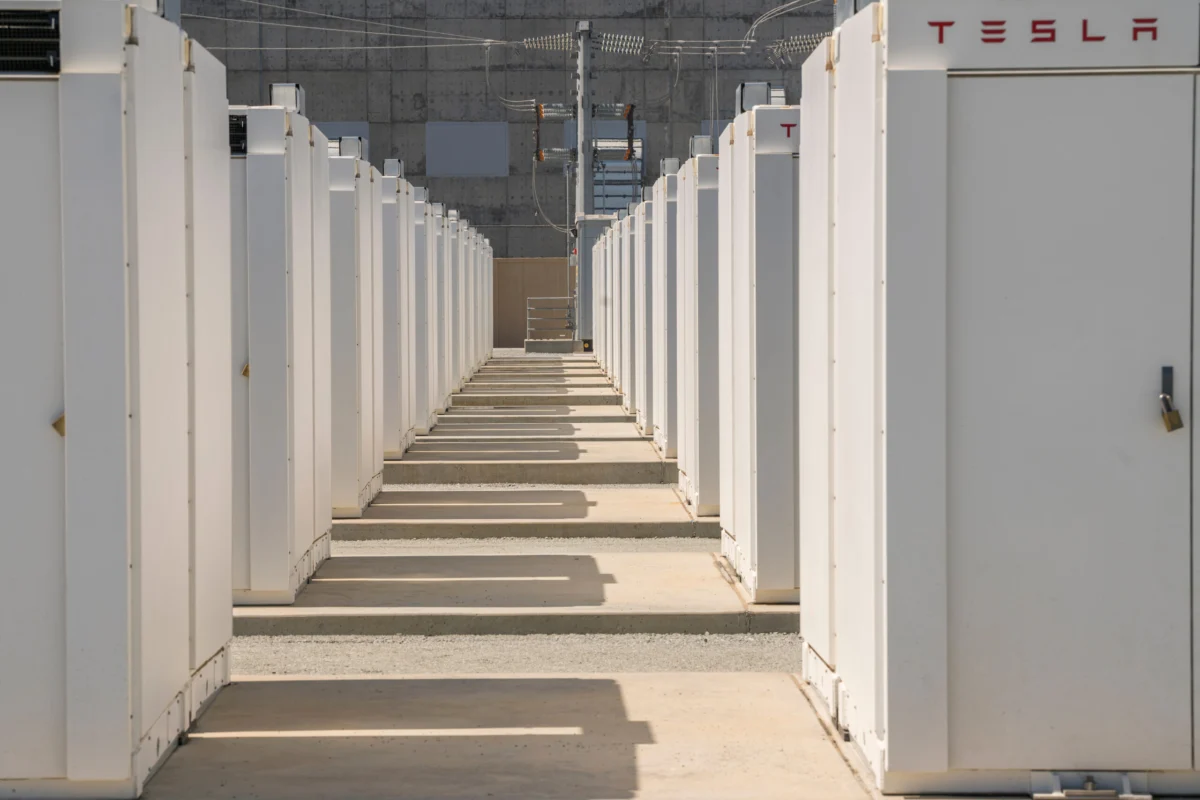
A recent series of regulatory disclosures has cast a bright light on the rapidly escalating energy demands of high-performance computing, highlighting an extraordinary web of capital deployment across interrelated technology ventures. According to financial filings submitted for the second quarter, space exploration titan SpaceX expanded its procurements of utility-scale energy storage systems, expending $295 million on Tesla Megapack units during the three-month period ending in June. When combined with first-quarter outlays of $34 million, SpaceX’s total commitment to Tesla’s battery division has reached $329 million for the current fiscal year alone.
This surge in capital expenditure underscores a broader operational consolidation across the commercial ecosystem surrounding Elon Musk, who serves as Chief Executive Officer and chief shareholder of SpaceX while concurrently leading Tesla. The financial linkages between these enterprises have tightened substantially following a sequence of corporate integrations. In 2025, artificial intelligence firm xAI absorbed the social media network X, before being acquired by SpaceX in early 2026—a move that combined space technology, orbital communications, and frontier computing under a unified corporate banner. Prior to its formal integration into SpaceX, xAI had independently purchased $430 million worth of Tesla Megapacks to power its rapidly expanding computational footprint, alongside earlier investments by SpaceX that included $131 million in Tesla Cybertruck fleets acquired at manufacturer retail prices by late 2025.
The sheer velocity of these transactions illustrates how modern technology conglomerates are leveraging internal synergies to resolve the critical bottlenecks facing next-generation computational infrastructure. As artificial intelligence models scale exponentially, the primary constraint on technological progress has shifted from semiconductor availability to electrical power availability and grid stability.
The Thermal and Electrical Realities of Modern Data Centers
To understand the strategic rationale behind these multi-hundred-million-dollar battery acquisitions, one must examine the unprecedented power profiles of contemporary artificial intelligence training facilities. Unlike traditional enterprise data centers, which maintain relatively predictable, steady-state electricity consumption profiles dominated by web hosting and database queries, high-performance AI clusters operate under extreme dynamic variability.
Modern compute campuses house tens of thousands of specialized Graphics Processing Units (GPUs) or custom Tensor Processing Units running complex neural network algorithms. When massive training runs are initialized, synchronized across thousands of interconnected nodes, or abruptly halted due to checkpointing or software exceptions, the electrical demand of the facility can swing by dozens or even hundreds of megawatts within milliseconds.
These rapid, high-amplitude power transients present severe operational challenges to electrical grid infrastructure:
- Grid Frequency and Voltage Instability: Sudden demand spikes can cause localized voltage sags and frequency deviations on municipal grids, potentially triggering safety trips on nearby substation transformers.
- Utility Demand Charges: Electric utility providers impose severe financial penalties—known as peak demand charges—on industrial customers whose power draw exceeds pre-negotiated baselines, even for brief durations.
- Generator Lag: On-site thermal generation, such as natural gas turbines or diesel backup systems, exhibits physical inertia and cannot ramp power output instantly to match sub-second computing spikes.
- Thermal Cycling Stress: Rapid power fluctuations create severe thermal cycles across silicon dies and cooling infrastructure, shortening the operational lifespan of multi-million-dollar hardware arrays.
Utility-scale Battery Energy Storage Systems (BESS), such as the Tesla Megapack, serve as an indispensable buffer against these operational hazards. Featuring containerized lithium-iron-phosphate (LFP) battery chemistry integrated with liquid thermal management, power electronics, and bi-directional inverter systems, these units can inject or absorb massive amounts of power in sub-second intervals. By performing automated "peak shaving," the battery installation discharge energy during maximum computational load, smoothing out the power draw presented to the regional grid or local generation equipment. Furthermore, in the event of an upstream utility disruption, these industrial batteries offer seamless, uninterrupted failover capacity, sustaining critical compute operations without loss of active training states.
Off-Grid Realities and the Energy Transition Paradox
The deployment of Megapacks at facilities tied to xAI’s computing endeavors, including the massive Colossus data center project and supporting infrastructure, highlights a complex energy landscape. In their push to bring world-class compute clusters online at unprecedented speed, developers have routinely encountered lengthy delays when attempting to secure traditional high-voltage grid connections. Regional transmission organizations (RTOs) across North America frequently report interconnection queues spanning several years due to transmission constraints and transformer supply chain bottlenecks.
To bypass these electrical grid bottlenecks, computing projects have increasingly turned to interim on-site power generation. In Mississippi, for example, operations supporting the Colossus architecture have relied on localized power generation solutions, including dozens of natural gas turbines deployed directly adjacent to the facilities. However, running combustion turbines off-grid introduces notable operational vulnerabilities. Gas turbines run most efficiently under consistent, static loads; forced ramp-ups and ramp-downs driven by volatile GPU workloads drastically lower fuel efficiency and accelerate hardware wear.
By integrating hundreds of megawatt-hours of Megapack capacity alongside thermal generation, operators create a highly resilient microgrid. The Megapacks handle microsecond-level transients, voltage regulation, and immediate load imbalances, allowing the gas turbines to operate within an optimized, highly efficient baseline thermal regime. This hybrid approach allows hyper-scale data centers to reach operational status years ahead of schedule while maintaining the power quality demanded by state-of-the-art silicon.
Corporate Governance and the Mechanics of Related-Party Deals
The flow of capital between Tesla, SpaceX, and xAI represents one of the largest corporate related-party ecosystems in modern economic history. While related-party transactions are common among affiliated businesses, the scale at which SpaceX and xAI are purchasing hardware from Tesla demands careful corporate governance and regulatory compliance.
Under federal securities regulations, publicly traded companies like Tesla must disclose material transactions involving entities controlled by major shareholders or executive officers. These disclosures are designed to ensure that goods and services are exchanged at fair market value (arm’s-length terms) rather than subsidized rates that could advantage one entity at the expense of another’s shareholders. Tesla’s filings demonstrate that products like the Megapack and fleet vehicles are transferred at standardized prices, ensuring the electric vehicle and energy storage manufacturer realizes full commercial margin on these inter-company orders.
From an economic standpoint, these internal purchase agreements provide substantial mutual benefits:
- Tesla Energy Revenue Acceleration: Tesla’s commercial energy storage division gains a massive, highly predictable anchor customer, insulating its production lines at the Lathrop, California, Megafactory—and prospective international sites—from broader macroeconomic fluctuations in commercial building markets.
- Guaranteed Hardware Allocation: SpaceX and xAI secure priority delivery of hard-to-source utility energy hardware in a global market characterized by acute supply shortages and long lead times.
- Unified Hardware and Software Stack: Internal engineering teams benefit from direct collaboration, permitting deep integration between Tesla’s energy control software (such as Autonomous Control and Opticaster) and xAI’s proprietary workload scheduling algorithms.
Industry Implications and the Broader Compute Landscape
The rapid accumulation of energy storage hardware by SpaceX and xAI reflects a macro-trend reshaping the broader tech sector. Competitors across the hyperscale ecosystem—including Microsoft, Alphabet, Amazon, and Meta—are facing identical structural energy shortages as they deploy next-generation AI infrastructure.
Many tech leaders are exploring long-term energy contracts tied to nuclear power, geothermal energy, and massive solar-plus-storage projects to fulfill zero-carbon commitments. However, the immediate necessity of keeping pace in the AI development race has created a pragmatic, multi-phase energy strategy across the technology industry. Phase one relies heavily on rapid-deployment microgrids using fossil generation combined with battery storage; phase two envisions long-term integration with modernized regional grids, small modular nuclear reactors (SMRs), and gigawatt-scale renewable microgrids.
SpaceX’s dual identity as an orbital communications provider (via the Starlink constellation) and a frontier AI compute operator presents unique future possibilities. As space-based platforms generate ever-increasing volumes of data, and as ground facilities demand unparalleled power resiliency, the integration of specialized battery technology, private power generation, and high-speed satellite backhaul creates a fully self-contained operational paradigm.
Future Outlook: Toward the Gigawatt Campus
Looking ahead, the energy requirements for frontier artificial intelligence models are projected to scale from hundreds of megawatts to multiple gigawatts per single campus before the end of the decade. At this scale, the energy infrastructure of a single compute facility will rival the power consumption of major industrial cities.
The ongoing acquisition of Tesla Megapacks by SpaceX represents the early stages of this transition. As energy storage systems evolve toward higher density chemistries, longer duration discharge capabilities, and deeper integration with on-site generation, the boundary between technology enterprise and utility operator will continue to blur. The companies that master the physics of power delivery, grid stabilization, and energy storage supply chains will ultimately dictate the pace of artificial intelligence development in the decades to come.
