

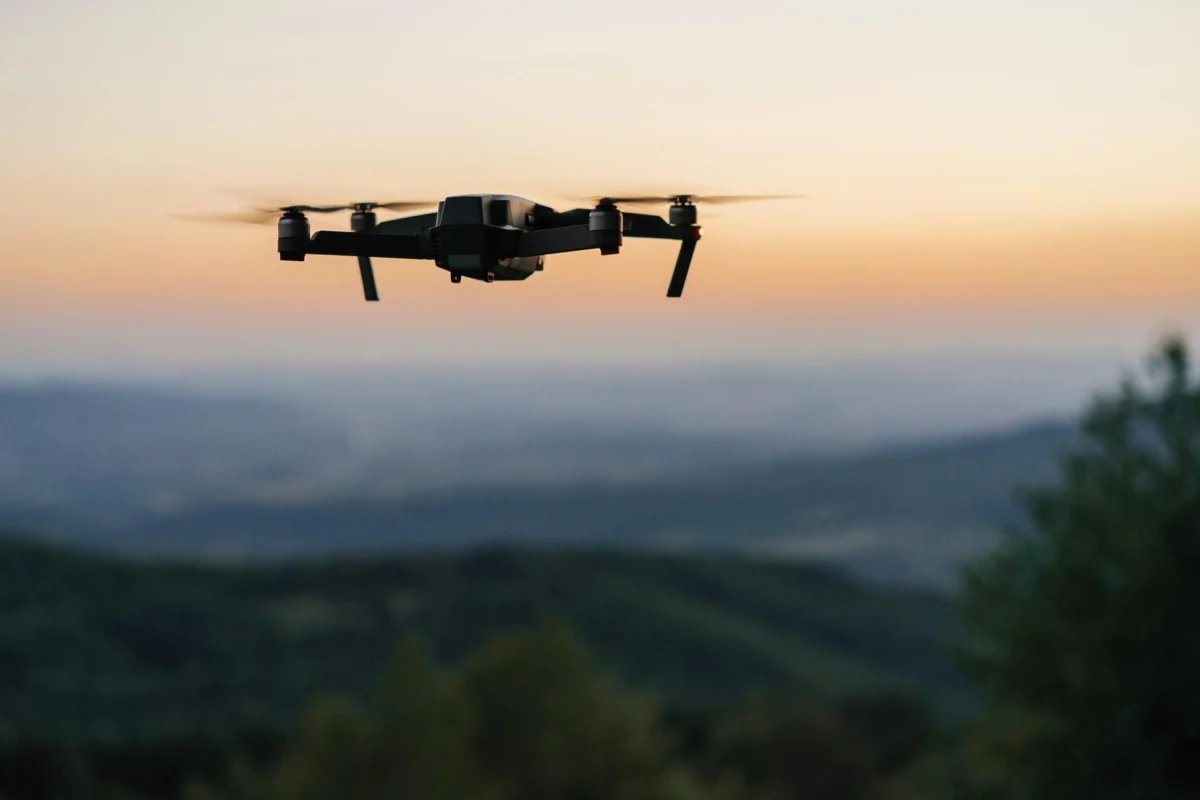
The traditional image of the defense industry is often one of kinetic force—of hardware designed for the sole purpose of maximum impact. However, a quiet revolution is underway within the engineering labs of the world’s most advanced technology firms, shifting the paradigm from lethality to precision and from human risk to robotic resilience. At the heart of this transition is a new generation of engineers who view defense not as a mechanism for conflict, but as a framework for protection. Among the leading voices in this space is Andrew Reiter, an engineer whose career trajectory through Shield AI, the nuclear energy sector, and humanoid robotics offers a profound look at how autonomy is redefining the 21st-century landscape.
The evolution of modern warfare is increasingly dictated by the "OODA loop"—observe, orient, decide, and act. In the past, every stage of this cycle required a human being, often placed in positions of extreme physical peril. Today, the integration of artificial intelligence and autonomous systems is decoupling the human operator from the immediate "line of fire." This shift is not merely a matter of tactical convenience; it represents a fundamental change in the ethics and economics of global security. As engineers refine these systems, the focus has moved toward "non-lethal" solutions where complexity allows for such high degrees of precision that collateral damage can be minimized, and service members can be kept out of harm’s way entirely.
Reiter’s journey into the defense sector began with a mission that was as much humanitarian as it was tactical. Speaking at a recent MIT-hosted event, Reiter detailed the foundational philosophy behind Shield AI, a company he helped build to address one of the most dangerous tasks in modern infantry operations: clearing hostile buildings. The impetus for the company came from a co-founder who served as a Navy SEAL. After multiple deployments, the reality of "getting shot at" became more than a professional hazard—it became a problem that required an engineering solution.
The tactical question was simple but revolutionary: Why is a human being the first thing to go through a door? In urban combat environments, the "fatal funnel"—the doorway or threshold—is the most dangerous place to be. Behind that door could be a combatant, a non-combatant, an improvised explosive device (IED), or a hostage. Traditionally, soldiers had to make split-second, life-or-death decisions with zero prior visibility. Reiter’s solution was to replace that human "first mover" with an autonomous drone.
However, the path to implementation was not immediate. In the early stages of development, Reiter was working on fully autonomous quadrotors capable of navigating complex indoor environments without GPS, creating real-time 3D maps of their surroundings. Despite the technical brilliance of the hardware, the market was initially slow to react. It was the "serendipity" of matching this high-level mapping technology with the specific, high-risk needs of special operations that finally bridged the gap between engineering innovation and real-world application.
This transition from small-scale scouting drones to larger, more complex systems reflects a broader trend in the aerospace industry. Reiter eventually moved from quadrotors to autonomous fighter jets, platforms that represent the pinnacle of current aerospace engineering. These "incredibly capable" machines are designed to operate in contested environments where human reaction times are simply insufficient. Yet, even as he reached the heights of defense tech, Reiter’s engineering curiosity led him toward another existential challenge: the global energy crisis.
The pivot from defense to decarbonization may seem like a non-sequitur, but for a systems engineer, the problems are remarkably similar. Both fields require navigating dense regulatory environments, managing high-stakes safety protocols, and developing software that can operate flawlessly in "edge cases." Reiter joined the nuclear energy sector, specifically focusing on reactor software. While his work eventually leaned into the regulatory side of the industry, the experience highlighted a critical realization: the foundational problems of robotics—perception, navigation, and decision-making—are universal across industries.

This realization brought Reiter to the burgeoning field of humanoid robotics. For decades, robotics was defined by heavy, track-driven designs that were cumbersome, expensive, and limited to specific industrial tasks. The "new" robotics, informed by the rapid advancements in drone autonomy and AI, is far more agile. Humanoid robots, which are now being developed by several major tech firms, utilize many of the same sensors and algorithms that allow a drone to navigate a bombed-out building or a fighter jet to dogfight autonomously. The "interesting contrast," as Reiter notes, lies in the application. While a drone must master three-dimensional flight and weight constraints, a humanoid must master balance, bipedal locomotion, and interaction with a world designed for people.
One of the most significant insights Reiter shared regarding the future of the military is the concept of "expendable assets." For the last century, naval and aerial power was defined by "exquisite" platforms—massive, multi-billion-dollar warships and aircraft carriers that are too expensive to lose. In a modern conflict, the loss of a single carrier is a national catastrophe. The 21st-century model, currently being tested in theaters like Ukraine, favors "attritable" systems. These are smaller, smarter, and significantly cheaper assets.
By embedding advanced sensors, high-performance computing power, and sophisticated AI algorithms into smaller platforms, engineers can create a swarm of assets that, collectively, possess the capability of a much larger vessel but without the singular point of failure. If one drone is lost, it is a line item on a spreadsheet; if a destroyer is lost, it is a strategic blow. This "democratization of capability" through AI allows smaller nations or units to project power and gather intelligence that was previously the sole domain of superpowers.
However, Reiter is quick to draw a line when it comes to the intersection of his two major fields of expertise: nuclear power and autonomous flight. While the U.S. Navy has long utilized nuclear reactors to power its fleet—with San Diego Harbor serving as a quiet home to several such reactors—Reiter argues that the technology does not belong in the sky. The risks associated with a nuclear-powered drone or aircraft, particularly in the event of a crash or intercept, far outweigh the endurance benefits. His stance serves as a reminder that even in an era of rapid innovation, engineering ethics must dictate the boundaries of what we build.
The broader implication of Reiter’s work is the necessary redefinition of the "defense" industry for the coming century. The "History Channel" version of warfare—characterized by massed armies and indiscriminate bombardment—is being replaced by a reality where technology is used to increase the "signal" and decrease the "noise" of conflict. AI and autonomous systems are being positioned as tools for de-escalation and protection. If a robot can identify a threat before a soldier enters a room, the likelihood of a panicked, lethal encounter drops significantly.
Furthermore, the "dual-use" nature of these technologies cannot be overstated. The same autonomy software that allows a drone to map a dangerous building can be used by humanoid robots to navigate a warehouse or by autonomous vehicles to reduce traffic fatalities. The engineering journey from drones to reactors to humanoids is a testament to the fact that we are entering an age of "generalized autonomy."
As we look toward the future, the goal of the modern engineer in the defense space is increasingly aligned with the preservation of life. By focusing on "non-lethal" precision and the replacement of human vulnerability with robotic persistence, the industry is moving away from the blunt instruments of the past. The work of innovators like Reiter suggests that the ultimate success of AI in defense will not be measured by its ability to wage war, but by its ability to prevent the human cost of it. In this new era, the most powerful weapon in the arsenal is not a missile, but a map—a 3D, real-time, autonomously generated understanding of the world that keeps both the soldier and the civilian out of the line of fire.
