

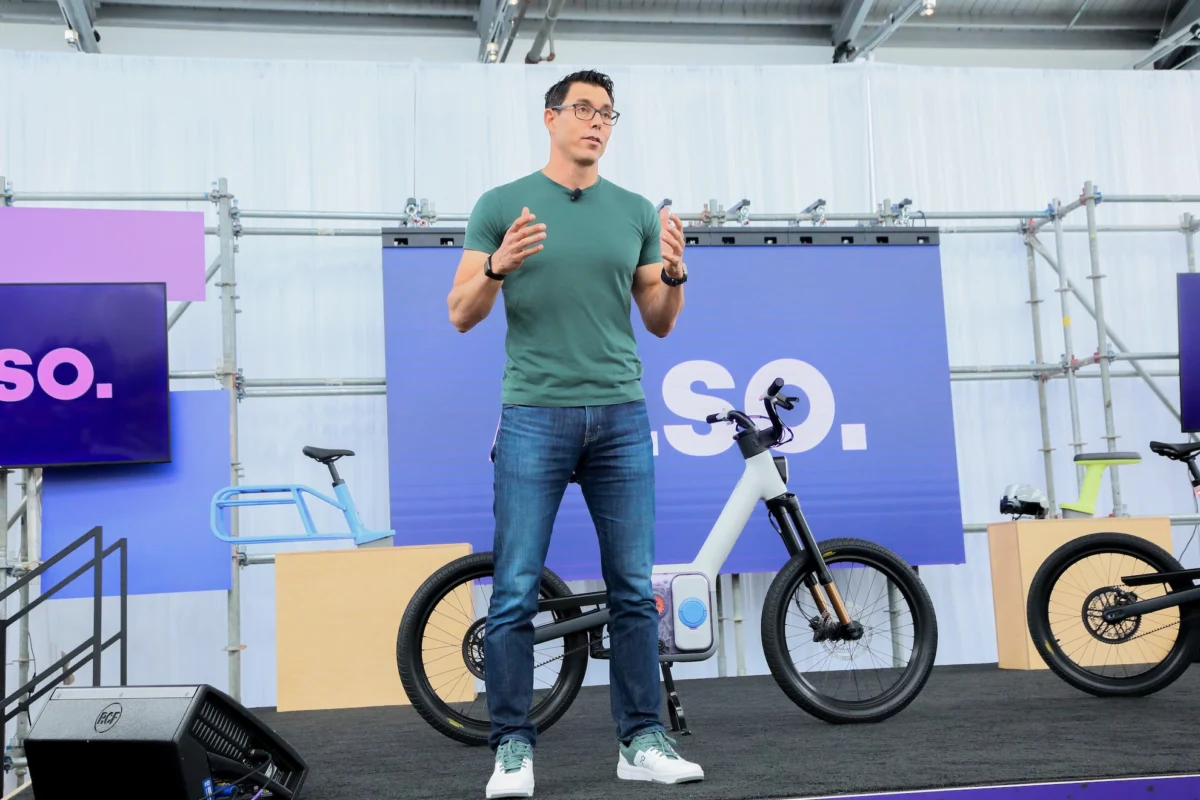
The high-end electric micromobility sector is witnessing a crucial milestone as Also, the independent startup incubated inside electric vehicle maker Rivian, officially begins shipping its long-awaited debut product. The company’s inaugural offering, a modular, premium pedal-assist bicycle dubbed the TM-B Launch Edition, has cleared manufacturing hurdles and is currently moving from overseas production facilities to U.S. distribution hubs. Deliveries to retail customers are scheduled to start immediately and run through September, concluding months of anticipation, logistical recalibrations, and growing impatience among early adopters who backed the high-concept two-wheeler.
Carrying a flagship price tag of $4,500, the TM-B Launch Edition enters an increasingly crowded but lucrative tier of the personal transportation market. For Also, handing over the first sets of keys—or rather, activating the first digital keypads—represents a pivotal transition from a capital-flush hardware project to an active commercial enterprise required to support real-world customers, manage post-purchase logistics, and validate its high-margin hardware philosophy.
From Skunkworks Concept to Capital-Backed Venture
The genesis of Also traces back to 2022, when Rivian Chief Executive Officer RJ Scaringe sought to broaden the automaker’s scope beyond full-sized adventure trucks and commercial delivery vans. Envisioning a comprehensive ecosystem of outdoor and urban mobility solutions, Scaringe sanctioned an internal skunkworks initiative dedicated to exploring lightweight, zero-emission personal vehicles.
During its formative years under Rivian’s umbrella, the project focused heavily on industrial design, modular engineering, and premium material integration. To establish an aesthetic identity distinct from conventional bicycle manufacturers, the team enlisted LoveFrom, the acclaimed design collective founded by former Apple Chief Design Officer Sir Jony Ive and renowned industrial designer Marc Newson. LoveFrom’s involvement brought an emphasis on clean lines, integrated structural components, and intuitive user interfaces—hallmarks that would eventually define the core design language of the TM-B.
By early 2025, Rivian’s executive leadership determined that the micromobility venture required dedicated operational focus and an independent balance sheet to scale effectively without distracting from Rivian’s core automotive production ramp. In March 2025, the unit was formally spun out as an independent entity named Also, bolstered by a substantial $105 million Series A funding round led by Silicon Valley venture firm Eclipse. The capital injection provided Also with the operational runway necessary to establish dedicated vendor relationships, build out direct-to-consumer software platforms, and finalize manufacturing contracts for its product portfolio.
Supply Chain Pressures and Delivery Bottlenecks
When Also officially revealed the finished TM-B in late 2025, the company projected that initial customer deliveries for the $4,500 Launch Edition would commence in the spring of 2026. However, scaling complex hardware platforms rarely follows a linear trajectory, particularly for a newly independent startup navigating global component procurement.
As the spring target approached, Also encountered significant manufacturing headwinds that forced a pushback of its delivery schedule to July. In public communications issued via its support channels, the company attributed the delay to broader volatility across global supply chains. Specifically, unexpected spikes in sector-wide demand for high-grade raw materials and specialized electronic sub-assemblies created procurement bottlenecks for essential parts within the TM-B’s drive unit and integrated power systems.
Rather than substituting compromised components or rushing assembly to meet self-imposed deadlines, Also elected to hold back production. The company maintained that maintaining rigorous safety tolerances, structural integrity, and software integration took precedence over immediate order fulfillment. Despite repeated inquiries regarding the exact nature of the supply chain failures, Also declined to specify which individual components—whether custom battery management systems, specialized mid-drive motors, or frame extrusions—caused the primary bottleneck.
The operational friction points faced by Also highlight a widespread vulnerability within the premium micromobility landscape. Unlike traditional bicycle assemblers that rely heavily on off-the-shelf components from dominant suppliers like Shimano or SRAM, boutique high-end e-bike builders increasingly design bespoke frame geometries, integrated lighting arrays, digital displays, and proprietary motor control units. While this strategy yields a differentiated product, it leaves manufacturers exposed to single-source component delays and multi-tiered supply chain fragility.
Pre-Order Dynamics and Customer Relations Friction
The extended delay between the initial public unveil and physical delivery created notable friction among early pre-order holders. Direct-to-consumer hardware launches thrive on momentum, and operational silence during schedule adjustments often leads to community frustration.
Throughout late July, online forums and community channels dedicated to the brand—most notably the r/ALSOmicromobility subreddit—became lightning rods for customer discontent. Prospective buyers expressed mounting frustration over shifting delivery estimates, vague operational updates, and limited direct communication regarding individual order statuses. For a subset of reservation holders, the repeated schedule changes eroded confidence, prompting order cancellations and requests for deposit refunds.
This customer friction illustrates the delicate balance early-stage hardware companies must strike when navigating the transition from pre-order marketing to physical fulfillment. In the premium consumer technology and vehicle sectors, customers paying top-tier prices expect clear communication, high-touch support, and transparent logistics tracking. As Also begins delivering bikes from its domestic logistics centers, the company’s internal customer success and service networks will face their first real-world stress test. Resolving early production anomalies, delivering timely software updates, and maintaining an active spare-parts catalog will be just as critical to the startup’s long-term brand equity as the initial quality of the physical bike itself.
A Dual-Track Strategy: Consumer Hardware and Commercial Fleet Platforms
While the TM-B e-bike serves as Also’s public flagship, the company’s overarching strategy extends far beyond consumer two-wheelers. Executives explicitly position Also not merely as a bicycle manufacturer, but as a comprehensive light-electric vehicle technology firm targeting both private commuters and multi-modal commercial logistics.
On the enterprise side, Also has quietly forged high-stakes partnerships with major logistics and delivery platforms looking to decarbonize urban last-mile transport. The startup is actively developing specialized four-wheeled, pedal-assist cargo vehicles tailored for Amazon’s urban delivery network. These micro-cargo platforms are engineered to navigate dense metropolitan cores, low-emission zones, and pedestrianized urban centers where standard commercial vans face operational restrictions, high parking fees, and persistent gridlock.
Concurrently, Also is collaborating with DoorDash to engineer autonomous, light-footprint delivery vehicles optimized for short-range food and parcel transport. By leveraging modular chassis architectures and shared power-management software across both consumer e-bikes and enterprise delivery fleets, Also aims to achieve economies of scale that pure-play consumer bike brands cannot match.
This dual-track approach provides Also with a unique business structure:
- High-Margin Consumer Mobility: Products like the TM-B establish premium brand identity, demonstrate design superiority, and generate immediate direct-to-consumer cash flow.
- High-Volume Enterprise Logistics: Fleet contracts with giants like Amazon and DoorDash offer recurring revenue, predictable manufacturing volumes, and multi-year order pipelines.
Industry Implications and the Evolving Micromobility Landscape
The launch of the TM-B comes at a transformational moment for the broader micromobility market. After years of rapid expansion fueled by low-cost urban rideshare schemes and budget-tier commuter bikes, the market is bifurcating. On one end, ultra-budget options continue to compete primarily on price; on the other, a distinct category of automotive-grade light electric vehicles is emerging, characterized by advanced engineering, elevated price points, and sophisticated digital integration.
Automotive OEMs have watched this space closely. Urbanization trends, municipal regulations favoring car-free city centers, and changing consumer preferences have led several major carmakers to explore lightweight personal transport. However, integrating low-volume, fast-iteration consumer products within traditional automotive manufacturing structures has historically proven difficult. Spinout models like Also—where a venture functions independently while retaining foundational access to automotive-level R&D, top-tier design talent, and institutional capital—are increasingly viewed as the optimal framework for automotive brand extensions into micromobility.
As Also hands off its first batch of TM-B e-bikes over the coming weeks, industry observers and competitors alike will monitor the rollout closely. If Also can smoothly navigate its initial delivery surge, resolve outstanding customer service bottlenecks, and maintain high build quality, it will validate the commercial viability of automotive-incubated micromobility ventures. More importantly, it will lay the operational groundwork for its far larger ambitions in commercial urban logistics, proving that light electric vehicles can deliver serious performance for both everyday riders and global logistics networks.
