

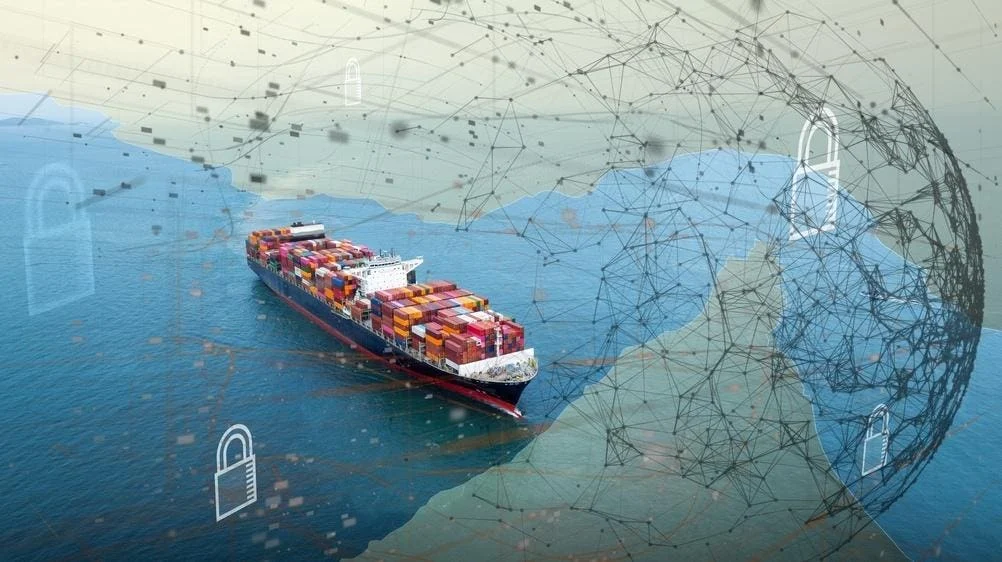
The geopolitical landscape of the 21st century is increasingly defined by a paradox: as technology becomes more sophisticated, the cost of disrupting it becomes exponentially cheaper. In the maritime corridors of the Middle East, specifically the Strait of Hormuz and the Bab el-Mandeb, the world is witnessing a masterclass in asymmetric warfare. State and non-state actors, utilizing low-cost drones, anti-ship missiles, and rudimentary naval mines, have demonstrated an ability to hold global commerce hostage. By targeting a narrow geographical chokepoint through which 20% of the world’s petroleum flows, a militarily "weaker" adversary can impose costs on the global economy that are wildly disproportionate to the investment required for the attack.
However, the most critical lesson for national security planners is not merely about the vulnerability of sea lanes. It is a warning about a looming structural crisis in the "high ground" of outer space. As the United States and its allies transition from legacy satellite architectures to modern, proliferated constellations, they risk replicating the very chokepoints they seek to avoid. We are, perhaps inadvertently, constructing a "virtual" Strait of Hormuz in orbit—a single point of failure that could render the world’s most advanced military and economic power impotent in a matter of hours.
The Efficiency Paradox: A Strategic Trap
At the heart of this vulnerability lies what can be termed the "Efficiency Paradox." In the realms of business strategy and government acquisition, efficiency is the ultimate virtue. To reduce costs and accelerate deployment, organizations naturally gravitate toward resource concentration, vertical integration, and standardization. By using a single optimized architecture, a streamlined software environment, and a handful of trusted contractors, an agency can achieve remarkable economies of scale.
In a peacetime environment, this is sound management. In a conflict environment, however, this efficiency becomes a roadmap for an adversary. What a procurement officer calls "standardization," a hostile cyber-actor calls a "universal exploit." What a CEO calls "vertical integration," a military strategist calls a "single point of failure."
The pursuit of the "most efficient" way to build a space architecture often leads to a monoculture. If every satellite in a 5,000-unit constellation runs on the same kernel, communicates via the same ground stations, and relies on a single proprietary cloud environment, the adversary no longer needs to shoot down 5,000 satellites. They only need to find one flaw in the digital spine that connects them.
From "Death Stars" to Proliferated Swarms
To understand the current risk, one must look at the evolution of space doctrine. For decades, the U.S. national security space community relied on what retired General John Hyten famously dubbed "big, fat, juicy targets." These were exquisite, multi-billion-dollar satellites, often the size of a school bus, stationed primarily in geostationary orbit (GEO). These "Death Stars" were highly capable but incredibly fragile from a strategic standpoint; losing just one could result in the total loss of a specific capability, such as missile warning or ultra-secure communications.
Recognizing this, the Space Force and agencies like the Space Development Agency (SDA) shifted toward "proliferated" architectures—large numbers of smaller, cheaper satellites in Low Earth Orbit (LEO). The logic is sound: it is harder to kill a swarm than a single bird. If an adversary destroys ten satellites in a constellation of a thousand, the mission continues.
Yet, this shift addresses only the physical dimension of resilience. True resilience is the ability to accomplish a mission despite intelligent, persistent hostility. If those thousand satellites are physically distributed but operationally centralized, the vulnerability remains. We have moved the target, but we haven’t necessarily hidden the bullseye.
The New Chokepoints: Virtual and Invisible
The "Strait of Hormuz" of the future will not be a physical coordinate in space. Instead, it will be found in the layers of the tech stack that support orbital operations. These modern chokepoints are emerging in four critical areas:
-
The Software Monoculture: As satellites become "software-defined," the code becomes more important than the hardware. If a single software vulnerability exists across an entire mega-constellation, a cyber-adversary can achieve a "kinetic-level" effect without firing a single shot. A malicious update or a zero-day exploit could potentially "brick" an entire orbital layer simultaneously.

-
Supply Chain Concentration: The push for low-cost satellites has led many prime contractors to source components from the same sub-tier suppliers. Whether it is a specific type of thruster, a specialized sensor, or a hardened microprocessor, a disruption at a single factory or a compromise of a single sub-contractor’s digital environment could paralyze the production and maintenance of multiple ostensibly "competing" satellite programs.
-
Ground Segment Fragility: Satellites are useless without the ground stations that command them and the data centers that process their information. Consolidating ground architecture into a single "efficient" cloud environment or a unified network creates a massive target. If an adversary can sever the link between the user and the constellation, the number of satellites in orbit becomes an irrelevant metric.
-
The Monopoly of Launch and Operation: Perhaps the most significant risk is the concentration of capability within a single commercial entity. While the private sector has revolutionized access to space, relying on a single provider for launch, satellite manufacturing, and data transport creates a strategic bottleneck. If that provider experiences a technical failure, a financial crisis, or a change in corporate leadership that conflicts with national interests, the entire national security apparatus is left without an alternative.
Redefining Resilience through Diversity
To prevent the formation of an orbital chokepoint, the definition of resilience must be expanded. It is no longer enough to measure resilience by satellite count. Instead, it must be measured by "Path Diversity."
Path Diversity means that for any given mission—be it positioning, navigation, and timing (PNT), tactical communications, or missile tracking—the commander must have multiple, independent ways to achieve the objective. This requires a "Heterogeneous Architecture," where the mission is distributed across different orbital regimes (LEO, MEO, and GEO), different hardware providers, and different software stacks.
This approach is intentionally "inefficient" in the traditional sense. It requires managing multiple contracts, integrating disparate data formats, and maintaining various ground interfaces. However, this diversity is what creates a "dilemma" for the adversary. If the U.S. can transition its communications from a government-owned LEO swarm to a commercial GEO satellite, and then to an allied MEO constellation seamlessly, the adversary’s ability to "close the kill chain" is effectively neutralized. They cannot attack one thing to stop the mission; they must attack everything, everywhere, all at once.
The Role of Continuous Competition
A vital component of this diverse architecture is the maintenance of a robust and competitive industrial base. Competition is often discussed in terms of driving down prices, but its most important role in the Space Age is ensuring survival.
Continuous competition prevents any single contractor from becoming "too big to fail" or "too entrenched to challenge." It ensures that the government has access to a rotating "bench" of technologies and supply chains. If one company’s software is compromised, the government should be able to pivot to a competitor’s system that operates on a completely different logic. In this context, a diverse industrial base is not just a benefit of the free market; it is a fundamental national security asset.
The Path Forward: Asking the Hard Questions
For the Space Force and the broader Department of Defense, the path forward requires a cultural shift in how programs are evaluated. Acquisition executives must move beyond the "green slides" of cost and schedule and begin asking existential operational questions:
- If we lose access to the primary commercial launch provider for two years, how does this mission survive?
- If a common software library used across three different programs is found to have a back-door, what is the recovery time?
- Do we have a "Plan B" and a "Plan C" that do not share any common hardware or software dependencies with "Plan A"?
The goal should not be to build a single, impenetrable shield in the sky. History teaches us that every shield can eventually be pierced. Instead, the goal is to build an ecosystem that is so distributed, so varied, and so adaptable that the very concept of a "chokepoint" becomes obsolete.
The Strait of Hormuz is a geographic reality that cannot be moved. But in the vastness of space, chokepoints are a choice—a choice often made in the name of near-term efficiency. By prioritizing architectural diversity and industrial competition, the United States can ensure that the "high ground" remains an open frontier rather than a strategic trap. The best way to defend against a Strait of Hormuz in space is to ensure we are never foolish enough to build one.
