

In the ongoing struggle to decarbonize North America’s largest metropolitan centers, few infrastructure projects carry as much strategic weight as the Champlain Hudson Power Express (CHPE). Designed to channel clean energy from the vast hydroelectric reservoirs of northern Quebec directly into the concrete expanse of New York City, the $6 billion infrastructure effort represents a milestone in high-voltage direct current (HVDC) engineering. Yet, as the project transitions from construction to early-stage operational testing, a series of initial mechanical setbacks and emerging hydrological challenges highlight the complex realities of modernizing an aging electric grid.
Spanning roughly 339 miles from the Canadian border to a converter station in Astoria, Queens, the fully buried transmission line is designed to import 1,250 megawatts of continuous clean power. Once fully operational, the system is projected to supply up to 20 percent of New York City’s peak electricity demand. By replacing downstate fossil-fuel generation with zero-emission Canadian electricity, the project is intended to serve as a cornerstone for New York State’s aggressive climate mandates. However, recent summer service disruptions and long-term climate variability in northern Quebec underscore the fragile balance between ambitious decarbonization targets and day-to-day grid operational reliability.
The Engineering Feat Behind the Cable
Conceived more than fifteen years ago, with formal environmental and regulatory permitting initiated in March 2010, the CHPE project was designed to bypass the traditional political and ecological hurdles associated with overhead high-voltage transmission lines. Overhead lines frequently encounter fierce local opposition due to land-use disputes, aesthetic concerns, and rights-of-way battles. To navigate these obstacles, developers opted for a subterranean and subaquatic route, burying two high-voltage direct-current cables along active rail corridors and beneath major waterways.
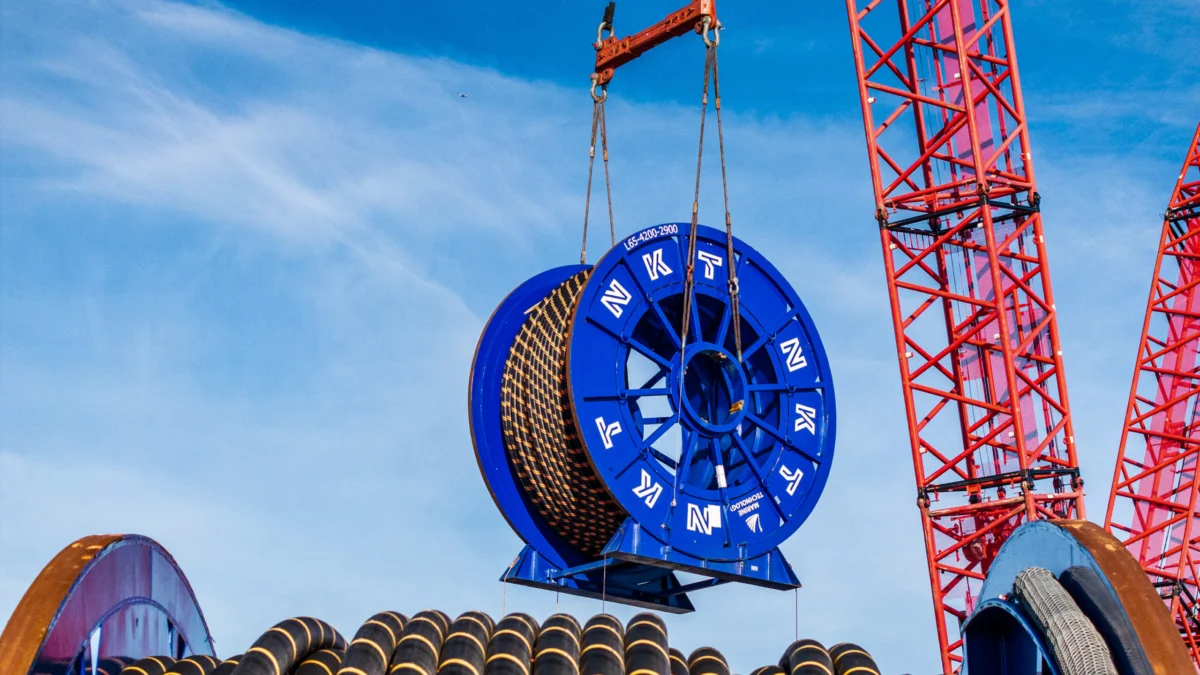
The joint venture—developed by Transmission Developers Inc., a company backed by alternative asset manager Blackstone, alongside provincial energy giant Hydro-Québec—undertook one of the most technically complex civil engineering campaigns in recent North American history. Construction began in late 2022, requiring specialized maritime vessels equipped with hydro-jet plows. These vessels sliced deep trenches into the muddy beds of Lake Champlain and the Hudson River, laying five-inch-thick solid dielectric cables far below the water floor to protect them from commercial maritime traffic, anchor drags, and natural aquatic erosion.
The choice of HVDC technology over traditional high-voltage alternating current (HVAC) was essential for a line of this length and capacity. Direct current minimizes resistive line losses over vast distances and allows operators to precisely control the volume and direction of power flow between two distinct, non-synchronized electrical grids. At the terminal point in Queens, massive converter stations convert the incoming direct current back into high-voltage alternating current, integrating it seamlessly into the local distribution network managed by Consolidated Edison and the New York Independent System Operator (NYISO).
Commissioning Friction and Technical Setbacks
Despite the completion of physical construction earlier this year, integrating such a massive, specialized power link into a dense urban grid is rarely seamless. During initial operational trials in early July, the transmission corridor suffered two consecutive unexpected outages that halted power delivery.
The first interruption, recorded on July 1, was attributed to an automatic safety trip at an AC-to-DC converter facility on the Canadian side of the border. Three days later, on July 4, a second, more severe fault brought the system down completely. Subsequent diagnostic testing traced the issue to a physically damaged segment of buried cable on the U.S. side of the border. The specialized manufacturer responsible for the line dispatched technical teams to extract the compromised section, perform forensic analysis, and install a replacement splice underground.
While unexpected shutdowns can spark concern among energy analysts and policy makers, power systems experts note that early operational turbulence is common during the commissioning phase of mega-infrastructure projects. Before a multi-gigawatt transmission line can be formally integrated into real-time dispatch systems, its specialized power electronics—including high-capacity thyristor and IGBT valve banks—must be thoroughly stress-tested under variable loads. Power systems engineers often view these early faults as an essential, albeit disruptive, phase of system calibration.
Strategic Relief for New York City’s "Energy Island"
The urgency behind bringing the line fully online stems from New York City’s persistent structural energy deficit. For decades, electricity planning in New York State has been defined by a sharp geographic divide. Upstate regions possess an abundance of zero-carbon generation, including major hydroelectric facilities along the Niagara River, utility-scale wind farms, and commercial nuclear plants. Downstate regions—specifically New York City and Long Island, designated by grid managers as "Zone J"—remain heavily reliant on aging natural gas and dual-fuel peaker plants situated directly within urban centers.
This divide is aggravated by limited transmission capacity through the center of the state, creating a bottleneck that prevents excess upstate clean energy from reaching the city. The situation grew more urgent following the retirement of the Indian Point Energy Center in 2021, a nuclear facility that had previously provided roughly a quarter of the lower Hudson Valley and New York City’s zero-emission electricity.
Under New York’s Climate Leadership and Community Protection Act (CLCPA), the state is legally bound to derive 70 percent of its electricity from renewable sources by 2030 and achieve a 100 percent zero-emission grid by 2040. Meeting these benchmarks without compromising reliability in New York City requires importing large volumes of firm, dispatchable clean energy. Unlike intermittent solar and wind generation, Canadian hydroelectricity can act as a "baseload" substitute, providing stable, controllable power that can be throttled up or down to match urban demand spikes.
To maintain system integrity while these projects develop, grid operator NYISO maintains strict reliability criteria. System planners explicitly exclude uncommissioned or early-stage projects from their summer margin adequacy models. Consequently, when severe heatwaves drove peak air-conditioning loads across the mid-Atlantic and Northeast earlier this summer, NYISO’s dispatch centers relied on existing generation reserves, ensuring the regional grid remained stable despite the temporary unavailability of the cross-border line.
Hydrological Vulnerabilities and Climate Risks in the North
While initial technical glitches on the line are expected to be resolved through repairs and calibration, a broader long-term challenge looms on the supply side: changing climate dynamics in eastern Canada.
Hydro-Québec’s system, which boasts an installed capacity exceeding 37,000 megawatts, has historically functioned as the primary energy reservoir for the northeastern United States. By impounding immense volumes of water across vast northern river basins, the provincial utility could store energy in reservoirs and export surplus electricity during high-demand periods in neighboring markets.
However, extended regional precipitation deficits have disrupted this historic model. Parts of eastern Canada have experienced multi-year droughts that significantly reduced natural runoff and diminished water levels behind major hydroelectric dams. When reservoir levels fall, the utility must carefully manage its stored water to ensure it can satisfy domestic heating loads during severe winter freezes—a statutory priority under Canadian law—before allocating excess energy to long-term export contracts.
To offset hydrological volatility, Hydro-Québec has begun accelerating investments in utility-scale onshore wind farms, aiming to use wind power to preserve water reserves behind its dams. Nevertheless, persistent shifts in precipitation patterns raise critical questions about long-term power availability. Even with state-of-the-art, high-capacity transmission cables in place, the true throughput of cross-border clean energy corridors will ultimately depend on seasonal rainfall, snowpack accumulation, and regional climate resilience.
A Watershed Moment for Regional Energy Integration
The operational evolution of the Champlain Hudson Power Express is being closely watched across North America’s energy sector. Across the region, similar cross-border infrastructure initiatives—such as the New England Clean Energy Connect (NECEC), a 145-mile line designed to bring Quebec hydro into Massachusetts via Maine—have faced comparable regulatory delays, legal challenges, and commissioning delays.
The commercial viability of these merchant transmission lines demonstrates a shift in energy investment strategies. Backed by private equity assets and backed by long-term power purchase agreements with state agencies, projects like CHPE reflect an growing appetite for high-risk, high-reward energy infrastructure investments. As energy markets place a premium on firm, low-carbon electricity to replace retiring fossil-fuel capacity, long-distance interregional transmission lines are becoming vital assets for regional economic planning.
For New York, the successful testing and full commercial operation of the CHPE line will serve as a crucial test case. If the $6 billion asset can overcome its early technical hurdles and navigate supply-side climate pressures, it will offer a scalable model for cross-border clean energy integration across North America. If challenges persist, however, grid planners may be forced to re-evaluate how quickly dense metropolitan areas can transition away from fossil-fuel baseline power without compromising energy security.
