

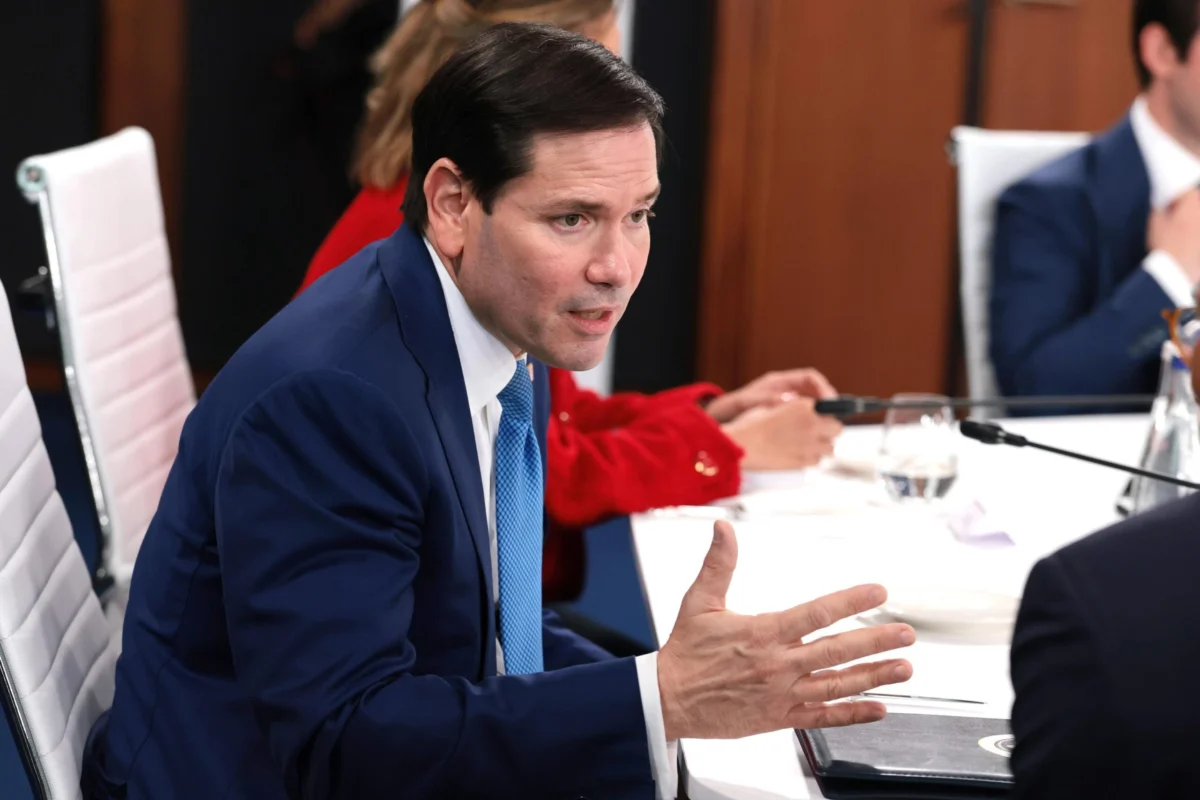
As global leaders and technology titans convened in the serene landscape of Evian-les-Bains for the G7 Summit, the atmosphere was thick with a tension that far outstripped the usual diplomatic pleasantries. At the heart of this friction is a fundamental question of trust in the digital age: Can the world rely on American artificial intelligence, or is the "kill switch" a looming reality that necessitates a radical decoupling from Silicon Valley? This question has moved from the realm of speculative fiction into the halls of the U.S. State Department, prompting a high-stakes diplomatic offensive led by Secretary of State Marco Rubio.
A recently surfaced diplomatic cable, reviewed by industry observers, reveals a concerted effort by the United States to manage a growing international PR crisis. The directive instructs American diplomats to reassure foreign governments and multinational corporations that Washington does not possess—nor does it intend to use—an "arbitrary kill switch" to sever access to critical AI technologies. However, the very need for such a reassurance campaign highlights a deepening rift in the global tech landscape, where the concept of "digital sovereignty" is no longer a fringe political slogan but a cornerstone of national security strategy for America’s closest allies and fiercest rivals alike.
The genesis of this anxiety can be traced back to a series of abrupt disruptions that sent shockwaves through the global tech ecosystem. On June 12, the U.S. government implemented restrictions barring non-U.S. residents from accessing Anthropic’s most sophisticated AI models, Mythos and Fable, citing heightened national security concerns. In a move that underscored the fragility of cloud-based AI dependencies, Anthropic responded by temporarily suspending access globally, as the company struggled to instantaneously verify the nationality of every user in its vast database. While the restriction lasted only a few weeks, the psychological and strategic impact was profound. For a Chief Information Officer at a European bank or an Asian manufacturing conglomerate, the duration of the blackout was irrelevant; the mere fact that it happened at all was proof of a systemic vulnerability.
The State Department’s talking points, as outlined in the cable, attempt to reframe these events. Diplomats are urged to argue that temporary pauses for security testing and compliance should not be conflated with a permanent "kill switch." The U.S. position is that these are narrow, surgical measures intended to prevent the misuse of dual-use technology by adversarial actors. Yet, to a foreign buyer, the distinction between a "security pause" and a "kill switch" is a semantic one. In the world of high-stakes enterprise, where AI is increasingly integrated into research, logistics, and real-time customer operations, continuity of service is the primary product. A government-ordered interruption, however brief, transforms an innovative tool into a liability.
This erosion of trust is catalyzing a massive shift in global capital. The most striking example is the reported interest from Samsung in French AI pioneer Mistral. Sources suggest that the South Korean giant is considering a substantial investment in Mistral as part of a funding round that could value the startup at approximately €20 billion. While Samsung has not officially confirmed the move, the strategic logic is clear: Mistral represents a credible, "sovereign" alternative to the American giants. By developing high-performing models that support private, on-premise deployment and local infrastructure, Mistral offers a hedge against the political volatility of Washington’s export controls.
France has been particularly aggressive in fostering this domestic capacity. The French government views AI not just as an economic engine, but as a pillar of national independence. This sentiment is echoed across Europe and Asia, where lawmakers are increasingly vocal about the dangers of "digital colonialism." The irony of the situation is not lost on international observers: as the U.S. State Department instructs its diplomats to challenge foreign digital sovereignty programs that favor local infrastructure, it simultaneously asserts the right to restrict access to its own platforms on national security grounds. This "do as I say, not as I do" approach is meeting stiff resistance.

The diplomatic cable reportedly asks officials to push back against localization rules—policies that require data to be stored and processed within a country’s borders—and other regulations that make it difficult for U.S. companies to dominate overseas markets. Washington views these as protectionist barriers; foreign governments view them as necessary shields. If advanced AI is sensitive enough for the United States to control via export licenses and "security pauses," then foreign leaders argue it is far too sensitive to be "rented" from a provider that can be silenced by a memo from the White House.
This tension is reshaping the architecture of AI development itself. We are witnessing the rise of "sovereign AI," where nations invest in their own compute clusters and indigenous foundational models. This trend is further fueled by the success of open-weight models, such as Meta’s Llama series and Mistral’s offerings. Unlike the closed-API models of OpenAI or Anthropic, open-weight models allow organizations to run AI on their own hardware, effectively removing the possibility of a remote "kill switch." For a defense agency in the UK or a healthcare provider in Singapore, the ability to control the physical and digital environment in which the model operates is becoming a non-negotiable requirement.
Even American tech giants are beginning to hedge their bets. Microsoft’s multi-billion-dollar agreement to support Mistral’s European computing infrastructure is a case in point. By allowing Azure customers to utilize French-developed models hosted on European data centers, Microsoft is providing a "middle path" for regulated industries that are wary of total dependence on U.S.-controlled infrastructure. This suggests a future where the AI market is fragmented not just by capability, but by jurisdiction.
The long-term implications of this shift are significant. If the U.S. continues to use AI access as a tool of statecraft, it risks accelerating the very decoupling it seeks to avoid. A world where every major economic bloc has its own "sovereign" AI stack is a world where American soft power is diminished, and where the global standards for AI safety and ethics become fractured. The "Silicon Iron Curtain" could lead to a duplication of efforts, slower global innovation, and a lack of interoperability between systems.
Furthermore, the focus on the "kill switch" ignores the broader issue of "compute sovereignty." The U.S. has already weaponized the supply chain of high-end semiconductors, such as Nvidia’s H100s, to limit the progress of adversaries like China. However, these same export controls have made allies nervous. If the U.S. can decide who gets the chips to train the AI, and then decide who gets to use the finished models, it holds a level of power that is unprecedented in industrial history. This concentration of power is precisely what is driving the global push for alternatives.
As we look toward the 2027 and 2028 horizons, the "reassurance campaign" by the State Department will likely face an uphill battle. The reality on the ground is that AI has transitioned from a "nice-to-have" productivity tool to the central nervous system of modern governance and commerce. In this context, "trust me" is a failing strategy. To maintain its leadership, the U.S. may need to move beyond diplomatic cables and toward a more transparent, treaty-based framework for AI access—one that provides legal guarantees of service continuity for allies, independent of shifting political winds in Washington.
The G7 discussions in Evian-les-Bains may have focused on Ukraine, the Middle East, and global innovation, but the subtext was the struggle for control over the future of intelligence. While Secretary Rubio and his team work to convince the world that the "kill switch" is a myth, the world is busy building the infrastructure to ensure that, even if it were real, it wouldn’t matter. The era of unquestioned American technological hegemony is giving way to a more complex, multipolar digital world—one where sovereignty is measured in parameters, weights, and the location of the data center.
