

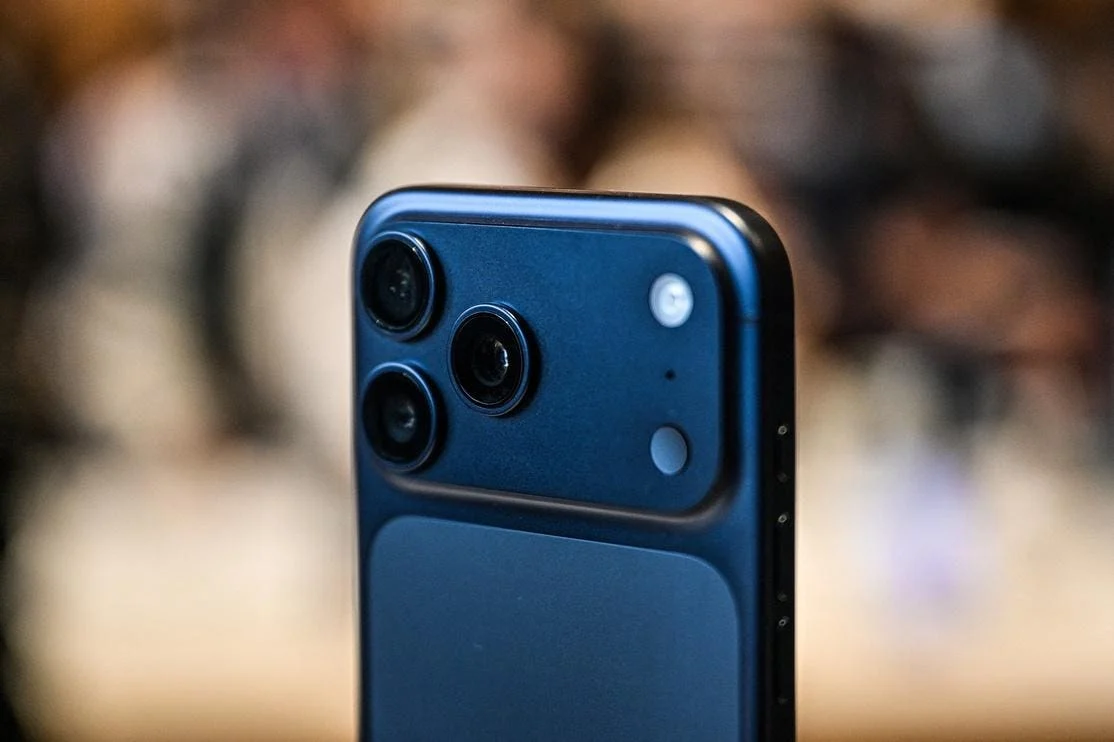
For over a decade, the technology industry has operated on a clock set by a single company in Cupertino. As summer begins to fade, the global tech community pivots its attention toward a singular window in September, anticipating the arrival of the next generation of mobile hardware. The upcoming launch of the iPhone 18 Pro and iPhone 18 Pro Max is not merely a product release; it is a meticulously choreographed performance that dictates market trends, consumer behavior, and retail logistics for the final quarter of the year. While Apple remains characteristically silent regarding its specific plans until the invitations are sent, the company’s historical adherence to a rigid scheduling logic allows us to forecast the exact timeline with a degree of precision that borders on certainty.
To understand the future, one must dissect the evolution of the Apple keynote. In the early years of the smartphone revolution, Apple’s release cycle was far more fluid. The original iPhone, unveiled by Steve Jobs in January 2007, did not reach consumers until June. This summer release window held steady for the iPhone 3G, 3GS, and the revolutionary iPhone 4. However, 2011 marked a permanent shift in the corporate strategy. The iPhone 4S was announced on October 4, 2011—the final keynote of the Jobs era and the first led by Tim Cook. Since that transition, the flagship iPhone has become an autumn staple, moving into a September slot that maximizes its impact on the holiday shopping season.
This shift was more than just a calendar change; it was a move to align hardware releases with the company’s fiscal year-end and the peak of global consumer spending. By examining the fourteen years of data following the iPhone 4S, we can identify a set of "Cupertino Rules" that Apple follows to ensure maximum media saturation and logistical efficiency. These rules are governed by three primary factors: the Labor Day holiday in the United States, the IFA trade show in Berlin, and the logistical requirements of international media travel.
The first and most significant constraint is the Labor Day factor. In the United States, Labor Day falls on the first Monday of September. Apple has demonstrated a consistent reluctance to hold major events on the day immediately following a public holiday. This is largely a matter of logistics; the Tuesday after Labor Day serves as a travel day for thousands of journalists, analysts, and Apple employees descending upon the Steve Jobs Theater. Forcing the world’s media to travel on a holiday Monday would be a PR misstep that Apple, a company obsessed with the "experience" of its events, simply does not make. Consequently, when Labor Day falls early in the month, the keynote typically lands on a Tuesday or Wednesday of the following week.
In the current cycle, Labor Day falls on Monday, September 7. This timing is critical because it mirrors the calendar of 2015. During that year, Apple bypassed the Tuesday travel day and held its keynote on Wednesday, September 9. This precedent strongly suggests that the iPhone 18 Pro and iPhone 18 Pro Max will be officially unveiled on Wednesday, September 9. This date satisfies all of Apple’s internal requirements: it provides a buffer from the holiday, allows for a full day of media travel, and keeps the announcement within the first half of the month to maintain momentum.
Another crucial external factor is the IFA (Internationale Funkausstellung) in Berlin. As Europe’s largest consumer electronics show, IFA typically opens in the first week of September. This year, the show is slated to begin on Friday, September 4, with press days occurring earlier that week. Apple has a long-standing tradition of avoiding direct clashes with IFA. The company prefers to let the noise of the Berlin show subside before it captures the global news cycle for itself. By scheduling its event for the week of September 7, Apple ensures that it does not have to share the headlines with the myriad of Android manufacturers and peripheral makers showcasing their wares in Germany. Conversely, Apple often uses the week of IFA to announce the date of its own keynote, effectively "stealing" the spotlight from competitors just as they are preparing their own presentations.

The unveiling of the iPhone 18 Pro will also serve as the public debut of iOS 27. The synergy between hardware and software is the cornerstone of Apple’s ecosystem, and the release of the new operating system is a vital component of the launch timeline. Currently, the public beta of iOS 27 is being vetted by early adopters. This period of "regret and refinement"—where users often toggle between the excitement of new features and the instability of beta software—is nearing its end. Based on previous years, the final "Golden Master" version of iOS 27 will likely be released to the general public on Monday, September 14. This provides a several-day window for existing iPhone users to upgrade their software before the new hardware arrives in stores, ensuring that the Apple servers are not overwhelmed by simultaneous hardware activations and software downloads.
Following the projected September 9 keynote, the retail machinery will move with industrial efficiency. Pre-orders for the iPhone 18 Pro and iPhone 18 Pro Max are expected to open on Friday, September 11. Apple has standardized this process to a global "go-live" time, typically 5:00 a.m. Pacific Time. This synchronization prevents any single region from gaining an unfair advantage on stock, though it requires customers in various time zones to adapt their schedules—whether that means waking up before dawn in California or hitting "refresh" during a lunch break in London. To streamline this, Apple has increasingly utilized "pre-pre-orders," allowing customers to select their preferred configuration and payment method in advance, essentially staging their purchase in a digital shopping bag until the clock strikes the hour.
The period between pre-orders and the official on-sale date is occupied by the critical "review window." Selected members of the press and influential content creators receive the devices shortly after the keynote, working under strict non-disclosure agreements. The embargo for these reviews usually lifts forty-eight hours before the phones reach retail shelves. Given a September 9 keynote, we can expect the first comprehensive deep dives into the iPhone 18 Pro’s camera capabilities and processor benchmarks to appear on Wednesday, September 16.
However, this year’s launch carries a potential "wildcard" that could disrupt the traditional three-model release structure. Rumors from the supply chain suggest that Apple is preparing its first-ever foldable device, potentially dubbed the "iPhone 18 Ultra." If Apple follows the precedent set by the iPhone X in 2017, the Ultra may be announced alongside the Pro models but could face a staggered release date. Foldable technology introduces significant manufacturing complexities and yield challenges. While the iPhone 18 Pro and Pro Max are almost certain to go on sale on Friday, September 18, the Ultra—if it exists—might not reach consumers until October or November. This "halo" product would serve to maintain interest in the brand well after the initial September surge.
The economic implications of this timeline are vast. The "Pro" models have become increasingly important to Apple’s bottom line as the company pushes for higher Average Selling Prices (ASP). The iPhone 18 Pro Max, in particular, is rumored to push the boundaries of titanium construction, potentially making it one of the most substantial and durable devices in the lineup’s history. Meanwhile, the base-model iPhone 18 is expected to be held back until a spring 2027 release, potentially alongside a second-generation "iPhone Air" and an "iPhone 18e." This strategy allows Apple to dominate the high-end market in the fall while refreshing its mid-range offerings during the traditionally slower spring season.
As we look toward the Friday, September 18 on-sale date, the global logistics network is already in motion. From the assembly lines in various manufacturing hubs to the distribution centers in the United States and Europe, millions of units are being staged for a simultaneous rollout. On that Friday, the first customers in Australia and New Zealand will walk into Apple Stores at 7:00 a.m. local time, followed by a wave of retail openings that will sweep across Asia, Europe, and finally the Americas.
In conclusion, while Apple may enjoy the aura of unpredictability, its success is built on the foundation of a predictable, repeatable, and masterfully executed schedule. The confluence of Labor Day, the IFA cycle, and a decade of logistical refinement points unequivocally to a September 9 unveiling. For the consumer, this means the wait for the iPhone 18 Pro is nearly over. For the industry, it signals the beginning of a new competitive cycle that will define the technological landscape for the year to come. Whether the headliner is a refined Pro model or a revolutionary foldable Ultra, the world will be watching Cupertino on the second Wednesday of September.
