

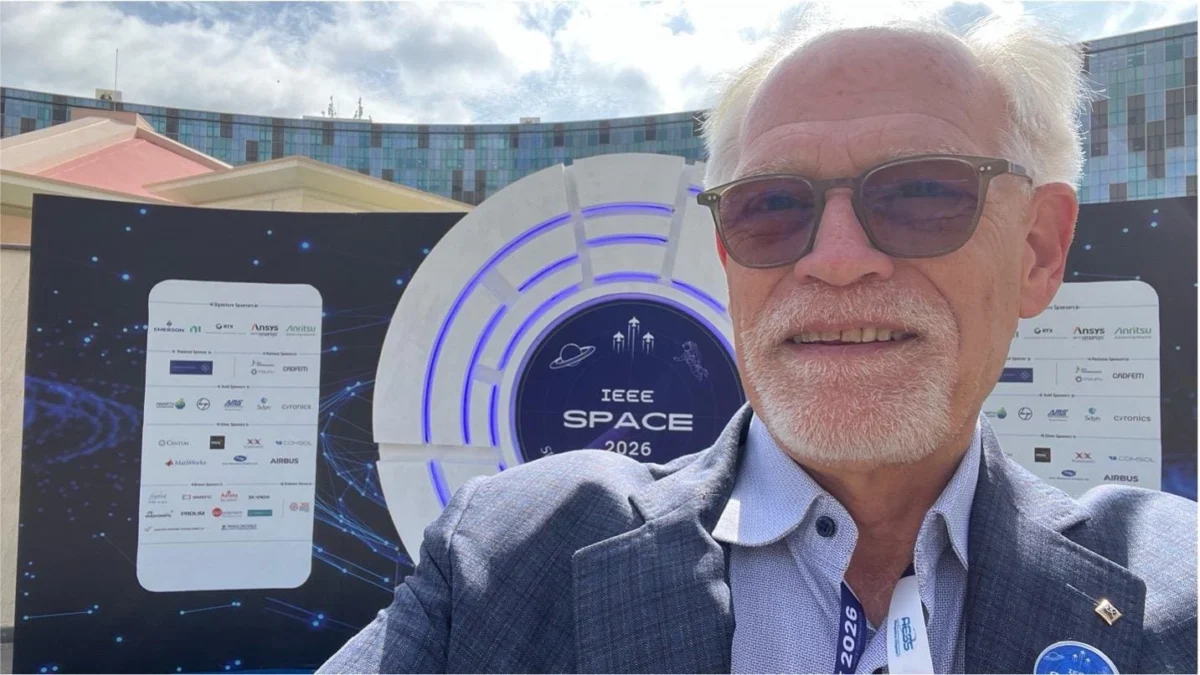
The recent conclusion of the 2026 IEEE Space, Aerospace and defenCE (SPACE) conference in Bangalore, India, marks a pivotal moment in the transition from theoretical space exploration to a sustainable, industrial off-world economy. As the third iteration of this increasingly influential gathering, the event served as a high-level nexus for engineers, policymakers, and private sector visionaries to chart the "humanization of space"—a concept that transcends mere exploration to envision a permanent, economically viable human presence beyond Earth’s atmosphere. Led by figures such as Tom Coughlin, a prominent IEEE leader and chair of the IEEE SpaceTech initiative, the conference underscored a shift in the global aerospace hierarchy, where traditional state-run programs are now being augmented, and in some cases surpassed, by a vibrant ecosystem of private enterprises and international collaborations.
The choice of Bangalore as a host city was far from coincidental. India has rapidly emerged as a formidable pillar in the global space sector, a status cemented during the conference by the successful launch of the Vikram I rocket by Skyroot, a private Indian aerospace firm. The mission, which successfully delivered a satellite into Low Earth Orbit (LEO), acted as a real-time proof of concept for the themes discussed at the conference. The pride felt by the Indian delegation was not merely nationalistic; it was a signal to the world that the barriers to entry for complex orbital maneuvers are falling. Skyroot’s success mirrors the trajectory of global leaders like SpaceX, proving that the democratization of space is no longer a Western-centric phenomenon but a global reality.
At the heart of this transformation is a radical shift in the economics of orbital delivery. For decades, the primary constraint on space development was the exorbitant cost of mass. During the Space Shuttle era, launching a kilogram of payload into orbit could cost upwards of $50,000. The advent of reusable launch vehicles, pioneered by SpaceX’s Falcon 9 and Falcon Heavy, brought those costs down to approximately $1,400 to $1,500 per kilogram. However, the projections discussed in Bangalore suggest we are on the precipice of an even more dramatic decline. With the imminent full operational capacity of next-generation heavy-lift vehicles like the SpaceX Starship, industry analysts project costs could plummet to less than $200 per kilogram. This order-of-magnitude reduction changes the fundamental calculus of space-based industry. When mass is no longer the primary budgetary bottleneck, the scope of what is "possible" expands from small, specialized satellites to massive industrial infrastructures.
The implications of these falling costs are profound, particularly for the burgeoning field of "Physical AI." This discipline, which integrates advanced autonomous robotics with artificial intelligence capable of interacting with the physical world, is expected to be the primary workforce of the new space age. In the harsh, high-radiation environments of the Moon, the asteroid belt, and LEO, human labor is prohibitively expensive and dangerous. Consequently, the development of autonomous and semi-autonomous robots is essential for the next phase of infrastructure build-out. These machines will be tasked with the complex assembly of modular space stations, the maintenance of orbital platforms, and the construction of lunar habitats using in-situ resource utilization (ISRU).
Manufacturing in microgravity represents another frontier that is nearing commercial maturity. The unique physical properties of space—namely the absence of convection and buoyancy—allow for the creation of materials that are impossible to produce on Earth. This includes high-purity ZBLAN fiber optic cables, which offer significantly lower signal loss than silica-based fibers, and the 3D printing of complex biological tissues and organs where Earth’s gravity would normally cause structures to collapse during the curing process. As launch costs decline, the ROI for these "Made in Space" products becomes increasingly attractive, potentially creating a self-sustaining loop of orbital commerce.
Furthermore, the conference highlighted the inevitable rise of space-based data centers. As orbital infrastructure grows, the need for localized processing power becomes critical. Current models of space operations rely heavily on downlinking raw data to Earth-based servers, a process limited by bandwidth and latency. By establishing data centers in orbit, the "management of the automated space infrastructure" can occur in real-time. These facilities would leverage the abundant solar energy available in space and the natural vacuum for certain cooling processes, providing the backbone for the "Internet of Space." This edge computing at an orbital scale will be vital for managing the thousands of autonomous robots and satellites that will eventually populate the Earth-Moon system.

The "humanization of space" also requires a rethinking of how we extract and use resources. Mining the Moon and near-Earth asteroids is no longer the stuff of science fiction; it is a strategic necessity for long-term presence. Water ice found in lunar craters can be processed into liquid hydrogen and oxygen—the primary components of rocket propellant. This "gas station in the sky" model would allow for much more ambitious deep-space missions, as spacecraft would not need to carry all their fuel from Earth’s deep gravity well. The IEEE SpaceTech initiative is specifically designed to foster the relationships and technical standards required to make these mining and refueling operations interoperable and safe.
However, the transition to a prospering space industry is not without significant hurdles, many of which are regulatory and organizational rather than purely technical. This is where the role of the IEEE becomes indispensable. As an organization that spans nearly every technological discipline, from telecommunications to power engineering and AI, the IEEE is uniquely positioned to lead the creation of international consensus standards. The current "Wild West" era of space exploration, characterized by a lack of coordinated traffic control and a growing debris crisis, is unsustainable.
The Kessler Syndrome—a theoretical scenario where the density of objects in LEO is high enough that a single collision could cause a cascade of debris that renders space flight impossible—is a looming threat. The Bangalore conference emphasized the urgent need for global standards in space traffic management and debris mitigation. We need "rules of the road" that are as robust as those in international maritime or aviation law. This includes standardized protocols for satellite de-orbiting, autonomous collision avoidance systems, and the shared use of the electromagnetic spectrum to prevent interference between the thousands of new satellites being launched annually.
Beyond safety, standards are the bedrock of a competitive marketplace. For the space industry to prosper, hardware from a company in India must be able to dock seamlessly with a module built in Europe or a refueling station owned by a firm in the United States. By establishing best practices for interfaces, communication protocols, and AI ethics, the IEEE SpaceTech initiative aims to create a "plug-and-play" ecosystem that lowers barriers to entry for startups and encourages innovation.
Looking forward, the momentum generated in Bangalore is set to shift toward Singapore for the 2027 SpaceTech conference. This move reflects a strategic intent to globalize the conversation further, drawing in the financial and technological powerhouses of Southeast Asia. Singapore’s reputation as a global hub for logistics, finance, and law makes it an ideal venue for discussing the next phase of space industrialization: the creation of international public policies that govern property rights in space, the environmental protection of celestial bodies, and the equitable distribution of space-based resources.
Ultimately, the 2026 IEEE SPACE conference demonstrated that the dream of a multi-planetary existence is transitioning into a rigorous engineering and economic roadmap. The "humanization of space" is not just about putting boots on the ground of another world; it is about building the industrial, digital, and regulatory scaffolding that allows humanity to thrive in the final frontier. Through the convergence of falling launch costs, the rise of physical AI, and the establishment of global technical standards, the outer space industry is moving toward a future where it is not just a branch of government research, but a core component of the global economy. The successful launch of the Vikram I during the event served as a poignant reminder: the countdown to this new era has already finished, and the ascent is well underway.
