

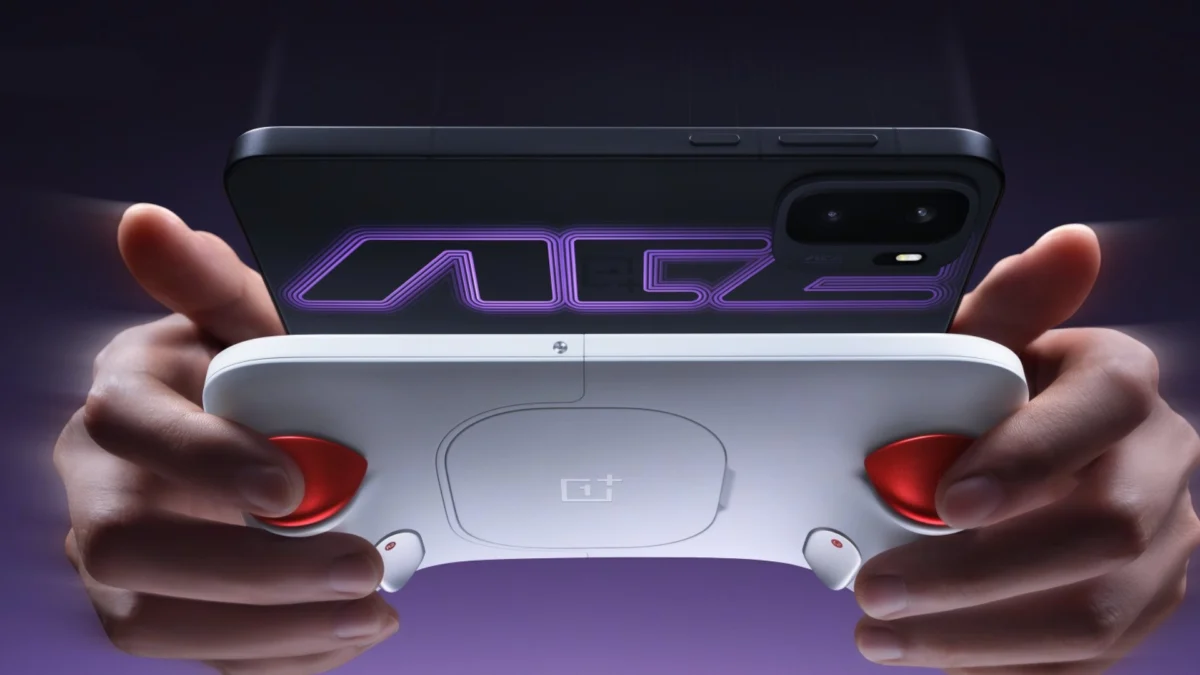
The landscape of mobile gaming is undergoing a tectonic shift, moving away from casual sessions toward high-fidelity, sustained experiences that rival dedicated portable consoles. As mobile titles become increasingly demanding, the traditional smartphone architecture—often prioritized for thinness and aesthetics—has struggled to keep pace with the thermal and power requirements of sustained performance. Enter the OnePlus Ace 6 Ultra, a device that effectively bridges the gap between a flagship smartphone and a professional-grade gaming handheld. With its latest series of announcements, OnePlus is making a clear statement: the era of anxiety-inducing battery drain during competitive play is drawing to a close.
The Ace 6 Ultra is slated for an official unveiling in China on April 28, and the pre-launch drip feed of specifications has generated significant buzz within the industry. While previous teases focused on the visual fluidity provided by its 165Hz BOE-manufactured display and the innovative attachable controller ecosystem, the most recent technical disclosures have shifted the conversation toward the device’s longevity. By integrating an 8,600mAh battery—a capacity that dwarfs the industry standard of 5,000mAh—OnePlus is signaling that it understands the fundamental pain point of the mobile gamer: the need for reliable, extended uptime.
Engineering for Endurance: The Glacier Battery Architecture
The cornerstone of the Ace 6 Ultra’s endurance narrative is the implementation of the “Glacier Battery” technology, powered by an advanced Energy Concentration Chip. This is not merely a marketing term; it represents a fundamental change in how smartphone batteries manage current flow and chemical efficiency. In the high-stakes environment of competitive gaming, where frame rates must remain constant to ensure victory, the stability of power delivery is paramount.
OnePlus has stated that this architecture facilitates up to seven hours of continuous, high-frame-rate gameplay. This metric is a significant departure from standard devices, which often see performance throttling after just a few hours of intensive use. Furthermore, the Energy Concentration Chip offers tangible advantages in varying environmental conditions. By providing the equivalent of 200mAh of additional capacity under standard operating temperatures, and a staggering 700mAh increase in extreme cold—specifically at -20°C—the phone ensures that users aren’t left stranded, whether they are gaming in a climate-controlled room or enduring harsh outdoor conditions.
Industry analysts note that this shift toward massive battery capacities in gaming-centric phones is a direct response to the "thermal throttling" epidemic. By opting for a higher-capacity cell, manufacturers can potentially lower the voltage strain on the battery, which in turn reduces internal heat generation during rapid discharge. This keeps the SoC (System on Chip) cooler for longer, allowing for sustained peak clock speeds without the dreaded frame-rate drops that plague mid-range devices.
Rapid Recovery: The 120W SuperVOOC Advantage
Even with an 8,600mAh reservoir, the reality of high-performance gaming is that eventually, the device will require a charge. OnePlus has addressed this bottleneck by equipping the Ace 6 Ultra with 120W SuperVOOC charging technology. The company reports that a mere ten-minute charge can restore two hours of intensive gameplay.
This charging capability is perhaps the most impressive technical achievement in the package. Earlier speculation suggested a more conservative 100W ceiling, making the 120W confirmation a pleasant surprise for prospective users. The implications here are clear: the Ace 6 Ultra is designed to be "always on." The ability to reclaim two hours of intense gameplay in the time it takes to grab a coffee fundamentally changes the user behavior model. Gamers no longer need to be tethered to a wall socket for hours to recover from a marathon session; they can integrate quick "top-ups" into their routine, ensuring the device remains ready for the next match.
Durability as a Competitive Edge
Beyond the internals, OnePlus has bolstered the Ace 6 Ultra’s physical resilience. Gaming phones are notoriously prone to damage due to the intense pressure applied during high-stakes maneuvers, as well as the risk of accidental drops during mobile play. The inclusion of the IP69K rating is a significant value add. As the highest level of ingress protection currently available for mobile devices, the IP69K rating ensures that the handset is shielded against not only dust and water submersion but also high-pressure, high-temperature water jets.
This level of protection is rarely seen in consumer electronics, typically being reserved for industrial-grade hardware. By bringing this to the gaming segment, OnePlus is effectively proofing the device against the hazards of daily life—and perhaps even some accidents that would destroy lesser handsets. Coupled with the OPPO Crystal Shield Glass, which enhances scratch and drop resistance, the Ace 6 Ultra presents itself as a robust tool built for longevity rather than a fragile accessory.
Industry Implications and Market Positioning
The arrival of the Ace 6 Ultra forces a recalibration of what constitutes a "gaming phone." For years, the market has been saturated with devices that emphasize flashy RGB lighting and aggressive, angular aesthetics. OnePlus is pivoting toward a more utilitarian approach: internal power, thermal efficiency, and hardware durability.
If this model successfully delivers on its promises, it could set a new benchmark for the entire smartphone industry. We are likely to see a trend where "battery density" becomes the new "megapixels"—a key battleground for OEM differentiation. Other manufacturers will undoubtedly face pressure to move beyond the 5,000mAh standard to remain competitive, potentially leading to a widespread adoption of more advanced battery chemistries and management chips.
Moreover, the modular approach—where the phone is designed to dock into a dedicated controller—suggests that OnePlus is eyeing the handheld console market currently dominated by devices like the Steam Deck or the ASUS ROG Ally. By leveraging the superior display technology and ecosystem of the Android platform, the Ace 6 Ultra offers a more versatile proposition. Users get a high-end smartphone that doubles as a serious gaming machine, eliminating the need to carry two separate devices.
The Global Outlook
While the Ace 6 Ultra is currently earmarked for a China-first launch, the global tech community is watching closely. OnePlus has a proven track record of re-branding its Ace series devices for international markets, as evidenced by the transition of the Ace 6T into the global OnePlus 15R. While there is no official confirmation regarding a global release for the Ultra variant, the sheer technical merit of the device makes it a prime candidate for a wider rollout.
If brought to global markets, the Ace 6 Ultra would likely disrupt the flagship segment. Many premium phones focus on camera arrays at the expense of battery capacity and cooling. The Ace 6 Ultra, by contrast, targets a specific, highly engaged audience: the "power user." Whether or not it arrives on international shores, its debut marks a pivotal moment in mobile technology, proving that with the right power management and thermal engineering, a smartphone can finally handle the rigors of serious, professional-grade gaming without compromise.
As we approach the April 28 launch, the focus will undoubtedly shift to real-world performance benchmarks. However, based on the specifications released, the OnePlus Ace 6 Ultra has already succeeded in one area: it has shifted the goalposts for what a mobile device can achieve, prioritizing substance over style and performance over passivity. For those who live their lives on the move and demand the best from their hardware, the wait for this "battery beast" appears well-justified.
