

The landscape of artificial intelligence infrastructure is on the precipice of a seismic shift as Cerebras Systems, the Silicon Valley powerhouse known for its radical "wafer-scale" approach to computing, officially moves to list its shares on the public market. This long-anticipated filing, targeting a mid-May debut, marks a pivotal moment for the semiconductor industry, representing the most significant challenge to the current GPU-centric hegemony established by Nvidia. After a series of geopolitical delays and a massive surge in private valuation, Cerebras is positioning itself not merely as a hardware provider, but as the essential architect of the next generation of generative AI.
The journey to this IPO has been anything but linear. Cerebras had previously attempted to go public in 2024, but those plans were scuttled under the weight of intense federal scrutiny. The primary point of contention for U.S. regulators was the company’s deep ties with G42, an Abu Dhabi-based artificial intelligence firm. As the U.S. government tightened its grip on the export of advanced AI technology to the Middle East—fearing potential leaks to China—the investment and partnership between Cerebras and G42 became a lightning rod for national security concerns. However, after navigating a complex federal review and restructuring its international engagements, Cerebras has emerged with a cleaner slate and a significantly bolstered balance sheet.
In the intervening years, the company’s valuation has skyrocketed. Following a $1.1 billion Series G round in late 2025, Cerebras secured an additional $1 billion in Series H funding as recently as February 2026. This latest infusion of capital valued the firm at a staggering $23 billion, a testament to the investor confidence in its unique technical architecture. Unlike traditional chipmakers that carve hundreds of individual processors from a single silicon wafer, Cerebras utilizes the entire wafer to create one massive chip. Their Wafer-Scale Engine (WSE) is essentially a single piece of silicon the size of a dinner plate, housing trillions of transistors and nearly a million AI-optimized cores. This architecture eliminates the traditional bottlenecks associated with interconnecting thousands of smaller GPUs, allowing for vastly superior data transfer speeds and reduced latency.
CEO Andrew Feldman has been vocal about the company’s competitive edge, particularly in the realm of "inference"—the process by which a trained AI model generates responses to user queries. While Nvidia’s H100 and Blackwell architectures remain the industry standard for training massive models, Cerebras has carved out a specialized niche in high-speed inference. This was punctuated by a landmark partnership with OpenAI, the creators of ChatGPT. Reports suggest the deal is worth upwards of $10 billion, a move that signals OpenAI’s desire to diversify its hardware dependencies. Feldman recently noted that the company successfully captured the fast inference business at OpenAI, a sector Nvidia was desperate to protect. By providing the throughput necessary for near-instantaneous complex reasoning, Cerebras is proving that for certain high-stakes AI applications, size truly does matter.
The financial performance disclosed in the IPO filing paints a picture of a company in a state of hyper-growth. Cerebras reported $510 million in revenue for the 2025 fiscal year. While the filing showed a GAAP net income of $237.8 million, this figure was heavily influenced by one-time accounting items and tax adjustments. On a non-GAAP basis, which many analysts view as a more accurate reflection of ongoing operations, the company posted a net loss of $75.7 million. This loss is characteristic of a high-growth deep-tech firm that continues to pour hundreds of millions of dollars into research and development to maintain its lead in the "silicon arms race."
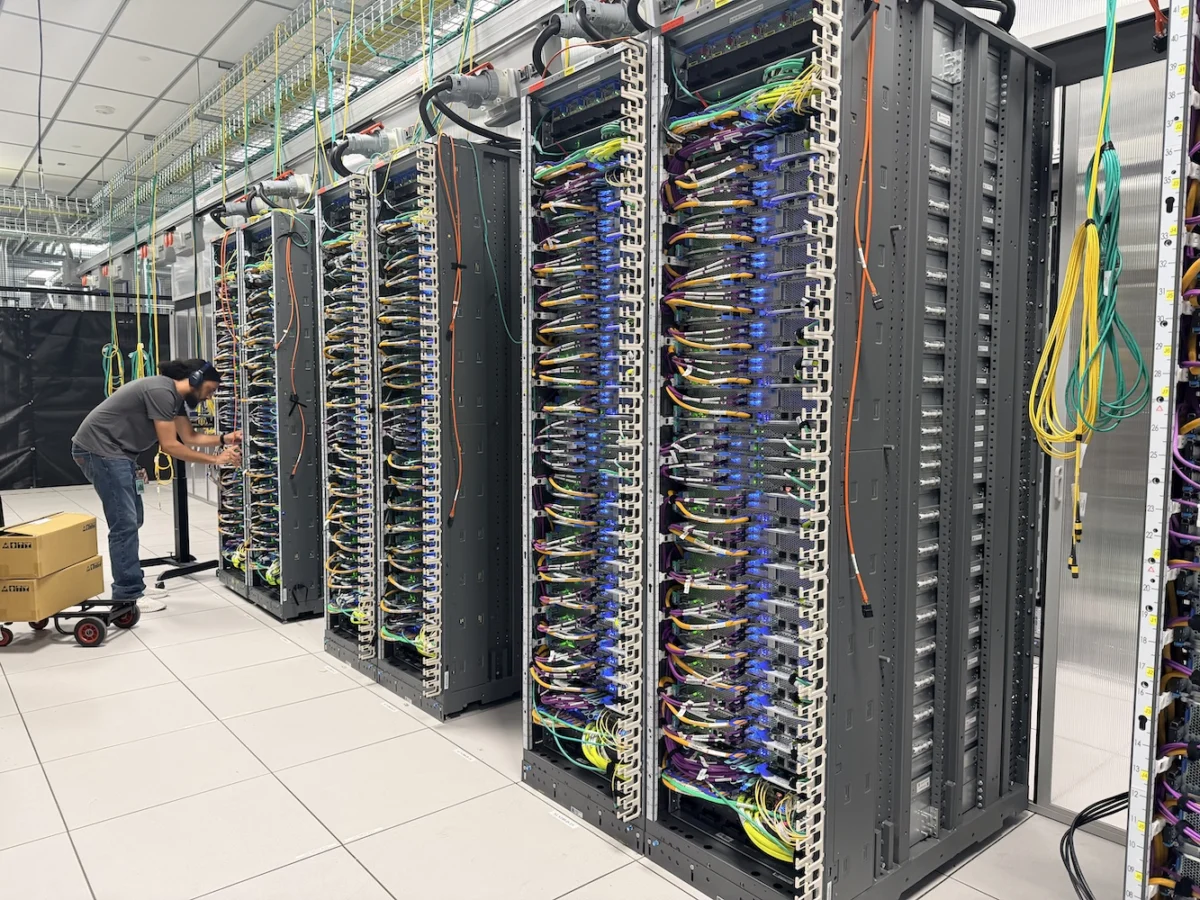
Beyond its relationship with OpenAI, Cerebras has made significant inroads into the cloud service provider (CSP) market through a strategic agreement with Amazon Web Services (AWS). This deal integrates Cerebras hardware into Amazon’s vast data center ecosystem, allowing AWS customers to access wafer-scale computing power via the cloud. This is a critical move for Cerebras, as it lowers the barrier to entry for enterprises that may not have the capital or the specialized facility requirements to house a Cerebras CS-3 system on-premises. By moving into the cloud, Cerebras is directly challenging Nvidia’s CUDA software moat, offering an alternative ecosystem for developers who are increasingly frustrated by the high costs and long lead times associated with GPU clusters.

The implications of this IPO extend far beyond the stock ticker. It serves as a litmus test for the "post-GPU" era of artificial intelligence. For the past decade, the industry has operated under the assumption that the best way to scale AI was to link more and more small chips together. Cerebras is betting the future on the opposite premise: that the only way to meet the exponential demand for compute is to make the individual processor larger and more integrated. If the IPO is successful and Cerebras can maintain its growth trajectory, it could force a fundamental redesign of data centers globally, shifting the focus from networking efficiency to cooling and powering single-wafer systems.
Industry analysts are also watching how Cerebras handles the evolving geopolitical landscape. While the G42 situation appears to have been resolved to the satisfaction of U.S. regulators, the company remains at the center of the technological rivalry between Washington and Beijing. As a U.S.-based company with a product that represents the absolute "bleeding edge" of compute, Cerebras will likely face perpetual export restrictions. Its ability to thrive while essentially being locked out of the Chinese market—a major consumer of AI hardware—will be a key metric for its long-term viability.
Furthermore, the timing of the IPO suggests that Cerebras is looking to capitalize on a market that is shifting from "AI hype" to "AI utility." In 2023 and 2024, investors were enamored with any company mentioning a large language model. By mid-2026, the market is demanding performance, efficiency, and clear paths to profitability. Cerebras’ focus on inference is timely, as the industry moves from the resource-intensive phase of training new models to the operational phase of running them for hundreds of millions of users daily. Inference is where the long-term revenue in AI resides, and if Cerebras can maintain its speed advantage, it could become the "engine room" of the global AI economy.
The upcoming offering, slated for mid-May, is expected to be one of the largest tech IPOs of the year. While the company has not yet disclosed the exact number of shares or the price range, the $23 billion private valuation sets a high bar. Investors will be looking closely at the company’s customer concentration—particularly its reliance on massive deals with OpenAI and AWS—and whether it can expand its footprint into the broader enterprise market, including sectors like pharmaceuticals, energy, and national labs where massive-scale simulation is required.
As the roadshow begins, the narrative will likely center on the concept of "computational sovereignty." In an era where access to compute is synonymous with economic and military power, Cerebras offers a domestic, radical alternative to the status quo. The company’s ability to manufacture these gargantuan chips—a feat many in the industry thought impossible a decade ago—serves as a powerful symbol of American engineering prowess.
However, the road ahead is not without significant competition. While Nvidia is the primary target, other players like Groq, Sambanova, and even internal silicon teams at Google and Microsoft are all vying for a piece of the inference market. Cerebras must prove that its wafer-scale architecture is not just a specialized tool for the elite, but a scalable solution that can eventually be democratized.
In conclusion, the Cerebras Systems IPO represents a watershed moment for the technology sector. It is a bold defiance of traditional semiconductor manufacturing limits and a high-stakes play for the future of artificial intelligence. As the company prepares to transition from a secretive, venture-backed startup to a publicly traded entity, the eyes of the tech world will be on Andrew Feldman and his team. If they can successfully navigate the transition, Cerebras may not just be a participant in the AI revolution—it may very well be the company that defines its physical limits. The mid-May debut will be more than just a financial event; it will be the beginning of a new chapter in the history of silicon.
