

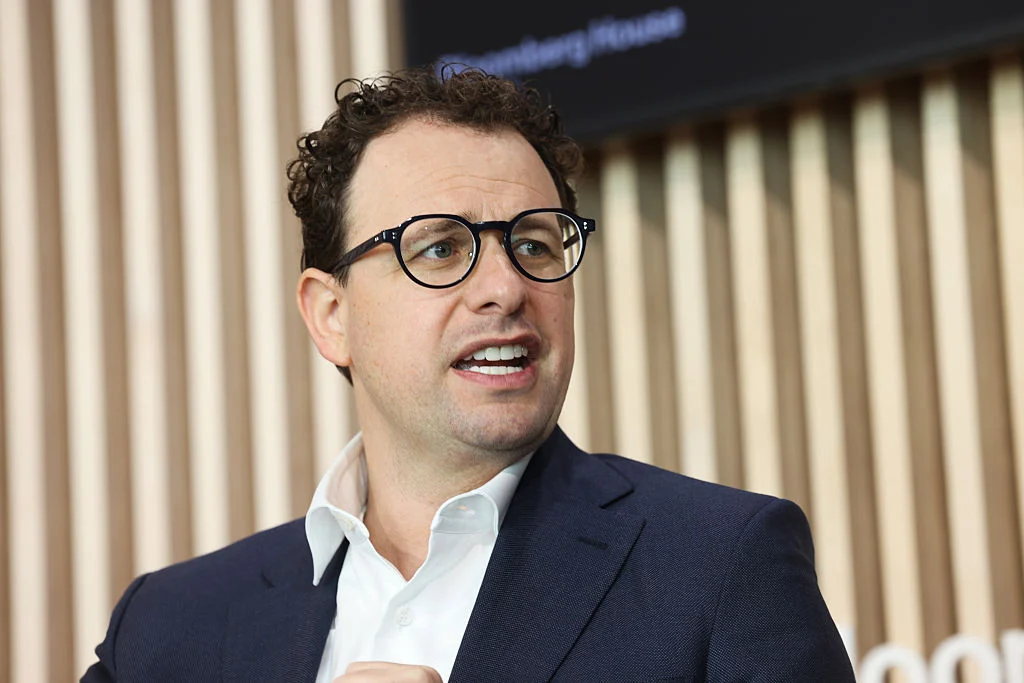
In the rapidly shifting landscape of American artificial intelligence policy, few narratives are as complex or as consequential as the evolving relationship between Anthropic and the current administration. While the Silicon Valley AI powerhouse has spent the better part of the last quarter locked in a high-stakes legal and bureaucratic battle with the Department of Defense, recent high-level engagements suggest a significant shift in the winds. Despite a lingering "supply-chain risk" designation from the Pentagon, Anthropic’s leadership appears to be successfully cultivating a parallel track of diplomacy with the White House and the Treasury Department, signaling a potential reconciliation that could redefine the company’s role in the national interest.
The tension reached a fever pitch earlier this spring when the Pentagon officially labeled Anthropic a supply-chain risk, a move traditionally reserved for foreign entities or companies with compromised security architectures. This designation was not merely a symbolic slap on the wrist; it carried the weight of law, potentially barring the company from lucrative government contracts and casting a shadow over its reputation as a "safety-first" AI developer. However, the narrative of a total freeze between the startup and the federal government is being dismantled by a series of strategic meetings and endorsements from the highest levels of the executive branch.
On Friday, a pivotal meeting took place at the White House that may serve as the foundation for a new era of cooperation. Anthropic CEO Dario Amodei met with White House Chief of Staff Susie Wiles and Treasury Secretary Scott Bessent. The meeting, described by administration officials as "productive and constructive," focused on the dual imperatives of maintaining America’s lead in the global AI race and establishing robust safety protocols for the next generation of large language models (LLMs). According to official statements, the discussion touched upon cybersecurity, the scaling of AI technology, and shared priorities regarding national security—a stark contrast to the adversarial posture maintained by the Department of Defense.
This executive outreach follows reports that the administration’s economic heavyweights are already integrating Anthropic’s technology into the nation’s financial infrastructure. Treasury Secretary Scott Bessent and Federal Reserve Chair Jerome Powell have reportedly been encouraging leaders of major American banks to pilot Anthropic’s latest flagship model, "Mythos." This internal promotion suggests a fundamental schism within the federal government: while the military remains wary of Anthropic’s refusal to relax its ethical safeguards for lethal applications, the financial and executive branches view the company’s precision and safety-oriented architecture as a vital asset for economic stability and administrative efficiency.
The root of the conflict with the Pentagon lies in Anthropic’s foundational philosophy. Founded by former OpenAI executives with a focus on "Constitutional AI," the company has long maintained strict ethical red lines. During contract negotiations with the military, Anthropic reportedly pushed for guarantees that its models would not be utilized for fully autonomous weapons systems or mass domestic surveillance. When these negotiations stalled, the Pentagon pivoted toward competitors like OpenAI, which recently secured its own military partnership, and subsequently leveled the "supply-chain risk" label against Anthropic.
Anthropic is currently fighting this designation in court, characterizing it as a "narrow contracting dispute" rather than a reflection of the company’s actual security posture. Jack Clark, Anthropic’s co-founder and head of policy, has been vocal in downplaying the friction, suggesting that the company’s willingness to brief the government on its newest models remains unchanged. The recent White House meeting lends credence to this view, suggesting that the "risk" label may be more of a tactical maneuver by the Department of Defense to gain leverage in negotiations rather than a consensus view held by the broader administration.
The industry implications of this "thawing" are profound. In the current geopolitical climate, the U.S. government is increasingly viewing AI as a "Manhattan Project" level priority. The competition with China for AI supremacy has created a demand for American-made champions that can deliver cutting-edge performance without compromising on democratic values or security. By engaging directly with Susie Wiles and Scott Bessent, Amodei is positioning Anthropic not just as a vendor, but as a strategic partner in the "America First" tech agenda. This approach emphasizes that AI safety is not a hindrance to progress, but a prerequisite for deploying AI in sensitive sectors like finance and national infrastructure.
Expert-level analysis of the "Mythos" model reveals why the Treasury and the Fed are so keen on its adoption. Unlike earlier iterations of LLMs that were prone to "hallucinations" or unpredictable behavior when faced with complex data, Mythos is designed with enhanced reasoning capabilities and a more rigid adherence to its underlying "constitution." For a bank or a regulatory body, this reliability is more valuable than raw creative output. The administration’s endorsement of Mythos for the banking sector suggests a belief that Anthropic’s approach to AI alignment is the gold standard for "mission-critical" applications where the cost of error is catastrophic.
Furthermore, the involvement of Susie Wiles, a key architect of the administration’s strategy, indicates that the relationship with Anthropic is being handled as a matter of high-level policy rather than routine procurement. Wiles’ presence at the meeting suggests that the administration is looking to build a "big tent" for AI development, ensuring that multiple domestic players are viable and competitive. This prevents a monopoly by any single entity, such as OpenAI or Google, and ensures a diversity of AI architectures are available for different government needs.
The future impact of this developing alliance will likely be felt in the upcoming legislative and regulatory cycles. The administration has signaled a preference for a deregulatory environment that favors rapid innovation, yet the meeting with Anthropic suggests they are also listening to the "safety" camp. If Anthropic can successfully argue that its safety protocols are a form of "product reliability" rather than "censorship" or "bureaucratic red tape," it may find itself in a unique position to influence the very rules that will govern the industry.
We are also likely to see a resolution to the Pentagon dispute that allows the Department of Defense to save face while still utilizing Anthropic’s technology. One possible outcome is a specialized "defense-grade" version of their models that satisfies the military’s requirements for certain non-lethal applications, such as logistics, intelligence synthesis, or administrative automation, while maintaining the company’s core ethical prohibitions against autonomous lethality.
As the legal battle over the "supply-chain risk" label continues, the court of public and political opinion seems to be moving in Anthropic’s favor. The willingness of the White House to host Amodei in a "productive and constructive" setting effectively neuters the sting of the Pentagon’s designation. It sends a clear message to the market and to international observers: Anthropic is a trusted American institution, even if it occasionally clashes with specific departments over the finer points of military ethics.
In the long term, this saga highlights the evolving nature of the "military-industrial-complex" in the age of artificial intelligence. Unlike the hardware manufacturers of the 20th century, today’s software giants are built on global datasets and universal ethical frameworks that don’t always align perfectly with traditional defense doctrines. Anthropic’s ability to navigate these two worlds—defending its ethical boundaries in court while expanding its influence in the White House—is a masterclass in modern corporate diplomacy.
As we look toward the remainder of 2026, the trajectory of Anthropic will serve as a bellwether for the entire AI sector. If a company that prides itself on safety and ethical constraints can thrive under an administration focused on aggressive growth and national strength, it will prove that the "safety vs. speed" debate is a false dichotomy. Instead, we may be entering an era of "safe speed," where the most reliable models are also the most powerful, and where the bridge between Silicon Valley and Washington is built on a foundation of mutual strategic necessity. The thawing of relations is not just a win for Anthropic; it is a signal that the American AI ecosystem is maturing into a more nuanced, multi-faceted alliance that can withstand internal friction in pursuit of global leadership.
