

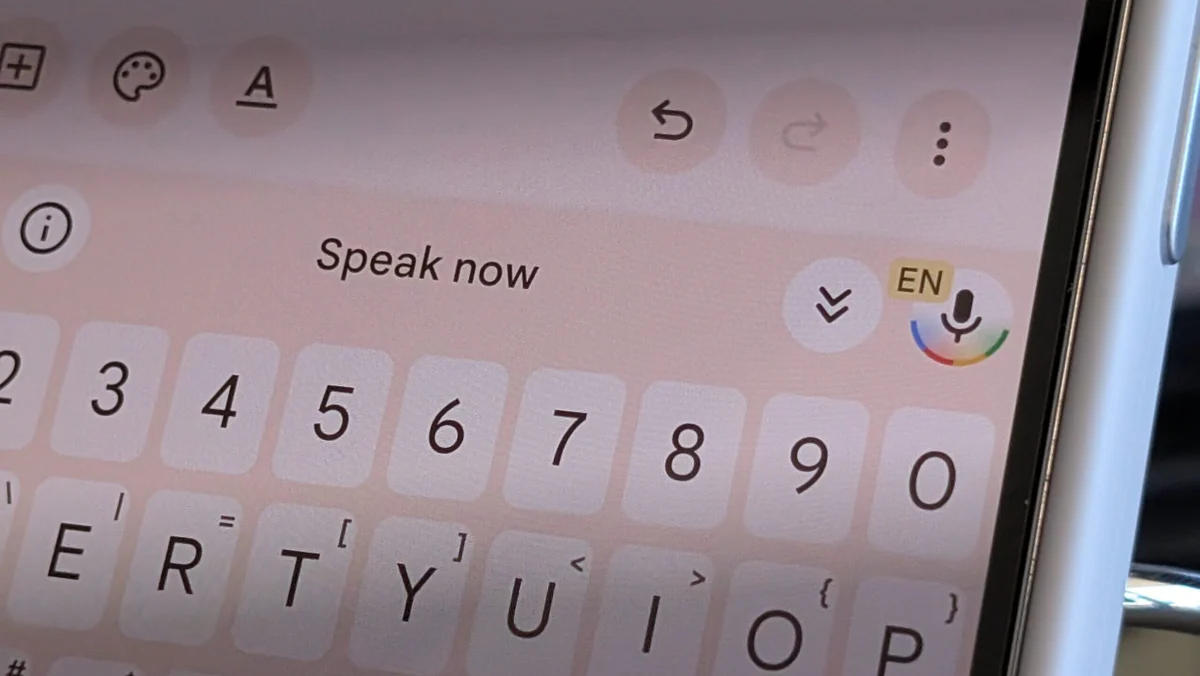
Gboard, Google’s flagship mobile keyboard application, has long cemented its position as a market leader, boasting a robust suite of features that enhance mobile text input efficiency. For users entrenched within the Google ecosystem, particularly those utilizing Pixel devices, the experience is further augmented by exclusive capabilities, such as sophisticated voice commands for on-the-fly text editing and advanced dictation modes allowing for the rapid transcription of multiple messages sequentially. However, despite these advancements, a long-standing point of friction for heavy voice typists—the reliance solely on the device’s integrated microphone—appears to be on the verge of resolution.
Evidence gleaned from an in-depth analysis of the beta version 17.1.2 of the Gboard application strongly suggests that Google is actively developing and testing native support for leveraging external audio input sources, specifically the microphones embedded within connected Bluetooth peripherals like wireless earbuds and headphones. This anticipated integration addresses a critical usability gap that has frustrated users for years, particularly those accustomed to hands-free operation in dynamic or noisy environments.
The discovery manifests as a new, explicit configuration option nestled within Gboard’s voice typing settings menu. This setting provides users with the unprecedented ability to toggle the audio capture source, switching the input stream away from the smartphone’s onboard microphone array directly to the transceiver integrated into a paired Bluetooth accessory. This seemingly simple architectural adjustment carries profound implications for the practical application of voice-to-text technology on the move.
The current paradigm forces users into a positional constraint: to achieve optimal transcription accuracy, the user must maintain relative proximity between their mouth and the phone’s microphone. This necessity often proves cumbersome when multitasking, engaging in physical activity, or operating in environments where holding the phone up to speak is impractical or socially awkward. The introduction of Bluetooth microphone routing fundamentally liberates the dictation process from this spatial tether. A user could potentially engage in a conversation, walk briskly, or operate machinery while dictating messages, relying on the discreet microphone positioned near their ear or mouth in their headset.
During internal verification processes, the capability was successfully toggled on and tested utilizing a contemporary set of true wireless stereo (TWS) earbuds. The results confirmed that the voice input stream was correctly redirected, capturing audio directly from the headset’s microphone rather than the handset itself. This successful, albeit early, operational test provides significant validation for the feature’s imminent potential.
The Context of Voice Input Evolution
To fully appreciate the significance of this impending change, one must consider the trajectory of mobile input methods. Keyboards evolved from purely physical interfaces to sophisticated on-screen simulations, incorporating swipe gestures and predictive text. Simultaneously, voice input, powered by increasingly sophisticated neural network models (like those employed by Google’s own speech recognition services), has matured from a novelty into a viable primary input method for many users.
Yet, the physical conduit for that voice input—the microphone—remained stubbornly tethered to the device itself. This created a persistent incongruity. Users could enjoy the freedom of wireless audio transmission for playback (music, calls) but were forced into wired-like constraints for high-quality audio input during dictation. Competitors and third-party solutions have often grappled with this, sometimes defaulting to the headset mic haphazardly or requiring specific application-level hooks that Gboard, operating at the system-wide keyboard level, has historically bypassed in favor of its internal microphone prioritization.
For Google, which heavily promotes its ambient computing vision—where the device seamlessly integrates into the user’s environment—this dependency on the phone’s mic represents a localized failure in environmental awareness. The smartphone, often pocketed or placed on a desk, becomes a poor audio capture device when the user is actively speaking elsewhere.
Industry Implications: Setting a New Benchmark for Accessibility and Usability
The adoption of user-selected Bluetooth microphone routing by Gboard is not merely a feature upgrade; it signals a necessary maturation of mobile software interfaces in an increasingly wireless world.
1. Elevated User Expectations: When a dominant platform component like Gboard implements a feature that users have demonstrably requested for an extended period—as evidenced by numerous public forum discussions and requests across various platforms—it establishes a new minimum standard for competitors. Other keyboard applications, or even native OS-level dictation tools, will face increased pressure to match this level of integration. Users accustomed to dictating clearly through their headsets while commuting or exercising will likely deem any keyboard lacking this functionality as technologically lagging.
2. Enhanced Accessibility: From an accessibility standpoint, this feature is transformative. Individuals with limited mobility, or those whose hands are occupied, rely heavily on voice input. Being able to dictate clearly without needing to physically maneuver the phone closer to the face significantly broadens the range of environments in which they can effectively use their device. This aligns perfectly with broader industry movements toward more inclusive design principles.
3. Improved Audio Quality in Adverse Conditions: Bluetooth headsets, especially higher-end models, are engineered with beamforming and noise cancellation technologies specifically designed to isolate the speaker’s voice from background noise. By directing Gboard’s transcription engine to use this superior microphone array, the accuracy of voice recognition in inherently noisy settings—such as busy streets, crowded offices, or public transport—is expected to see a measurable uplift, even if the primary goal is convenience rather than pure fidelity improvement.
Expert Analysis: The Technical Shift to Bluetooth Audio Profiles
The technical challenge Google is overcoming relates to how Android manages Bluetooth audio profiles. Typically, when a headset connects, it often defaults to the Hands-Free Profile (HFP) for voice communication (which uses lower bandwidth for telephony) or the High-Fidelity Audio Profile (A2DP) for media playback. For high-quality, real-time data streaming like continuous voice dictation, developers often need to ensure the system correctly routes the audio stream into the appropriate data channel recognized by the speech recognition API.
Previous limitations often stemmed from how the operating system presented available microphones to applications. If the OS prioritized the headset microphone only when an active phone call (HFP) was established, Gboard’s independent voice typing service would default to the primary device mic. The code changes discovered suggest that Gboard is now explicitly querying and utilizing the available input streams associated with the connected Bluetooth device, effectively forcing the system to recognize the headset microphone as a valid, high-priority source for the specific task of text transcription, irrespective of whether a call is active. This necessitates sophisticated handling of latency and data buffering, as dictation requires near-instantaneous transcription feedback.
Future Trajectories and Ecosystem Integration
This specific Gboard enhancement is indicative of a broader trend toward seamless, multi-device interaction orchestrated by Google’s AI infrastructure.
1. Deeper Ecosystem Synergy: If this feature stabilizes, it sets the stage for further integration across the Google hardware landscape. Imagine dictating a complex email on a Pixel phone while wearing Pixel Buds, with the transcription processing happening almost instantaneously, perhaps leveraging on-device machine learning models for speed and cloud processing for ultimate accuracy. This moves the smartphone from being a mere terminal to an intelligent hub coordinating input from various peripherals.
2. Impact on Wearables: While this feature focuses on earbuds/headphones, the long-term implication extends to future, more advanced wearables. If voice input becomes seamlessly routable through any connected, microphone-equipped device, it opens avenues for smartwatches or even specialized AR/VR glasses to become primary input vectors for text composition, reducing reliance on the phone screen altogether.
3. Competitive Response and Standardization: The success of this implementation could drive standardization efforts within the broader Android ecosystem. If Google formalizes this API interaction, it could encourage chipset manufacturers and accessory makers to optimize their Bluetooth stacks specifically for low-latency, high-fidelity input streaming for non-telephony applications.
While APK teardowns offer compelling predictive insights, the final public rollout remains contingent on internal quality assurance and deployment schedules. Given the fervent, long-standing user demand for this specific quality-of-life improvement, and the technological readiness evidenced by the functional testing, anticipation among the user base is understandably high. The resolution of this frustration marks a crucial step in refining the mobile dictation experience, positioning Gboard not just as a capable text entry tool, but as an intelligently adaptive interface aware of its user’s immediate acoustic environment. The ability to choose where you speak is, in the context of ubiquitous voice interaction, a significant victory for user autonomy and convenience. This refinement solidifies Gboard’s commitment to maintaining its leadership position by addressing persistent, high-frequency usability complaints with targeted engineering solutions. The maturity of the voice recognition backend is meaningless if the front-end input capture is compromised by environmental or positional factors, and Google appears ready to eliminate that final barrier.
