

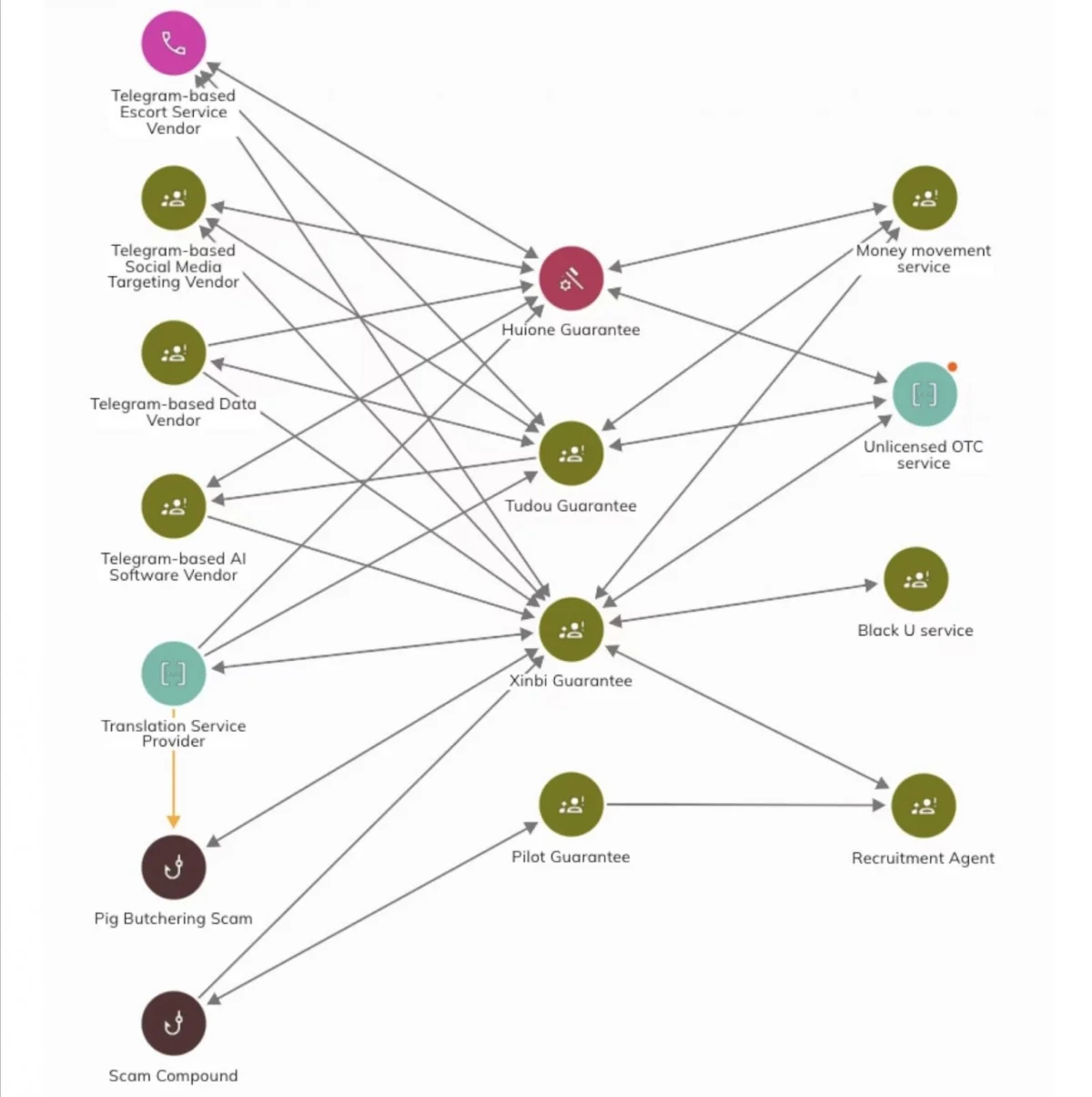
The United Kingdom’s Foreign, Commonwealth and Development Office (FCDO) has deployed significant financial and operational countermeasures against the burgeoning digital infrastructure underpinning transnational cybercrime, specifically targeting the Chinese-language online bazaar known as Xinbi. This action marks a critical escalation in the global fight against sophisticated scam operations flourishing across Southeast Asia, revealing a complex ecosystem where illicit marketplaces provide the foundational services for large-scale financial fraud and human exploitation. Xinbi, operating primarily via the Telegram messaging platform, is not merely a vendor of stolen goods; it functions as a crucial logistical hub, supplying everything from compromised personal data sets—essential for targeted phishing and social engineering—to sophisticated satellite internet equipment necessary for maintaining operational security in remote, often lawless, operational zones.
This coordinated interdiction by the FCDO signifies a recognition that dismantling physical scam compounds, while vital, is insufficient without severing the digital supply chains that feed them. Xinbi’s role extends beyond simple data brokerage. Analysis from blockchain intelligence firms, including Chainalysis, suggests the platform has facilitated an astronomical volume of transactions, reportedly exceeding $19.9 billion between 2021 and 2025. This staggering figure encompasses illicit activities ranging from facilitating unregulated Over-The-Counter (OTC) cryptocurrency trades, which naturally obscure transaction origins, to complex money laundering schemes designed to clean the proceeds of fraud. Furthermore, intelligence indicates Xinbi’s infrastructure has been leveraged by state-sponsored actors, notably North Korean threat groups, to launder significant cryptocurrency hauls obtained through high-profile digital asset thefts targeting global corporations and private investors.
The sanctions package is strategically comprehensive, extending beyond the digital marketplace itself to strike at the physical heart of these criminal enterprises. Concurrently sanctioned entities include the notorious "#8 Park" compound, identified by Elliptic as a critical node within the sprawling criminal network associated with the Prince Group, and Legend Innovation Co., the entity officially managing the massive facility. "#8 Park," located in a region where regulatory oversight is often porous, is chillingly described as potentially Cambodia’s largest scam compound, boasting a capacity engineered to hold and exploit up to 20,000 trafficked individuals. The FCDO explicitly noted that the UK stands as the first nation to specifically target Xinbi, underscoring a proactive stance against digital facilitators of these terrestrial abuses.
Background Context: The Evolution of Cyber-Enabled Exploitation
To fully appreciate the gravity of the UK’s action, one must understand the operational shift in transnational organized crime over the last decade. Historically, cybercrime was often decentralized or focused on direct malware delivery. Today, however, the model has become modular and industrialized, especially concerning "pig butchering" scams (also known as sha zhu pan or romance baiting). These sophisticated long-con operations require several distinct, specialized components: high-quality victim profiles, secure communication channels, untraceable payment rails, and coercive operational environments.
Xinbi has effectively become the Amazon of this illicit industrial complex. Scam syndicates, frequently originating from Chinese criminal organizations but operating across the border regions of Myanmar, Laos, and Cambodia, rely on platforms like Xinbi to source the necessary inputs. A perpetrator running a pig butchering scheme needs meticulously curated personal data—financial habits, social vulnerabilities, and demographic information—to craft believable investment narratives. Xinbi aggregates and sells these massive databases, often compiled from previous data breaches or direct infiltrations of legitimate systems. The provision of satellite internet equipment is another critical enabler, allowing scam centers to bypass local ISPs, which might be subject to monitoring or governmental cooperation with international law enforcement, ensuring continuous, high-bandwidth communication with global targets.
The coercion aspect cannot be overstated. The workers within compounds like "#8 Park" are overwhelmingly victims themselves—often trafficked laborers, debt-bonded individuals, or desperate migrants lured by false promises of legitimate employment. They are systematically forced, under threat of violence or imprisonment, to execute the social engineering, manage the cryptocurrency wallets, and interact with victims across various social media platforms and dating applications. The sheer scale, with compounds capable of housing thousands, necessitates an industrial-scale supply chain for materials, which Xinbi directly provides.

Industry Implications: De-risking the Crypto Ecosystem
The sanctions against Xinbi carry profound implications for the legitimate cryptocurrency sector. The primary objective of these targeted designations is the digital quarantine of the sanctioned entity—rendering it impossible for Xinbi or its associated wallets to interact with regulated exchanges or legitimate DeFi protocols without immediate scrutiny or freezing by compliance departments globally. This mirrors the chilling effect previously observed when the UK sanctioned the Byex Exchange, leading to its functional cessation.
For blockchain analytics firms and compliance officers at centralized exchanges (CEXs), Xinbi now becomes a high-priority de-risking target. Any wallet addresses demonstrably linked to Xinbi’s reported transaction volumes—the $19.9 billion figure—must be immediately flagged. This forces exchanges to enhance their transaction monitoring systems, potentially leading to higher friction for users dealing with funds that have a distant but traceable connection to the sanctioned network, even if those users are acting in good faith.
Furthermore, the sanctioning of a marketplace that facilitates unlicensed OTC trades highlights the persistent weakness in decentralized finance (DeFi) and peer-to-peer (P2P) exchanges, which often lack the stringent Know Your Customer (KYC) and Anti-Money Laundering (AML) controls mandated for traditional financial institutions. Xinbi’s reported ability to handle massive crypto volumes through these unregulated channels demonstrates a sophisticated exploitation of jurisdictional gaps, enabling criminals to bypass the very on-ramps and off-ramps that traditional financial regulators seek to control.
Expert-Level Analysis: The Nexus of Geopolitics and Cybercrime
The involvement of North Korean actors in utilizing Xinbi for laundering stolen funds adds a significant geopolitical layer to this enforcement action. State-sponsored hacking groups, such as those associated with the Lazarus Group, frequently rely on established, opaque financial networks to monetize massive crypto thefts, often diverting funds to support sanctioned state programs. Xinbi, by providing services to both independent criminal syndicates (like the Prince Group) and state-backed entities, becomes a point of convergence for diverse illicit economies.
From a national security perspective, the UK’s designation is a sophisticated move targeting the "enablers." While dismantling physical compounds addresses immediate human rights concerns, sanctioning the digital backbone—the marketplaces, the communication tools, and the crypto processors—aims to degrade the criminal business model’s sustainability. If the tools of the trade (stolen data, satellite access) become prohibitively expensive or too easily traceable, the economic viability of operating these massive scam centers diminishes.
The specific mention of the upcoming Illicit Finance Summit in June underscores the UK’s intent to leverage this action to push for greater international coordination. The challenge remains jurisdictional: scam compounds operate in nations often unwilling or unable to enforce international sanctions effectively. Therefore, the strategy pivots to choking off the financial lifelines originating from jurisdictions that can exert pressure, primarily through the global crypto infrastructure which still relies heavily on UK/US/EU-based exchanges and financial service providers for liquidity.
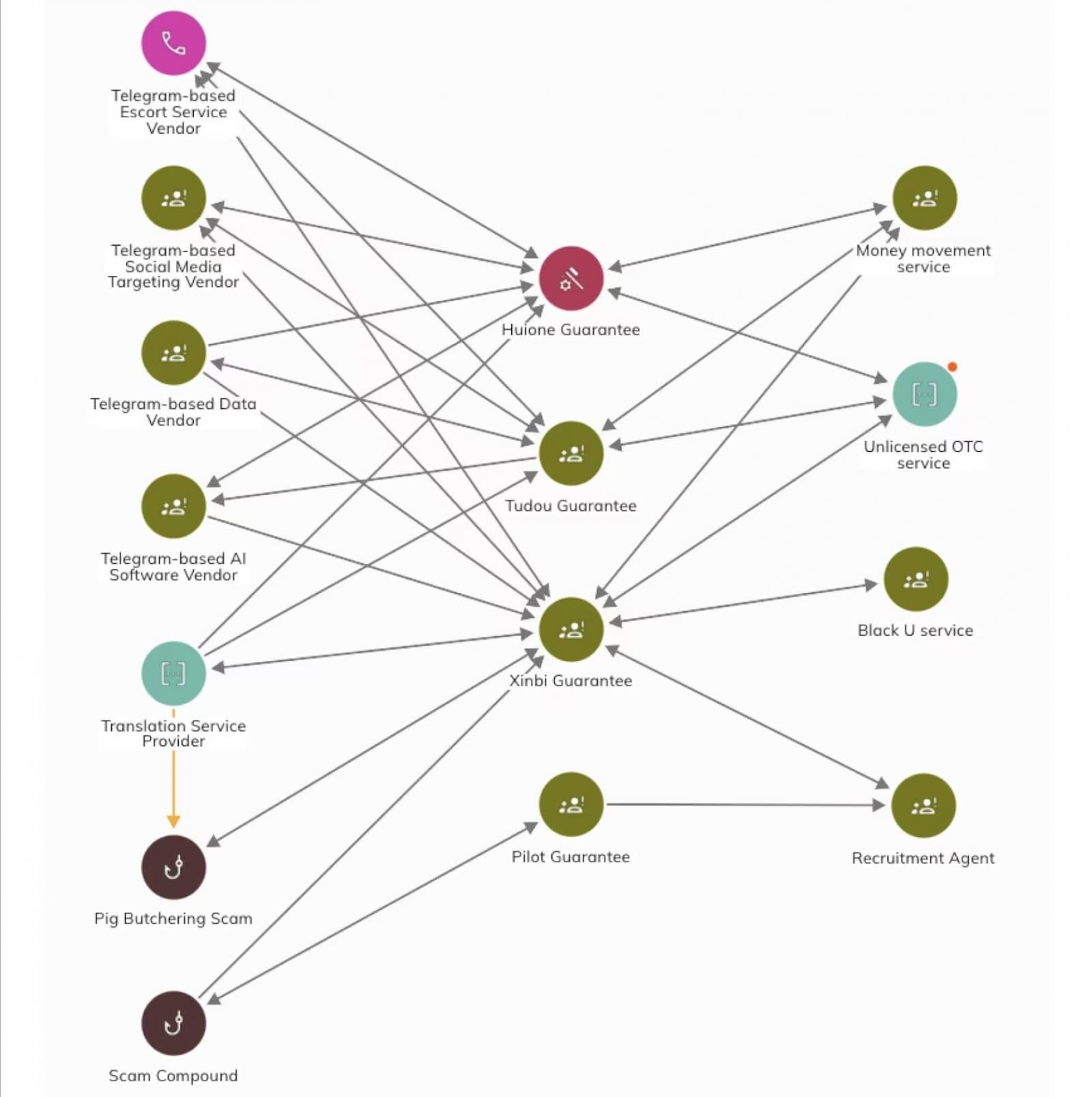
Future Impact and Trends: Targeting the Decentralized Web Infrastructure
The successful designation of Xinbi sets a precedent for future regulatory actions targeting infrastructure that services the dark corners of the internet. We can anticipate several trends emerging from this enforcement:
-
Increased Scrutiny on Telegram-Based Commerce: Given Xinbi’s reliance on Telegram, regulators and law enforcement agencies will likely place greater pressure on major messaging platforms to enhance monitoring protocols for commercial activity flagged as high-risk, balancing user privacy with the necessity of disrupting criminal operations.
-
Focus on Supply Chain Interdiction: Future enforcement actions will likely move upstream, targeting suppliers of specialized hardware (like high-grade encryption tools or satellite gear) and data aggregation services that feed the scam centers, rather than focusing solely on the front-end operators or the final transaction laundering.
-
The Blockchain Forensics Arms Race: The effectiveness of these sanctions hinges entirely on the quality of blockchain analysis. As criminal actors attempt to obfuscate their tracks using mixers, privacy coins, or complex layer-two solutions, the need for advanced forensic tools—like those employed by Chainalysis and Elliptic—will become even more critical for governments seeking to effectively apply sanctions in the digital domain. The continuous tracing of funds from the initial theft through the marketplace facilitator (Xinbi) to the final off-ramp remains the linchpin of modern financial disruption.
Stephen Doughty’s statement confirming the goal to prevent British citizens from becoming victims and to condemn the associated human rights abuses highlights the dual mandate of this policy: protecting domestic citizens while simultaneously confronting severe transnational criminal exploitation. This latest action signals a sustained, multi-pronged offensive against the organized cyber syndicates that have weaponized global connectivity and the pseudonymity of cryptocurrency to facilitate human trafficking and massive financial fraud. The disruption of Xinbi represents a significant blow to the operational stability of the Southeast Asian scam corridor, forcing its operators to rapidly seek out new, potentially less efficient, digital supply chains.
