

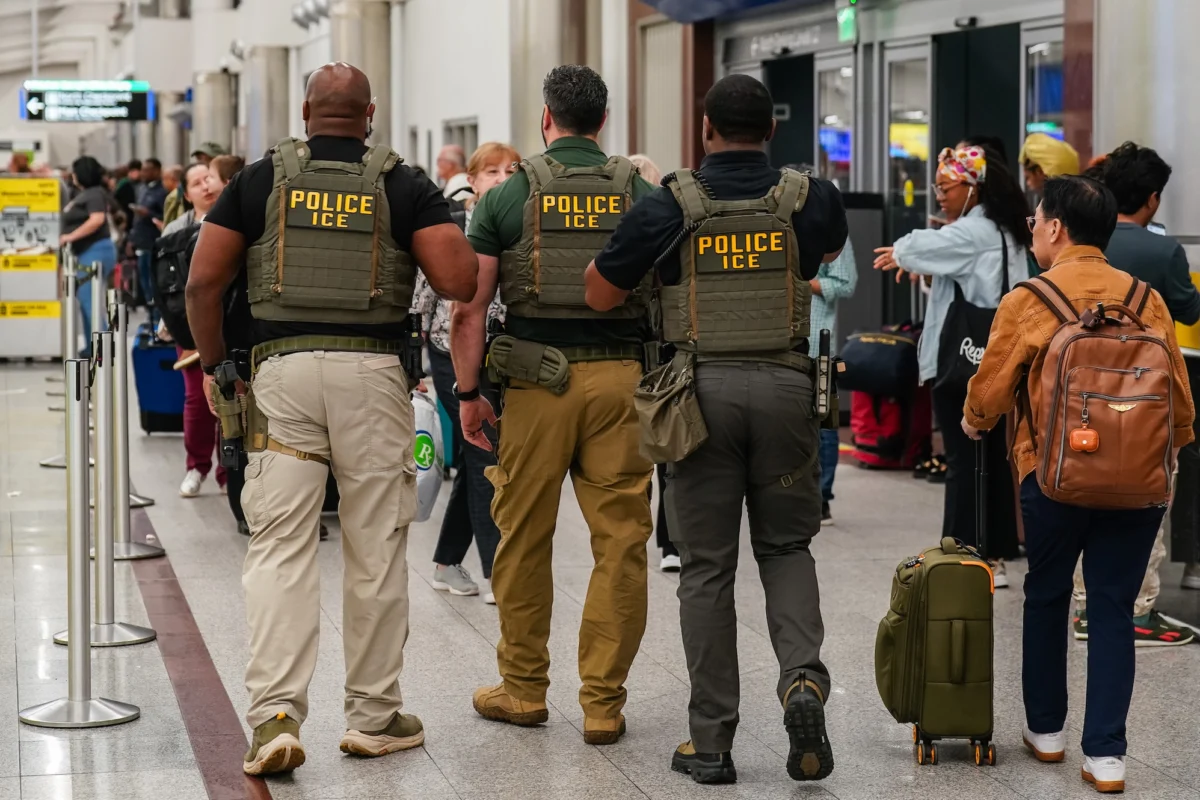
The landscape of American aviation security is undergoing a radical and controversial transformation as the federal government leverages immigration enforcement personnel to address the systemic failures of a prolonged partial government shutdown. Since the shutdown’s inception on February 14, the operational integrity of the nation’s airports has been pushed to a breaking point. With Transportation Security Administration (TSA) officers—many of whom are living paycheck to paycheck—forced to work without compensation, the resulting staffing shortages have led to unprecedented bottlenecks at security checkpoints. In a move that has ignited a firestorm of legal and ethical debate, the Trump administration has responded by deploying Immigration and Customs Enforcement (ICE) agents to several of the country’s busiest airports, ostensibly to "ease" the burden on security lines.
This deployment represents a significant shift in the domestic application of federal law enforcement. While ICE has historically maintained a presence at international arrival terminals, the integration of these agents into the general flow of domestic transit hubs marks a departure from standard protocol. The administration’s "border czar," Tom Homan, confirmed the strategy, noting that agents would be funneled into airports experiencing the most severe delays. However, the optics of the situation have shifted rapidly from administrative support to active enforcement, as reports and social media footage emerge showing ICE agents conducting arrests and detentions within terminal gates—areas typically reserved for travelers who have already cleared security.
The Breakdown of the Aviation Security Infrastructure
The root of this crisis lies in the ongoing budgetary impasse in Washington, D.C. As Congress remains deadlocked over federal funding, hundreds of thousands of Department of Homeland Security (DHS) employees, including the vast majority of the TSA workforce, have been classified as "essential." This designation requires them to report for duty despite the absence of a confirmed salary. The psychological and financial toll on these workers has manifested in high rates of "call-outs" and resignations, leading to security wait times that have, in some instances, exceeded four or five hours.
For the traveling public, the presence of ICE agents in these lines has done little to alleviate the frustration of delays. Instead, it has introduced a new layer of tension. Critics argue that using a specialized deportation and investigation force to perform the duties of security screeners is not only a poor use of resources but a deliberate attempt to normalize high-intensity surveillance in public spaces. The American Civil Liberties Union (ACLU) and other advocacy groups have warned that the presence of ICE in domestic terminals creates a climate of fear, particularly for immigrant communities and mixed-status families who may have previously viewed air travel as a relatively safe, albeit scrutinized, endeavor.
Real-Time Enforcement: From San Francisco to Atlanta
The theoretical concerns regarding ICE’s presence turned into documented reality over the past 48 hours. At San Francisco International Airport (SFO), eyewitnesses captured footage of what appeared to be plainclothes federal agents detaining individuals past the security perimeter. One widely circulated video on TikTok shows agents refusing to identify themselves while detaining a person who was accompanied by a child. The lack of clear insignia and the refusal to provide badges or warrants to onlookers has raised serious questions about the transparency and legality of these "pop-up" enforcement actions.
SFO is not an isolated case. Similar reports have surfaced from Hartsfield–Jackson Atlanta International Airport, Newark Liberty, and New York’s John F. Kennedy International Airport. The list of affected hubs continues to grow, with Chicago O’Hare, Houston Intercontinental, and Phoenix Sky Harbor also seeing an influx of ICE personnel. While the administration maintains that these agents are there to facilitate movement, the evidence of targeted arrests suggests a dual-purpose mission: managing crowds while simultaneously executing high-visibility enforcement actions.
The Technological Arsenal of Modern Immigration Enforcement
Beyond the physical presence of agents, the technology ICE brings to the airport environment is a focal point for privacy advocates and technology journalists. Unlike the TSA, which primarily focuses on detecting physical threats—explosives, weapons, and prohibited items—ICE operates with a mandate that relies heavily on digital surveillance and forensic data.
The agency’s toolkit includes sophisticated facial recognition software capable of matching travelers against massive databases in real-time. While biometric exit and entry programs have been in development for years, the deployment of ICE agents equipped with mobile biometric devices allows for "on-the-spot" identity verification that bypasses traditional checkpoint protocols. These apps can scrape social media profiles, previous visa applications, and criminal records within seconds of a facial scan.
Furthermore, ICE has increasingly utilized mobile device forensic tools (MDFTs) to extract data from seized electronics. Tools provided by companies like Cellebrite and GrayShift allow agents to bypass encryption on many modern smartphones, granting access to private messages, contact lists, and cloud-stored data. In the context of an airport arrest, the seizure of a device can provide agents with a roadmap of an individual’s entire social and professional network.
Perhaps most invasive is the agency’s use of commercially available location data. By purchasing data from brokers who aggregate information from weather apps, mobile games, and utility tools, ICE can track the historical movements of individuals without a warrant. When combined with the "geofencing" of an airport, this allows the agency to identify persons of interest the moment they enter the airport property, long before they reach a security line.
Legal Challenges and the "100-Mile Zone"
The legality of these operations often hinges on a controversial federal regulation that defines a "border zone" as any area within 100 miles of an external U.S. boundary. This zone encompasses nearly two-thirds of the American population and almost all major international airports. Within this perimeter, the Fourth Amendment’s protection against unreasonable searches and seizures is significantly curtailed, granting federal agents broader authority to stop and question individuals.
However, legal experts point out that this authority is not absolute. While agents can ask questions about citizenship, individuals generally retain the right to remain silent and are not required to consent to searches of their electronic devices without a warrant, despite the frequent pressure applied by agents in high-stress environments like airports. The recent reports of plainclothes arrests and the detention of children suggest a testing of these legal boundaries, likely leading to a wave of litigation once the government shutdown concludes and the courts return to full capacity.
The Political and Social Fallout
The political ramifications of this deployment are equally significant. Democratic lawmakers have intensified their calls for a complete overhaul of DHS operations, citing a pattern of abuse and a lack of accountability. The discourse has been further sharpened by recent tragedies, including the deaths of two U.S. citizens in federal custody earlier this year. For many, the sight of ICE agents in the nation’s "town squares" of transit is a bridge too far.
There is also the concern of "mission creep." If ICE agents are successfully used to supplement TSA staffing during a shutdown, what prevents their permanent integration into domestic security? The normalization of high-stakes immigration enforcement in civilian transit hubs could fundamentally alter the nature of domestic travel, turning every flight into a potential encounter with a deportation officer.
Future Trends: The Automated Border
Looking ahead, the current crisis may serve as a catalyst for the "automation" of the American border. The administration has long signaled a desire to move toward a "contactless" security experience, powered by AI and biometrics. In this vision, the friction of security lines is replaced by a continuous stream of surveillance that identifies and vets individuals as they move through the terminal.
While this might solve the issue of long lines, it replaces physical bottlenecks with a digital dragnet. The deployment of ICE agents today may be a precursor to a future where the agents themselves are less visible, but the technology they use—facial recognition, data scraping, and predictive analytics—is embedded into the very architecture of the airport.
As the shutdown continues and the standoff in Washington persists, the presence of federal immigration agents at the airport remains a stark symbol of a fractured government. For the traveler, the primary concern remains the safe and timely arrival at their destination. But for the citizen and the technologist, the real story lies in the shifting boundaries of privacy, the expansion of executive power, and the increasingly blurred line between public service and police state tactics in the heart of the American infrastructure.
