

The landscape of global mobility is undergoing a seismic shift, characterized by a transition from speculative "moonshot" projects to pragmatic, multi-layered partnerships. At the heart of this transformation is Uber, a company that has navigated a complex journey from being an embattled developer of proprietary self-driving technology to becoming the indispensable platform layer for the entire autonomous vehicle (AV) industry. This evolution reflects a broader maturation of the sector, where the focus has moved from "if" autonomous driving will happen to "how" it will be integrated into the existing fabric of urban logistics and passenger transport.
Uber’s current trajectory is a masterclass in strategic pivot. In 2020, the company made the monumental decision to sell its in-house autonomous development arm, Uber ATG, to Aurora Innovation. At the time, critics viewed this as a retreat—a sign that the financial burden of developing a "Level 4" self-driving system was too great for a company striving for GAAP profitability. However, the reality was far more nuanced. By shedding the high-intensity capital expenditures associated with ATG while maintaining a significant equity stake in the winning players, Uber repositioned itself as the ultimate aggregator. Today, Uber is "suddenly" everywhere in the AV space because it has spent the intervening years building a modular ecosystem that can accommodate drones, trucks, delivery robots, and robotaxis from nearly every major developer.

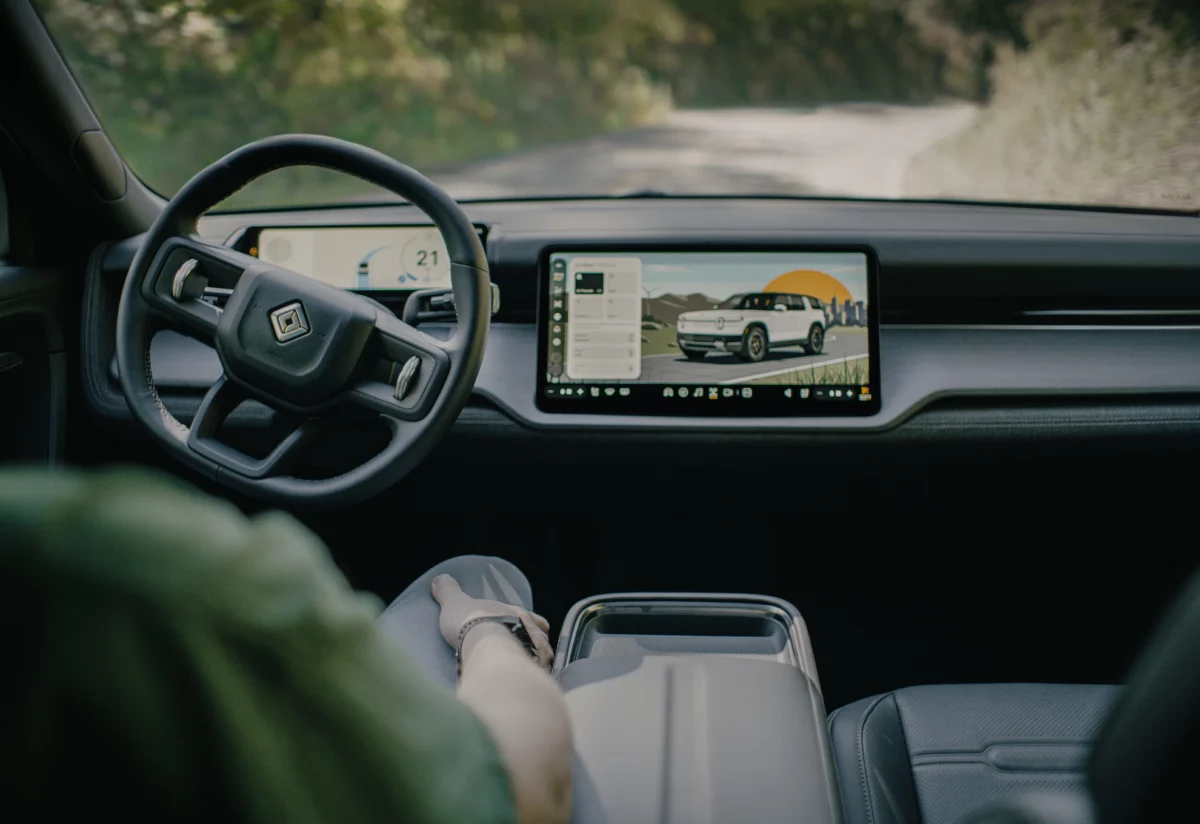
The recent announcement of Uber’s partnership with Rivian marks a new, high-stakes chapter in this saga. The deal, which includes an initial $300 million investment and a commitment to purchase 10,000 fully autonomous R2 robotaxis, could eventually balloon to a total value of $1.25 billion. This is not merely another partnership; it represents a unique hybrid model for Uber. Unlike its agreements with Chinese firms for European expansion or its collaboration with the U.K.-based startup Wayve, the Rivian deal sees Uber taking a more direct hand in the integration of the self-driving system within the vehicle manufacturer’s hardware.
The logistics of the Rivian deal are as ambitious as they are risky. The rollout is slated for 2028 in San Francisco and Miami, with a potential expansion of up to 40,000 additional units by 2030. However, the path to 2028 is fraught with industrial hurdles. Rivian has yet to begin mass production of the R2 SUV, and the Georgia factory intended to build these vehicles is still a construction site. Furthermore, Rivian has admitted that its aggressive push into autonomy has forced it to sacrifice its 2027 profitability goal. This highlights a critical tension in the industry: the immense capital required to bridge the gap between "functioning prototype" and "profitable fleet" is causing even the most successful EV startups to recalibrate their financial horizons.
While Uber and Rivian represent the hardware and platform side of the equation, Nvidia has solidified its role as the foundational "brains" of the autonomous era. During its recent GTC conference, CEO Jensen Huang declared that the "ChatGPT moment" for self-driving cars has arrived. This comparison is apt; just as large language models reached a tipping point of utility through massive data and compute, autonomous driving systems are now benefiting from a similar convergence of AI and sensor fusion.

Nvidia’s strategy mirrors Uber’s in its ubiquity. By securing deals with BYD, Geely, Hyundai, and Nissan to use its Drive Hyperion platform, Nvidia is ensuring that it wins regardless of which automaker dominates the market. When you include existing partners like Mercedes-Benz, Toyota, and GM, Nvidia-powered systems are positioned to influence the development of over 18 million vehicles produced annually. This "picks and shovels" approach to the AV gold rush has turned Nvidia into the de facto standard for the industry’s computational needs.
However, as the technology matures, the regulatory and security environment is becoming increasingly stringent. The National Highway Traffic Safety Administration (NHTSA) recently escalated its investigation into Tesla’s "Full Self-Driving" (FSD) software to an "engineering analysis." This is the highest level of scrutiny the agency can apply and is often the final step before a mandatory recall. The probe specifically targets FSD performance in low-visibility conditions, such as sun glare or fog—scenarios that remain the "edge cases" bedeviling the entire industry. The outcome of this investigation will likely set the tone for how autonomous systems are regulated across the United States, potentially moving the needle toward more rigid hardware requirements, such as LiDAR, which Tesla has famously eschewed.
The vulnerability of the modern, connected transportation network was further illustrated by a recent cyberattack on Intoxalock, a leading provider of vehicle breathalyzers. The attack left thousands of drivers stranded, unable to start their cars due to a failure in the cloud-connected ignition interlock devices. This incident serves as a stark reminder that as vehicles become "computers on wheels," the attack surface for malicious actors expands exponentially. For the robotaxi industry to gain public trust, it must prove not only that its AI can drive better than a human, but that its digital infrastructure is resilient against systemic failures.

Amidst these macro-trends, the investment landscape is seeing an influx of massive capital from unexpected quarters. Jeff Bezos is reportedly raising $100 billion for a fund dedicated to modernizing legacy manufacturing and aerospace firms using AI. This project, dubbed Prometheus, suggests that the next phase of the industrial revolution will not just be about "new" tech companies, but about the radical efficiency gains that AI can bring to old-school manufacturing. On the other end of the spectrum, the mobility sector continues to see a flurry of specialized activity. Amazon’s acquisition of the Zurich-based robotics startup Rivr—specialists in stair-climbing delivery bots—indicates that the "last fifty feet" of delivery remains a primary focus for e-commerce giants.
The human element of this technological race remains personified by figures like RJ Scaringe, the founder and CEO of Rivian. In recent discussions regarding his new venture, Mind Robotics, Scaringe has offered a contrarian view of the future of industrial AI. While many robotics companies are focused on the "spectacle" of humanoid robots—those capable of backflips or complex bipedal movement—Scaringe argues that the true value lies in the "hands." In his view, the vast majority of industrial tasks are about manipulation and fine motor skills. The rest of the robotic body is merely a delivery mechanism to get the hands to the work site. This "hands-first" philosophy could redefine how robots are integrated into vehicle assembly lines and logistics hubs, prioritizing functional utility over anthropomorphic form.
As we look toward the end of the decade, the convergence of these various threads—Uber’s platform dominance, Rivian’s manufacturing ambition, Nvidia’s computational power, and a more rigorous regulatory framework—paints a picture of a mobility sector that is finally moving past its "trough of disillusionment." The deals being struck today, such as Kodiak’s expansion of autonomous freight in the Dallas-El Paso corridor or the $110 million Series C for Advanced Navigation, are no longer based on pure speculation. They are based on the reality of a world where autonomous systems are beginning to handle the heavy lifting of global commerce.

The road to 2030 will be defined by how these players manage the transition from controlled pilot programs to unconstrained urban environments. For Uber, the goal is to be the app that every passenger opens, regardless of whether the vehicle that arrives has a steering wheel. For manufacturers like Rivian, the goal is to survive the "valley of death" inherent in scaling new vehicle platforms. And for the public, the goal remains a safer, more efficient, and more accessible way to move through the world. The pieces of the puzzle are finally on the table; the challenge now lies in the execution.
