

The conviction of Michael Smith, a North Carolina-based musician, for orchestrating a sophisticated, multi-million dollar digital royalty fraud scheme marks a critical inflection point in the evolving security challenges facing the global music streaming ecosystem. Smith’s guilty plea confirms his role in systematically diverting over $10 million in royalties from legitimate rights holders across major platforms including Spotify, Apple Music, Amazon Music, and YouTube Music. This elaborate operation, spanning from 2017 to 2024, relied on the confluence of nascent artificial intelligence capabilities and large-scale automation, creating a cautionary tale for content distributors and investors alike.
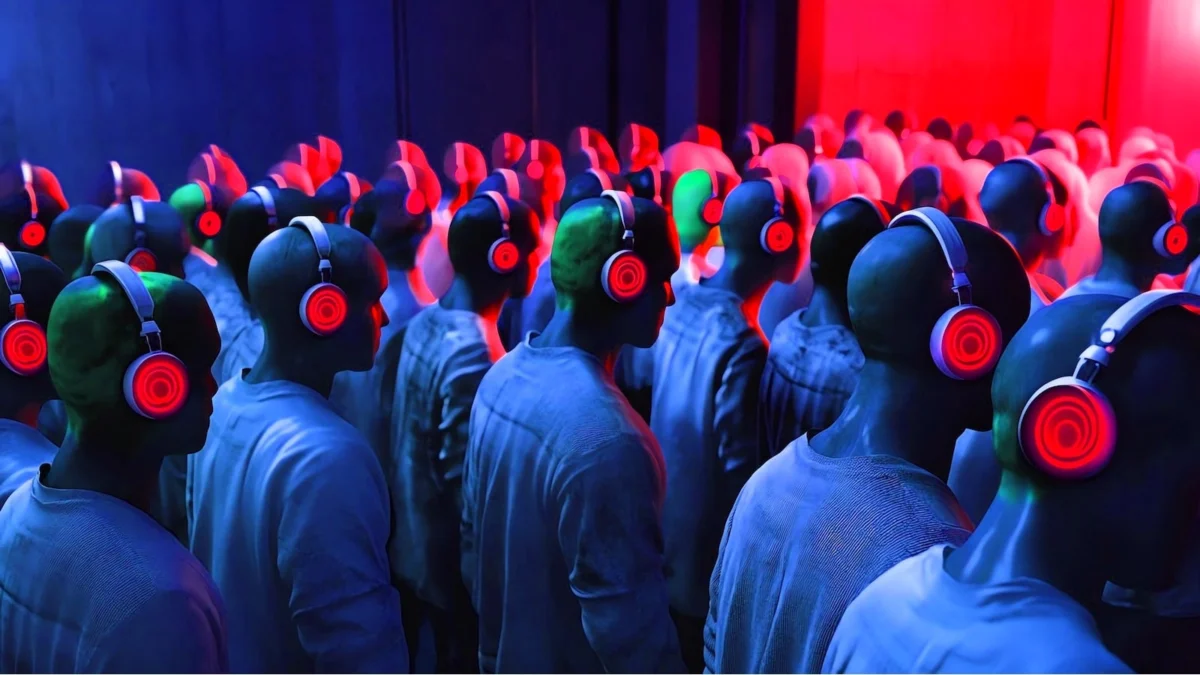
The core mechanism of Smith’s deception involved the mass acquisition of music tracks generated entirely by artificial intelligence from an unnamed accomplice. These synthetic compositions, numbering in the hundreds of thousands, were then uploaded to these digital service providers (DSPs). Crucially, the artificiality of the music was only half the equation; the profitability hinged on artificially inflating consumption metrics. Smith deployed legions of automated software agents—AI bots—programmed to stream these AI-generated tracks billions of times. This systematic gaming of the play-count algorithms successfully mimicked organic listener engagement, triggering royalty payouts based on fraudulent metrics.
The prosecution detailed how Smith actively managed this large-scale manipulation, collaborating with at least two other parties: an unnamed music promoter and the Chief Executive Officer of an AI music generation company. This triangulation of expertise—content creation (AI), promotion/distribution, and large-scale bot orchestration—demonstrates a targeted exploitation of the system’s inherent vulnerabilities. To circumvent the increasingly robust anti-fraud detection mechanisms employed by the DSPs, Smith mandated the use of Virtual Private Networks (VPNs) to mask the geographic and behavioral consistency of the streaming bots, thereby simulating diverse, authentic user traffic patterns.
Evidence uncovered from court documents, initially unsealed when Smith was formally charged in September 2024, paints a picture of meticulous, calculated deceit. Internal communications reveal Smith’s explicit awareness of the need to bypass fraud countermeasures. An email dated October 4, 2018, sent to his co-conspirators, plainly stated the strategy: "to not raise any issues with the powers that be we need a TON of content with small amounts of Streams," followed by the imperative, "We need to get a TON of songs fast to make this work around the anti fraud policies these guys are all using now." This suggests a recognition that high volumes of streams on a few tracks would trigger immediate flags, necessitating a "long-tail" fraud strategy where millions of tracks received low, but cumulative, fraudulent plays.
At the zenith of the operation, Smith commanded an infrastructure involving over 1,000 active bot accounts. A self-penned financial breakdown from October 20, 2017, detailed the precise scaling model. Smith managed 52 separate cloud service accounts, each hosting 20 distinct bot profiles, totaling the 1,040 streaming agents. His internal calculations projected that each bot could execute approximately 636 song streams daily. This projected throughput equated to roughly 661,440 fraudulent streams per day. Given the industry-standard—though variable—royalty rate often approximated at half a cent per stream, Smith estimated daily earnings soaring past $3,300, monthly revenues near $100,000, and an annual income stream exceeding $1.2 million purely from this illicit activity.
The scale of the financial abstraction was confirmed by later communications. A February 2024 email allegedly boasted that the collective output had generated "over 4 billion streams and $12 million in royalties since 2019." While the final plea agreement involved forfeiture of slightly over $8 million, reflecting the recovered illicit gains, the operational scope was clearly in the eight-figure range.
U.S. Attorney Jay Clayton emphasized the direct harm caused by the scheme: "Michael Smith generated thousands of fake songs using artificial intelligence and then streamed those fake songs billions of times. Although the songs and listeners were fake, the millions of dollars Smith stole was real." Clayton further underscored the victimology inherent in royalty fraud: "Millions of dollars in royalties that Smith diverted from real, deserving artists and rights holders." Smith’s guilty plea to one count of conspiracy to commit wire fraud, carrying a maximum sentence of five years, closes this specific chapter, but the underlying technological vector remains a significant industry concern.
Background Context: The Fragility of Streaming Economics
To fully appreciate the gravity of Smith’s actions, one must understand the fractional economics underpinning modern digital music distribution. Unlike physical sales or upfront licensing, streaming royalties are based on complex pro-rata models. A platform like Spotify pools all subscription and advertising revenue for a specific market, then divides that pool based on the total share of streams attributed to each rightsholder. If a track receives 0.01% of all streams in a given month, its owner receives 0.01% of the revenue pool for that month.
This architecture creates a powerful incentive for manipulation. Unlike traditional piracy, which simply denies revenue, royalty fraud actively steals revenue from the legitimate pool. Every fraudulent stream paid to Smith was a stream that did not count toward a genuine independent artist, a major label, or a songwriter. The time frame of Smith’s activity (2017-2024) is particularly relevant; 2017 predates the widespread public availability of sophisticated generative AI music tools, meaning his early efforts likely involved human-composed, low-quality tracks coupled with bots. The later years, however, seamlessly integrated readily available AI music generation, allowing for an almost limitless supply of "content" to feed the streaming machine.
Industry Implications: The AI Arms Race in Fraud Detection
Smith’s case illuminates a burgeoning arms race between fraudsters and DSP anti-fraud teams. The adoption of AI for content creation has lowered the barrier to entry for generating plausible, albeit unoriginal, musical assets. The low cost of AI-generated tracks—near zero marginal cost once the generative model is operational—makes them ideal fodder for high-volume, low-return fraudulent schemes that rely on scale.

The reliance on VPNs and complex bot orchestration highlights that modern fraud is less about hacking the platform and more about sophisticated social engineering of the platform’s behavioral analysis models. DSPs invest heavily in identifying anomalous listening patterns: sudden spikes in activity from a single IP range, playback durations that deviate from human norms (e.g., tracks played to completion repeatedly), or accounts exhibiting zero playlist creation or user interaction outside of targeted streaming. Smith’s strategy—using thousands of accounts streaming small amounts across a massive catalog—was explicitly designed to create noise that mimicked the long tail of organic, niche consumption, thereby burying the signal of fraud.
This demands continuous adaptation from platforms. Future anti-fraud measures will likely move beyond simple behavioral analysis to incorporating advanced fingerprinting of the playback source itself, looking for tell-tale signatures of automated scripts or virtualization layers, rather than just IP addresses. Furthermore, the partnership with the AI music company CEO suggests a dangerous integration where the very tools designed to democratize music creation are being weaponized to exploit the distribution system.
Expert-Level Analysis: The Threat to Catalog Integrity
From a music industry analyst’s perspective, the most damaging aspect of this fraud is the pollution of catalog integrity. When billions of streams are generated by synthetic content, it distorts the actual consumption data that labels, publishers, and licensing agencies rely upon for A&R decisions, marketing spend, and future investment.
Consider the concept of "stream share." If 5% of the total monthly streams on a platform are fraudulent, then every legitimate artist’s royalty share is reduced by that 5%. For major artists, this dilution might be masked by sheer volume. For independent or emerging artists whose revenue hinges on securing a few thousand legitimate streams, this fraud translates directly into lost income critical for survival or growth. The $10 million stolen represents not just money taken from the system, but potentially years of lost revenue potential for hundreds of smaller, legitimate creators.
The necessity of purchasing "hundreds of thousands of songs" from an accomplice also points to a sophisticated supply chain for synthetic IP. This indicates a nascent black market where entities specialize solely in generating vast libraries of legally ambiguous, yet technically uploadable, audio files, ready to be monetized via fraudulent streaming networks. This is a form of digital counterfeiting that operates entirely within the platform’s stated terms of service regarding content submission, making detection immensely challenging until the consumption data is analyzed.
Future Impact and Trends: Regulatory Scrutiny and Blockchain Potential
The successful prosecution of Smith sets a clear precedent: large-scale digital manipulation of streaming royalties is a prosecutable federal offense, not merely a terms-of-service violation. This should act as a deterrent, but the underlying technological avenues remain open.
Regulatory Pressure: Governments and regulatory bodies will inevitably face increased pressure to mandate greater transparency from DSPs regarding their fraud detection methodologies and royalty accounting practices. The narrative that "real money was stolen from real artists" provides strong political ammunition for tighter auditing requirements on streaming platforms, potentially forcing them to absorb the cost of fraud rather than passing it down through diluted royalty pools.
The Role of Blockchain and Web3: Ironically, the very technology often touted as the solution to music industry opacity—blockchain—could be central to combating this specific type of fraud. A decentralized ledger could theoretically verify the origin and initial consumption of a track in a way that centralized databases struggle to replicate universally. If content rights and initial play verification were immutable and transparently recorded, the ability of automated bots to inject billions of fake plays into the centralized accounting system becomes significantly harder. While Web3 adoption remains slow, this case underscores the value proposition of verifiable, non-fungible consumption records.
Evolution of AI Content Licensing: The involvement of an AI music company CEO suggests a future where generative AI platforms must be held accountable for the provenance of their output, especially when that output is used for commercial exploitation. Future licensing agreements for AI-generated music will likely require detailed metadata proving human curation or, conversely, robust flagging mechanisms that alert DSPs when content is purely synthetic and potentially destined for manipulative streaming farms.
In summary, Michael Smith’s scheme was a proof-of-concept demonstrating how readily available generative AI, combined with mature botting infrastructure, can effectively hijack fractional payment systems at scale. His conviction is a necessary regulatory success, yet it simultaneously serves as an urgent alarm bell, signaling that the next major security challenge in the digital economy will be defending the integrity of data streams against synthetic, algorithmically-optimized content inflation. The fight to secure the $10 million lost is won, but the battle to secure the billions flowing through these platforms against future, more advanced AI adversaries has only just begun.
