

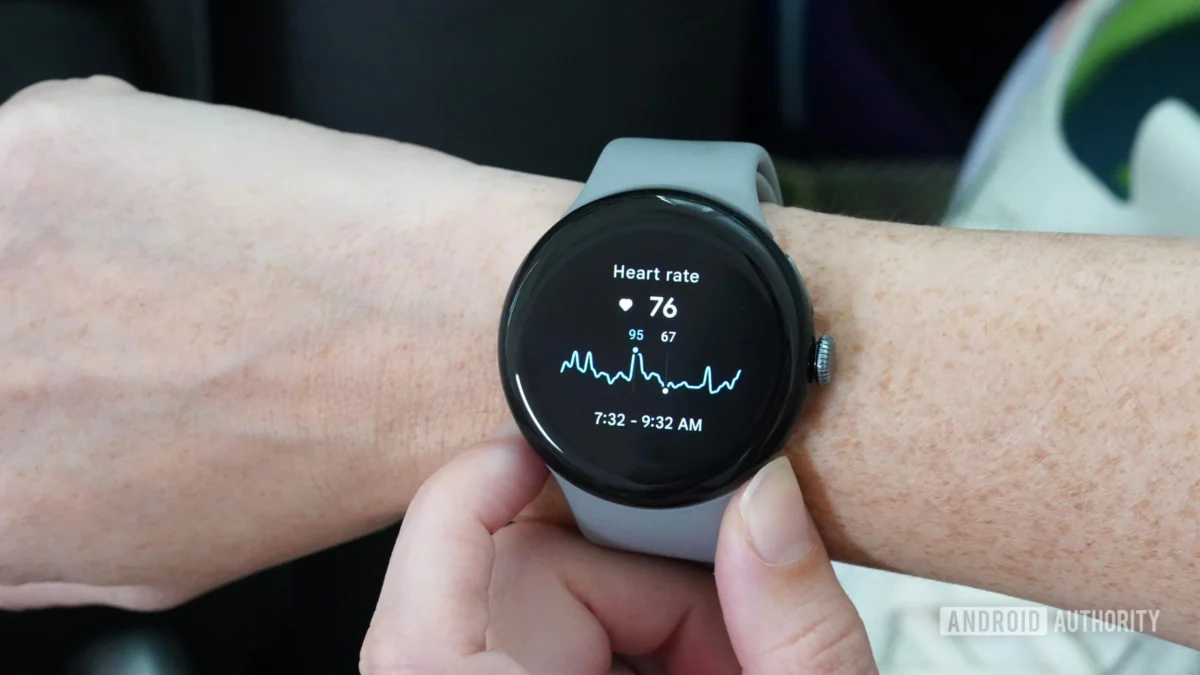
The trajectory of Google’s Pixel Watch line has been characterized by iterative refinement, a strategy that saw significant gains in software polish and hardware refinement across the initial generations. Each successive model addressed a previous shortcoming, moving the device from a merely attractive Wear OS proposition to a genuinely competitive smartwatch contender. While enhancements to battery endurance and the overall user experience have been notable, the true inflection point for serious activity tracking—specifically for runners and cyclists—arrived with the Pixel Watch 4, thanks to a crucial, yet often overlooked, hardware upgrade: the integration of dual-band Global Navigation Satellite System (GNSS) technology. Five months into rigorous testing across diverse urban, trail, and open-area environments, this specific capability stands out as the single most transformative improvement in the current iteration.
Contextualizing the GPS Deficit in Earlier Generations
To fully appreciate the significance of the Pixel Watch 4’s performance, one must recall the limitations inherent in its predecessors. The Pixel Watch 2, while aesthetically pleasing and offering a robust Wear OS experience powered by Fitbit integration, consistently lagged in location tracking precision. For casual users tracking a simple walk through a suburban neighborhood, the single-band GPS often sufficed, occasionally resulting in minor discrepancies in total distance. However, for any user requiring data integrity for structured training—those monitoring pace fluctuations during interval work or mapping precise routes for consistency—the older models introduced unacceptable levels of noise.
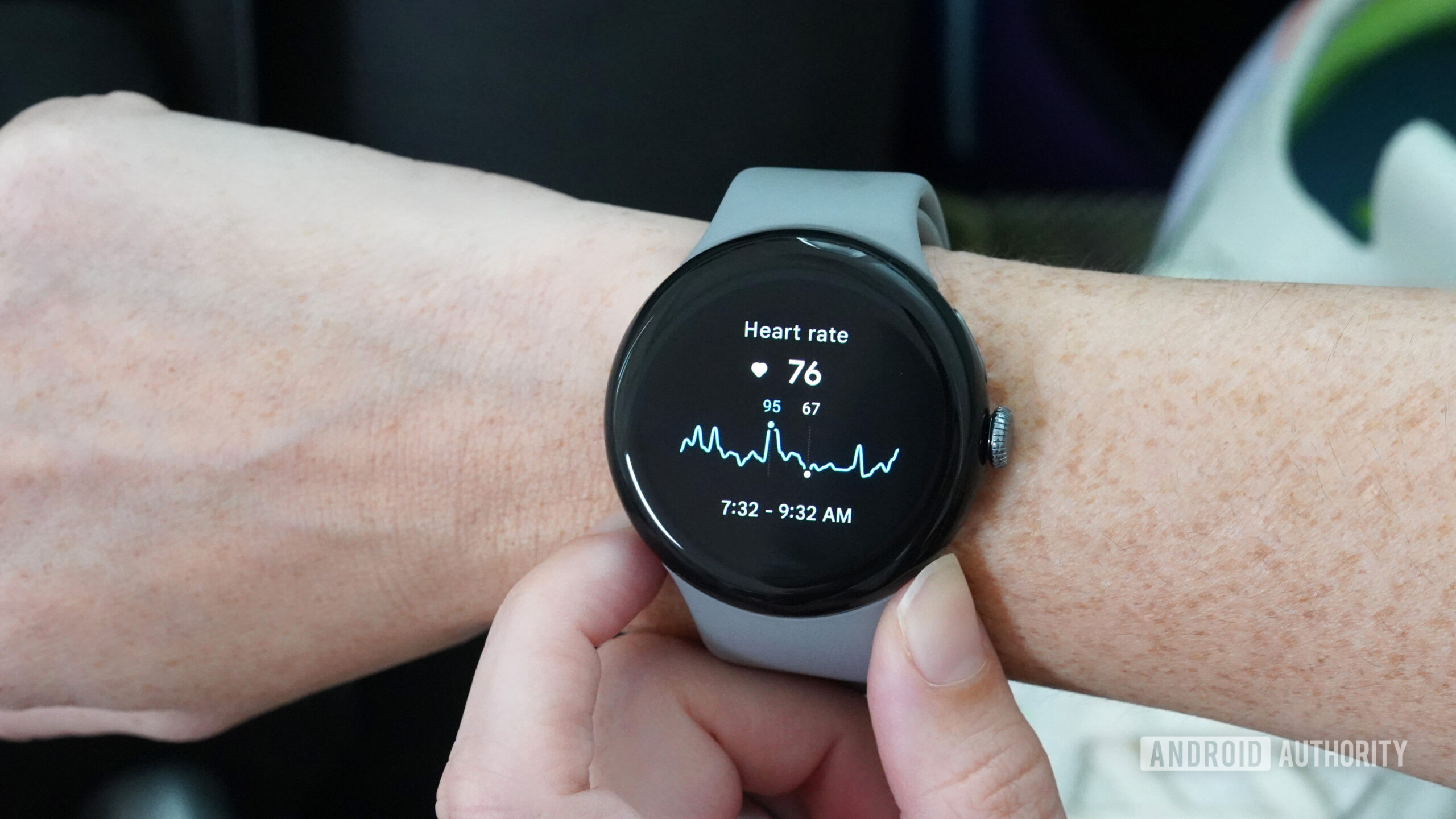
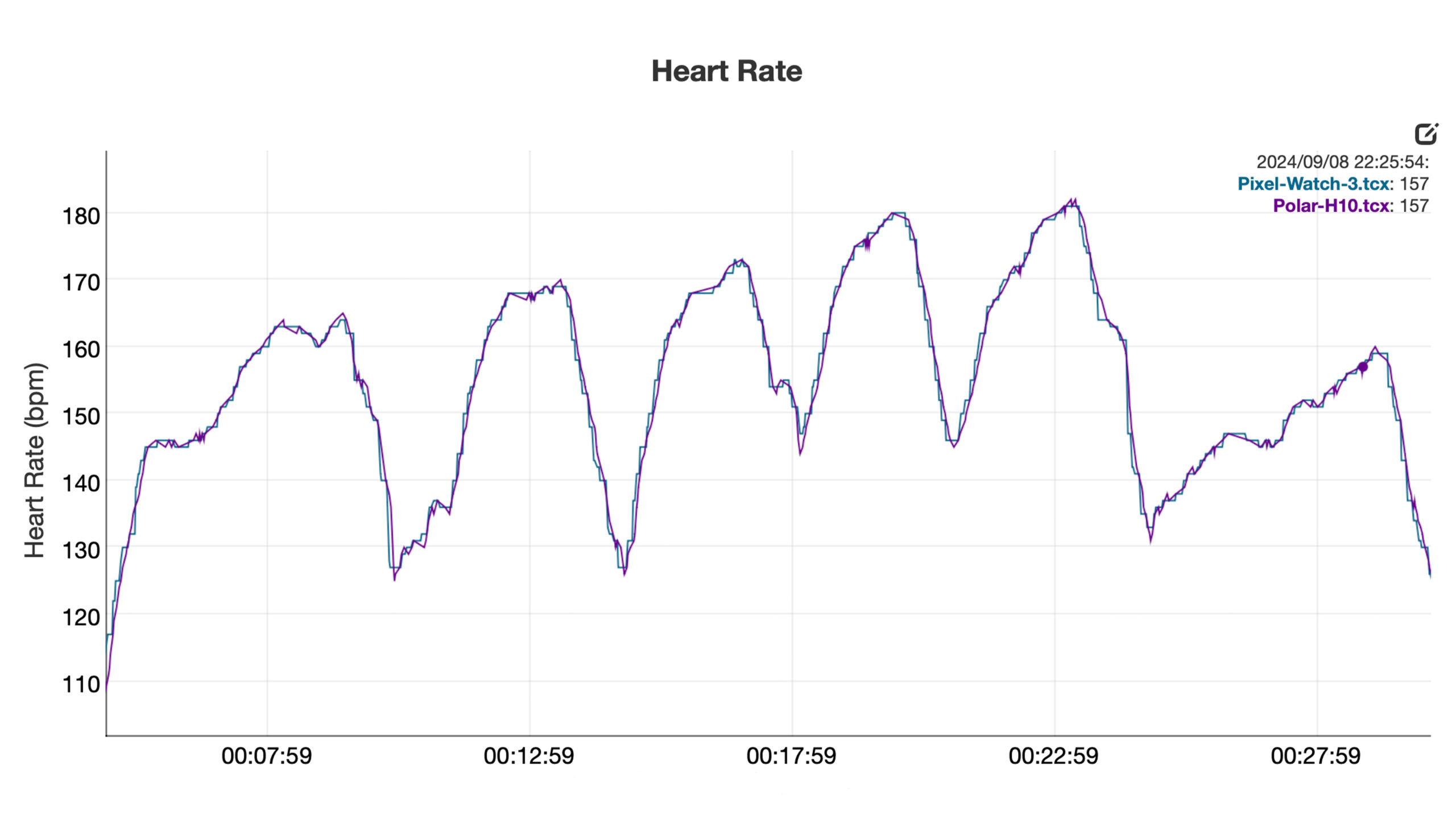
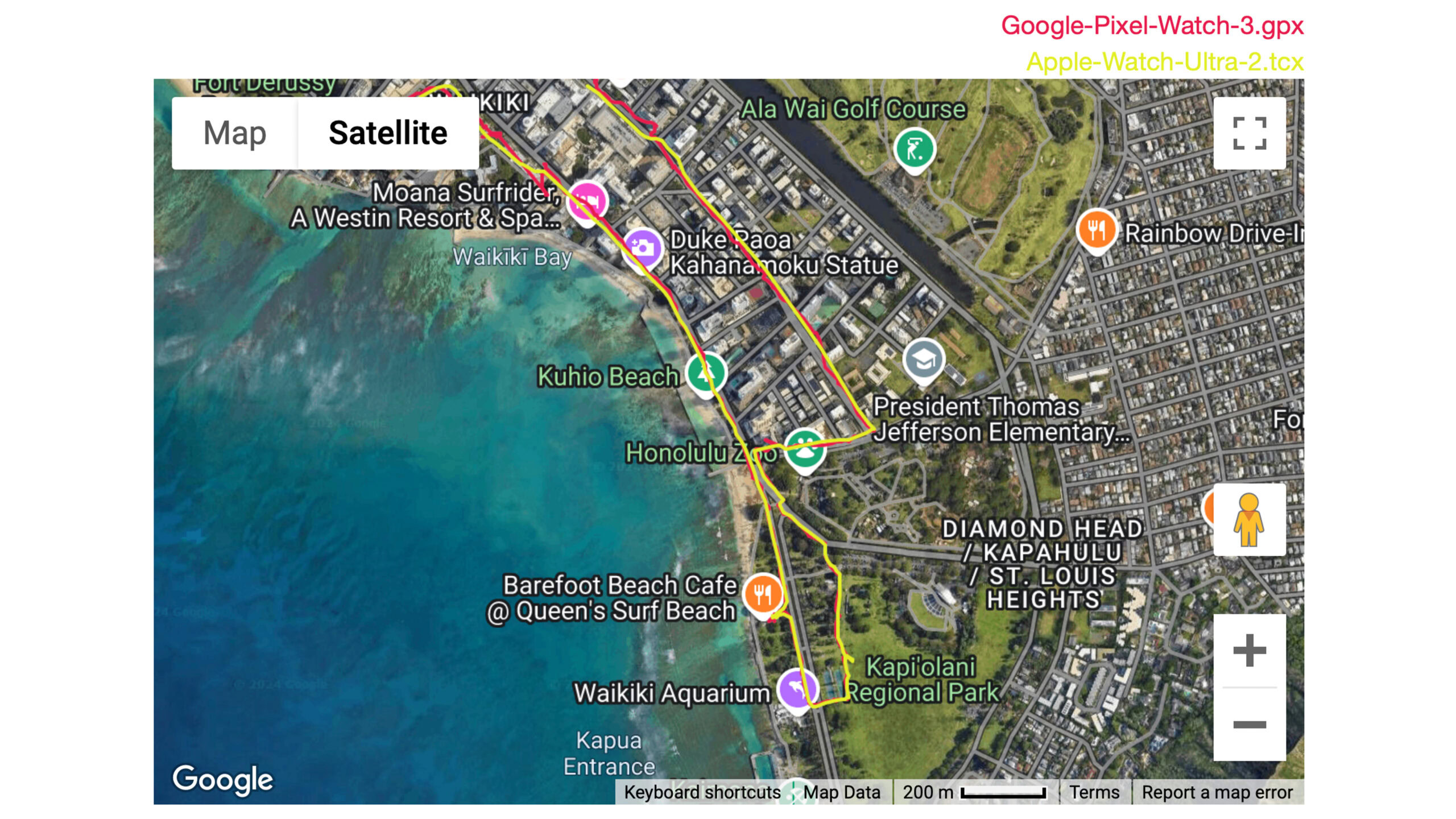
The Pixel Watch 3 attempted to bridge this gap. While it benefited from the overall refinement of the Wear OS platform and made commendable strides in biometric accuracy, particularly in heart rate monitoring where it achieved near-chest-strap parity, its location tracking remained stubbornly conventional. During head-to-head comparisons against benchmark devices, such as dedicated multi-band running watches from established players like Garmin, the Pixel Watch 3 frequently exhibited "GPS drift." This drift manifested as routes inaccurately cutting corners, dipping inexplicably into buildings, or recording segments through neighboring properties when the user was clearly on a designated sidewalk or trail. The pace readings derived from this imperfect positioning data were consequently unreliable for real-time pacing adjustments, frustrating dedicated athletes who rely on objective, instantaneous metrics. The situation was paradoxical: Google had engineered a phenomenal optical heart rate sensor capable of capturing nuanced heart rate zone data crucial for performance training, yet this data was undermined by an underlying positional tracking system that lacked the requisite fidelity. This created a hard ceiling on the Pixel Watch 3’s utility as a primary training instrument.
The Technical Leap: Understanding Dual-Band GNSS
The introduction of dual-band GNSS technology in the Pixel Watch 4 is not a mere software tweak; it represents a fundamental advancement in how the watch acquires and processes satellite signals. Single-band GPS utilizes one frequency band (typically L1). While this band offers broad coverage, it is susceptible to signal reflection, or multipath errors, especially in environments rich with vertical structures like city centers, dense forests, or canyons. When a signal bounces off a skyscraper before reaching the watch, the reported location is skewed.
Dual-band systems, by contrast, leverage both the L1 and L5 frequency bands. The L5 band, operating at a higher frequency, offers significantly superior resilience to interference and multipath errors. By simultaneously processing signals from both bands, the watch’s chipset can triangulate a position with far greater accuracy, effectively filtering out the reflected signals and locking onto the clearest, most direct paths from the satellites. This results in tighter, more accurate route mapping and, critically, more dependable pace and distance calculations derived from those coordinates.
Five Months of Validation: Consistency Over Initial Impression
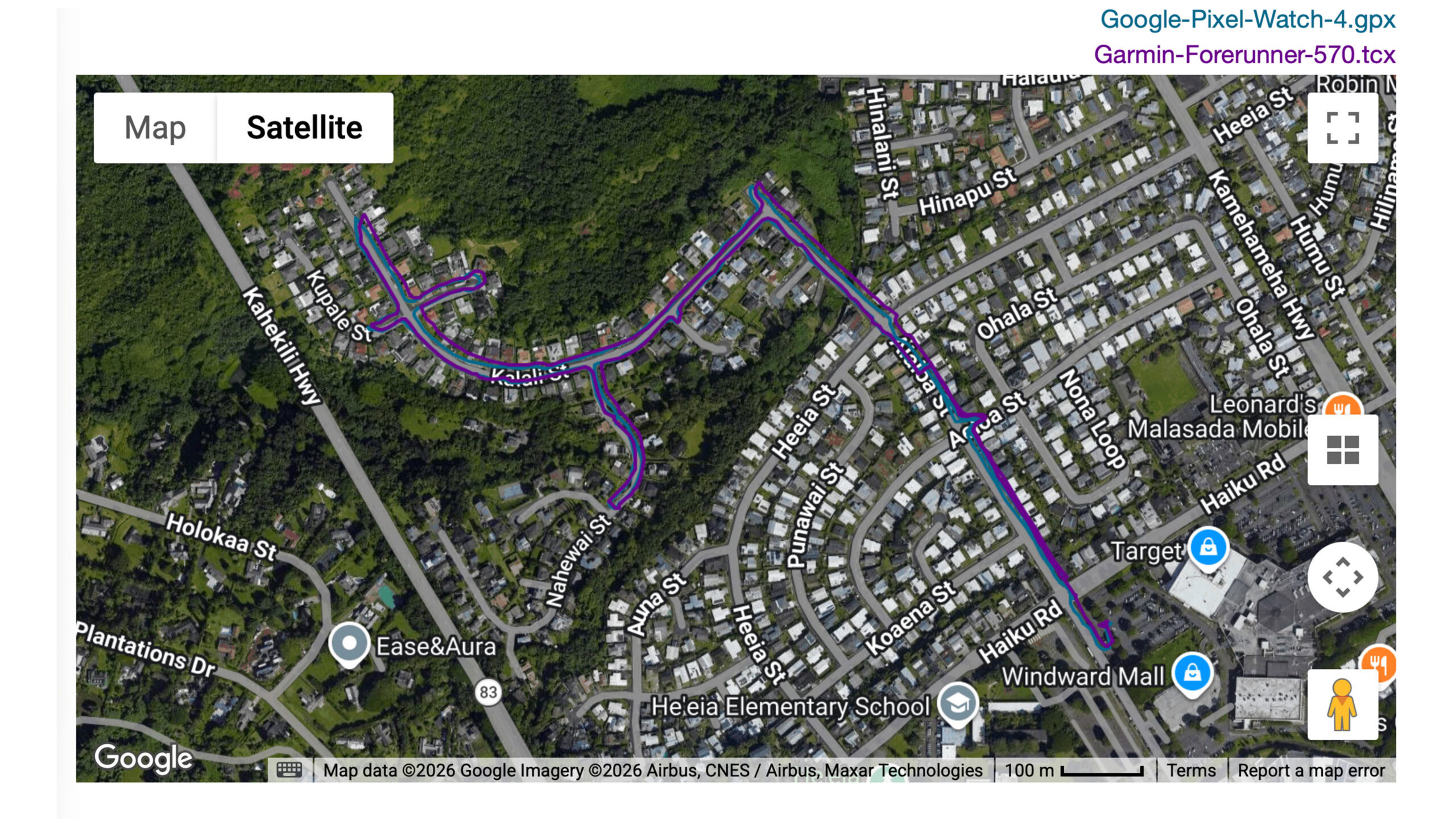
My initial five months with the Pixel Watch 4 confirmed that this technical specification translates directly into real-world performance that finally aligns with the high standards set by the watch’s other sensors. Early testing showed promise, where routes were better than the previous model but still exhibited minor inconsistencies when compared side-by-side with elite devices like the Garmin Epix Pro series. However, subsequent usage, allowing for firmware calibrations and continued signal acquisition in various conditions, has demonstrated remarkable consistency.
In contemporary comparison runs, the Pixel Watch 4 now frequently matches or, in challenging urban canyons, even surpasses the path tracing accuracy of established competitors. The erratic dips into non-existent territory have virtually disappeared. For the runner utilizing the watch for street races or meticulously plotted training loops, the path visualization post-activity is now clean, reflecting the actual ground covered rather than an abstract interpretation of satellite noise. This newfound precision in distance measurement eliminates the need for the manual correction factors often applied when relying on less accurate wrist-based GPS.
Furthermore, the improved signal locking is evident during activities involving sudden changes in environment, such as exiting a long tunnel or running adjacent to large structures. Where previous models might take several seconds to reacquire a robust lock, leading to momentary speed inconsistencies, the Pixel Watch 4 maintains connectivity with greater tenacity. This rapid, reliable acquisition is vital for athletes who start and stop activities frequently or transition between open space and dense cover.
Industry Implications: Google’s Maturation in Wearable Tech
The successful deployment of reliable dual-band GPS signifies a critical maturation point for Google in the wearable technology sector. For years, Android smartwatches were often perceived as lifestyle devices that could track fitness, whereas Apple Watch and Garmin devices were viewed as purpose-built fitness tools that also offered smart features. Google’s approach, heavily leveraging Fitbit’s established health tracking ecosystem, was strong on biometrics (heart rate, sleep, activity rings) but weak on the foundational utility required for performance tracking—namely, accurate location services.
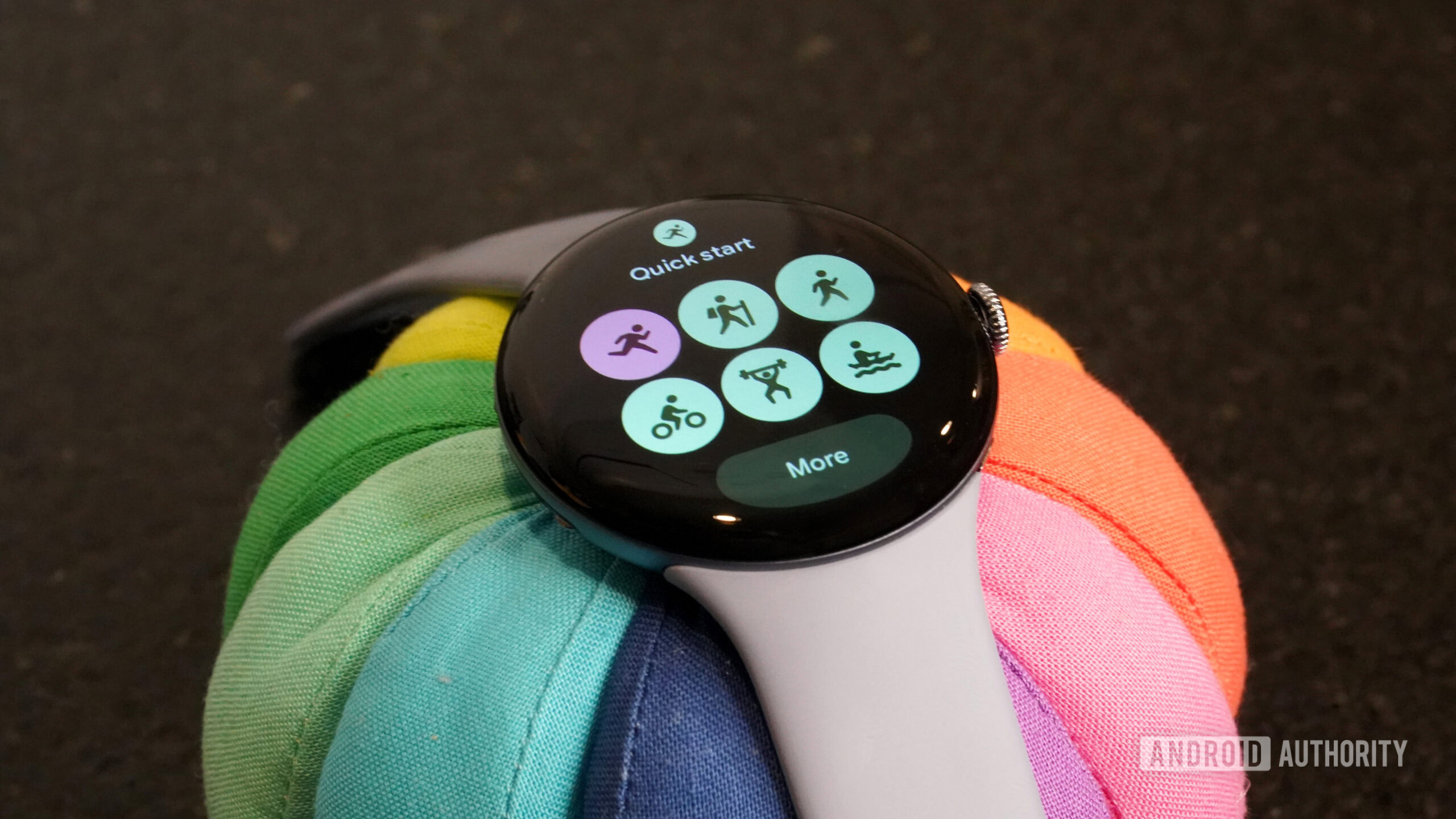
By achieving parity with, or exceeding, the GPS performance of its primary rivals, Google has effectively removed the primary technical objection for a large segment of the market: the serious athlete who prefers the Wear OS interface or is deeply integrated into the Google/Fitbit ecosystem. This upgrade moves the Pixel Watch 4 from being a compromise purchase to a comprehensive option. It suggests that Google is now treating the fitness and outdoor tracking aspects of its smartwatch platform with the same engineering rigor previously reserved for software integration and display technology.
This shift has broader implications for the Wear OS landscape. When the flagship device within the ecosystem achieves this level of functional parity, it sets a new baseline expectation for third-party Wear OS manufacturers. Competitors utilizing the platform are now under increased pressure to adopt similar high-end GNSS solutions to remain competitive in the premium segment, accelerating the overall technological baseline for Android wearables.

The Synergy: GPS and Heart Rate Working in Concert
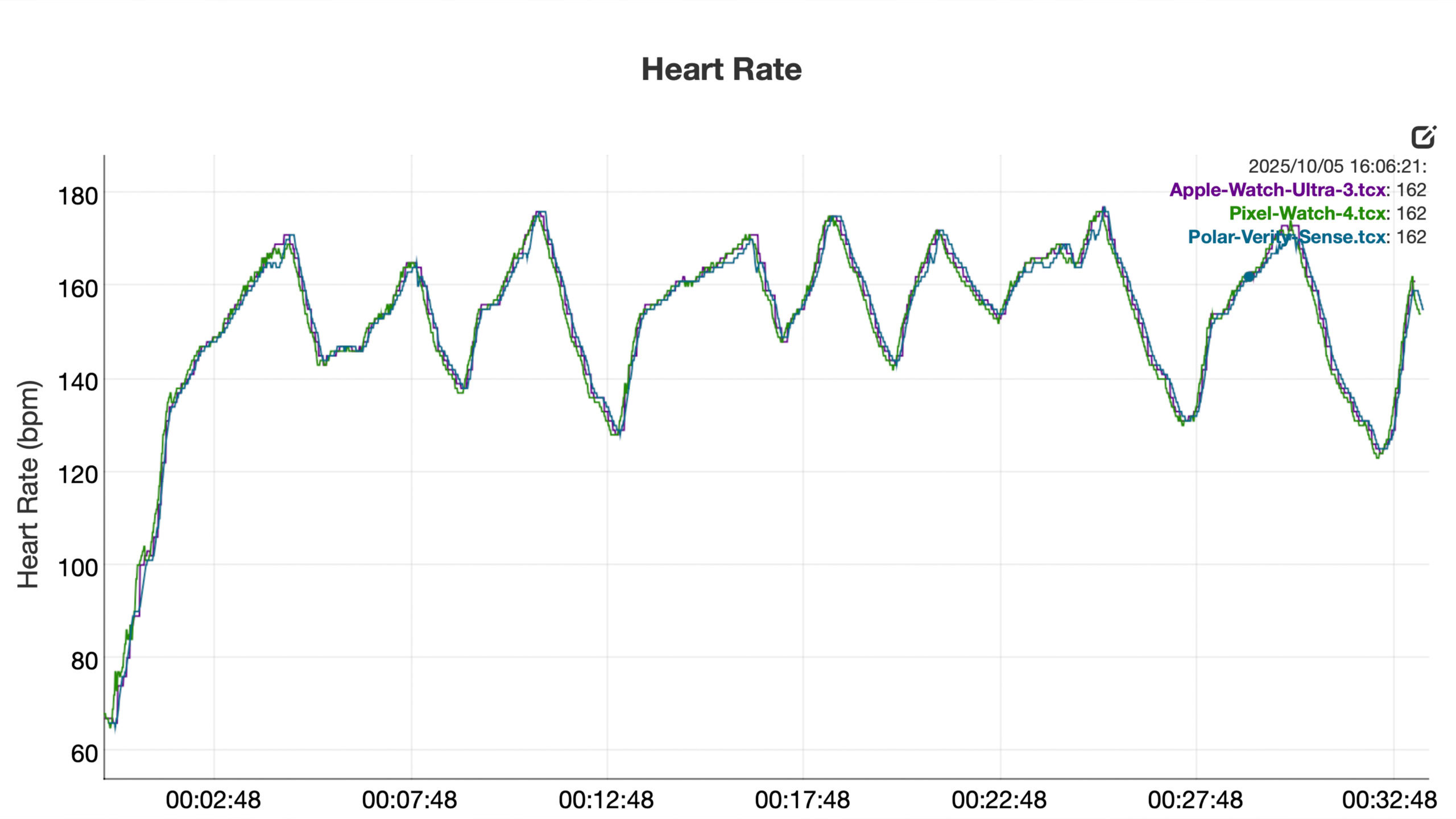
What makes the Pixel Watch 4 truly compelling is the synergy created by pairing this superior GPS with the already excellent heart rate tracking. Performance analysis is inherently dependent on two core variables: time (pace/distance) and physiological response (heart rate).
In the Pixel Watch 3 era, an analyst could review a workout, note that the heart rate spiked perfectly during a hill climb (thanks to the accurate PPG sensor), but then question the validity of the distance covered during that climb due to GPS drift. The resulting pace-per-heart-rate data was inherently noisy. With the Pixel Watch 4, these two data streams are finally clean and mutually reinforcing. A runner can now trust that when the watch reports a specific pace (derived from accurate L1/L5 positioning) coinciding with a specific heart rate (derived from accurate optical sensing), they are receiving a high-fidelity snapshot of their exertion level at that precise point on the map. This holistic data accuracy transforms the device from a passive tracker into an active training partner capable of supporting data-driven adjustments to training loads.
Endurance and Real-World Power Management
A common trade-off associated with dual-band GPS is increased power consumption. Utilizing two frequencies simultaneously requires more processing power and places a higher sustained load on the battery. A key metric for evaluating any endurance-focused wearable is whether this technological upgrade comes with an unacceptable cost to battery life.
Impressively, the Pixel Watch 4 appears to have managed this efficiency challenge effectively, likely through optimized chip architecture and software management introduced with the new generation. The watch maintains its advertised multi-day standby life for typical users while absorbing the power draw of continuous GPS logging during extended activities. A marathon-length run or a multi-hour cycling session no longer necessitates a mid-day emergency charge, a necessity that plagued earlier generations when engaging in continuous tracking. This sustained performance suggests Google has achieved a respectable balance between advanced positioning capabilities and practical, everyday usability, avoiding the pitfall of a feature-rich device that requires charging every night if used actively.
Future Trajectories and Enhanced Mapping Services
The improved GPS accuracy opens doors for more sophisticated future software features that Google and Fitbit can deploy. High-precision location data is the bedrock for advanced mapping, navigation, and safety features.
Firstly, enhanced route guidance. While current navigation features are functional, superior GPS allows for more granular, real-time turn-by-turn instructions, especially crucial on complex trail systems or in dense urban environments where precise lane identification might become beneficial. Secondly, safety features benefit immensely. Features like fall detection or emergency location sharing become significantly more trustworthy when the device can pinpoint the user’s location within a margin of error of just a few feet, rather than tens of feet.
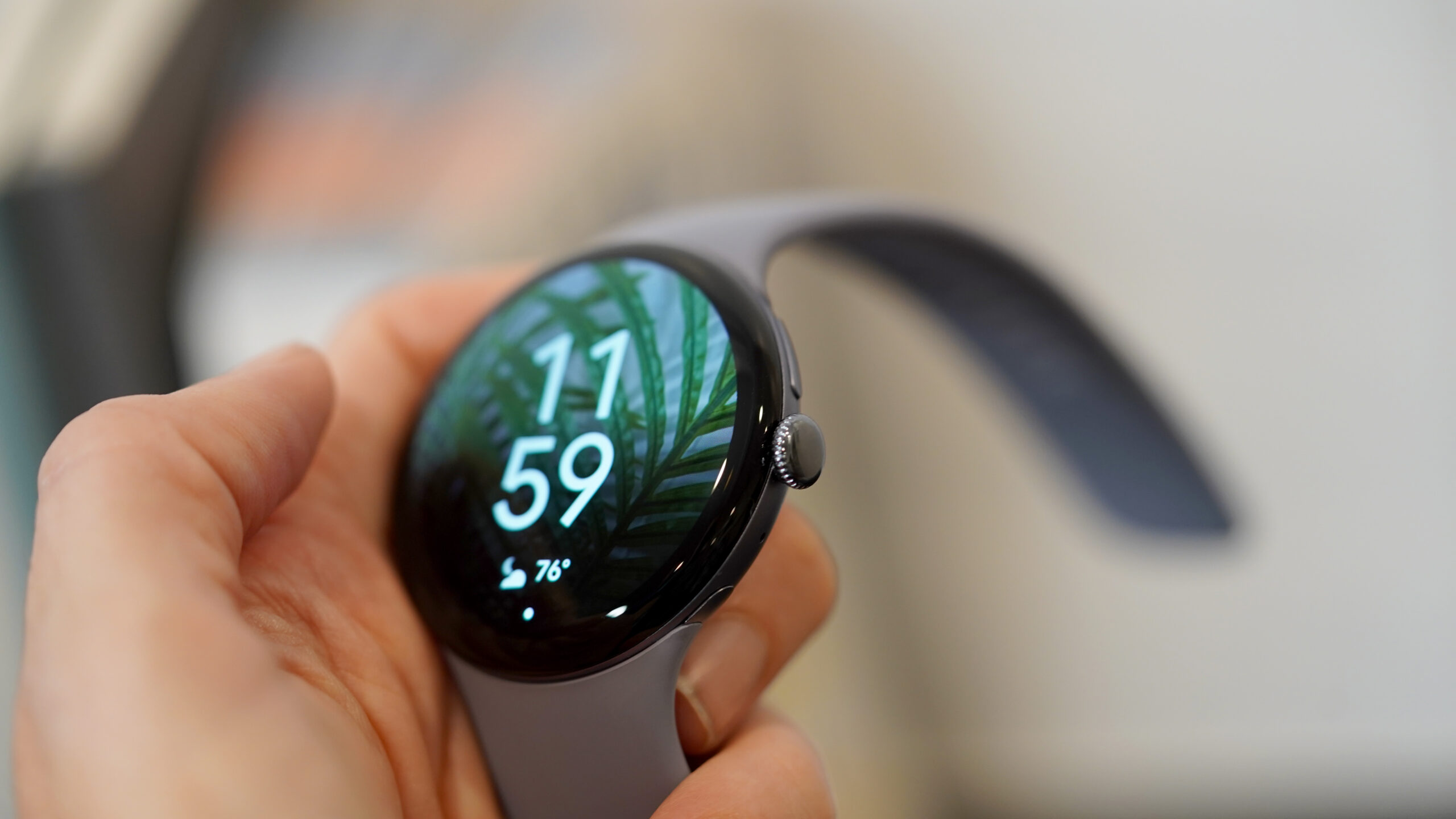
Looking ahead, as satellite constellations become denser and new GNSS standards emerge, the hardware foundation laid by the Pixel Watch 4 positions it well for software updates that can leverage future signal improvements. The investment in dual-band capability signals Google’s commitment to the long-term viability of the Pixel Watch platform as a serious competitor to specialized sports watches, promising continued refinement of mapping and activity analysis within the Wear OS framework. The five-month post-launch review solidifies this: the GPS upgrade isn’t just a feature; it is the keystone that completes the Pixel Watch’s transition into a fully credible, high-performance wearable device.
