

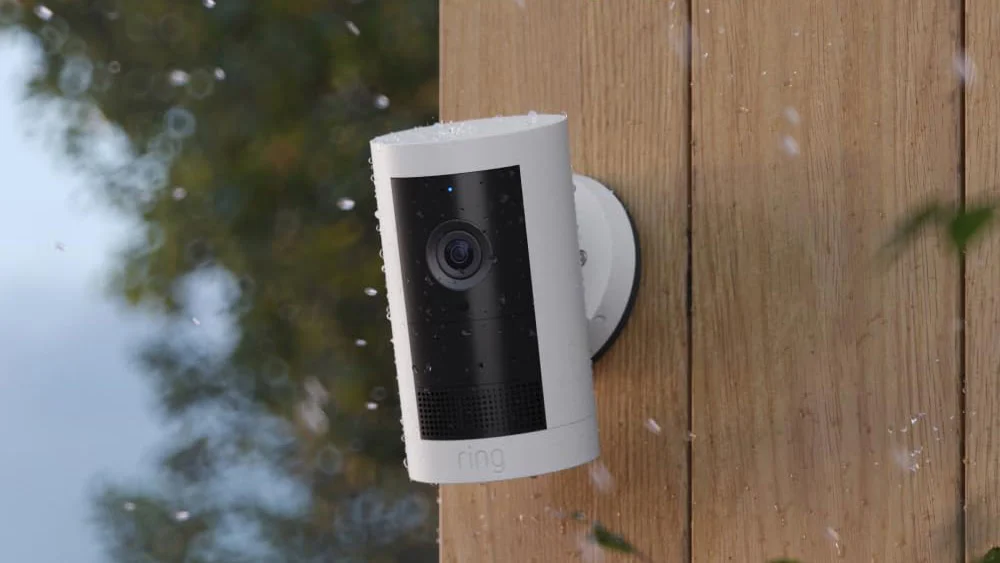
The connected home security landscape is currently experiencing a noticeable shift in consumer accessibility, marked by aggressive, time-sensitive pricing adjustments across Amazon’s Ring Outdoor Cam lineup. These promotions, originating directly from the parent company, signal a strategic effort to broaden the adoption of high-quality, battery-operated surveillance technology across various consumer segments. The discounts are not confined to a single tier but span the entire spectrum of the cordless outdoor offerings, indicating a concerted push to clear inventory or stimulate market penetration ahead of anticipated product refreshes or seasonal buying patterns. For consumers navigating the complex ecosystem of smart home security, these momentary pricing troughs represent an opportune moment to integrate professional-grade monitoring features without the typical premium outlay.
The Foundation: Analyzing the Base Ring Outdoor Cam
The entry point into this series, the standard Ring Outdoor Cam, serves as a crucial benchmark for value in the mid-tier home security market. Despite being the most accessible option, it delivers a surprisingly robust feature set that challenges perceptions of what a foundational security device should offer. Historically, budget-oriented cameras often sacrifice core functionality for lower cost, but the base Outdoor Cam maintains essential capabilities that satisfy the needs of many homeowners and renters.
Its foundation rests on Full HD (1080p) video capture, providing sufficient clarity for general area monitoring. Key software integrations include sophisticated motion detection algorithms, instantaneous mobile alerts, and real-time bidirectional audio communication—a non-negotiable feature for remote interaction or deterrence. Furthermore, the inclusion of standard night vision ensures continuous surveillance when ambient light fades. Crucially, the seamless integration with the Amazon Alexa ecosystem allows for voice control and integration into broader smart home routines, leveraging the massive existing user base familiar with Amazon’s platform.
A significant differentiator for this entire product line, and particularly relevant for the base model, is its inherent flexibility regarding placement. The design is inherently weather-resistant, engineered to withstand common environmental stressors such as precipitation, temperature fluctuations, and dust ingress—a prerequisite for any device designated for outdoor deployment. Power management is handled via a rechargeable battery pack, lauded for its longevity, often cited as lasting up to a year under typical usage scenarios. This operational profile—wire-free installation combined with extended battery performance—significantly lowers the barrier to entry, eliminating the complexity associated with running power conduits or specialized outdoor wiring. While it operates effectively out of the box, end-users must manage expectations regarding continuous high-demand scenarios, which will naturally reduce the advertised battery ceiling.
The Value Proposition: Examining the Outdoor Cam Plus
For consumers willing to invest a marginal amount more—often just a single-tier price jump—the Ring Outdoor Cam Plus emerges as the focal point of current promotional value. A minor increase in initial acquisition cost unlocks substantial performance enhancements that elevate the user experience considerably, moving it from adequate coverage to high-fidelity monitoring.
The most immediate and tangible upgrade is the leap in video resolution from Full HD to 2K (1440p). This increased pixel density translates directly into superior image detail, which becomes critical when reviewing incidents, particularly when digital zooming is required to isolate facial features or license plates. Beyond raw resolution, the Plus model introduces "Pre-Roll" video capture. This feature, historically reserved for premium surveillance solutions, buffers video footage immediately preceding a recorded motion event. This eliminates the common frustration of capturing only the tail end of an intrusion, providing crucial context by showing the moments leading up to the trigger.
Technologically, the Plus addresses potential connectivity bottlenecks by incorporating dual-band Wi-Fi support. Where the base model may rely solely on the more congested 2.4GHz band, the Plus can leverage the faster, less crowded 5GHz band. This dual-band capability ensures more stable data transmission, reducing latency in live stream access and improving the reliability of motion event reporting. Standard features like Low Light Sight, comprehensive motion alerting, and Alexa compatibility remain, but the enhanced visual fidelity and connectivity robustness position the Plus model as the current sweet spot for performance-to-cost ratio in the cordless security segment. Anecdotal user experience suggests that while the battery life remains impressive, the increased data processing for 2K video and dual-band utilization might necessitate recharging cycles closer to the four-to-six-month range, depending on the frequency of alerts.
Escalating Performance: The Ring Outdoor Cam Pro
The Ring Outdoor Cam Pro targets the discerning consumer who prioritizes maximum visual acuity and advanced detection capabilities, positioning itself as the pinnacle of Ring’s battery-powered, non-integrated lighting security offerings. This model signifies a commitment to professional-grade surveillance features scaled down for residential deployment.
The headline specification is the native 4K Ultra High Definition (UHD) video recording capability. This dramatic increase in resolution provides an imaging standard that allows for extreme digital magnification without significant loss of forensic detail. Ring advertises the potential for 10x digital zoom retention, a feature that transforms vague video clips into actionable evidence, capable of clearly identifying small details from a considerable distance.
Image processing is further refined through the inclusion of Adaptive Night Vision, an enhancement over the standard night vision found in lower tiers. This system dynamically adjusts illumination and exposure based on ambient light conditions to optimize clarity in near-total darkness, minimizing washout from nearby artificial lights while maximizing detail retention in shadowed areas. Complementing this visual upgrade is the refined 3D Motion Detection. This sophisticated technology often utilizes radar or similar sensors to establish a precise three-dimensional perimeter, allowing users to define specific zones of interest and filter out irrelevant motion triggers (like passing cars or swaying branches) with greater accuracy than traditional 2D pixel analysis.
While it retains dual-band Wi-Fi and all standard interactive features, the Pro model introduces a significant wired connectivity option for users seeking ultimate reliability: Power over Ethernet Plus (PoE+). For installations where constant power and a rock-solid internet connection are paramount, PoE+ allows the device to be powered and networked simultaneously via a single Ethernet cable running to a compatible injector or switch. This removes the variable of battery maintenance entirely for users opting for the wired configuration, solidifying its position as the most robust, non-floodlight-equipped option.
Industry Context and Strategic Implications
The widespread, simultaneous discounting of the entire Outdoor Cam series is more than just a seasonal promotion; it reflects several key dynamics within the smart home security industry. Firstly, Amazon is aggressively positioning Ring to counter competitive pressure from established players like Arlo and emerging threats from ecosystem providers like Google Nest. By driving down the entry price points, Ring aims to secure market share through sheer accessibility, leveraging the massive existing Prime subscriber base for rapid conversion.
Secondly, these deep cuts suggest a strategic timeline. Major hardware manufacturers often employ aggressive end-of-cycle pricing to liquidate current inventory ahead of an anticipated hardware refresh cycle. Consumers should view this as an opportunity to acquire current-generation technology at legacy pricing, though they must weigh this against the potential for newer models offering significant leaps in AI processing or battery chemistry improvements.
From an expert perspective, the focus on the "Plus" model highlights a maturing market understanding: consumers recognize the value proposition of improved resolution (2K) and contextual awareness (Pre-Roll). The base model appeals to the casual user, while the Pro caters to the security enthusiast. However, the middle tier, the Plus, is where market optimization occurs—offering the most significant perceived upgrade for the least financial commitment. The introduction and aggressive pricing of the PoE+ option on the Pro model is also noteworthy; it signals Ring’s awareness that professional installers or highly security-conscious consumers often prefer wired reliability over the convenience of battery power, even in their wireless-capable hardware.
The Subscription Caveat: Analyzing the Ring Protect Plan Dependency
A critical analysis of these deals necessitates a sober look at the ongoing operational costs and feature access. While the hardware pricing is at a historic low, the functional capabilities of all Ring devices are intrinsically tied to the Ring Protect subscription service. Without an active subscription, the cameras revert to a very basic monitoring tool—offering only live view and immediate, unrecorded motion alerts.
The rich feature set described—cloud storage for recorded events, video history access, sophisticated person/package/vehicle detection powered by cloud AI, and the use of features like Pre-Roll—are all gated behind a monthly or annual subscription fee. For the 4K Pro, the high-end features like detailed 3D motion detection analysis and extended video retention are dependent on the higher-tier Protect Plus or Pro plans.
This dual-cost structure—low upfront hardware cost subsidized by a recurring service revenue stream—is the dominant business model in modern consumer electronics security. A prospective buyer must calculate the Total Cost of Ownership (TCO) over three years, factoring in the subscription fees required to unlock the very features that made the hardware attractive in the first place. The aggressive hardware discounts effectively serve as a lower-cost gateway into Amazon’s recurring subscription ecosystem.
Future Trajectories and Technological Convergence
The progression seen across the Outdoor Cam line—from 1080p to 2K to 4K, coupled with advancements in Wi-Fi standards and detection methods—maps directly onto broader industry trends. We anticipate continued convergence between wired reliability (PoE+) and wireless flexibility (advanced battery management).
Future iterations of these cordless cameras will likely focus heavily on edge processing. Moving advanced AI tasks, such as object recognition and local anomaly detection, off the cloud and onto the camera’s onboard chip will reduce reliance on constant high-bandwidth uploads, potentially extending battery life even further and mitigating latency concerns. Furthermore, the industry is moving toward enhanced interoperability, though Ring, being deeply embedded in the Amazon ecosystem, may lag slightly behind open standards initiatives.
The current promotional window provides an excellent opportunity to invest in hardware that supports dual-band connectivity and high-resolution capture, future-proofing the installation against increasing bandwidth demands. However, the sustained value of the investment will ultimately be determined by the evolving landscape of cloud security services and the long-term commitment of the user to the requisite subscription model. These record-low prices democratize access to high-end surveillance tools, but consumers must engage with the full operational ecosystem to realize the advertised benefits.
