

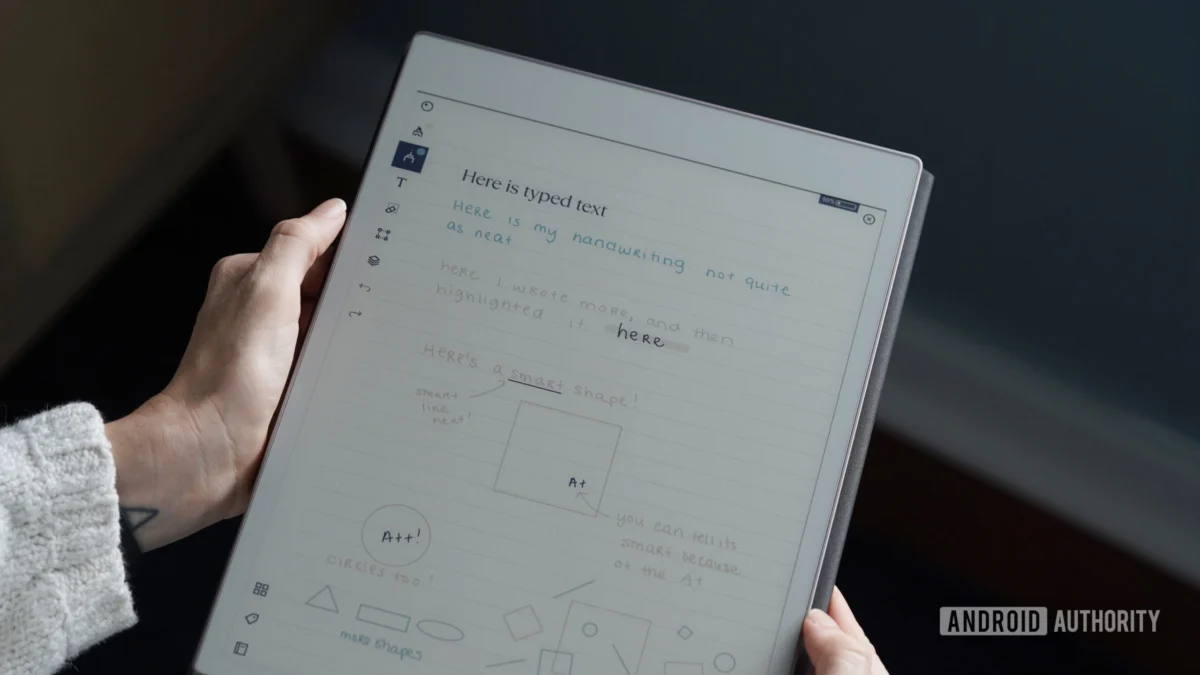
The digital stationery landscape is undergoing a subtle but significant evolution, driven by manufacturers seeking to bridge the enduring gap between tactile creation and digital organization. The reMarkable tablet, long lauded for its minimalist interface and paper-like writing experience, has just announced a major integration that fundamentally alters its role in professional workflows. This new capability, dubbed "Send to Miro," signals a strategic pivot towards becoming a genuine conduit rather than merely a repository for handwritten data.
This development is more than a simple software update; it represents a calculated move to solve one of the most persistent pain points for power users of dedicated E-Ink devices: the friction involved in digitizing and operationalizing captured thought. Users who gravitate toward the reMarkable value the focused environment it offers—the absence of notifications, the zero-latency writing feel, and the sheer cognitive clarity derived from working on a monochromatic screen. However, this focus often necessitates a cumbersome transition when those insights need to be shared, indexed, or integrated into collaborative, digital environments. The introduction of direct interoperability with Miro, a leading visual collaboration platform, directly addresses this chasm.
Contextualizing the Analog-Digital Dilemma
For years, the market for digital note-taking devices has been bifurcated. On one side reside traditional tablets (like iPads or high-end Android devices) that offer robust multitasking, vibrant color displays, and seamless cloud integration, but often suffer from the cognitive overhead of distraction. On the other side are E-Ink devices, epitomized by reMarkable, which prioritize singular focus and superior handwriting fidelity, mimicking the experience of pen on paper.
The core value proposition of reMarkable has always been cognitive transfer—capturing fleeting ideas with the speed and intimacy of handwriting. However, until now, extracting those ideas required manual transcription, photographing the page, or using rudimentary screen-capture methods, followed by OCR (Optical Character Recognition) if digital text was required. This process inherently degrades the spontaneity and immediacy that the device promises to enhance.
The partnership with Miro changes this dynamic by introducing a curated, direct pathway. Miro boards are inherently structured for ideation, project management, agile development, and collaborative mapping—activities that often begin life as rough sketches, bullet points, or concept diagrams scribbled during a preliminary meeting or brainstorming session. By enabling users to "Send to Miro," reMarkable is effectively positioning itself as the high-fidelity input layer for dynamic digital workspaces.
Deep Dive into the "Send to Miro" Mechanism
The functionality appears deceptively simple: a user jots down thoughts or sketches a diagram on their reMarkable device and selects the "Send to Miro" option. The real technological achievement lies in the backend processing and the subsequent utility on the receiving end.
The system must effectively handle several complex conversions. Handwritten strokes, which are inherently imprecise and context-dependent, must be intelligently interpreted. For textual notes, this implies advanced handwriting recognition that maintains formatting cues (like indentations or list structures) where possible. More crucially for diagrammatic work, the feature promises the transformation of rough sketches into structured digital assets within the Miro environment. If a user draws a rudimentary circle and a few connecting lines to represent a concept map, the reMarkable platform, in collaboration with Miro’s engine, must translate that into editable Miro shapes, connectors, and potentially even sticky notes.
Phil Hess, CEO of reMarkable, highlighted this crucial aspect: "Inspiration can strike at any moment, but typing up handwritten notes can be a hassle. With Send to Miro, you get all the benefits of pen and paper as part of your digital workflow." This statement underscores the intention: the device is no longer the end of the line for the thought; it is the beginning of the digital lifecycle for that thought.
For example, imagine an architect sketching an initial floor plan layout during a client consultation. Instead of photographing the page and manually rebuilding the layout using Miro’s native tools later, this feature theoretically allows the architect to transfer the raw spatial concepts directly onto a collaborative digital canvas, ready for refinement with team members in real-time or asynchronously. This immediate structural integrity preservation is a substantial leap forward from standard cloud syncing.
Industry Implications and Competitive Positioning
This integration has immediate ramifications for the broader market of digital paper devices, including competitors like Amazon’s Kindle Scribe and various offerings from Kobo and others.
- Ecosystem Lock-In: This move deepens reMarkable’s appeal to knowledge workers already embedded in collaborative, cloud-native ecosystems. While reMarkable already offers excellent integration with Dropbox and Google Drive for simple PDF/note transfer, Miro integration targets a specific, high-value segment: product designers, software developers, consultants, and educators who rely on visual frameworks for complex problem-solving. It transforms the device from a personal productivity tool into an integral node in a team productivity architecture.
- The Value of Software Partnerships: This showcases the necessity of strategic third-party partnerships for hardware manufacturers focusing on niche experiences. reMarkable cannot build a world-class digital whiteboard; Miro can. By linking its best-in-class input experience directly to the best-in-class collaborative tool, reMarkable leverages the strengths of both platforms, providing a superior end-to-end solution than either could offer in isolation.
- Raising the Bar for E-Ink Utility: Historically, E-Ink devices have been penalized for their perceived lack of functionality compared to LCD/OLED tablets. Features like "Send to Miro" directly counter this critique by demonstrating that specialized, deep integration can provide utility that color tablets often obscure with complexity. It repositions E-Ink not as a less capable device, but as a differently capable device, optimized for the initial capture phase of high-value work.
Expert Analysis: The Psychology of Workflow Transition
From a cognitive workflow perspective, the transition from analog capture to digital iteration is often where momentum is lost. Handwriting engages different neural pathways associated with memory encoding and conceptual synthesis than typing does. Many professionals prefer handwriting precisely because it forces a slower, more deliberate processing of information.
The crucial innovation here is the automation of the intermediate step. Previously, the user had to mentally translate their handwriting into a digital format—a process requiring time, effort, and potential loss of nuance. Now, the device handles the translation, allowing the user’s mental energy to focus immediately on the next step: structure and collaboration within Miro. This respects the cognitive benefits of handwriting while eliminating the administrative burden of digitization.
Furthermore, the success of this feature will heavily rely on the accuracy of the conversion engine. If the handwriting recognition struggles with specialized terminology or if the shape recognition mangles complex flowcharts, the feature will quickly be abandoned. The expectation set by Miro’s existing capabilities suggests a high bar for this initial transfer quality.
Future Trajectory and Emerging Trends
The "Send to Miro" feature sets a clear precedent for reMarkable’s future development strategy. We can anticipate several related trends emerging:
- Vertical Integration: Expect further integrations with platforms specific to other professional verticals. For instance, integration with specialized coding environments (allowing hand-drawn pseudo-code to be transferred), project management suites like Jira (for converting meeting notes into actionable tickets), or even dedicated academic platforms for mathematical notation transfer.
- Smarter Contextualization: Future iterations might involve the tablet itself understanding the intent of the user’s scribbles. If the user circles a section and draws an arrow to a separate area, the software might prompt: "Do you want to create a sub-board link in Miro?" This moves beyond simple transfer to proactive workflow assistance.
- The Subscription Model Justification: This feature is explicitly limited to reMarkable Connect subscribers. This confirms that high-value, deep integration services are central to the company’s monetization strategy. For users who rely on the focused E-Ink experience, the recurring subscription fee becomes justifiable as it unlocks functionality that transforms the tablet from a luxury accessory into an indispensable business tool. The perceived value must continually outweigh the cost of subscription, and deep integration with essential enterprise software is a powerful justification lever.
The rollout, scheduled to commence with reMarkable OS 3.26, marks a significant inflection point. While the device itself remains committed to its paper-like roots, its utility is expanding rapidly into the digital ecosystem. This move suggests that the future of specialized E-Ink devices is not isolation, but intelligent, curated connectivity, ensuring that the focus remains on the user’s creative output, regardless of whether that output lives temporarily on paper or permanently in the cloud. For professionals seeking the purity of handwriting without sacrificing the dynamism of modern digital collaboration, this new capability effectively closes the loop, making the reMarkable experience far more comprehensive and immediately actionable than ever before. This is the quiet revolution in workflow management that many in the analog-digital hybrid space have been anticipating.
