

The landscape of digital interaction is undergoing a fundamental shift from a user-directed experience to an agent-delegated one. As artificial intelligence evolves from passive chatbots into proactive "agents" capable of navigating the open web, executing complex workflows, and transacting financial assets, the internet is facing an unprecedented identity crisis. In response to this shift, Tools for Humanity (TFH), the organization behind the identity-focused project World, has unveiled AgentKit. This new developer tool is designed to serve as a biometric anchor for the burgeoning field of agentic commerce, providing a mechanism to verify that a unique human being is the ultimate authority behind an autonomous AI’s purchasing decisions.
Founded by Sam Altman and Alex Blania, World (formerly Worldcoin) has long positioned itself as the infrastructure for a post-AI internet. Its core mission—establishing "proof of human"—has gained renewed urgency as generative AI begins to flood digital spaces with synthetic content. There is a notable irony in the fact that Altman’s other major venture, OpenAI, is a primary driver of the very technology that necessitates such verification. However, World’s leadership argues that the proliferation of AI agents makes a robust, privacy-preserving identity layer not just a luxury, but a requirement for a stable global economy.
The Mechanics of Agentic Commerce and the Trust Gap
Agentic commerce refers to the practice of utilizing AI software to act as a proxy for a consumer. Instead of a human manually searching for the best price on a laptop, adding it to a cart, and entering credit card details, an AI agent is tasked with the entire lifecycle of the transaction. The agent analyzes specifications, compares prices across multiple retailers, and completes the checkout process autonomously.
While this promises unparalleled convenience and efficiency for the consumer, it presents a significant challenge for merchants and payment processors. From the perspective of a web server, an AI agent can look indistinguishable from a malicious bot or a sophisticated fraud script. Without a way to verify the human intent behind a transaction, merchants face increased risks of automated spam, inventory hoarding by scalper bots, and complex fraud schemes that could destabilize digital marketplaces.
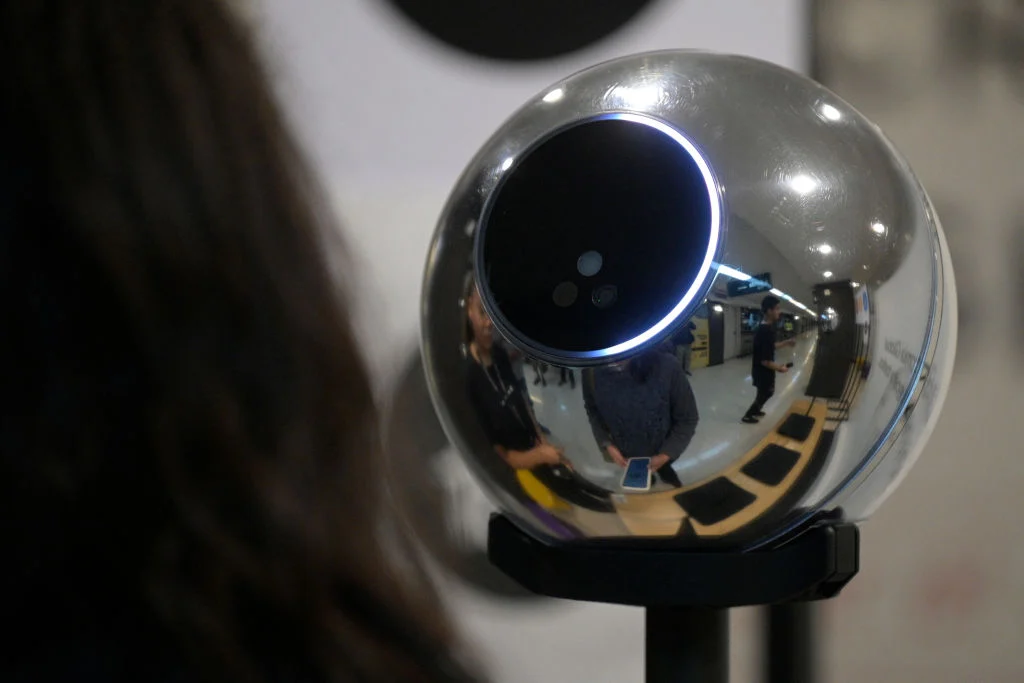
AgentKit seeks to bridge this trust gap. By integrating with World’s existing biometric verification ecosystem, AgentKit allows developers to require a "World ID" for any agent attempting to make a purchase. This ensures that while the agent is autonomous, it is tethered to a verified, unique human who has undergone a biometric scan via the "Orb"—World’s signature hardware device that maps the unique patterns of the human iris to create an encrypted digital code.
Technical Integration: World ID and the x402 Protocol
The technical architecture of AgentKit relies on a synergy between biometric identity and decentralized payment standards. Central to this is the x402 protocol, an open-source standard developed through a collaboration between Coinbase and Cloudflare. The x402 protocol was designed specifically to facilitate machine-to-machine payments, allowing software programs to transact with one another without the friction of traditional human-centric payment gateways.
AgentKit functions as a complementary layer to x402. When a user registers an AI agent, they link it to their verified World ID. When that agent interacts with a commercial website, AgentKit uses the x402 system to communicate a credential to the merchant: a cryptographic proof that the agent is acting on behalf of a real person. This does not necessarily reveal the user’s legal name or private data; rather, it provides a "proof of uniqueness," assuring the merchant that the transaction isn’t part of a botnet-driven attack or a multi-account exploit.
Tiago Sada, Chief Product Officer at Tools for Humanity, describes this relationship as a digital "power of attorney." Just as a legal document empowers one individual to act on behalf of another in the physical world, AgentKit allows a human to delegate financial and operational authority to an AI agent while maintaining a verifiable chain of accountability. This allows websites to make granular decisions: they can choose to trust transactions from verified agents while blocking or throttling those that lack a human-backed credential.
The Strategic Positioning of World in the AI Ecosystem
The timing of the AgentKit beta launch is no coincidence. The "agentic" turn in AI is currently the primary focus of Silicon Valley’s largest players. Amazon has been aggressively integrating AI shopping assistants into its retail ecosystem; Mastercard is exploring how autonomous agents will interact with credit networks; and Google has recently introduced its own protocols to support automated retail interactions.
By launching AgentKit now, World is attempting to position itself as the industry’s de facto identity provider. If agentic commerce becomes the standard way humans interact with the web, the entity that controls the "proof of human" protocol sits at a powerful chokepoint. World’s strategy is to become the "verified" badge of the autonomous age—a layer of stability that allows retailers to embrace AI agents without fear of being overwhelmed by non-human traffic.
However, this ambition is not without its critics. The reliance on the Orb—a physical device that captures biometric data—has raised significant privacy concerns since the project’s inception. While TFH maintains that the biometric data is converted into a hash and the original images are deleted, the centralization of identity verification in a single private entity remains a point of contention for digital rights advocates. AgentKit expands the scope of this verification from simple login credentials to the very heart of global commerce, raising the stakes for how this data is managed and protected.
Analysis: The Economic Implications of Verified Autonomy
The economic implications of AgentKit and similar technologies are profound. We are moving toward a "permissionless" economy for machines, but that economy requires "permissioned" entry points for the humans who fund them.
For merchants, the benefits are clear. Verified agents reduce the "noise" of the internet. In a world where 50% of web traffic is estimated to be bot-driven, being able to filter for "unique humans" allows for better inventory management and more accurate marketing analytics. It also mitigates the risk of chargebacks and fraudulent transactions, as the biometric link provides a higher level of assurance than a simple password or even two-factor authentication.
For the consumer, the value proposition lies in the expansion of what an AI can do. Currently, many platforms limit what automated tools can do to prevent abuse. If a user can prove they are a real person through a World ID, those platforms may be more willing to grant their AI agents higher transaction limits or access to exclusive inventory. It transforms the AI agent from a suspicious bot into a VIP digital representative.
Future Trends: The Standardization of Human-Agent Identity
Looking ahead, the success of AgentKit will likely depend on broad industry adoption of standards like x402 and the willingness of other tech giants to interoperate with World’s identity stack. We are likely to see a period of "protocol wars," where different consortia attempt to establish the dominant way to verify agents.
If World’s vision takes hold, the "Orb-verified" status could become a prerequisite for participating in the high-trust segments of the internet. This could lead to a two-tiered web: a "verified" layer where agents can transact freely, and an "unverified" layer plagued by the "slop" of anonymous bots and AI-generated noise.
Furthermore, as AI agents become more sophisticated, we may see the emergence of "agent reputations." A verified human could back multiple agents, and the behavior of those agents could reflect back on the human’s World ID. This creates a social and economic incentive for users to ensure their AI proxies behave according to the rules of the digital marketplace.
Conclusion
The launch of AgentKit marks a significant milestone in the evolution of the "agentic" web. By providing a biometric anchor for autonomous transactions, Tools for Humanity is addressing one of the most critical hurdles to the mass adoption of AI agents: the problem of trust. While the use of biometric hardware like the Orb remains a polarizing topic, the necessity of a verification layer in an AI-saturated world is increasingly difficult to ignore. As agentic commerce matures from a niche trend into a pillar of the global economy, the ability to distinguish between a helpful autonomous assistant and a malicious automated script will define the future of digital safety and commercial stability. World is betting that the iris scan is the key to that future, turning the human eye into the ultimate credit card for the age of artificial intelligence.
