

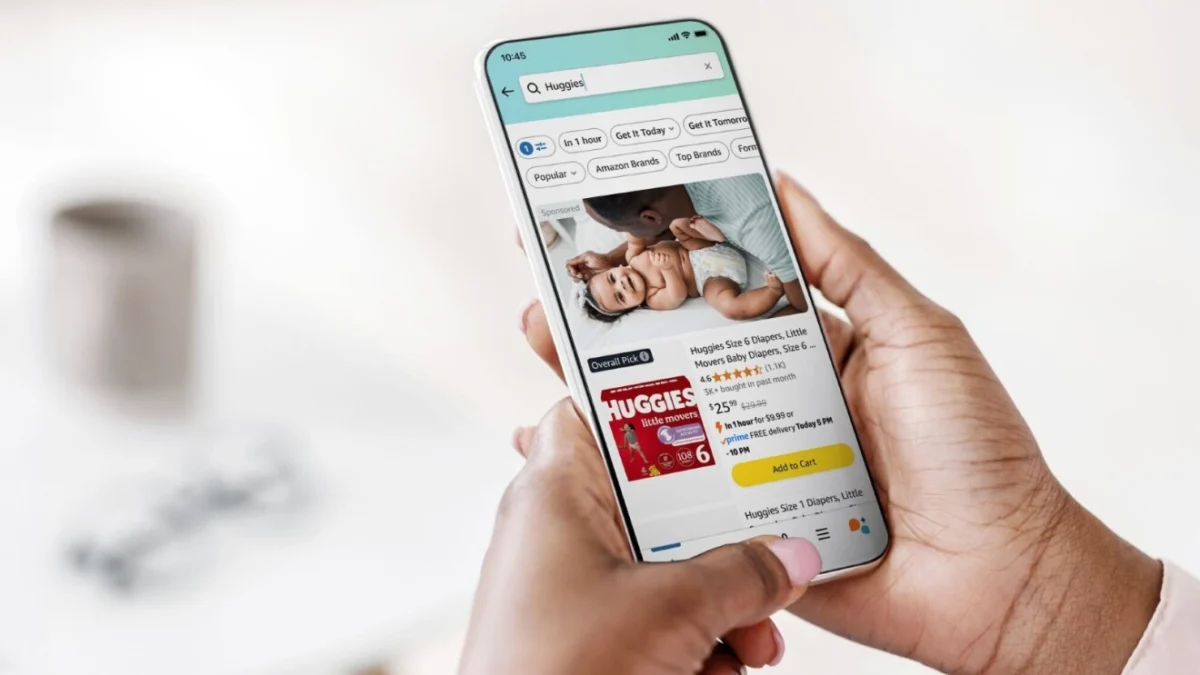
The retail landscape is currently witnessing a paradigm shift as the definition of "convenience" undergoes a radical transformation. Amazon, the company that once redefined the industry by making two-day shipping a global standard, is now aggressively moving to reclaim its dominance in the hyper-competitive "quick-commerce" sector. By introducing one-hour and three-hour delivery windows across a vast swath of the United States, the e-commerce titan is signaling a new era of logistics—one where the gap between digital purchase and physical possession is measured in minutes rather than days.
This strategic expansion introduces a bifurcated speed tier designed to cater to the immediate needs of modern households. Under the new framework, Amazon is making an initial catalog of approximately 90,000 items available for these ultra-fast windows. This selection is not a random assortment but a curated inventory of high-demand essentials, ranging from household staples and electronics to health supplies and last-minute gifts. To facilitate this, the company has integrated new user interface elements into its mobile application and desktop site, including "get it fast" labels and dedicated search filters that allow consumers to isolate products eligible for the accelerated timelines.
The pricing structure for these services reflects a strategic attempt to monetize the "convenience premium" while maintaining the perceived value of the Prime membership. For Amazon Prime subscribers, a one-hour delivery window carries a fee of $9.99, while the three-hour option is priced at a more accessible $4.99. For those without a Prime subscription, the costs rise significantly to $19.99 and $14.99, respectively. This tiered pricing not only covers the increased operational intensity of rapid fulfillment but also serves as a potent incentive for non-members to join the Prime ecosystem, where the friction of high delivery fees is substantially reduced.
Geographically, the rollout is ambitious. The one-hour delivery tier is being deployed in hundreds of U.S. cities, covering major metropolitan hubs such as Los Angeles, Chicago, and Washington, D.C. Perhaps more telling of Amazon’s logistical confidence is the inclusion of mid-sized markets and smaller urban centers like Boise, Idaho; Des Moines, Iowa; and American Fork, Utah. Meanwhile, the three-hour delivery window is seeing an even broader release, reaching over 2,000 cities and towns nationwide. This suggests that Amazon’s logistical infrastructure has reached a level of density where ultra-fast delivery is no longer an experimental luxury for Manhattan or Silicon Valley, but a scalable service for the American heartland.
The Logistics of Instant Gratification
To understand how Amazon can achieve a one-hour turnaround from "click to curb," one must look at the fundamental restructuring of its fulfillment network over the last several years. Historically, Amazon relied on massive, centralized warehouses located on the outskirts of major cities. While efficient for bulk storage, these facilities were ill-equipped for sub-hour speeds due to the "last-mile" distance.
The new initiative leverages a decentralized network of "Same-Day" fulfillment sites. These smaller, agile facilities are situated much closer to dense residential areas. Unlike the sprawling traditional fulfillment centers, these sites are optimized for speed and high-velocity inventory turnover. They utilize advanced predictive analytics to stock the specific 90,000 items that local data suggests are most likely to be ordered in a hurry. By shortening the physical distance between the product and the consumer, Amazon effectively bypasses the traditional bottlenecks of regional transit.
Furthermore, the integration of robotics and AI-driven sorting has reached a point of maturity where the "pick and pack" process can be completed in a matter of minutes. When a one-hour order is placed, the system prioritizes it in the queue, directing autonomous mobile robots to retrieve the item and bringing it to a human packer who readies it for immediate dispatch. The final leg of the journey is then handled by a dedicated fleet of delivery partners who operate on a "point-to-point" basis, rather than following the circuitous multi-stop routes typical of standard van deliveries.
Navigating the Competitive Battlefield
This move is a direct defensive and offensive volley against the rising tide of "instant" delivery platforms. Companies like Instacart, DoorDash, and Uber Eats have spent the last five years expanding beyond restaurant delivery into the realms of grocery, pharmacy, and general retail. These platforms capitalized on a perceived weakness in Amazon’s armor: the "immediacy gap." If a consumer needed a charging cable or a bottle of infant formula within the hour, they turned to DoorDash or Instacart, who could source it from a local brick-and-mortar store.
Amazon’s new service effectively cuts out the middleman—the third-party retailer—allowing Amazon to capture the full margin of the sale while offering a similar, if not superior, speed of service. By launching a dedicated storefront for these items, Amazon is positioning itself as a "digital convenience store" that competes directly with the local pharmacy or supermarket.

Industry analysts suggest that this pivot is essential for Amazon to maintain its share of the "essential" wallet. While consumers are willing to wait two days for a new book or a piece of furniture, they are increasingly unwilling to wait more than a few hours for consumables. As the "gig economy" infrastructure of its competitors matured, Amazon risked losing the high-frequency, low-friction transactions that drive long-term customer loyalty.
Lessons from History and Global Markets
This is not Amazon’s first foray into the world of rapid delivery, and the current strategy appears to be informed by past iterations. In 2014, the company launched "Prime Now," a standalone app and service that offered one-hour delivery. However, Prime Now was eventually shuttered in 2021 as the company sought to integrate those capabilities into the main Amazon ecosystem. The lesson learned was that consumers prefer a unified shopping experience rather than a fragmented one.
More recently, Amazon has been using international markets as a laboratory for quick-commerce. In India, the "Amazon Now" service has successfully piloted 10-minute delivery for groceries in select urban corridors. Similarly, in the United Arab Emirates, the company has experimented with 15-minute windows. These international pilots provided critical data on the limits of human and mechanical speed, as well as the cost-to-benefit ratio of ultra-fast fulfillment.
The December 2025 pilot of 30-minute deliveries in Seattle and Philadelphia served as the final domestic proof of concept. By refining the technology in these test markets, Amazon was able to identify the specific inventory mix and staffing levels required to make the one-hour promise a reality without incurring unsustainable losses.
The Broader Economic and Environmental Impact
The shift toward sub-hour delivery carries profound implications for the broader retail economy. For traditional brick-and-mortar retailers, the pressure has never been higher. If Amazon can deliver a product faster than a consumer can drive to a store, find parking, and check out, the primary value proposition of physical retail—immediacy—is neutralized. This may accelerate the trend of physical stores transitioning into "dark stores" or localized fulfillment hubs for their own e-commerce operations.
From a labor perspective, the expansion of ultra-fast delivery necessitates a massive surge in the "flex" workforce. This creates opportunities for gig workers but also raises questions about the long-term sustainability of such high-pressure delivery roles. The logistical precision required to meet a 60-minute deadline leaves little room for error, placing significant demands on both the technology and the people involved in the process.
There is also the environmental consideration. Rapid, point-to-point delivery is inherently less efficient than consolidated route delivery. While Amazon has made significant commitments to its "Climate Pledge," including the electrification of its delivery fleet, the carbon footprint of delivering a single item in an hour remains a challenge. The company’s ability to offset this impact through optimized routing and the use of electric vehicles will be a key metric for its sustainability goals in the coming decade.
Looking Ahead: The Future of Frictionless Commerce
As Amazon scales this service, the next frontier will likely involve even deeper integration of predictive AI. We may see a move toward "anticipatory shipping," where items are moved to local hubs before a customer even places an order, based on sophisticated behavioral models.
Furthermore, the expansion of drone delivery via the Prime Air program could eventually merge with these one-hour windows. In suburban or rural areas where traffic makes van delivery difficult, autonomous drones could provide the final link in the sub-hour chain. While regulatory and technical hurdles remain, the infrastructure Amazon is building today—the localized fulfillment sites and the 90,000-item "speed catalog"—is the foundation upon which drone delivery will eventually sit.
In conclusion, Amazon’s rollout of one-hour and three-hour delivery is more than just a new feature; it is a fundamental reassertion of its logistical dominance. By closing the time gap between desire and delivery, the company is attempting to make the digital marketplace indistinguishable from the physical one. For the consumer, it represents a new level of empowerment; for the competition, it represents a formidable new standard that may once again rewrite the rules of global commerce.
