

In the late summer of 2010, the landscape of global philanthropy appeared to be entering a new, enlightened era. Warren Buffett and Bill Gates, two of the most influential figures in the history of American capitalism, stood before the public to announce the Giving Pledge. It was a deceptively straightforward initiative: a moral commitment from the world’s billionaires to distribute at least half of their net worth to charitable causes, either during their lifetimes or as part of their testamentary legacy. At the time, the tech sector was accelerating its production of ultra-high-net-worth individuals at an unprecedented rate, and the Giving Pledge was framed as the definitive answer to the growing question of how these massive fortunes would serve the public interest. Buffett famously projected that the movement would unlock "trillions over time."
While the trillions in wealth certainly materialized, the promised surge in charitable distribution has become increasingly scrutinized. In the years following that initial announcement, the concentration of capital has reached levels that defy historical precedent. Recent data from the Federal Reserve indicates that the top 1% of American households now control wealth equivalent to the bottom 90% combined—a disparity that represents the highest concentration of resources since the central bank began tracking distribution in 1989. On a global scale, the wealth of the billionaire class has surged by 81% since 2020, reaching an estimated $18.3 trillion. Simultaneously, global food insecurity remains a crisis, with one in four individuals worldwide lacking regular access to adequate nutrition.
Against this backdrop of extreme economic divergence, the very concept of the "moral pledge" is undergoing a profound and public unraveling. The Giving Pledge, once seen as a mandatory badge of honor for the elite, is losing its luster. Data regarding the initiative’s membership reveals a stark downward trajectory. In its inaugural five years, the Pledge successfully recruited 113 families. That number fell to 72 in the subsequent five-year period, and dropped further to 43 in the five years following that. By 2024, only four new signatories joined the roster.
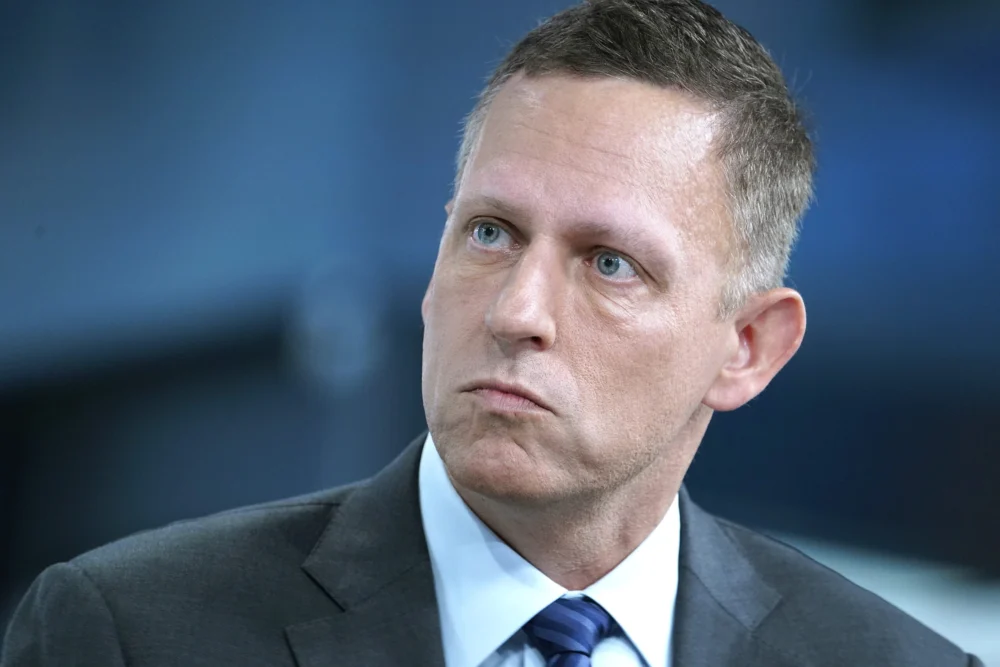
The decline of the Pledge is not merely a statistical anomaly; it represents a fundamental shift in the ideological foundations of Silicon Valley and the broader tech industry. The original roster of the Pledge reads like a "who’s who" of the digital age—Sam Altman, Mark Zuckerberg, Priscilla Chan, and Elon Musk are all participants. Yet, the energy sustaining this club has largely dissipated. Peter Thiel, a billionaire investor who notably never signed the commitment, has become one of its most vocal critics, characterizing the initiative as a "fake Boomer club" that has lost its cultural relevance. Thiel’s dismissive stance is more than just personal opinion; it reflects a broader movement within the tech elite to distance themselves from what they perceive as performative altruism.
This erosion of philanthropic idealism is part of a long-standing cultural transformation within the technology sector. For decades, the industry operated under a veneer of "making the world a better place"—a phrase so ubiquitous it eventually became a target of relentless satire. The HBO series Silicon Valley famously mocked this ethos, portraying tech executives as being obsessed with social impact while simultaneously engaging in ruthless corporate maneuvering. The satire was so effective that it reportedly forced corporate public relations departments to purge the phrase from their official communications. However, what has replaced that satirized idealism is far more consequential than a change in marketing slogans.
The industry is currently caught in a tug-of-war between two diametrically opposed worldviews. On one side is the "hippie value system" associated with the generation of Steve Jobs, which, however flawed, maintained a belief that technology should serve a humanistic purpose. On the other side is a burgeoning Ayn Randian libertarianism, championed by figures like Thiel. This newer guard views the act of building companies, creating jobs, and driving technological breakthroughs as the ultimate contribution to society. From this perspective, the pressure to engage in traditional philanthropy is viewed as an unnecessary social convention—or, in more extreme views, a form of "shakedown" intended to appease a public that is fundamentally hostile to success.
The libertarian wing of the tech world is no longer a fringe element; it has moved from the boardrooms of Sand Hill Road into the highest echelons of political power. For these individuals, the framework of "giving back" is fundamentally flawed. They argue that the wealth they generate is a byproduct of innovation that benefits everyone, and that they should not be coerced into funding non-profit organizations that they perceive as being ideologically misaligned with their values. Thiel, for instance, has reportedly encouraged a dozen current Pledge signers to rescind their commitments. He has specifically urged Elon Musk to exit the agreement, suggesting that the funds would otherwise be directed toward left-wing causes curated by Bill Gates.
The psychological pressure to remain on the Pledge’s public roster is also being re-evaluated. Thiel has suggested that many current members feel "blackmailed" by public opinion, fearing the backlash that would follow a formal renunciation of a non-binding promise. However, this argument is difficult to reconcile with the behavior of figures like Musk or Zuckerberg. Musk has frequently demonstrated a complete lack of concern for public perception, often engaging in highly controversial public discourse regardless of its impact on his approval ratings. Zuckerberg, similarly, has navigated years of intense regulatory and public scrutiny, emerging with a more focused and autonomous approach to his wealth management.
While the debate rages among the billionaire class, the reality for the average citizen is becoming increasingly precarious. Data from crowdfunding platforms like GoFundMe provides a grim barometer of the current economic climate. Last year, the platform reported a 17% increase in fundraisers for basic necessities, including rent, groceries, and fuel. Keywords such as "home," "food," and "bills" have become the dominant themes of public appeals for help. During a recent federal shutdown that halted food stamp distribution, related campaigns on the platform spiked sixfold. The CEO of GoFundMe has noted that as the cost of living rises, more people are forced to rely on the generosity of their immediate social circles just to survive.
The divergence between the fate of the Giving Pledge and the state of global philanthropy is nuanced. Many of the world’s wealthiest individuals are not necessarily stopping their giving; rather, they are redefining the terms of their engagement. They are increasingly moving away from traditional 501(c)(3) foundations in favor of Limited Liability Companies (LLCs) and private "Biohubs." The Chan Zuckerberg Initiative (CZI) provides a clear example of this shift. In early 2026, the organization reduced its workforce by 8% as it pivoted away from education and social justice initiatives to focus almost exclusively on its network of biology research institutes. While the Zuckerbergs remain committed to giving away 99% of their wealth, they are choosing to direct those resources toward scientific moonshots rather than social safety nets.
This move toward "sovereign philanthropy" allows donors to maintain tighter control over their funds, enabling them to invest in for-profit ventures, engage in political lobbying, and avoid the transparency requirements associated with traditional charitable foundations. It is a model that prioritizes the donor’s vision of the future over the immediate needs of the present.
In contrast, Bill Gates represents a more traditional, albeit massive, approach. He recently announced plans to distribute the entirety of his remaining wealth—estimated at over $200 billion—through his foundation over the next two decades, with the intent of closing the organization by 2045. Gates has invoked the philosophy of Andrew Carnegie, asserting that dying wealthy is a sign of moral failure. However, even Gates’ massive commitment is seen by some critics as a relic of a bygone era, an attempt to solve global problems through centralized, top-down institutions that the new libertarian guard views as inefficient and obsolete.
The current standoff between concentrated wealth and public need has historical parallels. During the original Gilded Age of the late 19th and early 20th centuries, the United States saw a similar concentration of resources in the hands of a few industrial titans. At that time, the "correction" to this imbalance did not come from the voluntary generosity of philanthropists. Instead, it was the result of aggressive policy shifts, including trust-busting, the introduction of the federal income tax, and the establishment of the estate tax. These changes were driven by a functional Congress and a press corps that exerted enough political pressure to force a redistribution of power and wealth.
Today, the institutional mechanisms that once balanced the scales—a robust regulatory state and a unified public voice—appear significantly more fragmented. The speed at which modern fortunes are built is also a complicating factor. In the past, wealth was often accumulated over generations; today, it is minted in years, often through software and financial instruments that require far less labor than the factories of the 19th century. According to Oxfam’s 2026 global inequality report, the wealth gained by billionaires in the year 2025 alone would have been enough to provide every person on Earth with $250, while still leaving the billionaires significantly richer than they were at the start of the year.
The Giving Pledge was always a "moral pledge," devoid of legal enforcement or material consequences. Its initial success was a reflection of a specific moment in time—an era when the tech industry still sought the approval of the broader public and believed in a shared social contract. The fact that the Pledge is now viewed by some of its most powerful members as a form of coercion or a "fake" club signals the end of that era. As the world’s wealthiest move toward a more autonomous and less accountable form of resource management, the gap between the "trillions" promised and the reality of the global safety net continues to widen. The decline of the Pledge is not just the story of a failing charity; it is the story of a billionaire class that is no longer interested in the public’s terms of engagement.
