

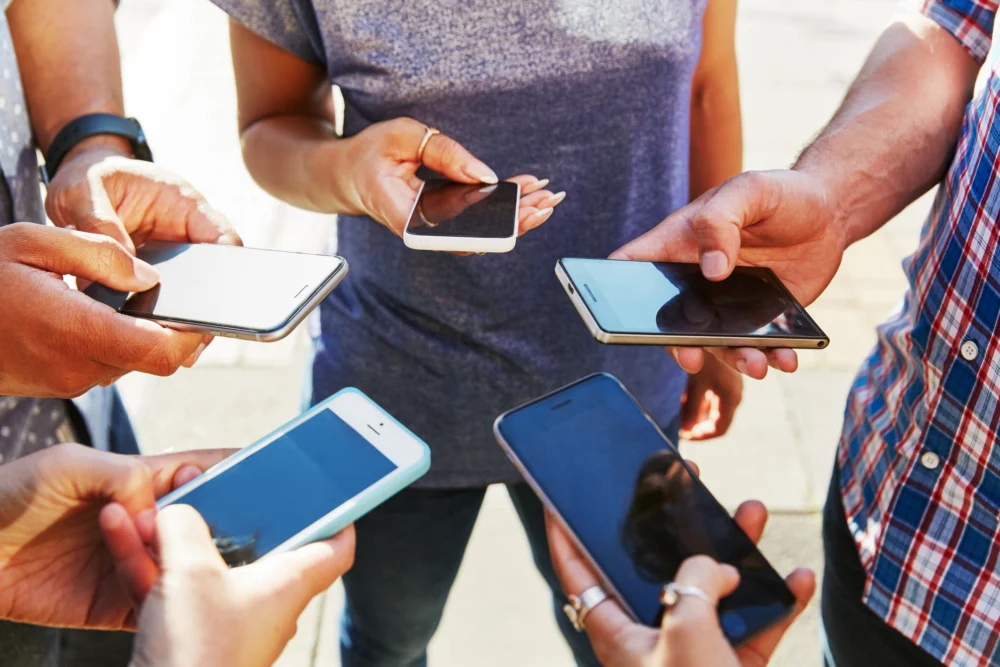
The modern world is currently grappling with a profound sociological paradox: while humanity is more digitally interconnected than at any point in history, the prevalence of chronic loneliness has reached the proportions of a global health crisis. In 2023, the U.S. Surgeon General issued a landmark advisory, officially labeling social isolation as a public health epidemic with physical consequences as detrimental as smoking fifteen cigarettes a day. This seismic shift in the social landscape has catalyzed the rise of the "platonic connection economy"—a burgeoning sector of the technology industry dedicated to facilitating human friendship through sophisticated algorithms, hyper-local event discovery, and AI-driven personality matching.

The erosion of traditional "third places"—the physical spaces outside of home and work where people naturally congregate, such as coffee shops, community centers, and parks—has left a void in the social infrastructure of modern cities. This deficit is particularly acute for two demographics: remote workers, who have lost the incidental "water cooler" interactions of office life, and Gen Z and Millennial cohorts, many of whom moved to new cities during the pandemic and find the traditional methods of adult socialization to be increasingly inaccessible.
As the stigma surrounding online dating has largely evaporated, a new wave of entrepreneurs is betting that the same digital frameworks used for romance can be successfully re-engineered for friendship. According to recent market data from Appfigures, this niche has transitioned from a fringe experiment to a viable commercial market. In 2025 alone, over a dozen friendship-focused platforms in the U.S. have generated roughly $16 million in consumer spending, supported by over 4.3 million downloads. These platforms are moving beyond the "swipe-right" mechanics of the past, focusing instead on group dynamics and shared experiences to lower the "social friction" associated with meeting strangers.

The Evolution of the Social Discovery Marketplace
The current landscape of friendship apps can be categorized into several distinct philosophies: algorithmic matching, event-centric discovery, and demographic-specific communities. Each seeks to solve the "awkwardness problem"—the inherent anxiety of approaching a stranger in public without a clear, shared objective.
One of the most innovative entries in the algorithmic matching space is 222, an iOS-only platform that functions as a curated social events service. Rather than forcing users to scroll through endless profiles, 222 utilizes personality assessments to pair groups of strangers and then sends them invitations to specific public venues, such as comedy clubs or wine bars. By vetting participants and allowing for a "plus-one," the app addresses the primary barrier to entry for many users: social anxiety. The service operates on a premium model, charging a curation fee of $22.22 or a monthly subscription, signaling a shift toward high-intent, paid social experiences.

Similarly, Pie leverages artificial intelligence to predict interpersonal compatibility. Before an event, attendees take a personality quiz; the algorithm then organizes them into groups of six. This "small group" approach is backed by sociological research suggesting that six is an optimal number for inclusive conversation without the fragmentation that occurs in larger crowds. Pie currently focuses on major urban hubs like San Francisco, Chicago, and Austin, emphasizing the importance of physical proximity in fostering lasting bonds.
The Shift Toward "Blind" and Group-Based Interaction
Perhaps the most talked-about newcomer is Timeleft, a platform that has gained international traction by facilitating blind dinner dates for groups of five strangers. Every Wednesday evening, participants are sent to a restaurant with nothing but their table number and a few minor details about their companions—such as their zodiac signs or occupations. The genius of Timeleft lies in its "icebreaker" games provided within the app, which help navigate the initial minutes of conversation. This model moves away from the "profile-first" culture of the internet, instead prioritizing the raw, unfiltered experience of a shared meal.

For the more established players, the strategy is one of evolution. Bumble BFF, which launched in 2016 as a feature within the dating app, was spun out into a standalone application in 2023. Recently, it underwent a significant redesign to pivot away from one-on-one "friend dating" toward community-building and group meetups. This reflects a broader industry trend: users find group settings less intimidating and more conducive to natural friendship formation than the high-pressure environment of a platonic "first date."
Meanwhile, Meetup, the venerable grandfather of the social discovery space, continues to serve as a foundational pillar. Since 2002, it has relied on a bottom-up approach where users create their own interest-based groups. While newer apps focus on AI and curation, Meetup’s strength remains its sheer scale and the diversity of its niche communities, ranging from professional networking to hyper-specific hobbies.

Niche Demographics and the Safety of Segregation
As the market matures, we are seeing the rise of platforms designed for specific identities and life stages. Les Amis is a prime example, offering a safe harbor for women, transgender, and LGBTQ+ individuals. By leveraging AI to match users for activities like pottery classes or book clubs, the app addresses safety concerns that are often overlooked by broader platforms. Its paid membership model—varying by city, such as $70 in New York—suggests that users are willing to pay a premium for a curated, safe environment.
The aging population is also a major driver of this sector. Meet5 and Wyzr Friends both target the "over 40" demographic, specifically catering to empty nesters, divorcees, and those looking to revitalize their social lives in mid-life. Meet5, a European export, has seen significant success in the U.S. with nearly 800,000 downloads, proving that the desire for new connections is not limited to the digital-native younger generations. These apps often focus on active, outdoorsy meetups like hiking or concerts, aligning with the lifestyle preferences of their users.

Hyper-Local Discovery and the "Snap Map" Influence
The latest frontier in the friendship space involves real-time location tracking and event integration. Mmotion, a newly launched platform in New York City (backed by professional basketball player Miles McBride), blends the social discovery of a map-based interface with interest-based groups. Users can see where active social "hubs" are located in the city, encouraging spontaneous meetups at bars or restaurants. This mirrors the functionality of "Snap Map" but repurposes it for meeting new people rather than just tracking existing friends.
In Los Angeles, Washed Up addresses the "solo attendee" problem. It allows users to find local events—trivia nights, comedy shows, or concerts—and join "plans" created by others. This allows individuals to show up to an event as part of a pre-established group, effectively eliminating the fear of being the "loner" in a crowd. Similarly, Clyx integrates data from TikTok and Ticketmaster to help users find what’s trending in their city, while recommending other attendees to connect with based on mutual contact lists.

Industry Implications and the Future of Human Connection
The professionalization of friend-making has significant implications for the tech industry and urban planning. We are witnessing the "SaaS-ification" of social life, where the ability to meet people is being sold as a service. This raises important questions about data privacy, especially in apps like Mmotion that rely on location sharing. Furthermore, as these apps become the primary gatekeepers of social interaction, there is a risk that the "serendipity" of urban life will be replaced by algorithmic silos.
However, the economic potential is undeniable. Beyond user subscriptions, these platforms are becoming powerful marketing tools for the hospitality industry. A platform like Timeleft essentially acts as a reservation engine for restaurants on a typically slow Wednesday night. In the future, we can expect deeper integrations between friendship apps and local businesses, where venues pay for the "privilege" of hosting curated social groups.

As we look toward the end of the decade, the integration of Augmented Reality (AR) and more advanced AI "social coaches" could further transform this space. Imagine an AR interface that highlights potential friends in a crowded room based on shared interests, or an AI that provides real-time conversation prompts through an earpiece. While some may find this prospect dystopian, for those suffering from the debilitating effects of isolation, these tools represent a vital lifeline.
Ultimately, the success of the platonic connection economy will not be measured by download counts or revenue, but by its ability to translate digital matches into long-term, offline relationships. In an era where the "loneliness epidemic" poses a genuine threat to public health, these apps are no longer just "social media"—they are essential digital infrastructure for the reconstruction of the human community.
