

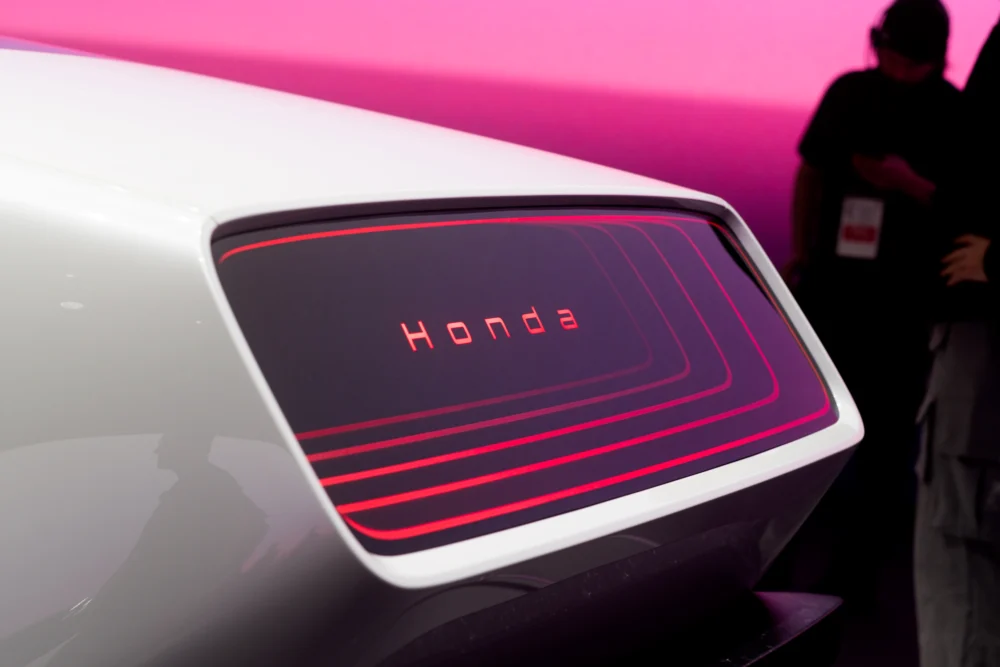
The global automotive industry is currently navigating what many analysts describe as the "Valley of Death" for electrification—a volatile period where early adopter enthusiasm has peaked, government incentives are being recalibrated, and the daunting reality of infrastructure gaps has cooled consumer demand in Western markets. For legacy automakers, this is a moment of profound strategic tension: do they double down on the future, or retreat to the profitable, familiar embrace of the internal combustion engine (ICE)? While many competitors are choosing a middle path of hybridization, Honda has signaled a much more drastic shift. By effectively dismantling its nascent electric vehicle (EV) programs, the Japanese giant may be protecting its short-term balance sheet at the expense of its long-term relevance.
This week’s series of announcements from Tokyo marks a watershed moment for the company. Honda has halted the development of the electric Acura RDX and the much-hyped "Honda 0" sedan and SUV series—projects that were supposed to represent the company’s first legitimate, ground-up foray into dedicated EV platforms. This was followed by the news that Honda would cease production of the Prologue, an EV that served as a stopgap measure, built on General Motors’ Ultium platform. By severing these ties and shelving its internal projects, Honda is not just hitting the pause button; it is effectively exiting the primary arena of 21st-century automotive innovation.
The company’s leadership has pointed to external pressures, specifically the rise of aggressive Chinese competition and the shifting landscape of U.S. tariffs, as the primary drivers for this retreat. However, a deeper analysis suggests that Honda’s predicament is less about market conditions and more about a fundamental failure to execute a viable, independent EV strategy. By relying on partners like GM for its initial offerings and failing to communicate a clear vision for its "0 Series," Honda remained a passenger in a race where its rivals were already laps ahead.
The Myth of the "Drop-In" Drivetrain
One of the most pervasive fallacies among legacy automotive executives is the belief that an electric vehicle is simply a traditional car with a different "fuel tank" and "motor." This perspective assumes that once battery costs stabilize and charging stations become ubiquitous, a company like Honda can simply swap out its world-class pistons for magnets and copper coils. This line of thinking ignores the radical architectural shift required to build a competitive EV.
When a vehicle is designed around an internal combustion engine, every component—from the chassis and suspension to the HVAC system and wiring harness—is optimized for a specific weight distribution and thermal profile. Attempting to "retrofit" batteries into these legacy architectures results in what the industry calls "compliance cars." These vehicles are almost universally compromised; they are heavier than they need to be, less efficient in their energy consumption, and significantly more expensive to manufacture because they lack the simplified assembly processes inherent to dedicated EV "skateboards."
Consider the cautionary tale of Ford’s Mustang Mach-E. While the vehicle has been a critical and commercial success in terms of brand building, it has struggled with profitability. Ford CEO Jim Farley recently acknowledged that the Mach-E was hampered by legacy engineering decisions. Because it was based on a modified version of a platform shared with fossil-fuel crossovers, its wiring harness is roughly 70 pounds heavier than a comparable Tesla’s. In the world of EVs, weight is the enemy of range, and complexity is the enemy of margin. By abandoning its ground-up EV platforms, Honda is forfeiting the opportunity to "unlearn" these legacy habits. It is choosing to stay in a comfort zone that is rapidly shrinking.
The Software-Defined Vehicle Gap
The retreat from EVs carries a secondary, perhaps more devastating, consequence: the loss of momentum in the transition to Software-Defined Vehicles (SDVs). In the modern era, the value of a vehicle is increasingly shifting from its mechanical hardware to its software stack. Consumers in the premium and tech-forward segments now expect their vehicles to behave like smartphones—receiving over-the-air (OTA) updates that improve performance, add features, and refine the user interface over the life of the product.
Companies like Tesla, Rivian, and China’s BYD and Xiaomi have built their brands around this "living" software. For these manufacturers, the vehicle is a platform for services. Honda, conversely, remains rooted in the "ship and forget" model of the 20th century. While it is technically possible to build a software-defined ICE vehicle, the two technologies are naturally symbiotic. The massive battery packs in EVs provide the consistent, high-voltage power required to run the sophisticated onboard computers and sensors necessary for advanced driver assistance systems (ADAS) and high-fidelity infotainment.
Furthermore, the culture of EV development—centered on rapid iteration and silicon-valley-style engineering—is exactly what is needed to build a competitive SDV. By walking away from EV development, Honda is also walking away from the training ground for the software engineers it desperately needs. In a decade, a car that cannot update its own autonomous driving algorithms or refresh its dashboard UI will be as obsolete as a flip phone in the age of the iPhone. Honda is not just missing out on a drivetrain; it is missing out on the entire operating system of the future.
The Manufacturing Learning Curve and Supply Chain Resilience
Innovation in the automotive sector is rarely the result of a single "eureka" moment; it is a cumulative process of "learning by doing." Every year a manufacturer spends producing EVs, it gains tribal knowledge about cell chemistry, thermal management, and power electronics. It builds relationships with lithium miners, cathode manufacturers, and semiconductor foundries.
By shelving its EV programs, Honda is effectively freezing its progress on this learning curve. While it waits for the "perfect" moment to re-enter the market, its competitors are refining their gigacasting techniques, reducing the amount of rare-earth metals in their motors, and securing long-term supply contracts that will eventually lead to massive economies of scale. When Honda eventually decides to return to the EV fold—as it inevitably must—it will find that the barrier to entry has risen. It will be forced to buy technology from its competitors or pay a premium to suppliers who have already committed their best output to more forward-thinking partners.
The China Omen: A $16 Billion Warning
The most immediate evidence of the danger Honda faces can be found in China, the world’s largest and most advanced EV market. For decades, Japanese automakers dominated China by offering reliable, fuel-efficient sedans to a growing middle class. That era has ended with startling speed. Honda’s recent earnings reports revealed a staggering $16 billion loss attributed largely to its inability to compete with domestic Chinese EV makers.
In China, the transition is no longer a "future trend"; it is the current reality. Consumers there view Japanese ICE cars as relics of a previous generation. Honda itself admitted that it was unable to deliver products that offered "value for money" compared to the tech-heavy, aggressively priced offerings from brands like Li Auto or BYD. If Honda cannot compete in a market where EV adoption is high, what makes it think it will fare better when those same competitive pressures eventually reach North America and Europe? Tariffs may provide a temporary shield, but they are a political solution to an engineering problem. They do nothing to make Honda’s products more innovative or efficient.
The Identity Crisis: What is Honda Without the Engine?
At its core, Honda has always been an engine company. From its legendary motorcycles to the VTEC systems that powered the Civics and Accords of the 1990s, the company’s soul was found in the precision of its internal combustion. This heritage is now becoming a liability. There is a palpable sense of institutional resistance within the company—a desire to protect the legacy of the "driver’s car."
But the definition of a "driver’s car" is being rewritten. In an era of increasing congestion and the gradual rise of autonomy, the tactile feel of a manual gearbox or the sound of a high-revving four-cylinder engine is becoming a niche preference rather than a mass-market requirement. Most consumers choose Honda for reliability and resale value. In an EV world, reliability is inherently higher due to the lack of moving parts (no oil changes, no spark plugs, no transmission flushes). If Honda cedes its reputation for reliability to electric newcomers, it loses its primary reason for existing in the minds of the general public.
Conclusion: The High Cost of Playing it Safe
Honda’s decision to kill its EV programs is a classic example of "The Innovator’s Dilemma." By focusing on the high margins of its current ICE lineup and reacting to the short-term headwinds of the EV market, it is failing to invest in the disruptive technology that will eventually render its current business model obsolete.
The automotive industry is not just changing its fuel source; it is undergoing a fundamental transformation in how vehicles are designed, manufactured, sold, and maintained. Honda’s retreat suggests a belief that it can wait for the storm to pass and then resume business as usual. But this is not a storm; it is a permanent change in the climate. By the time Honda realizes that the ground has shifted beneath its feet, it may find that it no longer has the tools, the talent, or the brand equity to catch up. For a company that once defined the cutting edge of Japanese engineering, this retreat into the combustion engine fortress looks less like a strategic pivot and more like a slow-motion surrender.
