

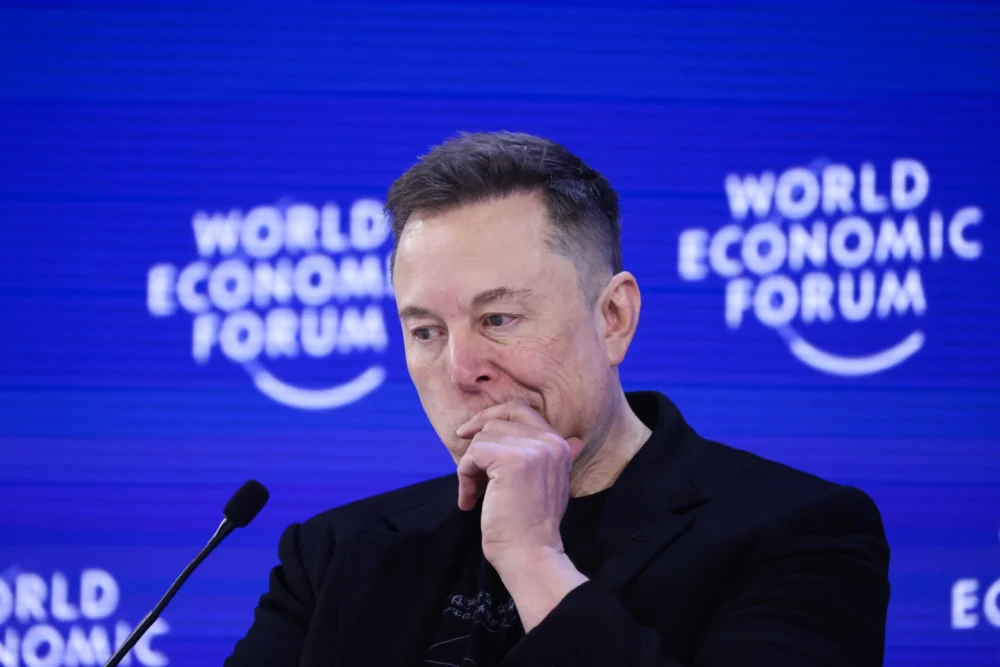
The trajectory of a silicon valley startup is rarely a straight line, but for xAI, Elon Musk’s ambitious foray into the generative artificial intelligence frontier, the path has become a series of sharp, disruptive pivots. Three years after its inception with a mission to "understand the true nature of the universe," the company is undergoing a fundamental structural and personnel overhaul that suggests its initial blueprint was insufficient for the brutal realities of the AI arms race. Of the original eleven co-founders who launched the venture alongside Musk, only two—Manuel Kroiss and Ross Nordeen—remain. This staggering 82% attrition rate at the leadership level is not merely a symptom of standard startup churn; it is the hallmark of a deliberate, albeit chaotic, "rebuilding from the foundations up."
The catalyst for this latest internal earthquake is a perceived lag in product competitiveness. Musk’s public admission that xAI was "not built right the first time" serves as both a justification for the mass exits and a warning to the remaining staff. The pressure reached a boiling point this past week with the departures of co-founders Zihang Dai and Guodong Zhang. Their exit followed a period of intense scrutiny from Musk regarding the performance of xAI’s coding assistants. In the current AI landscape, the ability to write, debug, and optimize software code is no longer a niche feature; it is the primary engine of monetization. While xAI’s flagship model, Grok, gained early notoriety for its "anti-woke" persona and a permissive approach to image generation that allowed for controversial content, these features do not translate into enterprise-grade revenue.
To compete with the likes of Anthropic’s Claude Code and OpenAI’s Codex, Musk is demanding a level of utility that xAI has yet to consistently demonstrate. During a recent all-hands meeting, the mandate was made clear: the company must close the gap with its rivals by mid-2025. The urgency is fueled by the realization that coding tools represent the most immediate path to high-margin B2B contracts. Developers are the primary "power users" of LLMs, and a model that can effectively function as a co-pilot for complex engineering tasks becomes an indispensable part of the modern corporate stack. For xAI, falling behind in this sector is not just a technical failure; it is a threat to the company’s long-term solvency.
The method of this restructuring is as unconventional as the man leading it. Reports indicate that the personnel audit is being conducted not by traditional HR or AI researchers, but by "parachuted" executives from Musk’s other domains, SpaceX and Tesla. These loyalists have been tasked with evaluating the xAI workforce through the lens of Musk’s "hardcore" engineering culture. The result has been a purge of those who do not "make the grade," replaced by a recruitment strategy that borders on the desperate. Musk recently revealed that he and colleague Baris Akis are manually reviewing previously rejected employment applications, searching for overlooked talent in the digital equivalent of a bargain bin. This "resume archaeology" highlights the extreme difficulty even the world’s wealthiest man faces in the current war for AI talent, where top-tier researchers command multi-million dollar compensation packages.
However, the recruitment front is not entirely bleak. The recent acquisition of Andrew Milich and Jason Ginsberg, formerly of the AI coding tool startup Cursor, represents a significant tactical win. Cursor has been widely praised for its seamless integration of AI into the developer workflow, yet it remains a "layer" company, dependent on the underlying models provided by OpenAI and Anthropic. The migration of Milich and Ginsberg to xAI suggests a growing trend in the industry: top-tier engineers are increasingly drawn to "frontier labs" that own the entire stack. In the AI era, compute is the new oil, and the ability to work directly on the base models—with the massive GPU clusters xAI has assembled—is a draw that even the most successful third-party startups cannot match.
The financial stakes of this reorganization cannot be overstated. Unlike the early days of OpenAI, which operated under a non-profit veneer, xAI is being integrated into a complex corporate web that includes SpaceX. With a potential public offering of SpaceX shares on the horizon, Musk is under immense pressure to prove that xAI is an asset rather than a cash-burning liability. Investors are looking for more than just a chatbot with a "rebellious" personality; they are looking for a platform that can drive industrial efficiency. A stumbling AI division could complicate the valuation of the SpaceX empire, making the success of Grok a prerequisite for the broader Musk ecosystem’s financial health.
Looking toward the horizon, Musk’s vision for xAI extends far beyond simple text or code generation. The company’s long-term bet is centered on a project colloquially (and somewhat derisively) named "Macrohard"—a tongue-in-cheek jab at Microsoft. The goal of Macrohard is to develop a comprehensive "AI agent" capable of performing any task a white-collar worker can do on a computer. This includes navigating complex software, managing schedules, conducting research, and executing workflows across multiple applications. While the project has seen its own share of leadership instability—with lead Toby Pohlen departing shortly after his appointment—Musk has doubled down by merging the effort with Tesla’s internal AI development.
This collaboration involves a joint effort between xAI and Tesla to create "Digital Optimus," a virtual counterpart to Tesla’s physical humanoid robot. In this framework, xAI’s large language models serve as the "brain," directing the digital agent to perform tasks in a way that mimics human computer interaction. This move signals a shift from "Chatbot AI" to "Agentic AI." The industry is moving away from systems that merely talk and toward systems that do. By linking xAI’s cognitive capabilities with Tesla’s expertise in real-world robotics and automation, Musk is attempting to create a vertically integrated AI that can operate in both the digital and physical realms.
This "Agentic" pivot is the new battleground for the entire tech industry. Perplexity AI has recently introduced its "Everything is Computer" initiative, which aims to provide enterprise users with digital proxies to orchestrate tasks. Similarly, OpenAI has been aggressively hiring experts like Peter Steinberger to turn its models into proactive personal assistants. The competition is no longer about who has the most parameters in their model, but who can build the most reliable interface between the AI and the existing world of software.
The "starting over" of xAI is a high-stakes gamble on the idea that the first wave of generative AI was merely a rough draft. By purging the original founding team and bringing in "hardcore" enforcers from his other companies, Musk is attempting to force a second-generation evolution of the company. It is a strategy built on the belief that a smaller, more disciplined team with direct access to massive compute resources can out-innovate the sprawling bureaucracies of established tech giants.
However, the risks of this approach are profound. Deep learning research often requires stability and long-term institutional knowledge—qualities that are frequently at odds with Musk’s "break things and move fast" philosophy. The constant turnover of senior talent risks creating a "brain drain" that could leave the company with the hardware but without the intellectual capital to utilize it effectively. Furthermore, the reliance on SpaceX and Tesla executives to manage an AI lab may lead to a culture clash between traditional engineering disciplines and the more experimental, probabilistic nature of AI development.
As xAI attempts to rebuild its foundation in mid-2025, the tech world is watching to see if this "starting over" is a sign of a necessary correction or a symptom of a fundamental lack of focus. Musk has defied the odds before with Tesla and SpaceX, but the AI field moves at a velocity that is unprecedented even by his standards. Whether xAI can transform from a "laxly regulated" chatbot provider into a dominant force in enterprise coding and autonomous agents will depend on whether Musk’s new "built right" foundation can withstand the immense pressure of the market. For now, xAI remains a company in a state of permanent revolution, forever discarding its past in a desperate sprint toward an uncertain, agentic future.
