

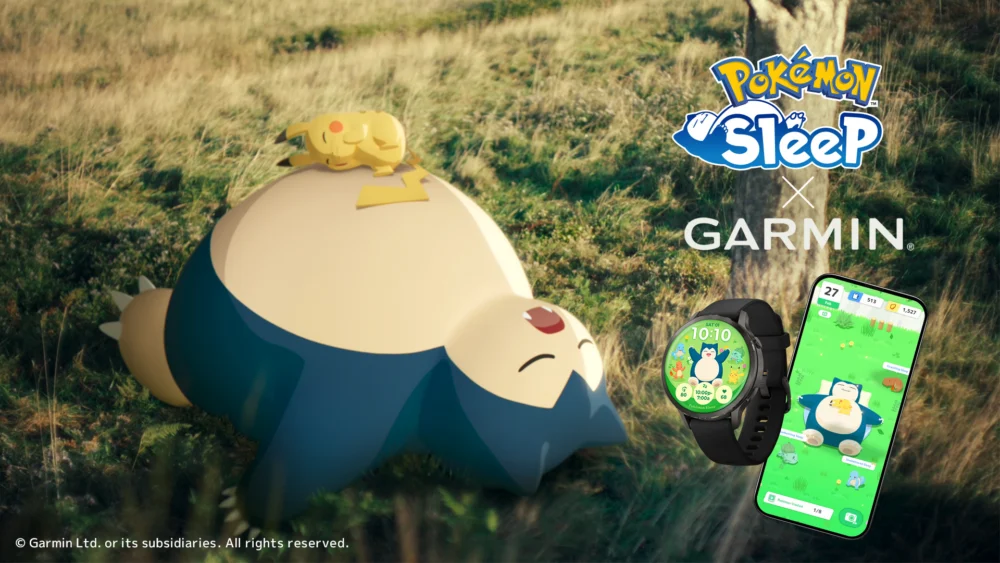
The intersection of dedicated fitness tracking hardware and expansive digital entertainment franchises has reached a new milestone, as Garmin, the titan of GPS technology and sports wearables, formally announced compatibility with the popular mobile application, Pokémon Sleep. This integration, strategically launched to coincide with World Sleep Day, underscores a growing trend in the digital wellness sector: the desire for richer, more engaging data capture through beloved intellectual properties (IPs). While the partnership broadens the utility of Garmin devices for a massive contingent of casual fitness enthusiasts and dedicated Pokémon fans alike, the technical requirements for participation have simultaneously revealed specific segmentation within Garmin’s extensive product catalog.
Background Context: The Rise of Gamified Wellness
To fully appreciate the significance of this collaboration, one must first examine the context surrounding Pokémon Sleep. Launched as a unique entry into the burgeoning sleep tracking market, Pokémon Sleep operates on a simple, yet compelling, premise: it rewards users for consistent, quality sleep by attracting different Pokémon to their in-game environment based on sleep duration and patterns. Unlike purely clinical sleep trackers, Pokémon Sleep leverages the emotional resonance and collection mechanics inherent to the Pokémon brand to drive user engagement and behavioral change—a concept known as "gamification."
For years, fitness and health tracking technology has faced a significant hurdle: user retention. Many individuals purchase advanced wearables with high aspirations for monitoring health metrics, only to abandon them within months when the data remains purely analytical and lacks immediate, tangible rewards. This is where the integration with established entertainment IPs becomes crucial. By linking sleep data—a notoriously passive activity—to the active pursuit of collecting digital creatures, Garmin and The Pokémon Company are essentially bridging the gap between utilitarian health tracking and immersive entertainment.
Garmin, traditionally known for its robust, data-heavy devices favored by endurance athletes and serious outdoor enthusiasts, has increasingly sought to appeal to a broader consumer base interested in holistic wellness, encompassing stress management, recovery, and sleep. This move into the casual gaming sphere is a calculated pivot, acknowledging that the next frontier in wearable adoption isn’t just about running faster, but about sleeping better—and making that process fun.
Technical Rollout and the Hardware Divide
The core announcement confirms that Pokémon Sleep can now ingest sleep metrics directly from compatible Garmin smartwatches. The critical technical specification hinges on the presence of an optical heart rate sensor—a feature that has become standard across the vast majority of modern Garmin devices, from the entry-level Venu Sq models to the premium Fēnix and Epix series.
However, the announcement simultaneously illuminated a distinct demarcation line within Garmin’s product portfolio. A specific, though undisclosed in the initial summary, set of models is excluded from this integration. This exclusion is almost certainly rooted in the specific data protocols required by the Pokémon Sleep application or perhaps limitations in the firmware integration capabilities for certain older or highly specialized devices that may lack the requisite heart rate variability (HRV) or movement tracking granularity necessary for the application’s algorithm.
For the vast user base whose devices are supported—including popular lines such as the Fēnix, Forerunner, Venu, and vívoactive series—the immediate benefit is clear: enhanced data synchronization without needing a secondary tracker or manual input. Users simply need to link their accounts within the respective applications. To incentivize immediate adoption, a limited-time promotional offer rewards early adopters with in-game items—specifically, three Poké Biscuits—for registering and tracking sleep via their Garmin hardware before November 1, 2026. This mechanism acts as a powerful short-term driver for adoption, ensuring high initial synchronization rates.
Industry Implications: The Interoperability Mandate
This partnership signifies more than just a fun crossover; it carries substantial implications for the broader wearable technology industry. Firstly, it reinforces the notion that proprietary ecosystems are increasingly expected to interface with external digital services, especially those driven by high-engagement IP. Consumers are demanding that their significant hardware investment serves as a universal key to unlock experiences across various platforms.
Secondly, it validates the importance of detailed sleep data as a primary metric for consumer engagement, moving beyond steps and calories burned. While steps are easily quantifiable and immediately rewarding, sleep quality requires sustained monitoring and behavioral adjustment. By aligning with Pokémon Sleep, Garmin implicitly endorses the sophistication of its own sleep tracking algorithms, positioning them as robust enough to satisfy the demands of a third-party application focused heavily on sleep analysis.
For competitors, this move pressures them to seek similar high-profile IP collaborations. The battleground for wearable market share is shifting from raw sensor accuracy—where most major players are now relatively close—to the richness of the user experience and the utility derived from the collected data. If a user can choose between a neutral fitness app and a version that rewards their healthy habits with access to beloved characters, the path of least resistance for continued engagement becomes obvious.
Expert Analysis: Data Fidelity and Body Battery Integration
A particularly nuanced aspect of this integration is the inclusion of dedicated, themed watch faces within the Garmin Connect IQ Store. The introduction of the "Pokémon Sleep: Snorlax & Friends" and "Pokémon Sleep: I Choose You" faces demonstrates a deep, rather than superficial, level of partnership integration.
The truly expert-level analysis rests on the dynamic nature of these watch faces. They are not static images. They are programmed to reflect the user’s physiological state as measured by the Garmin device, specifically utilizing the proprietary Body Battery metric. Body Battery is Garmin’s sophisticated algorithm that synthesizes data from heart rate variability, activity levels, and sleep quality to estimate the body’s energy reserves throughout the day.
The fact that the Pokémon poses on the watch faces change based on Body Battery levels—and switch to a designated "night mode" based on the user’s scheduled sleep time in the Garmin Connect app—suggests a bi-directional, albeit simplified, data flow. The watch face acts as a visually engaging, ambient feedback loop for the user’s recovery status. A low Body Battery might result in a tired-looking Snorlax, encouraging the user to prioritize rest, while a high Body Battery might showcase more active Pokémon. This subtle, continuous feedback mechanism is far more effective at promoting long-term adherence than occasional notifications.
Furthermore, the intelligent scheduling of the night mode—triggering 90 minutes before the user’s set sleep time—is a testament to Garmin’s sophisticated software architecture. It preemptively shifts the watch face into a mode conducive to sleep hygiene, minimizing disruptive bright lights or distracting visuals right before bedtime, aligning perfectly with established sleep science principles.
Future Impact and Emerging Trends
The Garmin-Pokémon Sleep synergy sets a precedent for future cross-industry collaborations, particularly as health data becomes more granular and less intrusive. We can anticipate several future trends stemming from this development:
-
Micro-Incentive Economies: Expect more partnerships where daily or weekly health goals unlock micro-rewards in tangential digital ecosystems (e.g., hitting a recovery goal unlocks a temporary boost in a mobile game, or achieving a streak unlocks exclusive digital assets). This moves beyond simple badges toward tangible, albeit virtual, economic incentives.
-
Deeper Physiological Feedback Loops: The Body Battery integration suggests that future applications will demand richer physiological data than just duration. Metrics like HRV, resting heart rate trends, and even respiration rate will become crucial inputs for entertainment or productivity applications. Wearable manufacturers will be pressured to ensure that their top-tier sensors are accessible via standardized APIs for such immersive experiences.
-
The Evolving Definition of "Fitness": This collaboration squarely places sleep and recovery on equal footing with activity in the eyes of the consumer market. The narrative is shifting from "how much did you move?" to "how well did you recover?" For Garmin, which has heavily invested in advanced sleep tracking and Body Battery, this integration validates that strategic focus.
The exclusion of certain Garmin models, while disappointing for those owners, serves as a crucial lesson for the hardware industry: integration success is dependent on consistent sensor architecture across product lines. Companies must rationalize their hardware tiers, as exciting third-party features will invariably favor the most capable and modern devices, potentially creating an unintentional "feature gap" that alienates users of older, yet still functional, hardware. Ultimately, this Pokémon partnership is a powerful indicator that the future of wearables lies not just in the data they collect, but in the engaging, habit-forming worlds they can unlock.
