

The landscape of digital communication has undergone a radical transformation over the last decade, shifting from a realm of simple connectivity to a complex minefield of social engineering and sophisticated fraud. As scammers leverage increasingly advanced tactics—ranging from AI-driven voice cloning to elaborate "digital arrest" psychological plays—the burden of defense has historically rested on the shoulders of the individual. However, Truecaller, the global leader in caller identification and spam blocking, is now spearheading a fundamental shift in this paradigm. With the worldwide rollout of its "Family Protection" suite, the company is transitioning from an individual utility to a collective security ecosystem, allowing tech-savvy users to act as a digital shield for their more vulnerable family members.
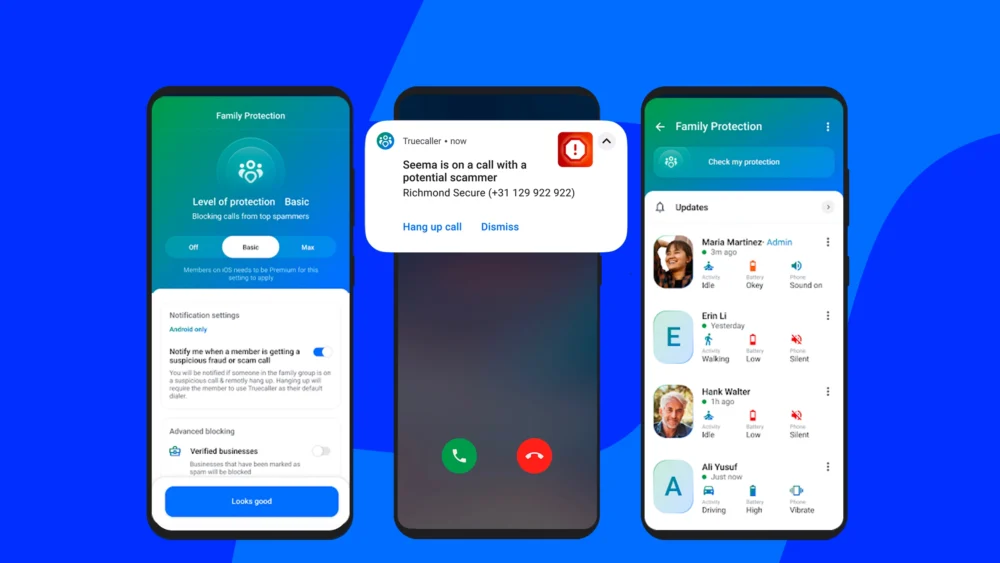
At the heart of this new initiative is a feature that grants a designated group administrator the unprecedented ability to intervene in real-time telephony. By establishing a family group of up to five members, an admin—typically the person most comfortable with digital security—receives instantaneous alerts whenever a group member is targeted by a suspected fraudulent call. Crucially, on Android devices, the admin is empowered to go beyond mere notification; they can remotely terminate the call on behalf of the family member if they believe a scam is in progress. This move represents one of the most aggressive steps taken by a consumer-facing app to date in the war against "vishing" (voice phishing) and highlights a growing trend in the technology sector: the professionalization of the "family IT admin."

The technical mechanics of the Family Protection feature are tailored to the specific affordances of modern mobile operating systems. While the alert system functions across both iOS and Android, the remote "hang-up" capability is currently restricted to Android users. This discrepancy is a direct result of Apple’s stringent privacy and security protocols, which tightly gate-keep call-handling APIs, preventing third-party applications from programmatically ending active calls. On Android, however, Truecaller’s deep integration allows for a more proactive intervention. Beyond call termination, the suite offers a comprehensive dashboard of the family’s digital well-being. Admins can monitor real-time status updates, such as whether a family member is walking or driving, their device’s battery level, and even their current sound settings. The intent is not surveillance for the sake of control, but rather contextual awareness—enabling an admin to know when an elderly parent might be distracted and therefore more susceptible to a high-pressure scammer.
The global rollout follows a successful pilot program in Sweden, Chile, Malaysia, and Kenya. The decision to bring this feature to the broader market, and specifically to India, is a calculated response to the escalating crisis of telephony-based financial crime. India remains Truecaller’s largest and most vital market, with over 450 million monthly active users. It is also a region where the sophistication of scam operations has reached an industrial scale. Last year alone, Truecaller identified over 7.7 billion fraud calls in the country. The "digital arrest" scam has become a particularly pernicious threat in the region, where perpetrators impersonate high-ranking law enforcement or tax officials, using intimidation and fake legal jargon to coerce victims into "settling" non-existent legal issues via immediate bank transfers. By allowing an admin to share blocklists and set international calling restrictions across the entire family group, Truecaller is attempting to create a "perimeter defense" that stops the threat before the phone even rings.
From a privacy perspective, the company is walking a delicate tightrope. In an era where data harvesting is a primary concern for consumers, the prospect of a "family admin" having access to one’s phone activity could be seen as invasive. To mitigate these concerns, Truecaller has built-in specific silos: admins are notified only of suspected spam and fraud calls. They remain blind to a member’s legitimate call history and private SMS threads. This distinction is vital for maintaining the trust of the 450 million users who rely on the platform. The goal is to provide a "guardian" function rather than a "spyware" function, focusing strictly on the intersection of external threats and internal vulnerability.

However, Truecaller’s pivot toward active intervention is not occurring in a vacuum. The company is currently navigating a turbulent period in its corporate history. Over the past year, its stock has seen a staggering decline of more than 80%, fueled by investor concerns over slowing growth and shifting regulatory environments. The company’s Q4 2025 financial report highlighted these headwinds, with EBITDA—a key metric of operating profitability—dropping by 49% year-on-year. Furthermore, advertising revenue, which has traditionally been a cornerstone of the Truecaller business model, saw a 31% contraction. In this context, the Family Protection feature is more than just a security update; it is a strategic attempt to increase user "stickiness" and provide a value proposition that goes beyond what free, government-mandated services can offer.
In India, the primary competitive threat comes from the government’s "Caller Name Presentation" (CNAP) system. This initiative mandates that telecommunications carriers display the name of the caller as it appears on their official KYC (Know Your Customer) documents. For years, the lack of such a system was the primary driver of Truecaller’s growth. With CNAP reaching full rollout, many questioned whether Truecaller would become redundant. The company’s leadership, including CEO Rishit Jhunjhunwala, has countered this narrative by arguing that a name alone is insufficient for security. A name tells you who is calling, but it doesn’t tell you their intent. Truecaller’s advantage lies in its community-based reputation engine, which provides context—marking a number as "Insurance Spam," "Credit Card Scam," or "Harassment"—that a carrier-level name display cannot provide.
The future of the Family Protection suite appears to be deeply intertwined with artificial intelligence. The company is already experimenting with AI assistants that can screen calls in real-time, listening for specific linguistic markers associated with fraud. If an AI detects words like "digital arrest," "unpaid tax warrant," or "emergency hospital bill" combined with high-pressure tactics, it could automatically flag the call to the family admin or even disconnect it autonomously. This move toward AI-driven "voice firewalls" is likely the next frontier for the company as it seeks to stay ahead of scammers who are themselves using AI to generate more convincing scripts and voice-cloned personas of loved ones.

Furthermore, the social implications of this technology cannot be overlooked. We are entering an era where "digital literacy" is becoming a form of protection that must be shared within a household. As the elderly population grows and becomes increasingly targeted by digital predators, the ability for a younger, more tech-fluent relative to provide a safety net is becoming an essential part of modern caregiving. Truecaller is essentially codifying the behavior that many families already practice—checking in on parents after they receive a weird call—and turning it into a real-time, actionable system.
As the global rollout continues, the success of Truecaller’s Family Protection will likely be measured by its ability to reduce the actual financial losses incurred by its users. By making the feature free for all users, regardless of whether they have a premium subscription, the company is betting that the increased user engagement and the data generated from these family groups will provide long-term stability. In a market where trust is the most valuable currency, Truecaller is attempting to position itself not just as an app on a screen, but as a proactive defender of the family unit in an increasingly hostile digital world. The shift from "Who is calling?" to "How can I protect my family from this call?" marks a significant evolution in the company’s mission and perhaps the beginning of a new standard for telephony security worldwide.
