

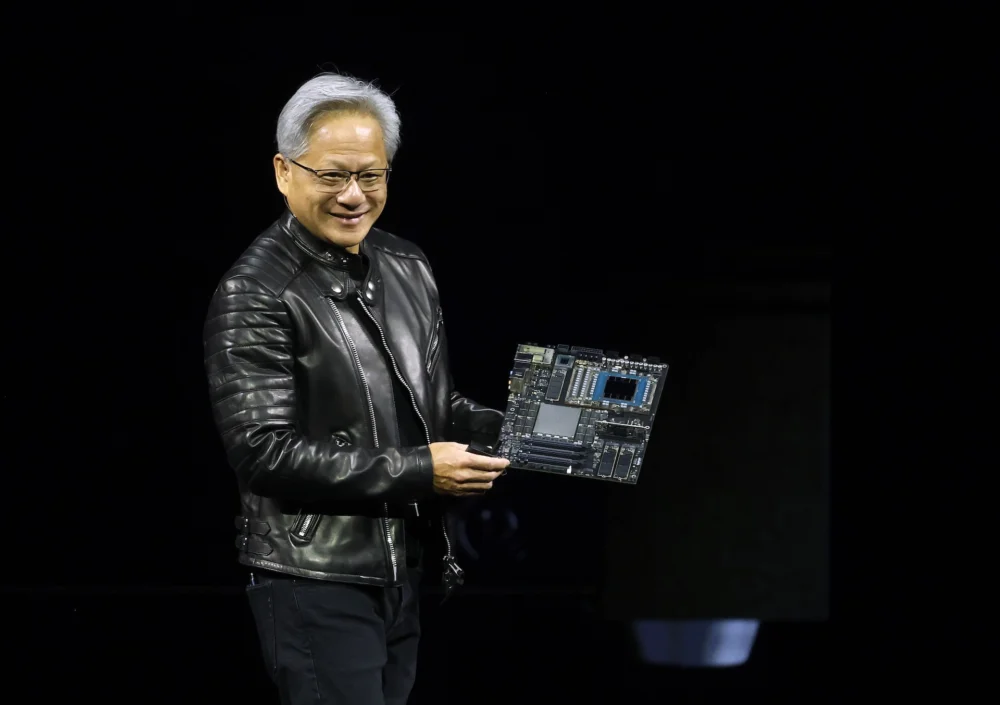
The technological epicenter of the world shifts to San Jose, California, next week as Nvidia prepares to host its annual GPU Technology Conference (GTC). What began years ago as a niche gathering for graphics programmers has evolved into the definitive summit for the artificial intelligence era, a transformation mirrored by Nvidia’s own meteoric rise to the pinnacle of the global economy. At the heart of this year’s proceedings is the highly anticipated keynote address by CEO Jensen Huang, scheduled for Monday at 11 a.m. PT / 2 p.m. ET. Delivered from the SAP Center, the two-hour presentation will be accessible to a global audience via a digital livestream, serving as the opening salvo for a three-day exploration into the future of accelerated computing.
GTC 2026 arrives at a critical juncture for the semiconductor industry and the broader enterprise landscape. While the previous three years were defined by a frantic "gold rush" for training compute—where tech giants and startups alike scrambled to secure H100 and B200 clusters to build foundational large language models—the narrative is now shifting. The industry is moving from the laboratory to the production line, focusing on how these models are deployed, scaled, and integrated into the fabric of daily business operations. Huang’s address is expected to reflect this maturation, pivoting from the raw power of silicon to the sophisticated orchestration of autonomous systems.
The Software Frontier: Orchestrating the "Agentic" Era
Perhaps the most significant rumor circulating ahead of the keynote involves Nvidia’s expansion into the software layer of the AI stack. Industry insiders point to the imminent launch of "NemoClaw," an open-source platform designed specifically for the development and management of enterprise AI agents. In the current nomenclature of Silicon Valley, an "agent" represents a step beyond the traditional chatbot; it is a piece of software capable of autonomous reasoning, multi-step task execution, and independent interaction with other software tools.
The strategic importance of NemoClaw cannot be overstated. By providing a structured, open-source framework, Nvidia aims to lower the barrier to entry for corporations looking to move beyond simple generative AI pilots toward fully autonomous workflows. If Nvidia can standardize the way these agents are built and deployed, it secures its position not just as a provider of the underlying hardware, but as the essential architect of the enterprise AI ecosystem. This move places Nvidia in direct competition with OpenAI and other platform providers who are racing to own the "agentic" layer of the internet. For Nvidia, an open-source approach serves as a powerful "moat-building" strategy, encouraging a developer ecosystem that is inherently optimized for Nvidia’s proprietary hardware architecture.
Hardware Innovation: The Battle for Inference Dominance
On the hardware front, the spotlight is expected to shine on a new class of silicon specifically engineered to tackle the "inference bottleneck." To understand the significance of this, one must distinguish between the two phases of AI life cycles: training and inference. Training is the computationally intensive process of teaching a model using massive datasets, a market where Nvidia currently maintains an estimated 80% share. Inference, however, is the process of the model actually functioning—responding to a user query, driving a car, or diagnosing a medical image.
As AI applications scale to billions of users, the cost and speed of inference become the primary hurdles to profitability and adoption. The rumored new chip is whispered to be a radical departure from traditional general-purpose GPUs, focusing instead on high-throughput, low-latency processing designed to run models more efficiently than ever before. This is a defensive as well as an offensive move. Hyperscalers like Amazon (with its Inferentia chips) and Google (with its TPUs) have been aggressively developing in-house silicon to reduce their reliance on Nvidia for inference tasks. By releasing a specialized inference powerhouse, Nvidia intends to prove that its vertically integrated stack remains the most cost-effective solution for the "production" phase of AI.
The $20 Billion Question: The Groq Integration
A major point of intrigue for analysts and equity strategists involves Nvidia’s recent $20 billion licensing agreement with Groq, a startup that gained notoriety for its Language Processing Units (LPUs) designed for lightning-fast text generation. The sheer scale of the deal—and the fact that Groq’s top leadership, including founder Jonathan Ross and President Sunny Madra, have reportedly joined Nvidia—suggests that this is far more than a simple patent acquisition.
Attendees at GTC 2026 are looking for clarity on how Groq’s deterministic, high-speed architecture will be folded into Nvidia’s roadmap. The integration of Groq’s talent and technology could be the "secret sauce" behind the rumored inference chip, combining Nvidia’s massive scale with Groq’s specialized approach to real-time data processing. If Huang showcases a product that merges these two philosophies, it could signal a paradigm shift in how the industry thinks about real-time AI interaction, moving away from the "wait-and-see" latency of current models toward instantaneous, human-like responsiveness.
Vertical Expansion: Robotics, Healthcare, and the Physical World
Beyond the core silicon and software, the broader GTC event will delve into the application of AI across physical industries. Nvidia has long championed the "Omniverse"—a digital twin platform that allows companies to simulate complex environments before deploying them in the real world. This year, the focus is expected to sharpen on robotics and autonomous vehicles.
In the robotics sector, Nvidia’s Project GR00T and its Jetson platform are likely to see significant updates. The goal is to provide the "brains" for a new generation of humanoid and industrial robots that can learn from human demonstration and simulation. In healthcare, the company’s partnership with biotech firms is expected to yield new breakthroughs in AI-accelerated drug discovery and genomic sequencing. These segments represent the "long tail" of Nvidia’s growth strategy; as the initial surge in data center spending eventually plateaus, the company’s ability to embed its technology into every hospital, factory, and vehicle will determine its long-term valuation.
Industry Implications and the Competitive Landscape
The atmosphere at GTC 2026 will be one of triumphant leadership, but also one of heightened vigilance. While Nvidia remains the undisputed king of the AI era, the competitive landscape is shifting. The "anti-Nvidia" sentiment among some tech giants has led to the formation of various consortia aimed at creating open standards for interconnects and software, attempting to break the proprietary grip of Nvidia’s CUDA programming model.
NemoClaw and the new hardware announcements are Nvidia’s response to these pressures. By embracing open-source software (on its own terms) and diversifying its hardware portfolio to include specialized inference chips, Nvidia is attempting to stay three steps ahead of its challengers. The message Jensen Huang is expected to deliver is clear: Nvidia is no longer just a "chip company." It is a full-stack computing company that provides the entire infrastructure—from the atoms in the silicon to the bits in the autonomous agent—required to power the next industrial revolution.
Looking Toward the Future
As the doors open at the SAP Center, the stakes could not be higher. Nvidia’s performance is often viewed as a bellwether for the entire tech sector and the global economy’s appetite for AI-driven transformation. The GTC keynote is more than a product launch; it is a vision-setting exercise for the next decade of human productivity.
Whether through the democratization of AI agents via NemoClaw, the optimization of global computing through new inference architectures, or the deepening of its strategic moats through high-profile talent acquisitions like the Groq team, Nvidia is positioning itself as the indispensable utility of the 21st century. For the developers, investors, and industry leaders watching Huang take the stage, the focus will be on one central question: How quickly can the world transition from dreaming about AI to living in a world fundamentally operated by it? The answers provided at GTC 2026 will likely define the technological roadmap for years to come.
