

For the vast majority of digital consumers, YouTube remains an indispensable utility. It transcends the definition of a mere entertainment platform, morphing into a de facto global library for education, entertainment, DIY solutions, and niche community engagement. Whether one requires a deep dive into next-generation semiconductor fabrication or a simple tutorial on basic home repair, the platform serves as the immediate, go-to resource. However, as we navigate the middle years of the 2020s, a stark reality has crystallized: the operational model that once defined the "free" YouTube experience is fundamentally obsolete, and this trajectory appears irreversible.
This shift is not a subtle evolution; it is a pronounced, aggressive recalibration of the value proposition offered to non-paying users. The platform, under the stewardship of its parent company, Alphabet, is systematically eroding the friction points that previously made the ad-supported tier tolerable. This aggressive monetization strategy is forcing a critical re-evaluation of the cost-benefit analysis for engaging with the world’s largest video ecosystem.
The Escalating Deterioration of the Free Experience
The evidence for this fundamental change is accumulating rapidly, manifesting across various devices and usage patterns. A recent, highly visible trigger for user frustration has been the rollout of extended, non-skippable advertising segments specifically targeting connected television (CTV) users. The introduction of 30-second, mandatory ad breaks represents a significant leap in advertising load. Historically, consumers tolerated shorter pre-roll or mid-roll spots, often with a five-second skip window. A half-minute commitment, entirely non-bypassable, fundamentally alters the viewing flow, transforming passive consumption into an actively punitive experience, especially on larger screens where the immersion level is highest.
This CTV escalation is symptomatic of a broader, platform-wide pattern of tightening constraints on the free tier. Concurrent with the TV ad increase, mobile application users—the core demographic for daily, short-form content—have been subjected to intrusive overlay advertisements. These banners, often anchored to the lower-left quadrant of the active video player, are not only visually disruptive but, in many reported instances, have proven stubbornly undismissible without forcing a complete application restart. This forces users to interrupt their engagement flow, effectively penalizing them for choosing the free option.
These developments are not isolated blips; they are part of a concerted strategy intensifying what began in previous years. The erosion accelerated throughout the preceding year, but 2026 has seen an alarming spike in the severity and frequency of these irritants. From the perspective of digital forensics and platform analysis, these changes appear strategically timed to maximize the conversion rate toward subscription services by making the free alternative progressively less viable for sustained use.
Furthermore, the platform has actively targeted the ancillary methods users developed to mitigate advertising overload. The ongoing technical skirmishes against third-party ad-blocking software continue, resulting in frequent service disruptions or outright blocks for users attempting to bypass the ad structure. Compounding this, the platform has systematically stripped valuable functionalities from the free experience. The restriction of background playback functionality—a feature long taken for granted for users who listen to podcasts or lectures while multitasking—has been successfully enforced across non-Premium mobile environments, severely limiting utility for auditory consumption.
When one aggregates these specific grievances—longer mandatory ad blocks, visually obstructive overlays, robust ad-blocker countermeasures, and the removal of essential background functionality—the cumulative effect is clear. The free YouTube experience of five years ago, which offered a reasonable balance between ad exposure and utility, is functionally extinct. The current iteration is a heavily compromised product, designed to generate maximum annoyance short of outright user abandonment.
Industry Context: The Platform Economy’s Inevitable Pivot
To fully contextualize YouTube’s actions, one must examine the broader dynamics of the digital media landscape in the mid-2020s. The initial "freemium" model, popularized by early internet services, operated on the assumption that massive scale and data aggregation would eventually yield sufficient advertising revenue to sustain operations. While YouTube achieved unprecedented scale, the economics of digital advertising have become increasingly volatile. Increased competition for advertiser spend, the rising cost of premium content licensing, and the massive infrastructure demands of 8K streaming and short-form video consumption place immense pressure on the revenue side.
Google, like other major tech entities, is prioritizing demonstrable, predictable revenue streams. Subscription models offer a far more stable financial foundation than reliance on fluctuating programmatic advertising markets. YouTube Premium, therefore, is not merely an upsell; it is the necessary evolution of the business model to sustain the platform’s current operational complexity and content creator support structure.
From an industry analysis perspective, YouTube is following a proven, if unpopular, path trodden by many other digital giants. They are tightening the screws on the "free" user base to create an irresistible "value gap" between the ad-supported and paid tiers. This is a classic psychological pricing tactic: making the inferior option so frustrating that the cost of the superior option becomes negligible in comparison to the sustained irritation.
Moreover, the content ecosystem itself demands this shift. Creators, who are the lifeblood of the platform, require higher compensation to produce increasingly high-quality, long-form, or specialized content. Increased ad inventory and higher CPMs (Cost Per Mille) are necessary to meet these escalating production costs, and when advertising inventory reaches saturation, the next lever to pull is restricting usage for non-payers.
The Premium Proposition: Reclaiming Utility
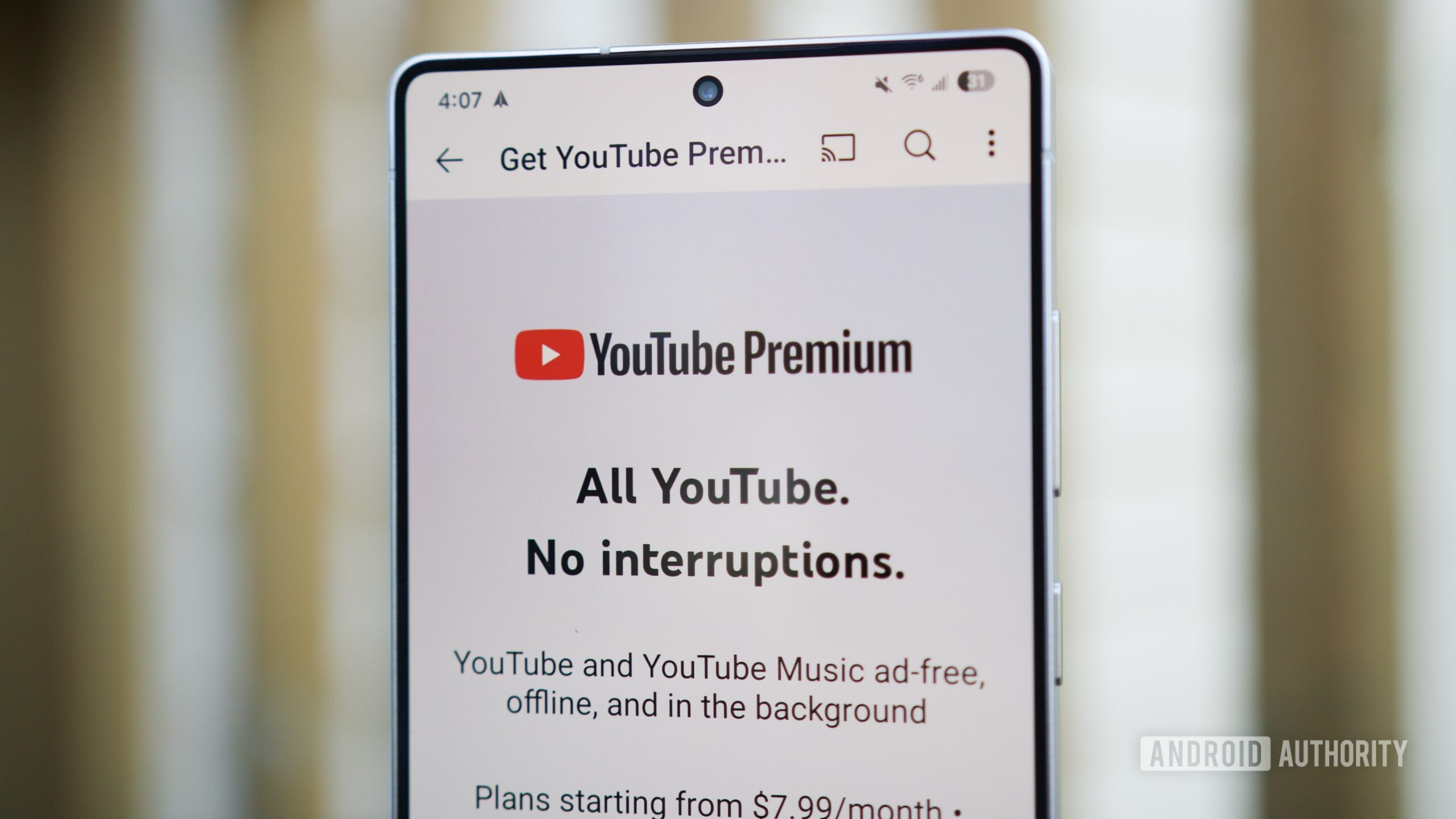
The logical counterpoint to the decaying free experience is the robust offering of YouTube Premium. While consumer fatigue regarding subscription proliferation is a genuine concern—the "subscription fatigue" phenomenon—the value calculation for Premium must be assessed specifically against the platform’s utility.
For the dedicated viewer, the benefits of Premium—which extend beyond mere ad removal—represent a significant return on investment:
- Ad Elimination: This is the primary driver, restoring the original, seamless viewing experience across all devices, including the often-neglected TV interface.
- Background Playback: Restoring the ability to use the app for audio-only consumption is crucial for productivity and commuting.
- Offline Downloads: This feature, vital for users with inconsistent data access or those traveling internationally, transitions YouTube from a streaming service to a legitimate on-demand library.
- YouTube Music Integration: The inclusion of a competitive music streaming service (Premium Music) essentially bundles two major media utilities into one monthly fee, significantly enhancing the overall package value compared to standalone services.
The pricing structure, as currently tiered, is specifically engineered to cater to different levels of need. The entry-level Premium Lite (often positioned around $8 USD monthly) targets the ad-averse user who doesn’t require music streaming or downloads. This tier is arguably the most critical lever in the current strategy, offering a low barrier to entry for immediate relief from the escalating ad environment. The standard Premium tier ($14 USD) and the Family Plan ($23 USD) address broader household needs, distributing the cost effectively.
From a pure cost-of-entertainment perspective, the standard Premium subscription remains highly competitive against dedicated streaming video platforms or music services when viewed as a consolidated offering. For the user who spends more than a nominal amount of time on YouTube daily, the monthly fee is rapidly becoming less of a luxury purchase and more of an operational necessity to maintain an expected level of digital interaction.
Future Implications and Strategic Trajectories
Analyzing the current aggressive posture suggests several predictable future impacts on the digital content landscape:
1. Bifurcation of the User Base: We are witnessing a rapid stratification. One segment, comprising casual viewers or those highly sensitive to recurring costs, will be forced to adapt to an increasingly hostile free environment, likely leading to higher adoption of non-standard circumvention tools, despite the platform’s efforts. The second segment, comprising power users, professionals, and creators, will migrate en masse to Premium to protect their core utility. This bifurcation solidifies the revenue base while segmenting the user experience.
2. Content Creator Incentives: A larger, more engaged Premium base translates directly into higher per-user revenue shares for creators through the Premium revenue pool. This financial incentive will likely steer high-value, professional content production further toward the platform, exacerbating the quality gap between Premium-supported content and what is viable on the ad-supported tier. Creators will have a greater financial motivation to cater to the subscription-holding demographic.
3. The Decline of "Passive" Viewing: The increasing intrusiveness of ads is actively discouraging passive, background, or low-attention viewing sessions. If every session carries a high probability of mandatory ad interruption or visual clutter, users will instinctively gravitate toward more focused, short-burst consumption or move high-value viewing to platforms where the investment is clearer.
4. Potential for Further Feature Restriction: If the current ad escalations do not meet revenue targets, it is highly probable that YouTube will look to restrict additional features from the free tier. This could include limitations on video quality (e.g., capping free users at 1080p or lower), reductions in daily viewing limits (though this is less likely given the platform’s reliance on scale), or further restrictions on how many devices can access the free tier concurrently.
The narrative that "free YouTube is dead" is not hyperbole; it is a description of a deliberate strategic pivot. Google is managing the transition of its most valuable digital asset from a massive, ad-supported public utility to a hybrid model where the core, seamless experience is reserved for subscribers. For anyone whose daily digital life is significantly interwoven with YouTube’s content library—whether for professional development, entertainment, or education—the window for treating the service as a truly free commodity has closed. The market is now demanding payment for access to the platform’s intended functionality, a reality that every dedicated user must now confront.
