

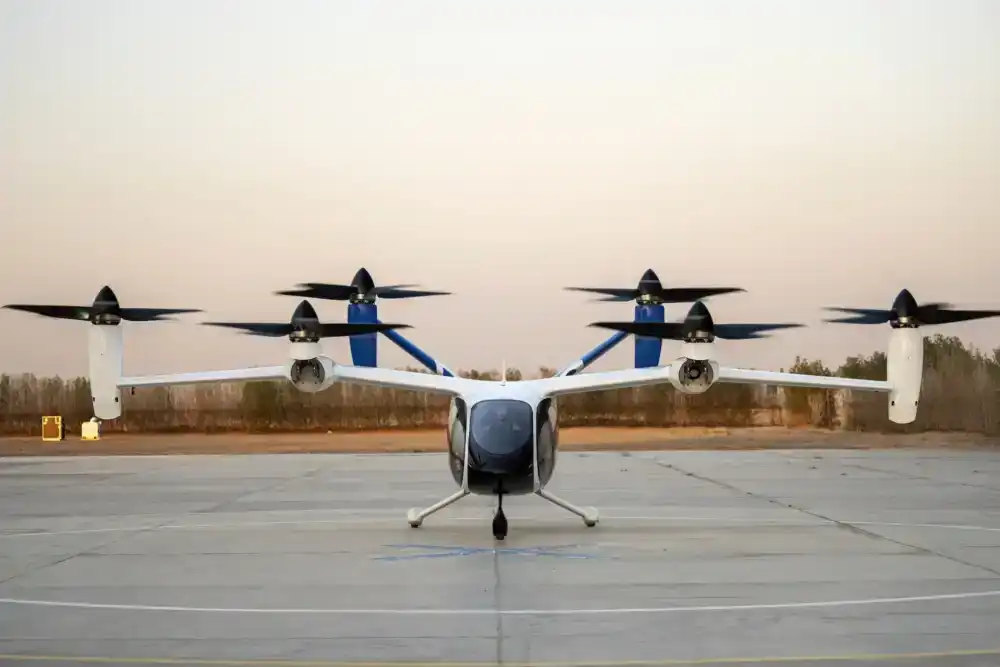
The landscape of American transportation is on the cusp of a vertical transformation as the Federal Aviation Administration (FAA) greenlights a massive expansion of electric aviation testing. In a move that signals a departure from the historically cautious pace of aerospace regulation, the FAA has officially approved eight comprehensive pilot programs. These initiatives will allow a select cohort of industry leaders—including Archer Aviation, Beta Technologies, Joby Aviation, and Wisk—to initiate widespread operational testing of electric vertical takeoff and landing (eVTOL) aircraft across 26 states. This three-year initiative, formally titled the Advanced Air Mobility (AAM) and Electric Vertical Takeoff and Landing Integration Pilot Program, represents the most significant federal commitment to date in the race to domesticate "flying taxi" technology.
For decades, the concept of urban air mobility remained a fixture of science fiction, hampered by the limitations of battery density, noise pollution, and the daunting complexity of air traffic management. However, the announcement by Department of Transportation (DOT) Secretary Sean Duffy marks a pivot toward practical implementation. The program is designed not merely as a technical sandbox but as a strategic effort to ensure the United States maintains a competitive edge in next-generation aerospace. By allowing companies to fly in real-world environments before they receive full commercial certification, the government is effectively attempting to "fast-track" an industry that has already seen billions of dollars in private investment.
The Regulatory Fast Track and the "Valley of Death"
The path to commercial aviation is notoriously treacherous. For eVTOL startups, the journey through the FAA’s type certification process—a rigorous multi-year evaluation of every bolt, battery cell, and software line—is often referred to as the "valley of death." It is a phase where capital reserves dwindle while regulatory hurdles remain high. The newly announced pilot program, which stems from an executive order signed by President Donald Trump, seeks to bridge this gap. By providing a framework for operational testing prior to full certification, the FAA is allowing companies to gather invaluable data on how these aircraft interact with existing infrastructure and weather patterns.
This accelerated timeline is a lifeline for publicly traded companies like Archer, Joby, and Beta. The market’s reaction was immediate and visceral; following the announcement, Beta Technologies saw its internal valuation metrics surge, while Joby and Archer enjoyed significant bumps in share price. For investors, the pilot program serves as a "de-risking" event, signaling that the federal government is an active partner rather than a passive observer. Kyle Clark, the founder and CEO of Beta Technologies, noted that the inclusion in this program allows his firm to begin operations roughly a year earlier than previously forecasted—a monumental shift in an industry where time is the most expensive commodity.
A Geographic Blueprint for a New Economy
The scope of the program is vast, covering 26 states through eight distinct regional hubs. These projects are not isolated corporate experiments; they are required to be partnerships between private companies and state, local, tribal, or territorial governments. This collaborative requirement ensures that the infrastructure for electric flight—such as "vertiports" and charging stations—is integrated into the existing civic fabric.

In the Northeast, the Port Authority of New York and New Jersey has emerged as a primary theater for testing. Partnering with Archer, Beta, Joby, and Electra, the Port Authority plans to explore a dozen operational concepts. Perhaps the most high-profile of these is a proposed route operating out of a Manhattan heliport, designed to whisk passengers over gridlocked traffic to regional airports in minutes. For a city like New York, where ground congestion is a permanent economic drain, the promise of a quiet, zero-emission aerial alternative is transformative.
Meanwhile, the Texas Department of Transportation is spearheading a massive regional network. Working with Archer, Beta, Joby, and Wisk, the Texas initiative aims to connect the "Texas Triangle"—Dallas, Austin, and San Antonio—with future expansions planned for Houston. Unlike the short-hop urban missions in New York, the Texas program focuses on regional connectivity, treating eVTOLs as a more flexible and sustainable alternative to short-haul regional jets. The DOT’s vision for Texas involves building "networks of networks," where air taxis expand from city centers to create a web of regional reach that could redefine commuting in the Lone Star State.
Beyond the Air Taxi: Cargo, Medicine, and Autonomy
While "air taxis" capture the public imagination, the pilot program reveals a much broader utility for electric aviation. Several projects are focused on the "unsexy" but highly lucrative world of logistics and emergency services. In the Gulf of Mexico, companies like Beta and Elroy Air are testing cargo and personnel transportation for the energy industry. These flights will service offshore rigs and remote sites in Louisiana, Texas, and Mississippi, replacing expensive and carbon-intensive helicopter sorties with more efficient electric alternatives.
The medical implications are equally profound. The program explores how eVTOLs can be used for rapid organ transport and emergency medical response, where minutes can be the difference between life and death. Because electric motors are significantly quieter and easier to maintain than traditional combustion engines, these aircraft can operate closer to residential areas and hospitals without the noise footprint of a traditional LifeFlight helicopter.
Furthermore, the program is pushing the boundaries of flight automation. In Albuquerque, the city is collaborating with Reliable Robotics to test autonomous operations. While most early eVTOL models, such as Archer’s "Midnight," are designed to be piloted by humans to satisfy current safety perceptions, the long-term economic viability of the industry likely rests on autonomy. Removing the pilot increases payload capacity and reduces operational costs, moving the service from a luxury boutique offering toward a mass-transit utility.
Infrastructure and the National Airspace System
One of the most significant challenges the FAA faces is the integration of these low-altitude, high-frequency flights into the National Airspace System (NAS). FAA Deputy Administrator Chris Rocheleau emphasized that these partnerships are critical for establishing the standards of "Advanced Air Mobility." The data gathered over the next three years will inform how the FAA manages "digital towers," automated deconfliction, and the noise profiles of these aircraft.

Archer Aviation has explicitly compared this phase of testing to the early days of robotaxi development on the ground. Just as Waymo and Cruise had to prove their safety on public streets to build social license, eVTOL companies must prove they can operate safely above populated areas. Archer’s "Midnight" aircraft, a four-passenger piloted craft, is being positioned as the vanguard for this effort, with a specific focus on the 2028 Olympic Games in Los Angeles. The Olympics are being viewed as the "coming out party" for the industry, a global stage where the U.S. hopes to showcase a fully functional, safe, and scaled air taxi ecosystem.
Industry Implications and Global Competition
The stakes of this pilot program extend beyond domestic transportation. Globally, the race for electric aviation supremacy is heating up. China’s EHang has already received type certification for its autonomous passenger drone, and European regulators are working closely with firms like Lilium and Volocopter. By launching this 26-state initiative, the U.S. government is asserting its intention to lead the regulatory conversation.
The economic ripple effects will likely be felt across the aerospace supply chain. The move toward electric propulsion requires a total reimagining of battery technology, thermal management, and lightweight composites. As these 30 proposals (from which the eight winners were selected) move into the operational phase, they will drive demand for specialized manufacturing and a new class of aviation technicians.
The Road Ahead: Challenges and Public Trust
Despite the optimism, the industry faces headwinds. Public perception remains a hurdle; the "not in my backyard" (NIMBY) sentiment that often plagues infrastructure projects could easily transition to "not over my roof." The FAA and its corporate partners will need to use these three years to prove that eVTOLs are as quiet and unobtrusive as promised.
There is also the question of the "last mile." An air taxi is only as good as the passenger’s ability to get to and from the vertiport. The integration projects in Florida, North Carolina, and Pennsylvania are looking at multi-modal connectivity—ensuring that a flight from a regional airport connects seamlessly with ground-based transit or ride-sharing services.
As the first test flights under this program begin as early as this summer, the aviation world will be watching closely. This isn’t just about avoiding traffic; it’s about a fundamental shift in how we perceive distance and geography. If successful, the Advanced Air Mobility and eVTOL Integration Pilot Program will be remembered as the moment the sky truly opened up, turning the dream of the "Jetson age" into a regulated, taxable, and essential part of the American economy. The three-year clock has started, and for the 26 states involved, the future of flight is no longer on the horizon—it is on the runway.
