

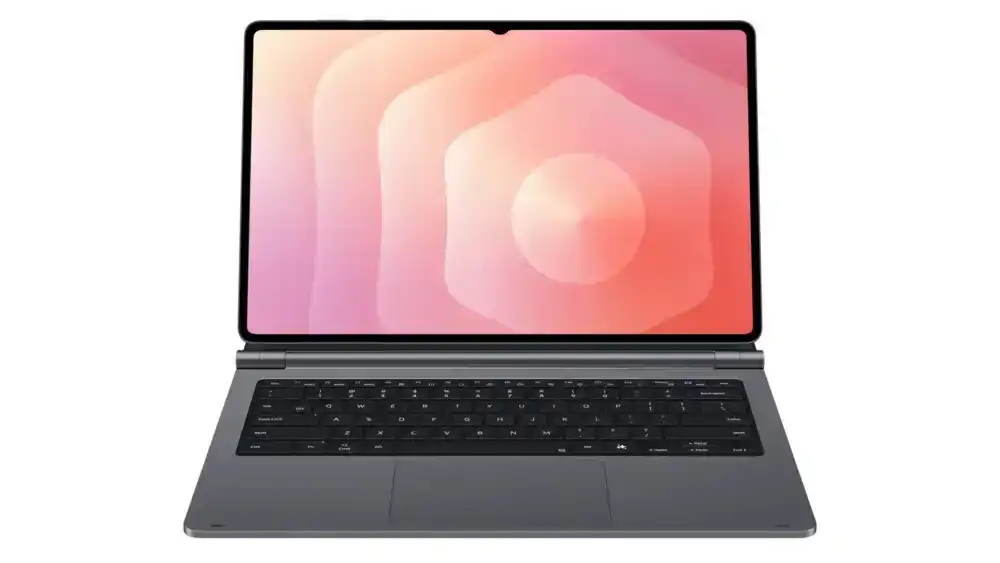
The emergence of Samsung’s Galaxy Tab S11 Ultra Pro Keyboard onto the South Korean market, following its unveiling at Mobile World Congress (MWC) 2026, has brought a significant conversation point into sharp focus: the accessory’s premium price tag. Launched initially in September 2025 alongside the flagship Tab S11 Ultra—which arrived bundled with essential companions like the updated S Pen, Smart Book Cover, and an Anti-Reflecting Screen Cover—the ecosystem now expands with this high-tier input device. While initial accessory offerings catered to standard productivity needs, the Pro Keyboard signals Samsung’s aggressive push toward positioning its premium tablet as a legitimate laptop replacement, a strategy that invariably demands premium peripheral pricing.
The initial lack of concrete release timelines following the MWC 2026 reveal meant that details regarding final market availability and cost remained speculative. However, the accessory has now surfaced on Samsung’s official Korean e-commerce portal, confirming its immediate availability in that region. The listed price point of 495,000 South Korean Won translates approximately to $338 USD, a figure that immediately elevates the accessory from a standard add-on to a substantial investment, nearing the cost of entry-level productivity laptops. This pricing structure warrants a deep dive into what distinguishes the Pro Keyboard from its predecessor and what this implies for the broader tablet accessory market.
The fundamental differentiator setting the Pro Keyboard apart from the existing Book Cover Keyboard for the Tab S11 Ultra is its enhanced feature set, directly addressing user feedback often leveled at traditional tablet keyboard folios. Most notably, the Pro Keyboard integrates a precision trackpad, a feature conspicuously absent from the standard Book Cover Keyboard. Samsung claims this integrated pointing device boasts a 14.6% increase in surface area compared to previous iterations, suggesting a design optimized for improved cursor control and multi-touch gestures essential for a desktop-like user experience. Furthermore, the shift to an aluminum build signifies a move toward enhanced rigidity and a more tactile, premium feel, aligning the accessory’s material quality with the high-end aesthetic of the Tab S11 Ultra itself.
Beyond hardware enhancements, the inclusion of dedicated physical keys signals a software integration strategy. The presence of specific keys for "Galaxy AI" and "DeX" functionalities is telling. The Galaxy AI key suggests a commitment to surfacing Samsung’s latest intelligent features directly via hardware shortcuts, potentially streamlining tasks like summarizing documents, live translation, or image manipulation—features that Samsung heavily markets as core differentiators for its 2026 device portfolio. Similarly, the DeX key reinforces the push for the desktop-like environment, allowing instantaneous switching between the standard Android tablet UI and the multi-window, taskbar-equipped DeX mode. These dedicated shortcuts are value-adds that justify a higher cost structure for power users heavily embedded in the Samsung ecosystem.
However, the initial market entry presents a slight discrepancy in aesthetic options. While pre-launch speculation suggested the Pro Keyboard would be offered in both gray and silver finishes, the South Korean store currently lists only the gray variant. Whether the silver option is slated for a later regional rollout or has been quietly deprecated remains to be seen, but it presents a minor fragmentation in the initial product offering.
The context of this high-priced peripheral is critical within the evolving landscape of premium tablets. Since Apple introduced the iPad Pro and subsequently the Magic Keyboard, the industry has seen a gradual acceptance—though often begrudging—that high-end tablets require high-end, high-cost input accessories to truly replace traditional computing devices. Samsung, with the Tab S11 Ultra, is clearly aiming to capture the segment of users who demand portability without sacrificing desktop-level interaction. The $338 USD baseline price places the combined cost of the tablet plus this keyboard attachment well into the territory traditionally occupied by mid-range laptops. This strategy relies on the assumption that the integrated hardware—the expansive AMOLED display, the integrated S Pen stylus functionality, and the powerful Exynos/Snapdragon chipset—provides a value proposition superior to that of a conventional clamshell notebook.
Industry analysts view this pricing as a calculated risk rooted in market segmentation. Samsung is not necessarily targeting the mass market with this specific accessory; rather, it is focused on the "prosumer" and enterprise user who values the versatility of Android/DeX but requires the ergonomic precision of a physical keyboard and trackpad. In enterprise deployment scenarios, where Total Cost of Ownership (TCO) calculations often prioritize device consolidation (one device for tablet and laptop duties), the premium accessory cost can be absorbed more easily than in consumer markets.
The ripple effect of this accessory pricing extends beyond Samsung’s immediate sales figures. It sets a new internal benchmark for premium tablet peripherals across the Android space. Competitors, particularly those vying for the high-end segment, will now benchmark their future keyboard solutions against this $338 mark. If the Pro Keyboard proves successful in driving significant upgrades to the Tab S11 Ultra platform, it validates the strategy of high-margin, feature-rich accessories. Conversely, if sales lag due to the accessory cost, it may signal consumer resistance to crossing a specific psychological threshold for peripheral expenditure.
From a technological trend perspective, the focus on the trackpad and AI keys highlights the convergence of input modalities. Modern operating systems, particularly DeX, thrive on mouse and cursor precision. The era where a tablet keyboard could succeed with only a rudimentary, often small, trackpad or none at all is drawing to a close. Users expect fluid, responsive pointing devices comparable to those found on high-end ultrabooks. The 14.6% size increase, while seemingly incremental, reflects significant ergonomic calibration required to accommodate finger movements for scrolling and complex window management within a DeX environment.
The dedicated Galaxy AI key is perhaps the most forward-looking element. As generative AI capabilities become increasingly integrated into core operating systems—not just cloud services—the ability to invoke these computationally intensive features instantly via hardware becomes a tangible benefit. This is a subtle but important step toward treating the tablet less as a consumption device and more as an intelligent workstation.
Looking ahead, the absence of a confirmed US release date and pricing creates uncertainty for North American consumers. Historically, accessories often debut in South Korea or Europe first, with US pricing sometimes reflecting a different conversion rate or strategic market positioning. Given the current conversion, a US price might hover around $350 to $399, potentially pushing the total package cost perilously close to flagship laptop territory. Samsung must effectively communicate the tangible productivity gains—the enhanced input precision, the aluminum build quality, and the AI integration—to justify this expenditure to a US audience already accustomed to competitive pricing from Microsoft’s Surface line and Apple’s ecosystem.
The long-term impact of accessories like the Pro Keyboard will determine the ultimate trajectory of the premium Android tablet segment. If Samsung can establish a robust, high-value accessory ecosystem that enhances the tablet’s utility to the point where users willingly invest hundreds of dollars in peripherals, it solidifies the tablet’s status as a true computing platform, rather than just a large smartphone alternative. This requires sustained software support that leverages these hardware additions effectively. If the DeX environment or Galaxy AI features do not evolve rapidly enough to fully utilize the superior input offered by the Pro Keyboard, the high price point will become an anchor, hindering adoption among all but the most dedicated early adopters.
The market is currently watching how this premium strategy plays out. The Tab S11 Ultra itself represents Samsung’s peak hardware engineering for tablets. The Pro Keyboard is the specialized tool designed to unlock that peak performance in productivity workflows. Its cost is a direct reflection of the perceived value of that unlocked potential in a highly competitive market where the line between tablet and laptop continues to blur under the influence of sophisticated mobile operating systems and integrated AI services. Consumers and enterprise buyers must now weigh whether the enhanced functionality justifies one of the highest peripheral price points seen in the tablet accessory category to date.
