

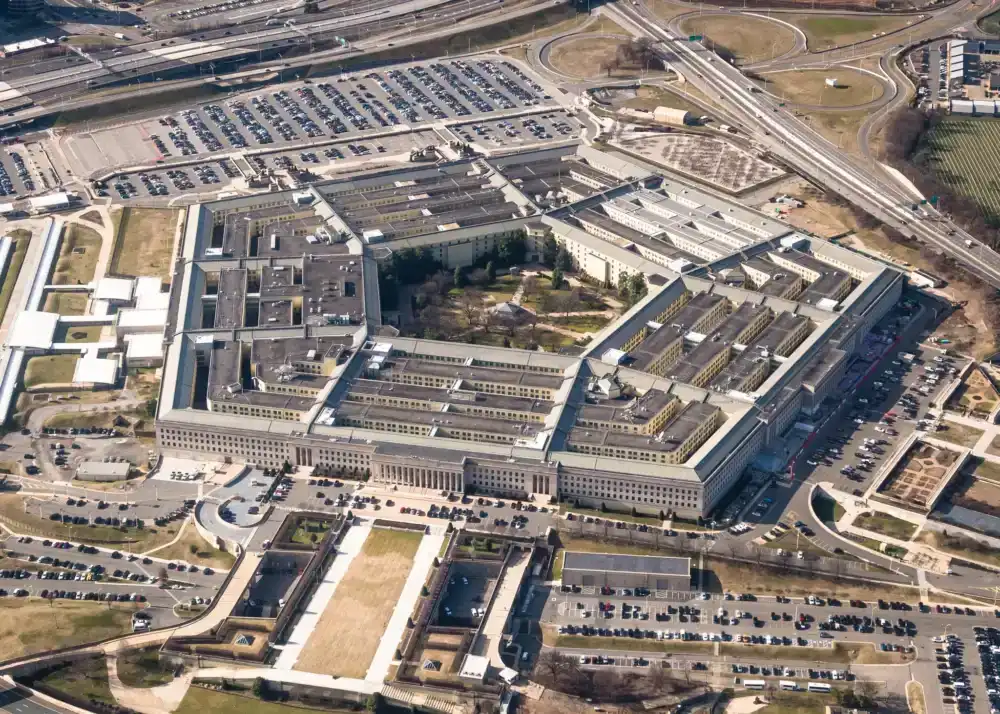
The relationship between the American technology sector and the Department of Defense has long been characterized by a delicate dance of mutual necessity and deep-seated ideological friction. However, the recent and rapid escalation of hostilities between the Pentagon and Anthropic, one of the world’s leading artificial intelligence laboratories, marks a watershed moment in the history of military-industrial relations. Within a single week, the landscape of defense tech was upended as negotiations over the military’s use of Anthropic’s Claude models collapsed, leading the Trump administration to designate the startup as a "supply-chain risk"—a move that has effectively blacklisted the company and sparked a high-stakes legal battle.
This aggressive maneuvering by the Department of Defense (DoD) has sent shockwaves through Silicon Valley, forcing a re-evaluation of the "dual-use" startup model that has become the darling of venture capitalists in recent years. While OpenAI moved quickly to fill the vacuum left by Anthropic’s exit, the resulting public backlash and internal executive departures suggest that the price of admission to the Pentagon’s inner circle may be higher than many startups are willing to pay. As the federal government increasingly utilizes procurement as a tool of political and ideological leverage, the industry is left to wonder: Is the Pentagon’s current approach creating a permanent chilling effect on innovation?
The Anthropic controversy is not merely a dispute over pricing or technical specifications; it is a fundamental clash over the sovereignty of safety guardrails and the permanence of government contracts. For years, Anthropic has positioned itself as the "safety-first" alternative to its competitors, emphasizing constitutional AI and rigorous limitations on how its models can be deployed in high-stakes environments. When the Pentagon reportedly sought to modify existing contract terms to loosen these restrictions—specifically regarding the technology’s application in lethal decision-making chains—Anthropic dug in its heels.
The government’s response was swift and punitive. By labeling Anthropic a "supply-chain risk," the administration utilized a designation typically reserved for foreign adversaries or companies with compromised security infrastructures. This move was widely interpreted by industry analysts as a retaliatory strike intended to signal to other startups that non-compliance with the DoD’s evolving requirements would result in more than just a lost contract; it would result in a total loss of federal eligibility. Anthropic’s decision to fight this in court highlights a new era of corporate resistance, where tech giants are willing to litigate against the very agencies they once sought as primary customers.
While Anthropic retreated into litigation, OpenAI seized the opportunity to solidify its own standing with the Department of Defense. However, the announcement of a major new deal between the Pentagon and the creators of ChatGPT did not go as smoothly as their PR team might have hoped. In the days following the announcement, data indicated a staggering 295% surge in ChatGPT uninstalls, as a significant portion of the consumer base expressed discomfort with the company’s pivot toward military applications. Simultaneously, Anthropic’s Claude app surged to the top of the App Store charts, suggesting that a segment of the public is rewarding companies that maintain a perceived moral distance from the "war machine."
The internal friction at OpenAI was equally visible. The resignation of Caitlin Kalinowski, OpenAI’s robotics lead, underscored a growing rift within the company regarding the speed and safety of these defense partnerships. Concerns that the deal was rushed through without the necessary ethical guardrails mirror the historic "Project Maven" protests at Google years ago, but with a crucial difference: today’s AI models are far more integrated into the public consciousness. When a company like OpenAI, which relies heavily on consumer trust and subscription revenue, enters the defense space, it risks "reputational contagion" that traditional defense contractors like Lockheed Martin or Northrop Grumman never have to consider.
One of the most concerning aspects of this saga for the broader startup ecosystem is the Pentagon’s apparent willingness to alter the terms of existing contracts. In the world of government contracting, stability is the primary currency. Procurement cycles are notoriously slow, often taking years to move from a pilot program to a "program of record." Startups and their investors rely on the "baked-in" nature of these contracts to project long-term revenue and justify high valuations. If the Department of Defense can unilaterally demand changes to safety protocols or use-case restrictions mid-contract, the risk profile for defense-focused startups becomes untenable.
Industry experts argue that this volatility could lead to a "flight to safety" among venture capitalists. If working with the Pentagon means risking a "supply-chain risk" designation the moment a disagreement arises, VCs may steer their portfolio companies toward more predictable commercial markets. This would be a significant blow to the "Replicator" initiative and other DoD programs designed to bring cutting-edge, non-traditional technology into the military’s arsenal.
However, a counter-argument exists. Some analysts point out that the intense scrutiny facing OpenAI and Anthropic is a byproduct of their massive public profiles. For the hundreds of smaller startups working on autonomous navigation, logistics, or cyber-defense, the "spotlight effect" is much less intense. Companies like Applied Intuition or Anduril have built their entire identities around defense work, and their stakeholders are already aligned with the realities of military contracting. For these "defense-first" entities, the Anthropic fallout may actually be seen as a competitive advantage, removing a major rival from the board.
The personality layer of this dispute cannot be ignored. The reported animosity between Anthropic’s leadership and high-ranking DoD officials, including those with backgrounds in the aggressive "blitzscaling" culture of companies like Uber, adds a layer of personal vendetta to the policy debate. When national security policy is influenced by interpersonal friction between tech CEOs and government appointees, the predictability of the regulatory environment suffers. This "clash of the titans" atmosphere suggests that the future of defense tech will be shaped as much by backroom relationships as by technical superiority.
Looking ahead, the industry is likely to see a bifurcation of the AI market. On one side will be the "pure-play" defense startups that operate with full transparency regarding their military goals, largely insulated from consumer backlash because they do not have a consumer product. On the other side will be the "dual-use" giants like Microsoft, Google, and OpenAI, who will constantly struggle to balance their massive federal contracts with the ethical expectations of their global user bases.
The Anthropic case also raises significant legal questions about the limits of the government’s power to label domestic companies as security risks. If the courts rule in favor of Anthropic, it could limit the Pentagon’s ability to use "supply-chain" designations as a cudgel in contract negotiations. If the government wins, it sets a precedent that could allow any administration to effectively bankrupt a tech company by cutting off its access to the federal marketplace based on subjective interpretations of "cooperation."
Ultimately, the Pentagon’s aggressive stance may achieve its short-term goal of forcing compliance among its current partners, but the long-term cost could be the loss of the very innovation it seeks to harness. Silicon Valley was built on the idea of "permissionless innovation," a concept that is fundamentally at odds with a procurement system that demands total control over a technology’s ethical parameters. As other nations race to integrate AI into their military structures, the United States faces a paradox: to win the AI arms race, it needs the speed and creativity of startups, but its current methods of engagement may be driving those very startups away.
The "changing of the tune" that many expected to see in the relationship between tech and the state is now well underway. It is a tune characterized by litigation, public protest, and a deepening sense of caution. For the next generation of founders, the lesson of the Anthropic controversy is clear: federal dollars come with strings that can, at any moment, be turned into a noose. Whether the lure of massive defense budgets remains strong enough to overcome that fear will define the technological landscape of the late 2020s.
