


The contemporary digital productivity landscape is characterized by a pervasive and often frustrating dichotomy: users are forced to choose between feature density and data sovereignty. For years, the quest for an ideal note-taking application has resembled a triage scenario. On one side stand the feature-laden giants—platforms boasting rich media integration, complex organizational structures, and intuitive interfaces. Yet, these titans frequently monetize user data or lock essential functionality, such as ubiquitous cross-device synchronization, behind escalating subscription tiers. On the other side reside the privacy purists, often open-source projects that champion end-to-end encryption and user control. While commendable in principle, these solutions frequently demand significant technical overhead, most notably through the necessity of self-hosting synchronization infrastructure, which introduces points of failure dependent on individual hardware reliability and maintenance acumen.
This inherent tension has created a significant gap in the market, leaving many users stranded between the convenience of proprietary ecosystems and the complexity of decentralized alternatives. My personal journey through this wilderness—having previously relied on solutions like Google Keep for its ubiquity, and later experimenting with self-hosted options like Jotty Page to maintain data residency—illuminated the unsustainable nature of this compromise. Self-hosting, while offering pristine privacy, introduces vulnerability; a server crash means an immediate loss of accessibility, regardless of data integrity. Conversely, established privacy-centric tools like Standard Notes, while offering secure synchronization out-of-the-box, often restrict the free tier to rudimentary plain text, severely limiting the creation of structured content such as detailed checklists or comparative tables essential for comprehensive knowledge management.
It is against this backdrop of digital compromise that Notesnook emerges not merely as an alternative, but as a potential paradigm shift. This application has quietly achieved a rare equilibrium, offering a surprisingly robust set of features within its free, open-source offering, while simultaneously embedding robust privacy mechanisms, including the option for user-controlled synchronization endpoints. The sheer value proposition embedded in its zero-cost tier—which includes reliable, proprietary multi-device syncing—is a phenomenon worthy of serious attention within the broader productivity software industry.
Decoding the Feature-Privacy Nexus
The core innovation of Notesnook lies in how it addresses the synchronization dilemma without resorting to user-hostile trade-offs. Traditional privacy advocates often mandate that users manage their own sync server for true security, a barrier to entry for the average user seeking seamless continuity between a desktop workstation, a tablet, and a mobile device. Notesnook bypasses this requirement by offering its own encrypted sync solution, meaning users gain the convenience of cloud synchronization while maintaining the assurance of data encryption. Furthermore, for those power users committed to complete control, the option to self-host the synchronization backend remains available, honoring the open-source ethos.
The platform’s open-source nature is a critical component of its trustworthiness. It subjects the code to public scrutiny, fostering transparency that proprietary applications cannot replicate. This characteristic extends across its availability, supporting all major operating systems, including the often-neglected Linux desktop environment. This multi-platform support mitigates vendor lock-in, offering users a genuine escape route should their needs evolve or if they decide to pivot hardware ecosystems.
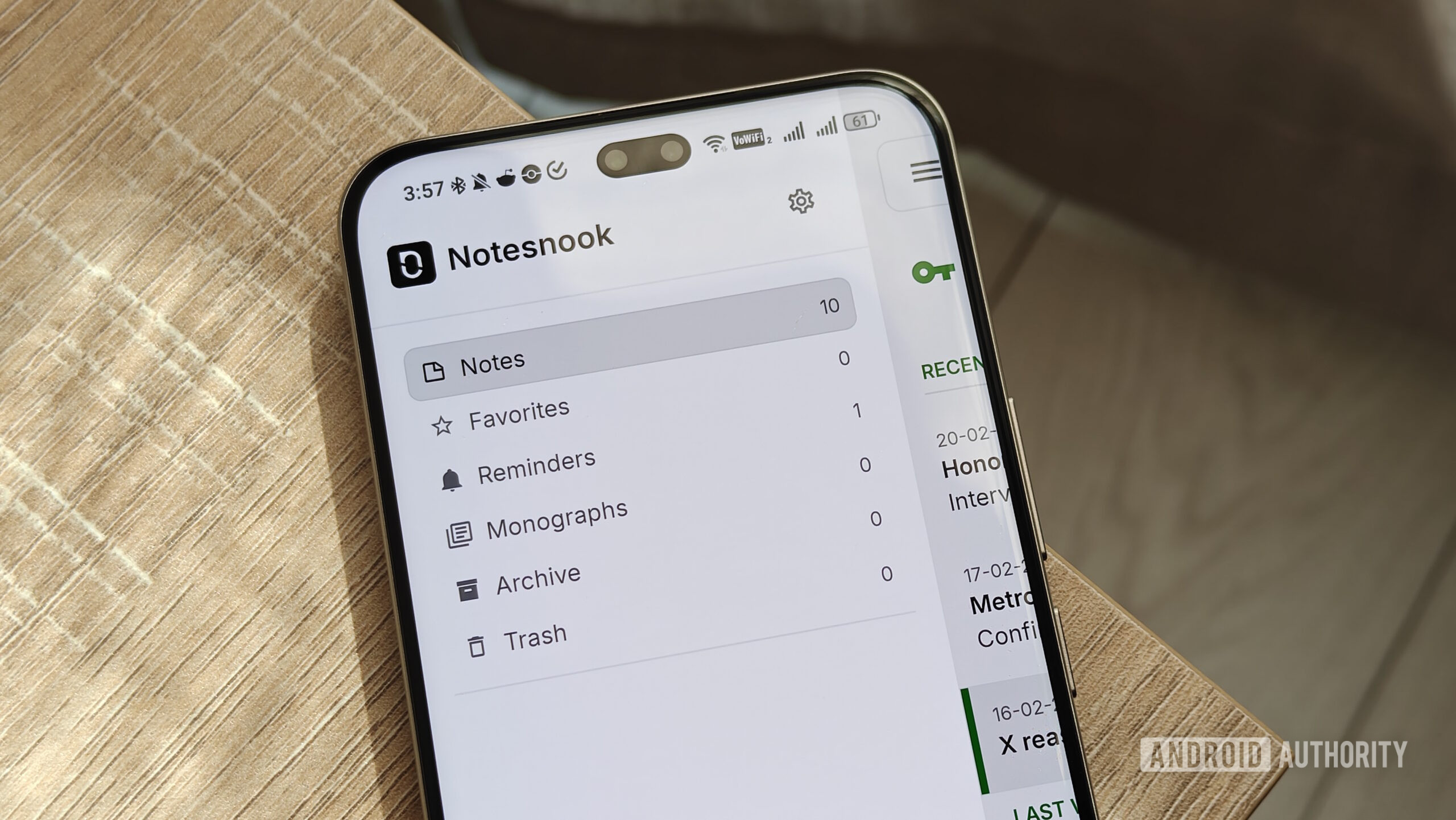
Digging into the functional aspects, the free tier surpasses many competitors’ premium offerings by integrating a highly capable rich-text editor. This is not merely about basic bolding and italics; it encompasses structural elements crucial for complex thought organization: hierarchical headers, nested bullet lists, and, notably, functional tables. The utility of tables, for instance, moves beyond mere aesthetics; they become indispensable tools for comparative analysis, such as documenting technical specifications across product iterations, a task that plain-text editors render cumbersome. Checklists, too, are fully supported, transforming the application into a viable system for task management, grocery lists, or project staging documentation.
Beyond formatting, the inclusion of organizational primitives like robust tagging systems and distinct notebooks allows for sophisticated categorization without the immediate need for paid hierarchical folder structures. Furthermore, the integration of time-based reminders and system-level shortcuts demonstrates an acknowledgment of workflow integration, features often reserved for subscription tiers in competing services.
Industry Implications: Challenging the SaaS Model
The existence and continued liberalization of Notesnook’s free tier carry significant implications for the Software as a Service (SaaS) model dominating the productivity sector. The prevailing industry trend dictates that utility scales linearly with financial commitment. Applications are engineered to demonstrate the necessity of premium features—often introducing artificial friction points just below the subscription threshold.
Notesnook’s strategy, which appears to be one of feature generosity coupled with an open-source foundation, challenges this established revenue logic. It suggests a viable alternative business model predicated on serving the core user base exceptionally well while reserving high-volume or advanced customization features for paying patrons. This democratization of core functionality forces a re-evaluation of what constitutes "premium" functionality. If rich text editing and encrypted sync are available for free, subscription value must pivot towards ancillary, yet desirable, elements.
For developers, Notesnook serves as a case study demonstrating that community trust, built through transparency (open-source) and generosity (feature-rich free tier), can be a more potent driver for adoption and eventual conversion than aggressive paywalling. It sets a higher baseline expectation for privacy-respecting applications across the board.
Expert Analysis of Limitations and Mitigation
While the platform is lauded for its free offering, a professional assessment requires a sober evaluation of its constraints. The limitations imposed on the free tier are strategically placed, targeting users whose primary work involves high data volume or complex, visually rich documentation.

The primary constraints center on media handling and organizational scale:
- Image Compression: Uploaded images are compressed, which is acceptable for quick visual references but unsuitable for archival photography or high-fidelity diagram storage.
- Color Palette Restriction: A limited palette of seven colors restricts advanced visual encoding techniques for rapid information parsing.
- Organizational Cap: Limits on tags (50) and notebooks (50) act as a soft ceiling for users managing hundreds of distinct projects or knowledge domains.
- File Upload Quota: The 50MB monthly upload limit restricts heavy multimedia integration.
- Reminder/Shortcut Limits: Capping active reminders and shortcuts (10 each) targets users who rely on automated nudges or complex automation scripts.
Crucially, the article notes that these limitations have proven surprisingly permissive in practice. The author’s pragmatic approach—deleting old reminders to stay within the active limit—highlights a key insight: these limits are often designed to prevent abuse or commercial over-utilization, not to hamper typical individual productivity. For the vast majority of users migrating from simpler systems like Google Keep, the free tier already provides an exponential increase in organizational sophistication and security posture. The paid tiers, conversely, unlock elements like advanced task lists (outline lists), recurring reminders, and comprehensive Markdown support, features primarily benefiting "power users" engaged in rigorous methodological note-taking or project management workflows that exceed basic documentation needs.
Future Impact and Emerging Trends
The trajectory of Notesnook points toward several important trends shaping the future of personal knowledge management (PKM) software.
Firstly, the emphasis on local-first architecture with optional, secure cloud sync is becoming a non-negotiable standard for discerning users. As awareness regarding data brokerage and algorithmic profiling increases, tools that keep the data encrypted on the user’s device, regardless of the sync method chosen, will gain market share. Notesnook’s design preemptively addresses this growing demand for data sovereignty.
Secondly, the application’s evolution demonstrates the virtuous cycle of open-source maintenance. The observation that the platform has increased its generosity over time, rather than tightening the screws on the free offering, is counter-cyclical to current SaaS trends. This fosters deep user loyalty and generates authentic advocacy, a marketing engine far more valuable than superficial promotional campaigns. Future success will likely involve expanding platform parity (e.g., deeper integration with desktop window management or specialized Linux features) while keeping the core encryption and editing features unencumbered.
Finally, the successful blending of rich text formatting with high-level security suggests a maturation in PKM tools. We are moving past the era where security meant sacrificing usability, or usability meant sacrificing privacy. The next wave of successful productivity software will be defined by its ability to seamlessly integrate these formerly mutually exclusive requirements, providing robust, flexible structures for thought capture that are inherently resistant to external exploitation. Notesnook, by providing feature parity with many established proprietary tools on its free tier while upholding stringent privacy standards, positions itself as a vanguard in this necessary evolution. It is a powerful demonstration that software can be both technically sophisticated and ethically aligned with user interests, making its relative obscurity a significant oversight in the current digital tooling discourse.
