

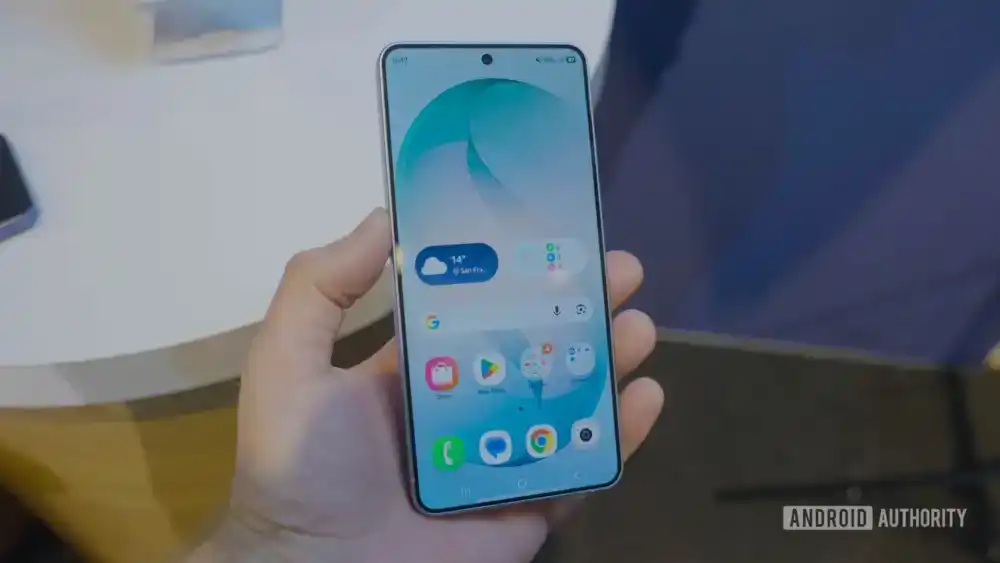
The landscape of personal computing, particularly within the mobile sector, is undergoing a profound metamorphosis, driven almost entirely by the rapid maturation of generative Artificial Intelligence. Samsung Electronics, a titan in the global hardware market, appears to be charting an aggressive course toward embedding this technology deeply into the core user experience of its Galaxy ecosystem. A recent indication of this strategic pivot comes from executive commentary suggesting the company is actively investigating "vibe coding"—the concept of using natural language prompts to generate functional software code—as a future feature for its flagship devices. This exploration moves beyond the current scope of Galaxy AI, which primarily focuses on communication enhancements and productivity augmentation, suggesting a future where end-users possess unprecedented, low-friction control over their device’s operational layers.
The Context: From Smartphone to "AI Phone"
Samsung’s renewed focus on AI is not nascent; it was crystallized with the introduction of the Galaxy S24 series and its proprietary Galaxy AI suite. This commitment is so pronounced that the company has publicly signaled a semantic shift, preferring the designation "AI phone" over the traditional "smartphone" when discussing forthcoming iterations, such as the anticipated S26 lineup. This linguistic framing underscores a strategic belief: future differentiation in the premium mobile segment will hinge on intelligent, adaptive software capabilities rather than incremental hardware upgrades alone.
"Vibe coding," in this context, is an emergent term describing the process of leveraging large language models (LLMs) to translate high-level, intuitive human requests (the "vibe") into executable programming instructions. Traditionally, software development demands specialized knowledge of syntax, logic structures, and platform-specific APIs. Vibe coding aims to collapse this barrier to entry. If successful on a mobile platform, it represents a radical democratization of customization. The executive insight, attributed to Won-Joon Choi, Head of Samsung’s Mobile Experience division, confirms this is more than theoretical speculation; it is an active area of R&D interest. Choi stated that integrating such a capability is "something we’re looking into," signaling Samsung’s intent to push the boundaries of on-device intelligence.
Deconstructing the Potential: Beyond App Creation
The significance of integrating vibe coding onto a mobile device like a Galaxy phone extends far beyond simply enabling novice users to build rudimentary applications. The true disruption lies in the ability to modify the User Experience (UX) layer itself.
Currently, mobile customization is largely confined to themes, icon packs, and widget configurations—all elements pre-approved and packaged by the manufacturer or app developers. Choi explicitly highlighted this limitation, noting that users are "limited to premade tools." A true vibe coding integration would shatter these constraints. Imagine a user describing a desired interaction—"When I swipe down from the top right corner, open the camera in portrait mode and automatically apply my favorite filter"—and the device’s AI system generating the necessary underlying logic to execute that command across the operating system or specific third-party applications.
This capability moves toward a highly personalized, emergent operating system where the interface morphs dynamically based on individual workflows, rather than adhering to a standardized design language enforced across millions of units. It suggests a future where the mobile experience is not merely curated but actively co-created by the user in real-time.
Industry Implications: The Democratization of Software Control
The exploration of mobile vibe coding carries substantial implications for the broader technology ecosystem, touching upon software distribution, developer roles, and platform security.
Shifting Developer Paradigms: For established software developers, this trend necessitates a re-evaluation of how APIs and SDKs are exposed. If end-users can generate functional code snippets via natural language, developers must design their systems to be inherently modular and secure enough to accept these AI-generated modifications without compromising stability. The focus may shift from writing boilerplate code to crafting robust, highly specified interfaces that the AI can safely manipulate. This could lead to the rise of "prompt engineers" specialized in interfacing with proprietary mobile AI engines.
The Security Tightrope Walk: The most immediate and complex hurdle for Samsung will be security and stability. Allowing users to dynamically modify system or application behavior introduces enormous vectors for exploitation. Malicious prompts could inadvertently (or intentionally) create backdoors, drain battery life through inefficient loops, or cause critical system instability. Samsung would need to develop sophisticated sandboxing layers and robust validation mechanisms capable of vetting AI-generated code for security flaws and performance bottlenecks before execution. This moves beyond simple permission structures; it requires runtime code analysis executed at the speed of user input.
Competitive Advantage: In the highly competitive premium smartphone market, where hardware innovation often plateaus, software-driven differentiation is paramount. If Samsung can successfully deploy a stable, powerful vibe coding engine on-device—or via a tightly integrated cloud service—it establishes a significant competitive moat against rivals relying on more static software overlays. It transforms the Galaxy device from a powerful tool into a malleable extension of the user’s intent.
Expert Analysis: The Technical Feasibility and Challenges
Technically, achieving mobile vibe coding involves integrating several cutting-edge disciplines. It requires a highly optimized, perhaps quantized, LLM running locally (or leveraging low-latency cloud inference) to ensure instant responsiveness—a core requirement for any meaningful UX modification.
On-Device vs. Cloud Processing: Running complex code generation models entirely on a mobile chipset, even future iterations, presents thermal and power consumption challenges. A hybrid approach, where simple prompt parsing and basic UX adjustments occur on-device, while complex application logic generation is offloaded to a dedicated cloud endpoint (akin to Samsung Knox Vault or similar secure enclaves), might be the most pragmatic initial step. However, the latency inherent in cloud calls risks undermining the "vibe" immediacy the feature promises.
Abstraction and Intent Mapping: The core difficulty is mapping vague human intent ("make this look better") to precise, platform-specific code (e.g., Kotlin, Swift, or a proprietary Samsung scripting language). This demands an advanced layer of semantic abstraction that understands the mobile context—knowing, for instance, that "better" for a messaging app might mean changing font kerning, while "better" for a map application might mean adjusting visual contrast for better outdoor visibility. The success of this feature hinges on the maturity of this intent-to-code translator.
UX and Discoverability: Even if the technology works flawlessly, introducing a layer of programming into the mainstream mobile OS risks alienating the very users Samsung aims to empower. The feature must be discoverable yet unobtrusive. It cannot clutter the standard interface. Perhaps it will manifest as an advanced setting within the Developer Options, or perhaps through a dedicated, context-aware AI assistant capable of recognizing when a user is struggling with a predefined workflow and prompting, "Would you like to customize this process?"
Future Trajectory: The Evolution of Mobile Interaction
The pursuit of vibe coding on Galaxy devices reflects a broader, inevitable trend in personal technology: the convergence of human language and digital execution. This mirrors the philosophical direction taken by platforms like Microsoft with Copilot and Google with Gemini, but applying it directly to the operating system kernel level on a handheld device.
If Samsung pioneers this successfully, it sets the stage for the next decade of mobile evolution:
- Hyper-Specialized Devices: Users may no longer purchase a single "phone" but rather a base hardware platform customized heavily via AI generation to fit highly specific professional or personal needs (e.g., a "field technician mode" or a "creative director hub").
- The End of Static Interfaces: The concept of a static home screen or a fixed navigation bar could become obsolete, replaced by fluid interfaces that rewrite themselves based on the task at hand, dictated by user prompts.
- New Ecosystem Gatekeeping: Samsung’s control over the underlying AI model used for this generation becomes a powerful form of platform governance. They dictate the limits of what the user can code, effectively establishing new boundaries for mobile development within their walled garden.
While the executive confirmation is positive—confirming Samsung’s profound interest in pushing AI beyond mere assistance into creation—the journey from "very interesting" concept to reliable consumer feature will be fraught with significant technical and security challenges. The market awaits to see if the "AI phone" era will truly empower users to become impromptu software architects or if it remains a sophisticated tool managed by Samsung’s proprietary intelligence layer.
