

The technology landscape is perpetually characterized by the cadence of iterative upgrades, and as the recent introduction of the Pixel 10a solidifies Google’s current smartphone portfolio, industry focus naturally pivots toward the next major flagship cycle: the Pixel 11 series. While the launch window for these devices remains distant, the early murmurings—often originating from the supply chain—are beginning to coalesce into tangible, albeit speculative, design narratives. One such development, emerging not from official channels but from the accessories ecosystem, offers the first visual suggestion of significant aesthetic refinement, specifically concerning the device’s polarizing rear camera housing.
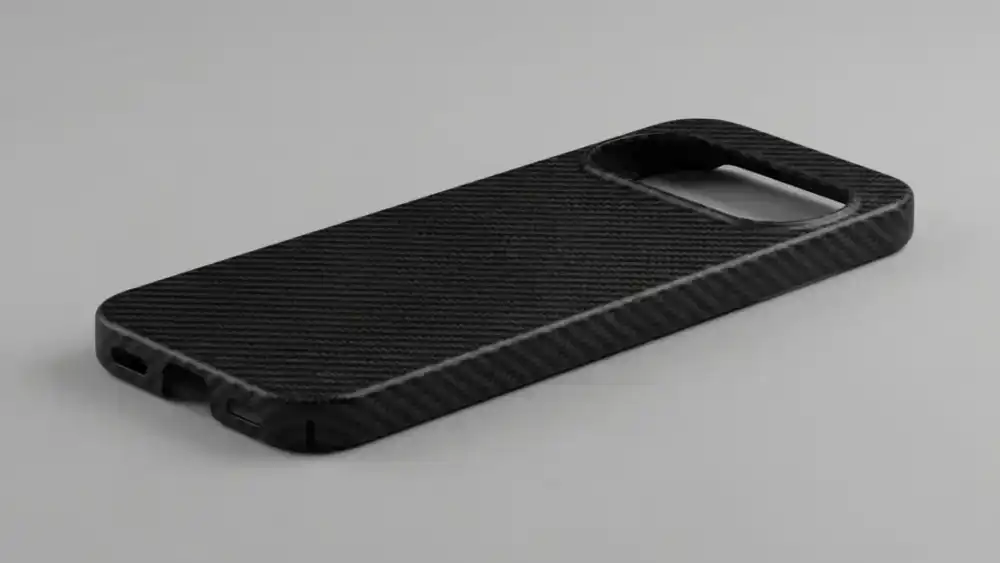
The genesis of this early insight comes via an unexpected source: a product listing from ThinBorne, a specialized case manufacturer, detailing an offering for the purported Pixel 11 Pro XL. This particular case, noted for its construction using advanced aramid fiber and integration of MagSafe-compatible magnetic arrays—a feature signaling Google’s potential full embrace of standardized wireless charging accessories—includes two preliminary renders illustrating the protective shell. These renders, while purely suggestive of the internal device dimensions, provide critical clues about the exterior design language Google may adopt for its next premium offering.
The overarching context provided by these early case molds is one of continuity overlaid with subtle, yet potentially impactful, evolutionary changes. The overall footprint and chassis thickness of the anticipated Pixel 11 Pro XL appear to align closely with its immediate predecessor, suggesting Google is comfortable with the current ergonomic balance achieved in its largest form factor. However, the divergence lies in the treatment of the signature design element introduced in recent Pixel generations: the horizontal camera bar.
One of the most compelling observations gleaned from these accessory renderings pertains to the depth of the camera housing cutout. Typically, case designs must account for the protrusion of the camera module beyond the rear panel to ensure the lenses are protected when the phone rests on a flat surface. The renders suggest that the required recess depth for the Pixel 11 Pro XL case is noticeably shallower than what was necessary for the Pixel 10 series. If this is accurate, it implies a significant engineering achievement by Google: the ability to integrate more sophisticated or larger camera sensors—perhaps necessitated by new computational photography algorithms or hardware requirements—without exacerbating the module’s physical projection from the device body. Reducing camera bump size, even marginally, is a persistent goal in smartphone design, often leading to improved handling and reduced wobbling when the device is used flat on a table. This reduction in protrusion hints at internal component stacking optimization or a shift in lens module architecture.
The second, perhaps more visually striking, departure suggested by these early blueprints involves the geometry of the camera bar itself. Previous iterations of the Pixel flagship line have employed an elongated, often gently curved, pill-shaped visor housing the sensors. The renders for the Pixel 11 Pro XL case, conversely, depict a cutout that suggests a more rectilinear, albeit still significantly rounded, rectangular structure. This shift moves the design away from the strictly defined "oval" of recent models towards a shape that incorporates more defined corners while maintaining overall horizontal orientation.
From an industrial design perspective, this evolution suggests a move toward visual consolidation and symmetry. A slightly wider, more robustly rectangular housing could serve several purposes. Firstly, it might accommodate a revised array of sensors—perhaps a wider ultra-wide lens, or the rumored integration of advanced depth-sensing LiDAR elements, which require greater aperture space. Secondly, it could be an aesthetic choice designed to visually anchor the top portion of the phone, providing a more grounded, architectural look that contrasts with the softer curves prevalent in competitor devices. This move toward sharper, yet still softened, geometry aligns with broader trends in premium industrial design that seek to balance technological density with sophisticated minimalism.
It is crucial to contextualize these observations within the broader trajectory of Google’s Pixel hardware strategy. Since the introduction of the distinctive camera bar, Google has used this element as a clear brand identifier, differentiating itself instantly from the crowded field of smartphones that favor the centralized or corner-mounted camera islands popularized by Apple and Samsung. The Pixel 11 Pro XL’s potential design shift, therefore, is not a concession to market conformity, but rather an evolution of their established design language. They are refining the signature, not discarding it.
Furthermore, the mention of MagSafe compatibility in the case material—aramid fiber being a high-strength, lightweight alternative to traditional polymers or carbon fiber—speaks volumes about the expected feature set of the Pixel 11 Pro XL. The integration of precise magnetic rings for accessory attachment suggests Google views its hardware as a platform extending beyond the device itself. This focus on ecosystem interoperability is a strategic imperative, especially as manufacturers look to capture recurring revenue streams through proprietary or standardized accessories. The commitment to MagSafe compatibility, a standard pioneered by Apple but rapidly adopted across the Android sphere, signals Google’s intent to ensure the Pixel flagship is not only best-in-class in software and AI but also fully integrated into the magnetic accessory infrastructure.
Moving beyond the physical housing, the rumors surrounding advanced biometric security—specifically the potential inclusion of an under-display infrared camera for enhanced face unlock capabilities—must be considered alongside these external design cues. If Google is indeed moving toward a truly seamless front-facing experience, minimizing reliance on physical notches or punch-holes, the rear design must achieve a similar level of visual integrity. A cleaner, slightly less protruding camera bar complements the pursuit of a completely uninterrupted display experience. The challenge lies in packaging the requisite optical components—potentially larger sensors for improved low-light performance and the rumored IR array components—into a more streamlined housing.
The industry implications of these early renders are significant for the premium smartphone segment. Google has successfully carved out a niche by prioritizing computational photography and clean software experience over raw hardware specifications. However, the market has become increasingly unforgiving regarding physical design compromises, particularly the camera bump. Competitors like Samsung have experimented with integrating the camera module more fluidly into the chassis frame, while others are pushing the boundaries of under-display cameras. If Google can execute a reduction in camera protrusion while simultaneously enhancing optical performance—a technical feat suggested by the case renders—it would reinforce their position as an innovative hardware manufacturer, not merely a software showcase.
For consumers, the appeal of a flatter rear panel cannot be overstated. It speaks to the tactile experience and usability of the device. A phone that sits more flush on a desk or slides more easily into a pocket without catching offers a tangible quality-of-life improvement that often resonates more deeply than minor processor speed bumps. This incrementalism in design refinement suggests Google understands that the next major leap in flagship appeal may come from perfecting the user interface interaction with the physical object itself.
Looking toward future trends, the evolution of the camera bar design directly impacts thermal management and battery integration. A wider housing might provide a larger surface area for heat dissipation from advanced Tensor chipsets, or it could offer more structural support for a larger battery cell—a perennial consumer demand. While the renders only hint at the external aperture shape, the engineering underneath must reconcile these competing demands: more powerful hardware, better optics, and a slimmer profile. The design language seen here suggests a commitment to the latter two, placing greater emphasis on internal engineering optimization.
It is essential to maintain a degree of journalistic skepticism. Accessory manufacturers often base their initial molds on leaked schematics, engineering samples, or sometimes even educated guesswork extrapolated from internal supply chain chatter. These early molds are often corrected as final production samples are verified. However, the consistency in reporting similar design shifts across multiple leaks—including the subtle alteration of the camera bar shape—lends credence to the notion that Google is actively exploring modifications to its established visual identity for the Pixel 11 generation. This is more than just a case manufacturer hedging its bets; it suggests a meaningful shift in the physical blueprint emanating from Mountain View.
In summation, the emergence of these early Pixel 11 Pro XL case renders provides the first tangible, albeit speculative, glimpse into the hardware evolution Google is planning. The proposed reduction in camera module protrusion and the subtle reshaping of the horizontal visor from an elongated oval to a more defined, rounded rectangle suggest a design philosophy focused on ergonomic refinement and visual sophistication. If these early indicators prove accurate, the Pixel 11 series will mark a significant step in iterating on Google’s established aesthetic, aiming for a more integrated and polished physical presence to complement its expected advancements in AI-driven functionality. The next twelve months will undoubtedly bring further leaks, but for now, the world of third-party protection offers the clearest window into Google’s hardware ambitions.
